Skip to content

Southern Fried Science

Over 15 years of ocean science and conservation online

  • Home
  • About SFS
  • Authors
  • Support SFS

Author: David Shiffman

What does the new species of hammerhead mean for shark science and conservation?

Posted on November 11, 2013 By David Shiffman 3 Comments on What does the new species of hammerhead mean for shark science and conservation?
What does the new species of hammerhead mean for shark science and conservation?
Conservation, Science

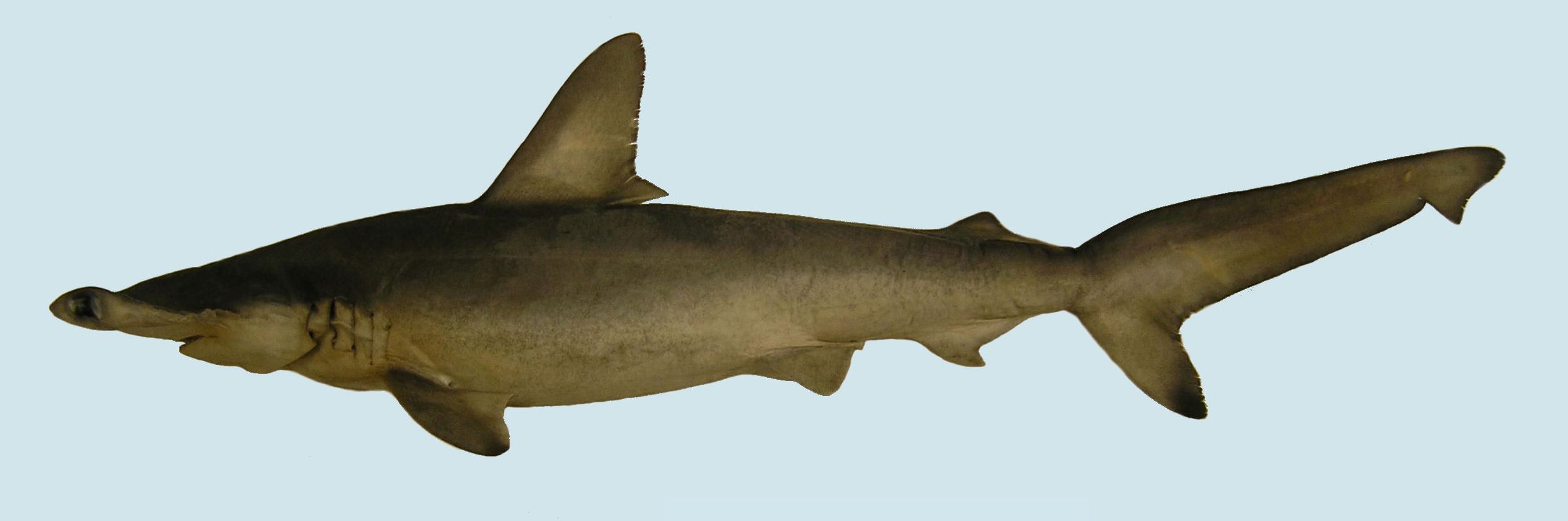
In the year 2000, Dr. William Driggers, now of the National Marine Fisheries Service’s Southeast Fisheries Science Center in Mississippi, was sampling for sharks in South Carolina. Dr Driggers recalls that “at the time I was collecting samples from various species of sharks for life history studies and also collecting tissues for Dr. [Joseph] Quattro’s genetics work.” Dr. Quattro, a professor at the Marine Science Program and Department of Biological Sciences at the University of South Carolina, had been working on a project to characterize the population genetics of fish in South Carolina by “working my way down river systems to the coast,” he told me. “Even sturgeons were showing population differentiation, so I thought the next animal would be marine, but estuarine dependent – sharks.” Analysis of the samples Dr. Driggers collected led to a surprising result.

“I was asked “what are the chances that I would misidentify a ‘scalloped hammerhead’ and answered that there was no chance as they are very morphologically distinctive (looks like I was wrong),” Dr. Driggers told me. “I was then informed that genetic sequences indicated that some of the specimens I had labeled as ‘scalloped hammerhead’ were distinctly different from known S. lewini sequences. At Dr. Quattro’s request, I began bringing back whole specimens so they could be archived and morphometric analyses conducted. The first whole specimen that was vouchered and shown to be the new species was collected in Bulls Bay in July of 2001.”


In 2006,  Dr. Quattro and his team published a paper entitled “Genetic evidence of cryptic speciation within hammerhead sharks,” showing that there may be a previously-unknown species hiding within scalloped hammerheads. When genetic samples of scalloped hammerheads, great hammerheads, and bonnethead sharks were phylogenetically mapped, the team found an unexpected result. Dr. Quattro, told me that “while doing the population genetics of this animals, we found two divergent genetic lineages within what were morphologically scalloped hammerheads.  We gathered sequences and specimens from other known species and didn’t find a match – that’s what got us on the whole cryptic species [defined by Bickford et al. 2007 as “two or more distinct species erroneously classified and hidden under one species name”] thing.”

Read More “What does the new species of hammerhead mean for shark science and conservation?” »

What can the funniest shark memes on the internetz teach us about ocean science and conservation?

Posted on November 8, 2013November 11, 2013 By David Shiffman 4 Comments on What can the funniest shark memes on the internetz teach us about ocean science and conservation?
Conservation, Science

In recent years, some of my favorite ocean predators have started to show up in memes. As part of our tradition of using internet humor to educate our readers, I’ve selected the funniest shark memes on the internetz, and I’ve tried to explain what’s going on in the photos used for those memes. I’m happy to discuss these science and conservation issues in the comments if you have any questions, but my selection of what constitutes that funniest shark memes  is obviously correct and beyond dispute.

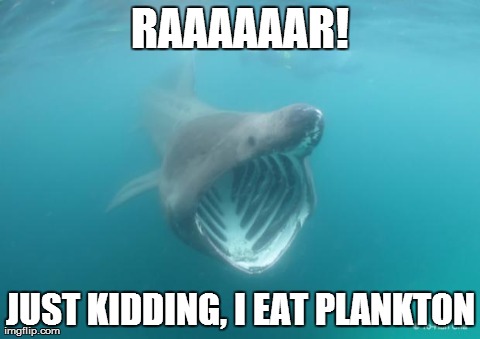
12) Ferocious planktivore is ferocious

4d7m1

Original image source: Flickr user Yohancha.
What’s going on? This shows a basking shark, the second largest shark in the world, with its mouth open wide. While this gaping maw may appear to be menacing, like whale sharks, the basking shark is a strict planktivore.

Read More “What can the funniest shark memes on the internetz teach us about ocean science and conservation?” »

10 components of a sustainable shark fishery, and how you can help implement them

Posted on November 7, 2013November 7, 2013 By David Shiffman 1 Comment on 10 components of a sustainable shark fishery, and how you can help implement them
Conservation, Science

x3170e00In 1999, government officials from all over the world gathered in Rome for a meeting of the United Nations Food and Agricultural Organization’s Committee on Fisheries. The Committee meets every two years,  but one of the numerous outputs of this meeting was particularly significant, at least for sharks. Based on years of consultation and discussion by experts, the group agreed on a formal set of general principles that should make up sustainable and well-managed shark fisheries.

These 10 principles, part of a larger International Plan of Action for Sharks (IPOA-Sharks) , have helped shape more than a decade of scientific research and management priorities for the chondrichthyan fishes. When properly implemented and enforced, they allow people to use sharks (and rays and skates and chimeras, included in the IPOA-Sharks definition of “sharks”) as a natural resource while keeping populations healthy and allowing depleted stocks to recover.

According to the IPOA-Sharks, a national shark plan should aim to:

Read More “10 components of a sustainable shark fishery, and how you can help implement them” »

CNN is airing “Blackfish” Thursday at 9. Watch with us and join the live twitter chat!

Posted on October 23, 2013October 27, 2013 By David Shiffman 2 Comments on CNN is airing “Blackfish” Thursday at 9. Watch with us and join the live twitter chat!

On Thursday, October 24th at 9:00 P.M. eastern time, CNN will be airing Blackfish, the critically-acclaimed documentary about orca whale captivity and SeaWorld. Be sure to check out Southern Fried Science’s review (and fact-check) of the film. Blackfish will be followed by a live debate at 11:00 hosted by Anderson Cooper. The debate will feature … Read More “CNN is airing “Blackfish” Thursday at 9. Watch with us and join the live twitter chat!” »

Welcome back, U.S. government science and environment agencies!

Posted on October 17, 2013October 27, 2013 By David Shiffman

On October 17th, after a 16 day shutdown, the U.S. government re-opened. Here are what the twitter accounts from U.S. science and environment agencies had to say on their first day back. I’ll continue to update this throughout the day as more twitter accounts come back online

Read More “Welcome back, U.S. government science and environment agencies!” »

An apology for my post on activists’ response to hotel guests eating a shark

Posted on September 30, 2013October 27, 2013 By David Shiffman 7 Comments on An apology for my post on activists’ response to hotel guests eating a shark
Blogging

davesquare

Last week, in response to a viral image of hotel guests eating a shark, I wrote a post explaining why I felt that the response from many in the activism community was disproportionate to the degree of the problem represented by that photo (and how other more serious problems got much less attention). Based on feedback I received from people who have read the post, the points I was trying to make were lost among my exasperated, and sometimes hostile, tone. This is my fault as a writer and not yours as a reader. I am writing this follow-up post to both briefly explain what I was trying to say and to apologize for not saying it well. Additionally, like all blog posts, this represented a personal opinion and not any sort of official consensus statement  from the scientific community, though I often consult with leaders of the scientific community when writing posts.

This was the first blog post in a very long time that I wrote in the proverbial “heat of the moment,” in the midst of a long argument with activists on Facebook and twitter. The discussion went way outside of the boundaries of polite conversation, and I received numerous personal attacks and a few threats. The hotel owners and the people who ate the shark in the photo also received plenty of threats, though all of the threatening tweets seem to have now been deleted. In short, I was exasperated.  I was in “argument mode” and not “educator mode”.

This was also the first blog post in a very long time that I published the day it was written. I normally like to leave a post alone for a day or two after writing it before looking it over again. I will often have other Southern Fried Science writers or scientific colleagues read posts before I publish them. That did not happen in this case.  I say all of this not to excuse my error, but to explain it.

Additionally, I was not saying that people eating a large Threatened species is totally insignificant. Many shark populations are being overfished, which is a big problem, and consumption is part of that problem. The point I tried to make was that he level of attention that this incident received was disproportionate to the level of threat it represented, that other issues  that are much more serious get much less attention, and that some of the tactics that activists used in this case were inappropriate and even harmful.

People felt that I was mocking, belittling, or insulting activists who felt that a photo of resort guests eating a shark represented a major conservation issue. That was not my intent and I truly apologize for presenting myself in that way.

Read More “An apology for my post on activists’ response to hotel guests eating a shark” »

A photo of people eating a shark is upsetting activists for some silly reason

Posted on September 26, 2013September 30, 2013 By David Shiffman 42 Comments on A photo of people eating a shark is upsetting activists for some silly reason
Conservation, Science

davesquare

Photo via activist Andy Gray on Facebook, original photographer unknown

A photo of a single thresher shark being served for dinner at a resort is making the rounds among shark conservation activists. The photo, shown on the right, has been shared more than 12,000 times. A petition written in response to the image  (in French) has over 1,000 signatures. The story has even made it into the mainstream media. The original caption refers to this scene as “shameful and disgraceful”, while follow-up comments refer to it as “shocking,” “sickening,” “disgusting,” “beyond words,” “shameful,” and “barbaric.”  12,000 shares and a 1,000 signature petition is significantly more outrage than I’ve ever seen for any issue involving a single individual shark. Why, exactly, are activists so upset about it?

It can’t simply be reaction to the death of a single shark. If you believe that no sharks should be eaten ever (or that no animals should be eaten ever), that’s a perfectly valid belief system. You should be (and likely are) aware, however, that the overwhelming majority of the world, including almost all governments, the majority of the scientific community, and many NGOs, completely disagree with you. People have encountered photos of individual sharks being killed before, or pictures of sharks on a menu or for sale in grocery stores, and not reacted this strongly.

It likely isn’t the species of shark in question, either. This shark is either a pelagic thresher or a common thresher, and while both are considered Vulnerable to extinction by the IUCN Red List, they’re common components of shark fisheries. Thresher fisheries in U.S. waters are considered well managed (and that population is only “Near-Threatened”). Some of the comments say that “sharks are an endangered species,” which is nonsense, as there are over 500 species of sharks and most are not even Threatened. Regardless, a single individual animal doesn’t impact the population in any significant way.

Read More “A photo of people eating a shark is upsetting activists for some silly reason” »

Dolphin intelligence researcher did not say that dolphins aren’t intelligent as Daily Mail, Sunday Times claim

Posted on September 12, 2013October 27, 2013 By David Shiffman 11 Comments on Dolphin intelligence researcher did not say that dolphins aren’t intelligent as Daily Mail, Sunday Times claim
Science

davesquare

A screen capture of the Daily Mail's headline for this article
A screen capture of the Daily Mail’s article headline

Earlier this week, the Daily Mail ran an article which claimed that dolphins are not as intelligent as is commonly believed. The crux of this provocative argument comes from an interview with Dr. Justin Gregg, a research associate with the dolphin communication project who studies social cognition.

According to the Daily Mail article, Justin Gregg said, “Dolphins are fascinating in their own right, but in terms of intelligence they are nowhere near as special as they have been portrayed…they are less sophisticated than chickens.” In an editorial that was likely the source of the Daily Mail article, the Sunday Times claims that he said “Not only are dolphins dimmer than the average chicken, says Justin Gregg, a zoologist, but they are also capable of gang rape and acts of violence. So don’t be taken in by those winning smiles.”

Unsurprisingly, this article has ruffled some feathers in the marine mammal researcher community.

Read More “Dolphin intelligence researcher did not say that dolphins aren’t intelligent as Daily Mail, Sunday Times claim” »

One month until ScienceOnline Oceans: Here’s what you need to know!

Posted on September 11, 2013October 27, 2013 By David Shiffman

davesquare sciooceansScienceOnline Oceans starts on October 11th, one month from today! Here’s what you need to know in order to make the most of the meeting.

1) There are still spots available! If you’ve been considering attending (or if you are already planning attending and know others who might be interested), there are still spots available! The conference registration fee remains $150 for students and $200 for others. Register here.

2) Make your hotel reservation this week!  If you haven’t yet made your hotel reservation, you need to do it THIS WEEK! We strongly recommend staying at the conference hotel, as bus transportation to conference events and field trips is to and from the hotel. Additionally, the hotel bar is the evening social gathering place for the conference. We consider time at the hotel as part of the conference! You don’t need to pay at the time you make the reservation, you pay when you check out.

Information about hotel reservations can be found here: http://oceans.scienceonline.com/hotel-information/
If you do not reserve before the weekend, then
  • you may not be able to get a room at the conference rate
  • you may not be able to get a room at all, and, most importantly
  • ScienceOnline is financially responsible for paying for the rooms we contracted for (if we don’t get enough reservations)!
There is also a roomshare Wiki: http://sciooceans.wikispaces.com/Roomshare

**Please note that if you are planning on participating in a Friday afternoon workshop, it may be easier to fly in Thursday night, and if you are participating in a Sunday field trip, it may be easier to fly home Monday morning. A limited number of hotel rooms are available at the conference rate on both Thursday and Sunday evening.**

Read More “One month until ScienceOnline Oceans: Here’s what you need to know!” »

The Pizza of Privilege: My Experiences with Anti-Semitism in Academia

Posted on August 22, 2013October 27, 2013 By David Shiffman 45 Comments on The Pizza of Privilege: My Experiences with Anti-Semitism in Academia
Science

davesquare

Anti-Semitic graffiti similar to this has been found on U.S. universities. This comes from a private residence in New York. Photo credit: Alex Silverman/WCBS 880.

Since I joined Southern Fried Science in 2009, I’ve written almost 1,000 blog posts. This post has unquestionably been the most difficult one for me to write. Although I’ve always enjoyed sharing and debating my opinions (even when they’re unpopular in certain circles,) I’ve never been comfortable discussing negative personal experiences. And yet, I feel that the topic of anti-Semitism in academia , something that is in fact much more pervasive than most non-Jews believe, is too important for me to remain silent any longer. More than 40% of Jewish students reported being the victim of some degree of anti-Semitism at their college or university. This can range from mockery to exclusion to  the Michigan State student who was beaten while his attackers made the Nazi salute last summer.

I want to state upfront that it is not my intention in writing this post to start a “which minority group is the most oppressed” competition, nor am I naive enough to believe that my post will be the proverbial straw that breaks the camel’s back and fixes these issues once and for all. I also want to state that while I could write a whole book about my experiences with anti-Semitism in the context of my personal pro-Israel advocacy, this post is not about that, other than to say that while not all criticism of Israel and Israel’s policies and actions can be considered anti-Semitic in nature, some of it certainly can.  Finally, it’s important to note that while not all of these examples are necessarily anti-Jewish specifically, all are anti-someone-different-from-me and contrary to a culture of diversity and inclusiveness. My goal is simply to continue an important and ongoing conversation about academic culture by sharing my personal experiences, and perhaps to bring another group into that conversation.  Please feel free to share your own experiences in the comments section.

Read More “The Pizza of Privilege: My Experiences with Anti-Semitism in Academia” »

Posts pagination

Previous 1 … 27 28 29 … 68 Next

Popular Posts

The next OpenCTD is here!The next OpenCTD is here!June 22, 2026Andrew Thaler
What Ocean Ramsey does is not shark science or conservation: some brief thoughts on "the Shark Whisperer" documentaryWhat Ocean Ramsey does is not shark science or conservation: some brief thoughts on "the Shark Whisperer" documentaryJuly 2, 2025David Shiffman
Undermining the Law of the Sea. Some additional thoughts following my OpEd in the Hill.Undermining the Law of the Sea. Some additional thoughts following my OpEd in the Hill.June 22, 2026Andrew Thaler
What is a Sand Shark?What is a Sand Shark?November 12, 2017Chuck Bangley
The story of the pride flag made from NASA imagery: Bluesky's most-liked imageThe story of the pride flag made from NASA imagery: Bluesky's most-liked imageSeptember 27, 2024David Shiffman
Tagging Bull Sharks in the Neuse RiverTagging Bull Sharks in the Neuse RiverAugust 4, 2011Guest Writer
That's not a blobfish: Deep Sea Social Media is Flooded by AI SlopThat's not a blobfish: Deep Sea Social Media is Flooded by AI SlopDecember 19, 2025Andrew Thaler
Our favorite sea monsters – Ningen (#4)Our favorite sea monsters – Ningen (#4)September 7, 2010Andrew Thaler
Rice’s whale and the curious case of the disappearing species.Rice’s whale and the curious case of the disappearing species.June 25, 2026Southern Fried Science
Shark of Darkness: Wrath of Submarine is a fake documentaryShark of Darkness: Wrath of Submarine is a fake documentaryAugust 10, 2014Michelle Jewell
Subscribe to our RSS Feed for updates whenever new articles are published.

We recommend Feedly for RSS management. It's like Google Reader, except it still exists.

Southern Fried Science

  • Home
  • About SFS
  • Authors
  • Support SFS


If you enjoy Southern Fried Science, consider contributing to our Patreon campaign.

Copyright © 2026 Southern Fried Science.

Theme: Oceanly Premium by ScriptsTown