Skip to content

Southern Fried Science

Over 15 years of ocean science and conservation online

  • Home
  • About SFS
  • Authors
  • Support SFS

Author: David Shiffman

Breaking News! “Most Comprehensive Estimate of Mortality”: Between 63 and 273 Million Sharks Killed Each Year

Posted on March 1, 2013March 1, 2013 By David Shiffman 10 Comments on Breaking News! “Most Comprehensive Estimate of Mortality”: Between 63 and 273 Million Sharks Killed Each Year
Conservation, Science

davesquare

A new study* has estimated that the total number of sharks killed by fisheries each year is between 63 and 273 million, with a average of approximately 100 million.In an interview, lead author Dr. Boris Worm explains the importance of this estimate:

“This is by far the most comprehensive estimate of shark mortality yet,” he said,  “because we consider all sources of mortality, from direct fishing, finning, and discard mortality. the estimate was derived by crunching numbers from almost 100 publications on the catches and mortality of sharks.”

Of all the numbers this team crunched, the most important thing to consider is whether the exploitation rate is greater than the rebound rate. In other words, is this level of exploitation more than the populations can recover from? Though many estimates and approximations went into calculating these figures, it seems quite clear that sharks are being harvested at an unsustainable rate.


Read More “Breaking News! “Most Comprehensive Estimate of Mortality”: Between 63 and 273 Million Sharks Killed Each Year” »

How to make a completely useless online environmental petition in 5 easy steps

Posted on February 26, 2013 By David Shiffman 21 Comments on How to make a completely useless online environmental petition in 5 easy steps
Conservation

Sites like Care2 and Causes, for better or for worse, make it easier than ever to write and distribute petitions
Sites like Care2 and Causes, for better or for worse, make it easier than ever to write petitions

Online petitions have become a popular tool of the conservation movement. A well-written petition can be an important tool for helping to shape policy, particularly when used as part of a larger and well-organized lobbying and advocacy campaign. Many petitions, however, are so badly written as to be ineffective or even counterproductive when it comes to influencing real policy change. Even worse, they falsely perpetuate the idea that an activist has “done something” about the problem, which may prevent them from participating in a process that could result in real change.

In case you want to join the numerous  activists who are filling my Facebook news feed and e-mail inbox with useless petitions, here is an easy 5 step guide for you to to follow, using examples from some real petitions I’ve been asked to sign.

A note on terminology: Petitions typically contain a few basic elements, which I term here “the problem”, “the target”, and “the solution”. The problem briefly describes the undesirable situation that the petition hopes to remedy. The target is who the petition is directed at. The solution is what should be done about the problem.

Read More “How to make a completely useless online environmental petition in 5 easy steps” »

The most preventable shark attack of all time?

Posted on February 19, 2013February 19, 2013 By David Shiffman 5 Comments on The most preventable shark attack of all time?
The most preventable shark attack of all time?
Science

davesquare

I don’t often cover shark attacks here at Southern Fried Science. They get plenty of news coverage on their own, they’re usually not that relevant from a science and conservation perspective, and they are outside of my expertise and interests. However, some shark attack stories, such as this one, transcend “if it bleeds, it leads” fearmongering journalism and are interesting in their own right.

I’d like to preface this story by saying that shark attacks are extremely rare to begin with (you have a 1 in 5 chance of dying from heart disease and a 1 in 3.8 million chance of being killed by a shark in the United States). If you want to further minimize your chance of being attacked by a shark, most of the few attacks that occur can be prevented by simply swimming close to shore with lots of other people nearby during the day. Even though shark attacks are rare, I still don’t want to minimize the suffering of the few attack victims and their families. With these caveats out of the way, presented below is the fascinating story of what is probably the most preventable shark attack of all time.

Read More “The most preventable shark attack of all time?” »

50 Shades of Grey Reef Shark: A Valentine’s Day Special Report on Shark Sex (With Pictures! And Video!)

Posted on February 13, 2013February 13, 2013 By David Shiffman 5 Comments on 50 Shades of Grey Reef Shark: A Valentine’s Day Special Report on Shark Sex (With Pictures! And Video!)
50 Shades of Grey Reef Shark: A Valentine’s Day Special Report on Shark Sex (With Pictures! And Video!)
Science

davesquare

As many of our readers prepare for a romantic evening with their special someone (or a Single’s Awareness Day celebration with friends), I invite you to take a few minutes and learn how our toothy friends in the ocean do it. And by “do it”, I mean “do it”. Here are 10 things you might not have known about shark sex.

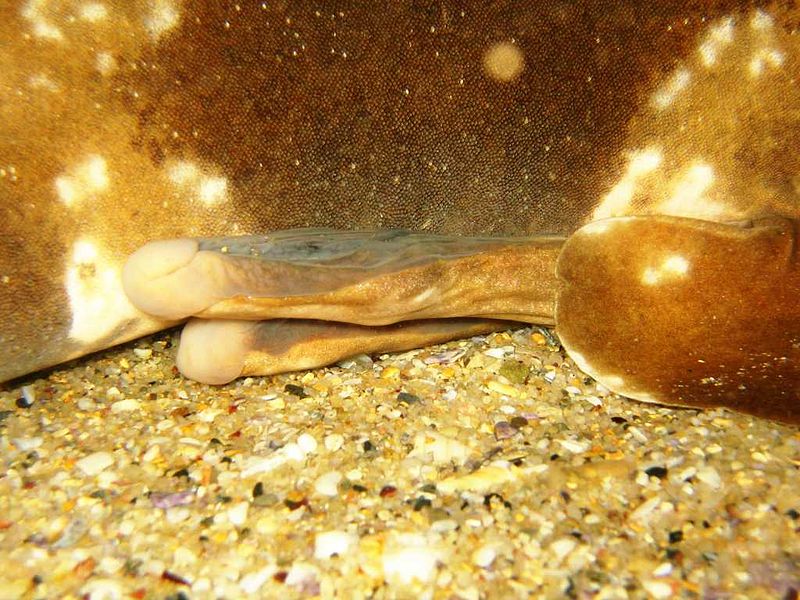
1) Sharks have external reproductive organs. A male shark has reproductive organs called “claspers” (yes, there are two of them), and females have a “cloaca”. As I regularly tell the high school students who join us for shark research trips, even if you don’t have a degree in marine biology, you’ll quickly recognize what you’re looking at.

A closeup of claspers (male reproductive organs) on a spotted Wobbegong shark. Photo credit: Richard Ling, WikiMedia Commons

Read More “50 Shades of Grey Reef Shark: A Valentine’s Day Special Report on Shark Sex (With Pictures! And Video!)” »

Introducing ScienceOnline: Oceans!

Posted on February 1, 2013October 27, 2013 By David Shiffman 10 Comments on Introducing ScienceOnline: Oceans!

I am thrilled to officially announce Science Online: Oceans, which will take place in Miami this October! ScienceOnline: Oceans is affiliated with the North Carolina based ScienceOnline organization and meeting, and we hope to incorporate much of what makes those meetings so special, but there is one key difference that regular ScienceOnline attendees should be aware of. ScienceOnline: Oceans will focus exclusively on ocean science and conservation (and, of course, how these topics relate to the internet and social media).

scio_oceans

Who can attend? Anyone! Any interested scientist, journalist, student, blogger, communicator, activist, or member of the public is welcome.  Due to logistical limits, we will have to cap total attendance at 200 (previously it was 150), including organizers, presenters, and attendees. Registration will open in March, stay tuned!

Read More “Introducing ScienceOnline: Oceans!” »

More than 100 marine scientists call for protecting the deep sea from trawling. Will you join us?

Posted on January 28, 2013January 28, 2013 By David Shiffman 8 Comments on More than 100 marine scientists call for protecting the deep sea from trawling. Will you join us?
Conservation, Science

davesquare

The least-impacted places in the ocean are mainly in the deep sea, but as fishing technology has improved, even seamounts, sponge gardens and deep-sea coral beds are no longer out of reach of our appetites for seafood. Bottom trawling, which involves dragging a heavy weighted net along the seabed, is so destructive to benthic habitats that it has been compared to clear-cutting a forest.  Bottom gillnetting catches almost anything that swims into them (and isn’t smaller than the mesh size), resulting in enormous levels of bycatch.

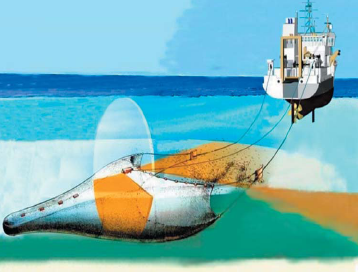
A (simplified) schematic of a bottom trawl. This one (on the NOAA vessel Henry Bigelow) is used for scientific sampling, not fishing, but it's the same principle on a smaller scale. Image via Wikimedia Commons
A (simplified) schematic of a bottom trawl. This one (on the NOAA vessel Henry Bigelow) is used for scientific sampling, not fishing, but it’s the same principle on a smaller scale.                  Image via Wikimedia Commons


The deep-sea fishing fleet of the European Union is one of the largest in the world, which is why it was so heartening to see the European Commission call for a phase-out of trawls and bottom gillnets recently. The Marine Conservation Institute, a longtime leader in marine protected areas, has obtained over 100 signatures (including mine) from marine scientists supporting a phase-out of bottom trawls and bottom gillnets by the EU fishing fleet. If you are a scientist who supports this measure, please consider adding your signature. This can be done by e-mailing DeepSeaTrawlPetition@Marine-Conservation.org and including your name, institutional affiliation, degree, title, and full mailing address. Please note that MCI is primarily interested in signatures from the scientific community, and that simply posting a comment on this blog post is not equivalent to signing the petition.However, feel free to post a comment letting us know that you contacted MCI!

mci-logo

The full text of the petition can be seen after the jump:

Read More “More than 100 marine scientists call for protecting the deep sea from trawling. Will you join us?” »

How to tell if a “shark in flooded city streets after a storm” photo is a fake in 5 easy steps

Posted on January 23, 2013August 28, 2017 By David Shiffman 3 Comments on How to tell if a “shark in flooded city streets after a storm” photo is a fake in 5 easy steps
Popular Culture, Science


The combination of increasing extreme weather and social media has created, if you’ll pardon the pun, a perfect storm for sharing photos that show post-hurricane devastation (both real and fake). Many of them take the form of of a shark swimming through flooded city streets. For better or for worse, I’m known as “the shark guy” among my friends and family, which means that every time one of these pictures pops up, I get it e-mailed to me on the order of 50-100 times.

With the hopes of lightening my inbox and edu-ma-cating our loyal readers, presented below is a simple guide to determine if any given “shark after the storm” photo is fake.

1) Use your vast knowledge of shark biology to determine if a shark that size of that species could possibly be in water that deep.

puertorico

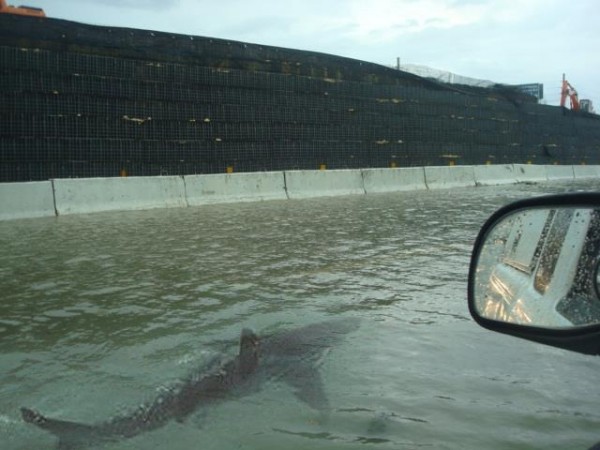
The image above was one of the first “shark after a storm” pictures to go viral. It claimed to show a great white shark swimming through the flooded streets of Puerto Rico after Hurricane Irene in 2011. Take a look at how high the car’s side view mirror is above the water. That means the water level, while more than high enough to be destructive to cars and buildings, is not nearly high enough for a shark of that size to be comfortably swimming in. Also, great white sharks are not typically found in the Caribbean in August.

Read More “How to tell if a “shark in flooded city streets after a storm” photo is a fake in 5 easy steps” »

An interview with Kool Kid Kreyola of “Me and My Shark Fin”

Posted on January 14, 2013 By David Shiffman 1 Comment on An interview with Kool Kid Kreyola of “Me and My Shark Fin”
Uncategorized

davesquareLast summer, shark conservation got an interesting new voice. Kool Kid Kreyola, a California-based painter and musician, took the ocean twitterverse by storm with “Me and My Shark Fin”. This video, a clever parody of Jay Z and Beyonce’s “Bonnie and Clyde” , told the story of shark fin soup… from the perspective of a shark.

Kreyola agreed to participate in an interview with me. If you have any follow-up questions, please post them in the comments section below, and I’ll make sure that he sees them.

Read More “An interview with Kool Kid Kreyola of “Me and My Shark Fin”” »

Submit your short ocean-themed movie to the Beneath The Waves Film Festival

Posted on January 8, 2013 By David Shiffman

The Beneath The Waves Film Festival is accepting submissions for the 2013 event. Now in it’s fourth year, Beneath the Waves encourages dialogue and networking between documentary filmmakers, conservationists, and scientists. As in past years, the film festival is associated with the Benthic Ecology conference, which is taking place March 20th-23rd in Savannah, Georgia. There will … Read More “Submit your short ocean-themed movie to the Beneath The Waves Film Festival” »

13 wrong things about sharks that conservation advocates should stop saying in 2013 (and what they should say instead)

Posted on December 27, 2012December 27, 2012 By David Shiffman 64 Comments on 13 wrong things about sharks that conservation advocates should stop saying in 2013 (and what they should say instead)
Conservation, Science

davesquare

While the rest of the scientific and management community and I are grateful for the passionate support of many shark conservation advocates, passion is no substitute for knowledge and accuracy.  Some conservation issues are a matter of opinion and can (and should) be reasonably be discussed by people with different views, but many others are a matter of fact. Presented here, in no particular order, are 13  incorrect statements and arguments commonly made by well-intentioned but uninformed shark conservation advocates, along with the reality of the situation.

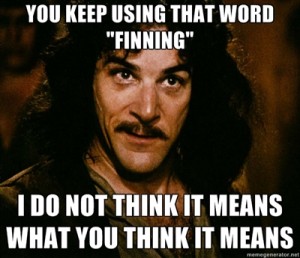
From MemeGenerator.net

1) “Shark finning” is synonymous and interchangeable with “the global shark fin trade.” Shark finning is a specific fishing method. It is not the only way to catch sharks, and it is not the only way to provide shark fins for the global fin trade. Stopping shark finning is a worthy goal (that has largely been accomplished already *) because it is a wasteful and brutal fishing method that complicates management, but stopping shark finning does not stop the global shark fin trade. Many people calling for a ban on finning really seem to want no shark fishing and no fin trade of any kind (a viewpoint I disagree with, but regardless, proper terminology matters). For more on the difference between shark fishing and shark finning, see this post from June 2012.

2) 100 million sharks a year are killed for their fins. The origin of this number is still debated, but it was popularized by Sharkwater. While we will likely never know exactly how many sharks are “killed for their fins”, the best scientific estimate of the scope of the fin trade we have comes from a 2006 paper by Dr. Shelley Clarke. She found that the fins of between 26 and 73 million sharks end up in the fin trade each year, with a simulation average of 38 million.  Dr. Clarke wrote an essay for SeaWeb on the misuse of her work, which is worth a read.

3) 1 in 3 species of sharks face extinction. This one is actually relatively close to accurate, and can be fixed with the addition of just two words. An IUCN Shark Specialist Group report found that 1 in 3 species of “open ocean” sharks are Threatened with extinction (Threatened means Vulnerable, Endangered or Critically Endangered according to IUCN Red List standards). 1 in 6 species of shark, skate, ray, or chimera are Threatened- while still a troubling number indicative of a very bad situation, it’s half as bad as claimed by many advocates. Also, please note that I included skates and rays, which are similarly threatened but often ignored by conservation advocates (with one notable exception from 2012).

Read More “13 wrong things about sharks that conservation advocates should stop saying in 2013 (and what they should say instead)” »

Posts pagination

Previous 1 … 32 33 34 … 69 Next

Popular Posts

At least 74 practicing shark researchers: How a silly thing I said online raised thousands for conservationAt least 74 practicing shark researchers: How a silly thing I said online raised thousands for conservationFebruary 26, 2025David Shiffman
Why the new Trump order to shoot wolves is both illegal and a dreadful precedent for endangered speciesWhy the new Trump order to shoot wolves is both illegal and a dreadful precedent for endangered speciesSeptember 5, 2026Ali Gaster
The Trump Administration’s latest attack on endangered speciesThe Trump Administration’s latest attack on endangered speciesSeptember 17, 2026Ali Gaster
How to build a canoe from scratch on a graduate student stipendHow to build a canoe from scratch on a graduate student stipendApril 17, 2010Andrew Thaler
That's not a blobfish: Deep Sea Social Media is Flooded by AI SlopThat's not a blobfish: Deep Sea Social Media is Flooded by AI SlopDecember 19, 2025Andrew Thaler
What is a Sand Shark?What is a Sand Shark?November 12, 2017Chuck Bangley
What Ocean Ramsey does is not shark science or conservation: some brief thoughts on "the Shark Whisperer" documentaryWhat Ocean Ramsey does is not shark science or conservation: some brief thoughts on "the Shark Whisperer" documentaryJuly 2, 2025David Shiffman
When is a take not a take? Yet another attack on Endangered Species by the Trump AdministrationWhen is a take not a take? Yet another attack on Endangered Species by the Trump AdministrationSeptember 22, 2026Ali Gaster
I'm a scientist. A social scientist. Please opine on the validity of my discipline.April 4, 2013Bluegrass Blue Crab
Shark of Darkness: Wrath of Submarine is a fake documentaryShark of Darkness: Wrath of Submarine is a fake documentaryAugust 10, 2014Michelle Jewell
Subscribe to our RSS Feed for updates whenever new articles are published.

We recommend Feedly for RSS management. It's like Google Reader, except it still exists.

Southern Fried Science

  • Home
  • About SFS
  • Authors
  • Support SFS


If you enjoy Southern Fried Science, consider contributing to our Patreon campaign.

Copyright © 2026 Southern Fried Science.

Theme: Oceanly Premium by ScriptsTown