Skip to content

Southern Fried Science

Over 15 years of ocean science and conservation online

  • Home
  • About SFS
  • Authors
  • Support SFS

Author: David Shiffman

“Sharks create oxygen”: A scientific perspective

Posted on February 10, 2012 By David Shiffman 14 Comments on “Sharks create oxygen”: A scientific perspective
Conservation, Science

I want to apologize to our regular readers for stating something that should be incredibly obvious. Sharks in in no way connected to the global supply of atmospheric oxygen. If every single species of shark went extinct, there would be a variety of negative ecological effects, but a reduction in the global supply of atmospheric oxygen would not be among them. There is not a shred of scientific evidence supporting the idea that the loss of sharks would affect our oxygen supply- not a single scientific paper, not a single technical report. I’ve attended a dozen scientific conferences focusing on marine ecology or shark biology (including three international conferences) and I’ve never seen or heard of anyone presenting or even discussing this. To the best of my knowledge, not a single person who has authored a scientific paper or technical report supports this idea. Despite the complete lack of any kind of credible evidence, and despite many recent blog posts thoroughly debunking it (see here here here here here here and here ), this pseudoscience  just won’t die.

The premise of the sharks and oxygen claim is as follows:

Read More ““Sharks create oxygen”: A scientific perspective” »

Core Themes for 2012: Focus on nuance

Posted on January 30, 2012January 31, 2012 By David Shiffman
Uncategorized

One of the main advantages of blogs is that they allow knowledgeable parties to write in detail about their area of expertise. Information can now come directly from experts to the interested public.  This provides an  opportunity for those directly involved in an issue to provide context to (and details of) a story. Here at Southern Fried Science, we strive to provide deeper background in topics in which we are knowledgeable, focusing not only on the broader context but on the subtle nuance.

Read More “Core Themes for 2012: Focus on nuance” »

Core themes of 2012: Underrepresented issues in marine science and conservation

Posted on January 26, 2012 By David Shiffman 3 Comments on Core themes of 2012: Underrepresented issues in marine science and conservation
Uncategorized

One of the many unfortunate consequences of the decline in traditional media has been a reduction in science reporting. The formerly great CNN science unit closed in 2008, followed soon after by the health and science page of the Boston Globe. Alarmingly few trained science journalists are left, and people without proper training are being asked to cover the few science stories that still make it on the air ( I was once interviewed about shark research by the weatherman from CNN’s “American Morning”).  With few exceptions, science and conservation stories are no longer considered a priority to the major news networks and newspapers. However, science is no less important to our everyday lives.

Read More “Core themes of 2012: Underrepresented issues in marine science and conservation” »

How to live-tweet a conference: A guide for conference organizers and twitter users

Posted on January 17, 2012January 17, 2012 By David Shiffman 8 Comments on How to live-tweet a conference: A guide for conference organizers and twitter users
Science

Attending scientific conferences is one of my favorite parts of my job. I get to travel to interesting places (and Mobile, Alabama), catch up with colleagues, learn about what smart people all over the world are up to, and get feedback on my own research from those smart people. Conferences help me to learn about the world, network with people in my field, and become a better scientist. To date, I’ve attended 13 conferences (including 3 international ones), and I learn something new at each one.

There are a lot of non-scientists in the world who care about many of the issues discussed at scientific conferences, issues like climate change, endangered species, overfishing, and cool new discoveries about sharks. The overwhelming majority of these non-scientists lack the resources or the time to attend conferences, and many might not even know that they’re happening. In many cases, increased public awareness of a conservation issue is exactly what’s needed to help fix the problem. If the interested public can’t attend conferences and the mainstream media doesn’t typically cover them, how can we get the word out?

Image courtesy twitter.com, used with permission

Part of the answer is social media, the so-called Web 2.0 technologies that simultaneously make it easier than ever before in human history for people to share information with the world (without traditional gatekeepers like the mainstream media), and make it easier than ever before in human history for people to find information about topics they care about. One social media tool that lends itself particularly well to sharing information from a conference is twitter, and live-tweeting conferences is a growing trend. For the purpose of this post, I define live-tweeting (henceforth simply “tweeting”) as simply tweeting about conference presentations and events. This tweeting can take place during the actual conference presentation (in several cases, I’ve been able to relay a question to a presenter from one of my twitter followers during the official question and answer period associated with a presentation), but doesn’t necessarily have to be. At one conference, I simply took notes on talks and tweeted about them later- the only disadvantages of this strategy are that you can’t relay questions from your followers to the presenters and you may be discussing the same topic at a different time as other twitter users.

Presented below is a guide for conference organizers to promote conference tweeting, and a guide for interested twitter users to use the tool to maximum effect. The guide is with specific reference to getting important information from a conference to the interested non-scientist not-present-at-the-conference public. There are many other goals for conference tweeting (taking notes on a conference primarily for personal use, sharing important technical information with colleagues in your field, etc), and the strategies and suggestions below may not be appropriate for these goals.

Read More “How to live-tweet a conference: A guide for conference organizers and twitter users” »

Get marine conservation into the national political conversation with Americans Elect!

Posted on January 12, 2012 By David Shiffman
Conservation

In response to the partisan gridlock in Washington DC, a group called Americans Elect hopes to “open up the political process”. This organization, founded by heavy hitters from both parties, is using the internet to allow anyone registered to vote in the United States, regardless of political affiliation, to nominate candidates for President of the United States. An online convention in June, which every registered Americans Elect user can participate in, will determine the nominee. who will be on official ballots in every state alongside Barack Obama and the Republican nominee (probably Romney but we’ll see).

Additionally, any registered Americans Elect user can propose a question. The top questions, as voted on by all other Americans Elect users, will have to be answered by any potential candidate. These top questions, and the Americans Elect candidates’ responses to them, will undoubtedly attract national media coverage. Presently, most of the top questions are about the economy and foreign policy. None focus on the oceans.

I have submitted a series of marine conservation questions, and I need your help to get them enough votes to earn them “top question” status and get marine conservation into the national political conversation! If you are registered to vote in the United States, please consider registering for Americans Elect and voting for these questions.

Read More “Get marine conservation into the national political conversation with Americans Elect!” »

New app: Learn about great white sharks while supporting research

Posted on January 11, 2012 By David Shiffman 4 Comments on New app: Learn about great white sharks while supporting research
Science

Earlier today, the Marine Conservation Science Institute launched a new iPhone and iPad app focusing on great white sharks. The app, called Expedition White Shark , includes numerous features that let users learn more about these amazing animals.

A game (called “Shark Life”) lets you learn about the life history of great white sharks by controlling a virtual baby great white. Users explore the marine environment near Southern California white eating fish and avoiding threats like gillnets and pollution.

A “news” interface lets you keep up to date on some of the latest exciting discoveries the Marine CSI team makes, and you can learn more about great whites from the “facts” tab. The app also includes numerous photos and videos of great whites and the research team in action.The coolest feature this app contains, however, is the ability to track satellite-tagged great whites.

Read More “New app: Learn about great white sharks while supporting research” »

What hybrid sharks mean (and don’t mean) for climate change and evolution: fact-checking the media coverage

Posted on January 6, 2012January 6, 2012 By David Shiffman 37 Comments on What hybrid sharks mean (and don’t mean) for climate change and evolution: fact-checking the media coverage
Conservation, Science

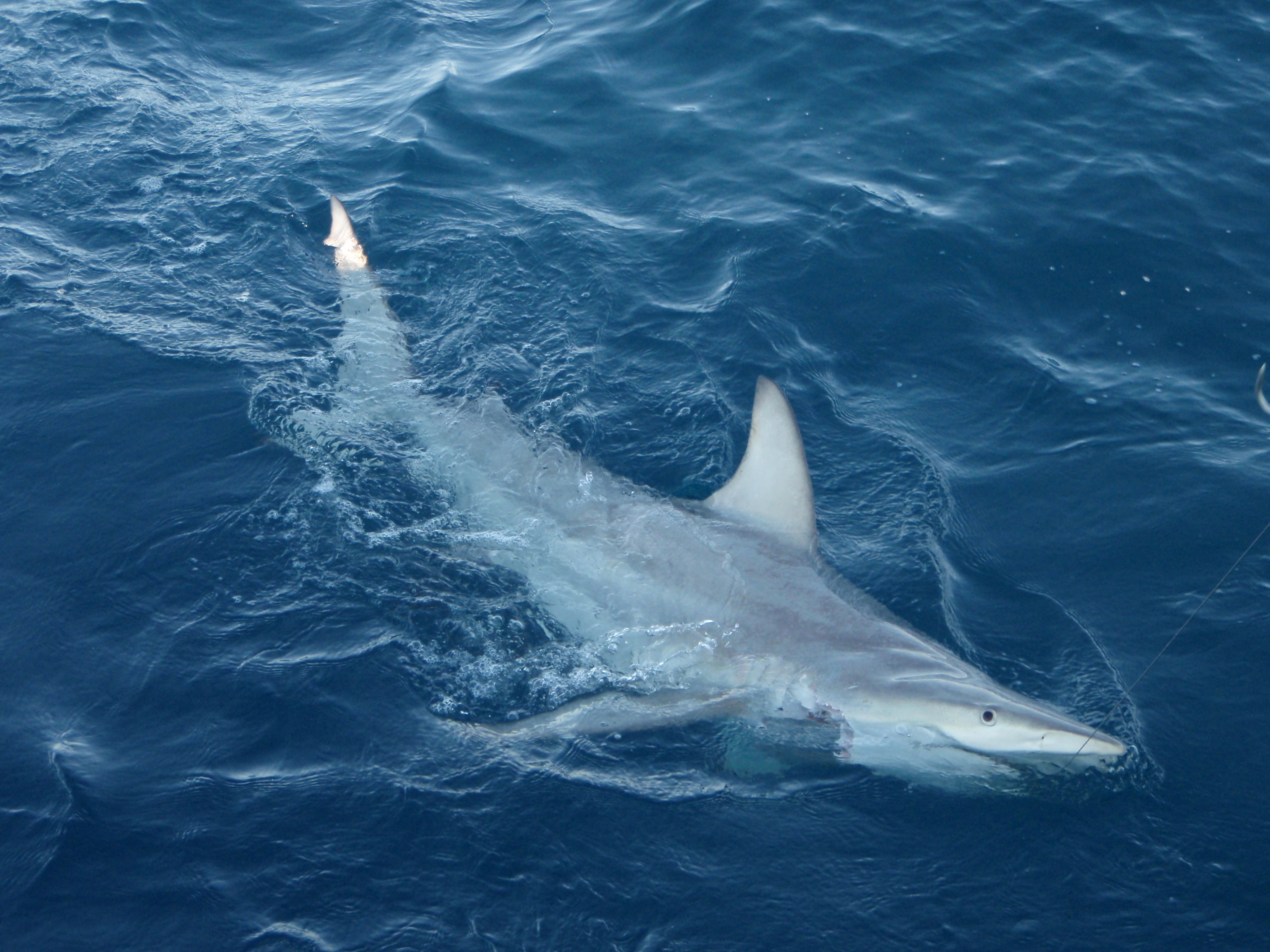
Photo credit: study author Pascal Geraghty, New South Wales Department of Primary Industry

Last week, a team of 10 Australian scientists announced that they had found the world’s first “shark hybrids”, offspring of individuals from two different shark species which had interbred. During a routine survey of Australian marine life, 57 sharks were found that physically resembled one species of shark, but had genetic markers inconsistent with that species. Subsequent genetic investigation revealed that these 57 animals were hybrids between common blacktip sharks (Carcharhinus limbatus) and Australian blacktip sharks (C. tilstoni).

Some of these hybrids were “F1″, meaning that one parents was a common blacktip and one was an Australian blacktip. Others were “B+”(backcrossed), which means that one parent was a common blacktip/Australian blacktip hybrid, and the other was a “purebreed” of one of those two species. According to the study’s lead author, Dr. Jess Morgan of the University of Queensland, “our genetic marker tells us that these hybrids are ‘at least’ F1, and that these animals are reproductively viable and can produce an F2…the hybrids may be generations past F2 but the existing genetic markers can’t distinguish how many generations past the second cross have occurred.”

Read More “What hybrid sharks mean (and don’t mean) for climate change and evolution: fact-checking the media coverage” »

Kakapo: The world’s largest parrot and the birth of active conservation

Posted on January 4, 2012 By David Shiffman 8 Comments on Kakapo: The world’s largest parrot and the birth of active conservation
Conservation

Our world is facing a biodiversity crisis so severe that many scientists have labeled it as the sixth great mass extinction in Earth’s history. Conservation efforts to date have focused on endangered species and  “biodiversity hotspots” , relatively small areas with large numbers of species. Most of these hotspots are in areas you’d expect them to be, places like coral reefs and tropical rain forests. One surprising biodiversity hotspot is New Zealand.

Though New Zealand is best known for it’s two largest islands, the country has over 700 islands larger than one hectare. Additionally, New Zealand is isolated- hundreds of miles of Pacific ocean separate it from Australia, and it’s farther still from Asia or South America.  Similar to the Galapagos, this isolation has led to an extremely high rate of “endemic” species, plants and animals that are native to an area and aren’t found anywhere else on Earth.

New Zealand is particularly famous for its unique birds. You may have heard of the kiwi, a word which has become slang for a New Zealander*, but this nation is also known as the “seabird capital of the world“. In total, there are more than 60 endemic bird species found there.

Read More “Kakapo: The world’s largest parrot and the birth of active conservation” »

The top 10 shark conservation stories of 2011

Posted on December 28, 2011 By David Shiffman 17 Comments on The top 10 shark conservation stories of 2011
Conservation, Science

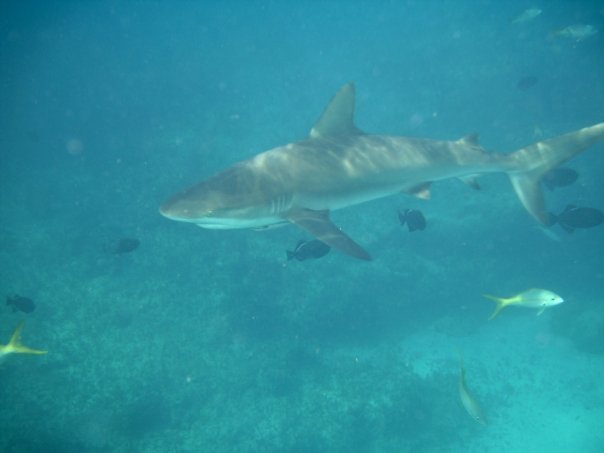
Caribbean reef shark, Bimini. Photo credit: David Shiffman

2011 was a relatively good year for sharks and rays. Presented below, in no particular order, are ten important shark conservation stories from the past year.

1. Shark sanctuaries. The world gained several new shark sanctuaries, areas where shark fishing is banned, in 2011. Nations creating new shark sanctuaries include Honduras (~92,000 square miles), the Bahamas (~240,000 square miles), Marshall Islands/Guam/Palau (a regional partnership protecting almost 2 million square miles). Numerous concerns about enforcing rules in these huge areas, as well as concerns about potential loopholes in the policies, exist among conservation scientists.

2. Fin bans. These laws ban the possession, trade, or sale of shark fins within the boundaries of a city, state/territory, or country. In 2011, Hawaii’s first-in-the-US fin ban took effect, and a few other US states (California, Washington, and Oregon) passed similar laws. There is an ongoing debate in the shark conservation community about whether blanket bans on finning are better than promoting best practices (i.e. more sustainable shark fishing techniques). Additionally, some are concerned that we aren’t focusing enough on other threats to sharks like bycatch and habitat destruction.

Read More “The top 10 shark conservation stories of 2011” »

National Marine Fisheries Service rejects petition to list 4 skate species under Endangered Species Act

Posted on December 27, 2011 By David Shiffman 8 Comments on National Marine Fisheries Service rejects petition to list 4 skate species under Endangered Species Act
Conservation, Science

Image from nero.NOAA.gov

Last August, two petitions were sent to the National Marine Fisheries Service from three conservation organizations (the Animal Welfare Institute, WildEarth Guardians and Friends of Animals). The petitions (available in their entirety here) requested that four species of skate be listed as “threatened” or “endangered” under the Endangered Species Act, and requested that critical habitat for these species be designated and appropriately protected. These species are the thorny skate, barndoor skate, winter skate, and smooth skate.

Due to both a directed fishery (skate wings are used for lobster trap bait, and also for food for a primarily-overseas market that includes Europe) and bycatch in bottom fisheries , Northwest Atlantic populations of these species have experienced serious declines in recent years. While some skate species have rebounded (for reasons that are not entirely clear), The thorny skate remains particularly threatened- the IUCN Red List considers the subpopulation off the Northeastern U.S. coast to be Critically Endangered. It is illegal for U.S. fishermen to keep thorny skates they catch (and has been since 2004), but they are commonly taken as bycatch in fisheries for the other skates and groundfish.

Yesterday, the National Marine Fisheries Service formally responded to the petition (thorny skate and other skates), and the news isn’t good for skates:

“After reviewing the information contained in the petition and information readily available in our files, we conclude that the petition fails to present substantial scientific or commercial information indicating that the petitioned action concerning barndoor, smooth and/or winter skate may be warranted…We find that the petitions do not present substantial scientific information indicating the petitioned actions may be warranted. Accordingly, we will not initiate a review of the status of thorny skate at this time.”

The National Marine Fisheries Service listed several reasons why they believe these skates should not be listed under the Endangered Species Act.

Read More “National Marine Fisheries Service rejects petition to list 4 skate species under Endangered Species Act” »

Posts pagination

Previous 1 … 37 38 39 … 69 Next

Popular Posts

At least 74 practicing shark researchers: How a silly thing I said online raised thousands for conservationAt least 74 practicing shark researchers: How a silly thing I said online raised thousands for conservationFebruary 26, 2025David Shiffman
Why the new Trump order to shoot wolves is both illegal and a dreadful precedent for endangered speciesWhy the new Trump order to shoot wolves is both illegal and a dreadful precedent for endangered speciesSeptember 5, 2026Ali Gaster
The Trump Administration’s latest attack on endangered speciesThe Trump Administration’s latest attack on endangered speciesSeptember 17, 2026Ali Gaster
How to build a canoe from scratch on a graduate student stipendHow to build a canoe from scratch on a graduate student stipendApril 17, 2010Andrew Thaler
That's not a blobfish: Deep Sea Social Media is Flooded by AI SlopThat's not a blobfish: Deep Sea Social Media is Flooded by AI SlopDecember 19, 2025Andrew Thaler
What is a Sand Shark?What is a Sand Shark?November 12, 2017Chuck Bangley
What Ocean Ramsey does is not shark science or conservation: some brief thoughts on "the Shark Whisperer" documentaryWhat Ocean Ramsey does is not shark science or conservation: some brief thoughts on "the Shark Whisperer" documentaryJuly 2, 2025David Shiffman
When is a take not a take? Yet another attack on Endangered Species by the Trump AdministrationWhen is a take not a take? Yet another attack on Endangered Species by the Trump AdministrationSeptember 22, 2026Ali Gaster
I'm a scientist. A social scientist. Please opine on the validity of my discipline.April 4, 2013Bluegrass Blue Crab
I turned my woodshop into a personal solar farm.I turned my woodshop into a personal solar farm.June 21, 2021Andrew Thaler
Subscribe to our RSS Feed for updates whenever new articles are published.

We recommend Feedly for RSS management. It's like Google Reader, except it still exists.

Southern Fried Science

  • Home
  • About SFS
  • Authors
  • Support SFS


If you enjoy Southern Fried Science, consider contributing to our Patreon campaign.

Copyright © 2026 Southern Fried Science.

Theme: Oceanly Premium by ScriptsTown