Skip to content

Southern Fried Science

Over 15 years of ocean science and conservation online

  • Home
  • About SFS
  • Authors
  • Support SFS

Author: David Shiffman

Traveling the world in 140 characters or less: How Twitter got me a trip to New Zealand

Posted on November 7, 2011December 9, 2011 By David Shiffman 1 Comment on Traveling the world in 140 characters or less: How Twitter got me a trip to New Zealand

Last May, I attended the 2nd International Marine Conservation Congresss, an interdisciplinary conference that brought together scientists, NGOs, policymakers, and interested members of the general public. It was the largest professional meeting dedicated to saving the oceans in history, and it was an honor to be a part of it. In addition to seeing old friends and meeting some of my heroes, I took the opportunity to “live-Tweet” the talks I attended. Whenever a presenter made an important point, I summarized it in a Tweet, and, whenever possible, I included relevant hashtags (#Shark, #bycatch) and links to more information (either a website or published paper affiliated with the presenter, or one from a 3rd party working in the same field).

Read More “Traveling the world in 140 characters or less: How Twitter got me a trip to New Zealand” »

Support “Shored Up”, a new documentary about beach renourishment

Posted on November 6, 2011December 9, 2011 By David Shiffman 2 Comments on Support “Shored Up”, a new documentary about beach renourishment
Conservation

Our friends from the fantastic ocean acidification documentary  A Sea Change are working on an important new project. It’s called “Shored Up“, and it’s all about sea level rise and the strategies that coastal communities are using to try and keep their beaches.

One issue in particular, beach renourishment, has major environmental implications that aren’t often considered. Sand provides critical habitat for organisms other than tourists, and not all sand is the same: it differs in grain size, chemical composition, and other variables. Organisms that are adapted to one type of sand, such as beach-dwelling crabs and snails, often struggle to survive in another that’s dumped in huge quantities in their habitat. Additionally, the ecosystem where the sand comes from is often greatly disturbed by the huge sand-collecting dredges.

The movie doesn’t just focus on renourishment, however:

Read More “Support “Shored Up”, a new documentary about beach renourishment” »

Shark Science Monday: the Known Unknowns of Shark Conservation

Posted on October 31, 2011December 9, 2011 By David Shiffman 7 Comments on Shark Science Monday: the Known Unknowns of Shark Conservation
Science

“There are known knowns; there are things we know we know. We also know there are known unknowns, that is to say we know there are some things we do not know. But there are also unknown unknowns – the ones we don’t know we don’t know.” – Former U.S. Secretary of Defense Donald Rumsfeld.

As nature documentary viewers often hear, there is a lot about sharks and rays that scientists don’t know… but what are the most important things that we need to know? A new paper written by Colin Simpfendorfer, Will White, and former Shark Science Monday interview subjects Michelle Heupel and Nick Dulvy attempts to identify these “known unknowns” of shark and ray conservation. “The importance of research and public opinion to conservation management of sharks and rays: a synthesis”, which arose out of the 2010 Sharks International conference, is the most complete record ever created of the research questions that we need to answer in order to better conserve and manage these animals. For young shark researchers eager to work on projects with practical conservation importance, this paper is a great place to start looking for ideas. Additionally, future published work that claims to be important for conservation and management would do well to cite it, and anyone interested in this subject should read it.

Read More “Shark Science Monday: the Known Unknowns of Shark Conservation” »

Do environmental regulations harm the economy?

Posted on October 28, 2011October 31, 2011 By David Shiffman 7 Comments on Do environmental regulations harm the economy?
Conservation

Image courtesy SlopeMedia.org

One of the main themes of the Republican Presidential primary campaign has been that government regulations- specifically, regulations designed to protect the environment and public health from industrial pollution- is damaging to the economy. Nearly all of the Republican Presidential candidates have expressed this view: Rick Perry wants to “lock the doors and turn off the lights” at EPA headquarters, Michelle Bachmann thinks it should be called the “job-killing organization of America“, and both Newt Gingrich and Herman Cain want to abolish the agency entirely.

Is there any truth to the idea that environmental regulations cost jobs and are slowing the economic recovery? On it’s face, the idea makes sense. A business has a finite amount of money, and the more money they have to spend on complying with environmental regulations, the less money they can spend on hiring workers. If a business has to pay for new technology to reduce the amount of pollution their manufacturing process produces, the money spent on that technology is money that can’t be spent on new workers. The real question, though, is not whether there are costs to environmental regulations- there obviously are, and they can sometimes be quite high to particular industries. The real question is whether the benefits of these environmental regulations outweigh the costs.

Read More “Do environmental regulations harm the economy?” »

Western Australia’s sharks need your help!

Posted on October 23, 2011 By David Shiffman 14 Comments on Western Australia’s sharks need your help!
Conservation, Science

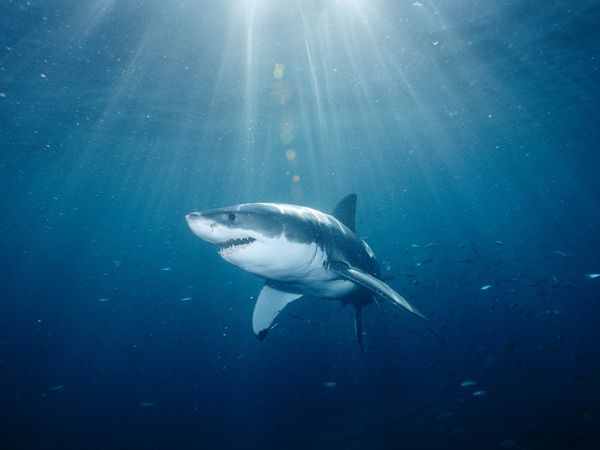
Great White Shark. Image courtesy animals.NationalGeographic.com

Last week, I wrote about three current shark conservation issues, including a proposed shark cull in Western Australia. Barbara Wueringer was able to deliver her letter to Western Australian government officials on Friday, and thanks to your help, it was signed by more than 100 scientists and conservationists from all over the world.

Yesterday, however, another swimmer was killed by a shark in Western Australian waters. George Thomas Wainwright, 32, was a native of Texas who had been working on a boat in Australia. This attack, which is the third in the last two months, has resulted in renewed calls for a “shark cull”. The proposed plan would involve both an attempt to kill the specific shark responsible for killing Mr. Wainwright and a more general killing of all the sharks in the area. It is believed that the shark that killed Mr. Wainwright was a great white shark, also known as a  “white pointer” in Australia.

Read More “Western Australia’s sharks need your help!” »

RJD Twitter teach-ins start Monday at 1 with overfishing

Posted on October 21, 2011 By David Shiffman 3 Comments on RJD Twitter teach-ins start Monday at 1 with overfishing
Science

My lab, the RJ Dunlap Marine Conservation Program at the University of Miami, will be hosting a series of Twitter teach-ins on marine biology and conservation topics. Each teach-in will cover a topic in a series of Tweets, including links to photos and videos, as well as NGO reports, blog posts, and scientific papers which people … Read More “RJD Twitter teach-ins start Monday at 1 with overfishing” »

Culling, bycatch, and loopholes: three shark conservation petitions need your signatures!

Posted on October 19, 2011October 27, 2011 By David Shiffman 9 Comments on Culling, bycatch, and loopholes: three shark conservation petitions need your signatures!
Conservation

While we can all celebrate the recent passage of California’s shark fin ban, sharks still need your help! The government of Western Australia is planning a “shark cull”, intentionally killing large numbers of threatened species to reduce the probability of shark attacks. The Marine Stewardship Council is considering granting “sustainable” status to a fishery with huge shark bycatch issues (an issue we originally covered last year). The European Union, one of the largest shark fishing entities in the world, still has large loopholes in their shark fishing policy. In the past few weeks, I’ve been contacted by conservation organizations working on these issues, and they need our help!  Please consider signing the petitions listed below, and please consider telling interested friends and colleagues. As I’ve written many times before here on Southern Fried Science, I don’t support just any petition, but these are all from legitimate people and organizations and I have chosen to sign all three.

Read More “Culling, bycatch, and loopholes: three shark conservation petitions need your signatures!” »

Securing the Conservation of Sharks and Rays

Posted on October 10, 2011October 9, 2011 By David Shiffman 5 Comments on Securing the Conservation of Sharks and Rays
Conservation, Science

At the 2nd International Marine Conservation Congress, Dr. Nick Dulvy and the IUCN Shark Specialist Group organized a special symposium called “Securing the Conservation of Sharks and Rays”. This symposium featured leading scientists, international policy experts, the founder of a creative non-profit, a National Geographic conservation photographer… and me. It was, without a doubt, the greatest professional honor of my (admittedly brief so far) career.

Read More “Securing the Conservation of Sharks and Rays” »

Misunderstood Marine Life #2 – moray eels

Posted on October 7, 2011October 7, 2011 By David Shiffman
Uncategorized

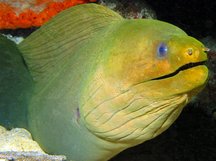
Image courtesy ReefGuide.org

Since they are typically observed hiding in dark crevices while opening and closing their mouths in an apparently menacing gesture, it isn’t surprising that moray eels get a bad reputation. The fact that their sharp teeth face backward (causing severe damage to anyone trying to pull their hand out of a moray’s mouth) doesn’t help this reputation, and neither does the recent discovery that morays have a second set of “Alien”-like jaws that drags prey deep into their mouth and throat. The truth isn’t quite so simple. Most people know very little about these amazing animals.

The green moray (pictured above) is the most famous member of this group, but there are more than 200 species in the family Muraenidae.  Green morays are not even really green (a yellow mucus deposited on a dark body creates the illusion of green skin). Snyder’s morays are less than a foot long when full grown, while giant slender morays can reach lengths of over 10 feet. Morays live in an impressive variety of habitats, including temperate and tropical seas, depths of several hundred meters, and even freshwater.

Read More “Misunderstood Marine Life #2 – moray eels” »

Does shark conservation result in more shark attacks?

Posted on October 6, 2011October 5, 2011 By David Shiffman 5 Comments on Does shark conservation result in more shark attacks?
Science
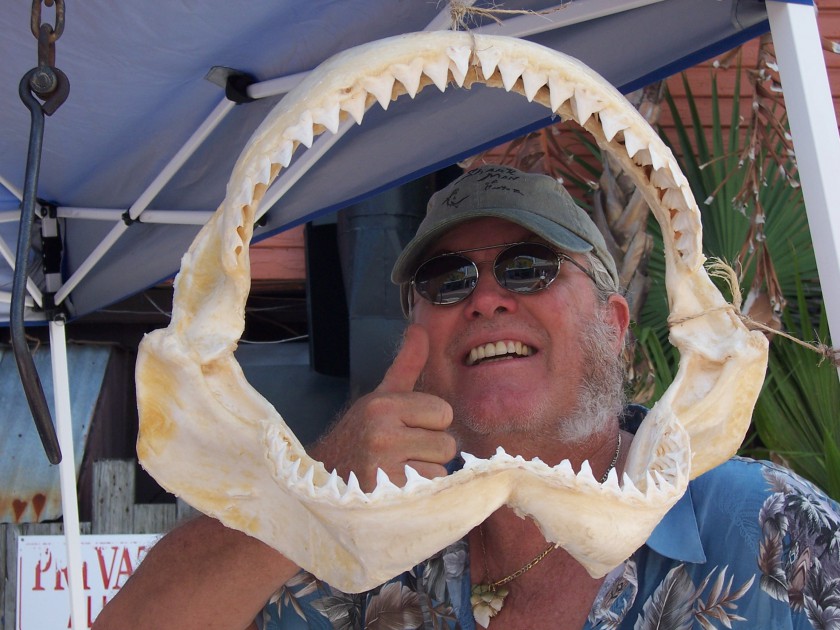
Captain Bill, image from SharkManOfCortez.com

Meet Captain Bill Goldschmitt, an author, blogger, and commercial shark fisherman. Captain Bill is a passionate, opinionated, and influential man in the world of shark conservation and management. Unfortunately, the opinions that he chooses to passionately share are wildly incorrect. Captain Bill is a leading proponent of many ideas that have no basis in reality, including the notion that shark conservation efforts lead to an increased danger for humans from shark attacks.

He repeats this idea often on his blog. In recent months, he has written that the Florida Fish and Wildlife Commission has declared “open season” on Florida bathers by even considering new shark protection efforts, pleaded with Shark Week to focus more on how dangerous sharks are and less on their dwindling numbers and ecological importance, and compared shark conservationists to those who apologize for al-Qaeda terrorists.

Read More “Does shark conservation result in more shark attacks?” »

Posts pagination

Previous 1 … 40 41 42 … 69 Next

Popular Posts

How many of these shark Jeopardy clues can you get correct?How many of these shark Jeopardy clues can you get correct?November 5, 2026David Shiffman
Shark of Darkness: Wrath of Submarine is a fake documentaryShark of Darkness: Wrath of Submarine is a fake documentaryAugust 10, 2014Michelle Jewell
We Asked IMCC7 Attendees What Ocean Conservation Needs. Here's What They Said.We Asked IMCC7 Attendees What Ocean Conservation Needs. Here's What They Said.November 5, 2026Angelo Villagomez
What Ocean Ramsey does is not shark science or conservation: some brief thoughts on "the Shark Whisperer" documentaryWhat Ocean Ramsey does is not shark science or conservation: some brief thoughts on "the Shark Whisperer" documentaryJuly 2, 2025David Shiffman
For when the madness ends: a 5-point plan for getting conservation back on track in the USFor when the madness ends: a 5-point plan for getting conservation back on track in the USJuly 9, 2026Ali Gaster
Our favorite sea monsters – Ningen (#4)Our favorite sea monsters – Ningen (#4)September 7, 2010Andrew Thaler
That's not a blobfish: Deep Sea Social Media is Flooded by AI SlopThat's not a blobfish: Deep Sea Social Media is Flooded by AI SlopDecember 19, 2025Andrew Thaler
What is a Sand Shark?What is a Sand Shark?November 12, 2017Chuck Bangley
Have we found the city of Atlantis?Have we found the city of Atlantis?September 1, 2026Chris Parsons
Threatened gentle giants: both species of manta ray added to the IUCN Red ListThreatened gentle giants: both species of manta ray added to the IUCN Red ListNovember 14, 2011David Shiffman
Subscribe to our RSS Feed for updates whenever new articles are published.

We recommend Feedly for RSS management. It's like Google Reader, except it still exists.

Southern Fried Science

  • Home
  • About SFS
  • Authors
  • Support SFS


If you enjoy Southern Fried Science, consider contributing to our Patreon campaign.

Copyright © 2026 Southern Fried Science.

Theme: Oceanly Premium by ScriptsTown