A more comprehensive build guide, along with the 3D printer files, can be found in the BeagleBox GitHub Repository.
The BeagleBox 2 is a dirt-cheat, tough, versatile field computer built from 3D-printed parts, off-the-shelf hardware, and a single board computer. You can read all about it here: The BeagleBox 2: a dirt-cheap, tough-as-nails, 3D-printed, versatile field laptop.
Let’s build one!
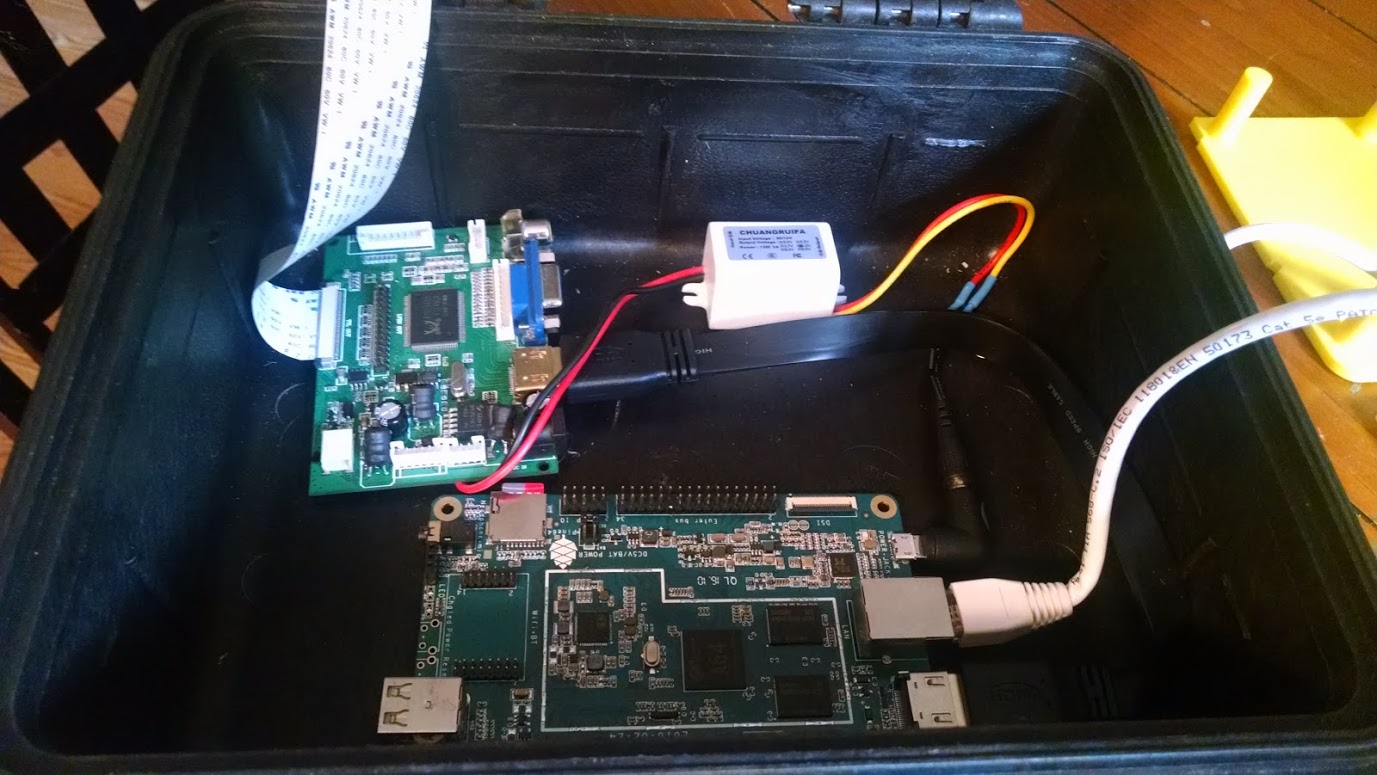
The brain is a Pine64 1 GB single board computer. Right now, Pine is back ordered by about a month. I didn’t include a WiFi module in my initial order, and now I regret it (the Linux build for the Pine doesn’t support USB WiFi yet), so I have one on order. The Pine64 is $19.00, the Wifi Module is $10.99. You can use any single board computer that takes 5V DC and HDMI for video out in this build.
The screen we initially recommended, and that I used for my build, is no longer available, but this one appears to be the exact same product with slightly different connection cables. At $88.89, it’s the single most expensive component in the build. You’ll need a DC/DC step-down to drop the 12V coming out of the screen to 5V for the Pine64. This one works just fine at $7.67. A 4-port Amazon Basics USB hub for $6.97 rounds out the hardware.
Let’s talk cables. You need a 12V AC to DC wall adapter to power things (though you could always go straight for the battery pack). Plenty of options in the $4 to $6 range. You need a short HDMI cable, like this one for $7.22. You need some 5.5mm barrel plugs ($11.99 for a 20-pack), to connect the video card to the SCB and and 5.5mm barrel jack ($5.15 for a 5 pack) to hook up the power outlet. You need an adapter to convert the 5.5mm plug to the Pine64’s micro USB ($5.66). If you want music, grab a short adapter for $4.95. Finally, an ethernet coupler for $3.58. And you’ll need a short bit of patch cable.
I get about 6 hours of runtime with this $55.99 battery, but there are tons of option. Just make sure it supports 12v DC output.
And, of course, the most important piece, the Pelican Case. The BeagleBox fits in a Pelican 1200 case, which runs about $39.95.
All told, if you bought every part brand new, this set up would cost you about $275. A lot of the cost though is in Maker type parts which you’re better off scrounging. Heck, if you want (and since I bought them in bulk), I’ll mail you a barrel jack and 2 plugs for the price of postage (or, even better, supporting my Patreon; while supplies last).
The 3D Printer files are available on Youmagine, and will soon be up on the Oceanography for Everyone github page along with these instructions. These are all designed to print within a 150cm by 150cm by 150 cm bed in PLA. Total print time is about 15 hours on a Printrbot Simple Metal. The screen pieces lock together in only one configuration, so there’s no possibility of doing them wrong, same with the case pieces. This time, I simply used hot glue to adhere everything. It creates a solid, though ultimately removable hold, just in case you need to get in later.
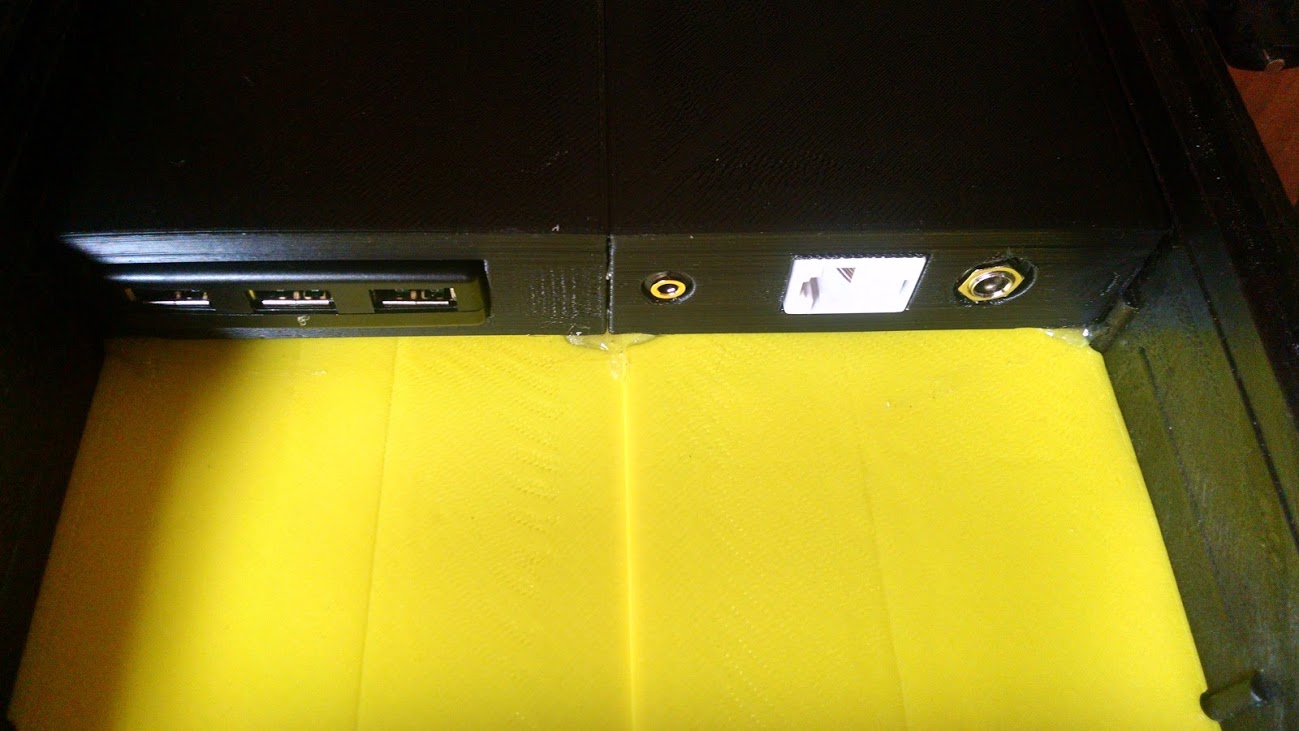
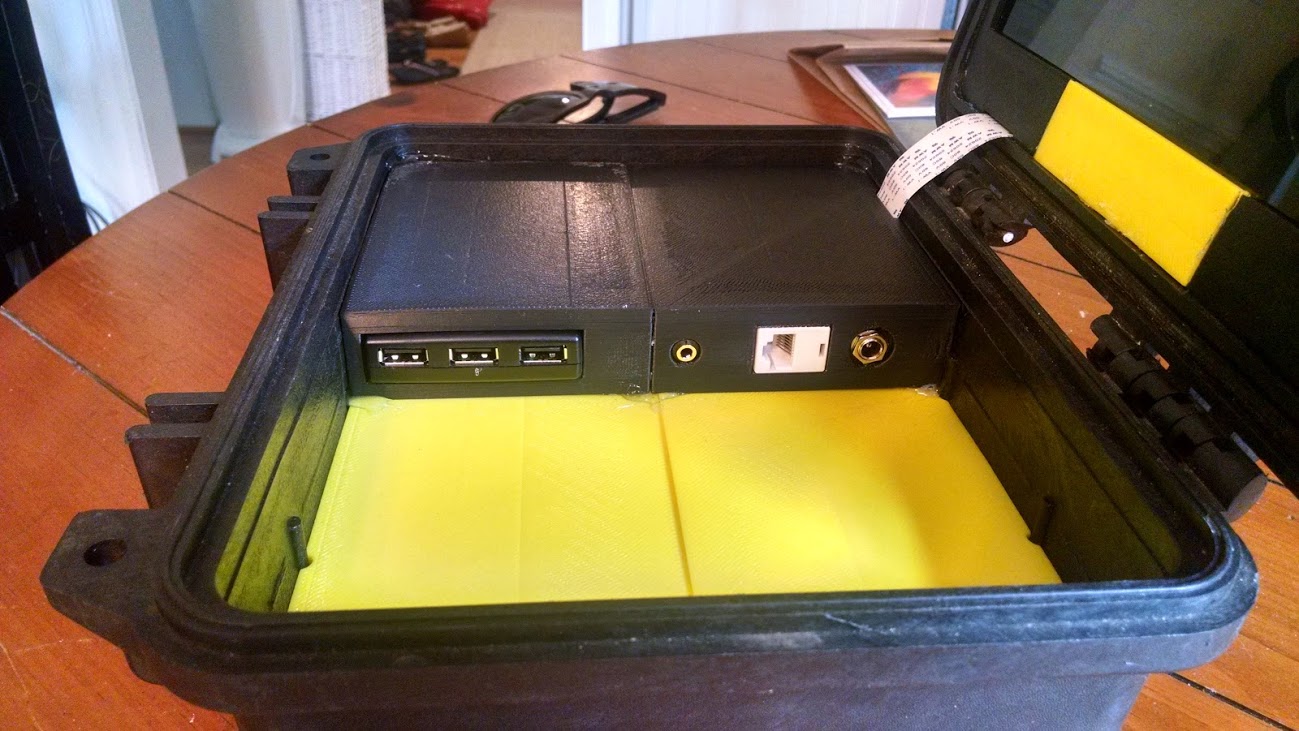
To wire everything up, follow the instructions form the original BeagleBone project. The only difference is the addition of the 5.5 mm to microUSB adapter and the barrel jack in the case. The audio jack, power outlet, and ethernet adapter, as well as the USB hub, all fit in their respective holes.
I anchored all of the hardware to the bottom of the case using velcro strips to keep everything in place. The battery sits on the outside in the indentation for storage. This is mostly to make airport security feel better, since DIY systems like this can look suspicious. The last thing you need is an interface device of your choice: USB wireless keyboards work great.
And that’s all it takes! Power it on and let me know how your build went in the comments, below.
Hey Team Ocean! Southern Fried Science is entirely supported by contributions from our readers. Head over to Patreon to help keep our servers running an fund new and novel ocean outreach projects, like the BeagleBox 2. Even a dollar or two a month will go a long way towards keeping our website online and producing the high-quality marine science and conservation content you love.