Skip to content

Southern Fried Science

Over 15 years of ocean science and conservation online

  • Home
  • About SFS
  • Authors
  • Support SFS

Building robots in Papua New Guinea: update from #ROV2PNG

Posted on October 24, 2014 By Andrew Thaler
Science
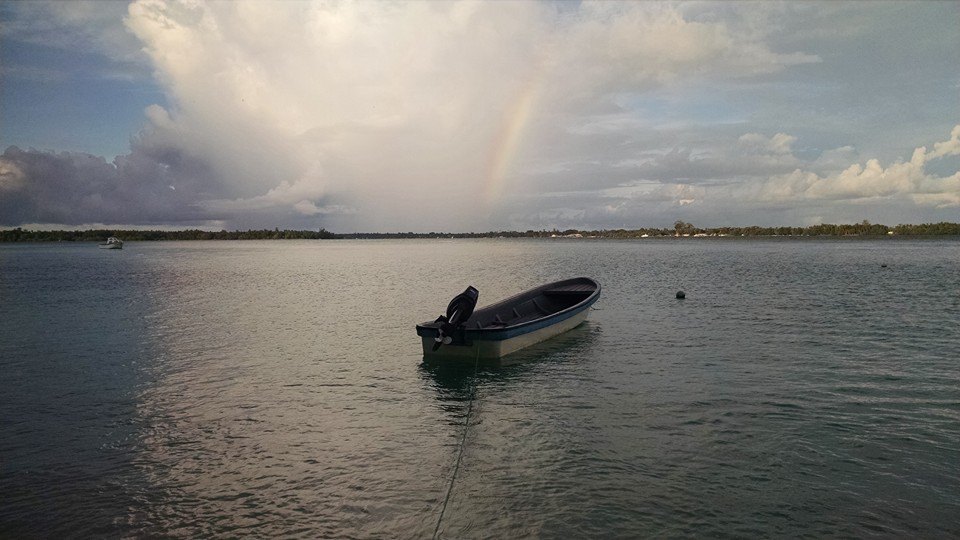
The view from our morning commute between Nusa and Nago.

Hello from the warm, sunny island of Nago, home of the National Fisheries College field station and staging ground for Marine Ecology via Remote Observation, part of the Marine Science Short Course. My team and I arrived in Port Morseby on Friday, where we met with Jamie on her way home and and caught up with my former student, now lecturer at UPNG, Freddie Alei, who joins us for the next week of class. Another day of travel brought us to the shores of Nusa Island. We had our first chance to meet the students on Sunday, during a walk around the local beach, followed by an afternoon flying Independent Lee, one of our demonstration robots, from the Fisheries’ jetty. It was a nice warm up for an intensive week of robotics and marine ecology.

There are two major components to the #ROV2PNG portion of the Marine Science Short Course. The first, and most visible, is the construction and operation of the OpenROV, an open-source underwater robot that is incredibly adaptable and expandable. Over the last three days, students have learned how to solder, weld acrylic, test electronics, use epoxy resins, and work together to assemble the chassis, endcaps, battery tubes, motors, and brain of the robot. Excitement is mounting as we approach the moment when we can power up the ROVs for the first time.
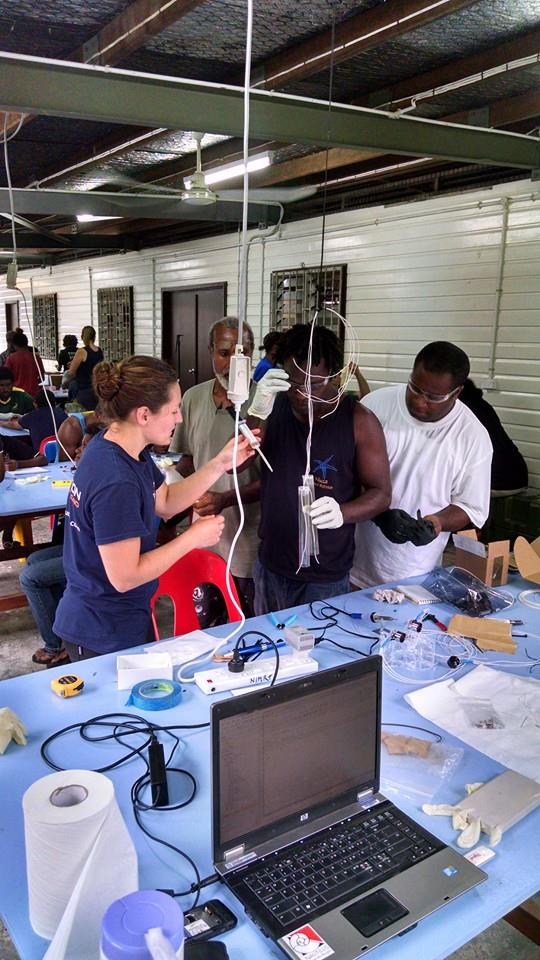
Erika Bergman shows students how to pot endcaps with epoxy.

Mid-day on the third day of building, as the robots began to look more like ROVs and less like piles of components, was the perfect moment to hold a naming ceremony. Each robot was christened with a Tok Pisin name. In a few days, Rasta Pis (octopus), NilPis (a local fish), Pismeri (mermaid), Meri Niuailan (woman from New Ireland), Iauro (slang for ‘it’s all good’), and Solwara (salt water) will dive for the first time. We ran the numbers, and on dive day, these six robots, combined with Indy, Phantom, and Thunder, will be the largest deployment of OpenROV’s in the field, ever.

Our group has taken to the slogan “failure is part of our pedagogy.” We want our students to complete this class not only with the knowledge to build and fly these robots, but also with the confidence to fix and troubleshoot problems as they arise. There’s only one way to teach that kind of adaptive, practical troubleshooting: stuff has to break. We’ve already overcome a few hurdles. Students have seen Dominik recover and repair a completely flooded OpenROV. Erika has pressed her robot, Phantom, into service, using parts of the chassis and end caps to replace components from the students kits. Independent Lee has become the course display model, being assembled and disassembled numerous times to demonstrate specific components and techniques.

In addition to building the robots, students also need the skills to use them as serious tools for marine ecological studies. Over the next week, students are developing, writing, and presenting grant proposals, both as individuals and in groups, to use the robots they’re building to study the marine environment around New Ireland. Discussions about writing marine ecology grants by myself are complemented by lectures on marine ecology, biodiversity, and community-supported ecology by Dr. Augustine Mungkaje, Dr. Amy Freitag, and Freddie Alei. All of which is in addition to a week of marine invertebrate zoology by Duke University graduate student Jamie Wagner.
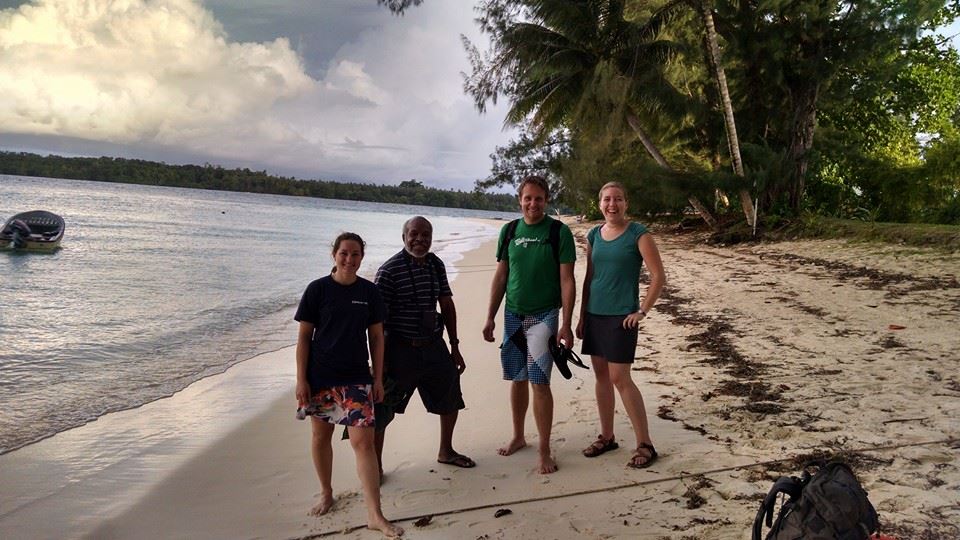
The team (sans photographer) prepares to return to our bungalows after a long day of robot building.

As the robots come online and the class moves forward, we will transition from an intensive engineering class to an advanced field ecology course, with robots becoming the work horses for a series of novel investigations into the marine environment around New Ireland, Papua New Guinea.

For an entertaining summary of the first week of the course, check out William Saleu’s update, here.

Share this:

  • Click to share on Bluesky (Opens in new window) Bluesky
  • Click to share on Facebook (Opens in new window) Facebook
  • Click to share on Reddit (Opens in new window) Reddit
  • Click to share on Threads (Opens in new window) Threads
  • Click to share on WhatsApp (Opens in new window) WhatsApp
  • Click to share on Mastodon (Opens in new window) Mastodon

Related

Tags: #ROV2PNG openexplorer OpenROV Papua New Guinea

Post navigation

❮ Previous Post: Wailing about whaling – the 2014 International Whaling Commission meeting
Next Post: The greater good: animal welfare vs. conservation ❯

You may also like

Blogging
Ocean Outreach in an Evolving Online Ecosystem: Science is Storytelling
August 9, 2016
Weekly Salvage
We Robot, a horrible hagfish massacre, deep, delicious sandwiches, fish slime harvests, and more! Monday Morning Salvage: September 10, 2018.
September 10, 2018
Weekly Salvage
#Sharpiegate, mining the deep sea, electric eels, oil, and more! Weekly Salvage: September 16, 2019
September 16, 2019
Weekly Salvage
Everything about hagfish is the best thing about hagfish, the battle for the deep-sea heats up, parasitic butt snails, and more! Monday Morning Salvage: December 17, 2017
December 18, 2017

Popular Posts

What Ocean Ramsey does is not shark science or conservation: some brief thoughts on "the Shark Whisperer" documentaryWhat Ocean Ramsey does is not shark science or conservation: some brief thoughts on "the Shark Whisperer" documentaryJuly 2, 2025David Shiffman
I can serve on your graduate thesis committee. Here’s what you can expect of me, and what I expect in return.I can serve on your graduate thesis committee. Here’s what you can expect of me, and what I expect in return.October 16, 2025David Shiffman
What can the funniest shark memes on the internetz teach us about ocean science and conservation?What can the funniest shark memes on the internetz teach us about ocean science and conservation?November 8, 2013David Shiffman
I turned my woodshop into a personal solar farm.I turned my woodshop into a personal solar farm.June 21, 2021Andrew Thaler
Shark of Darkness: Wrath of Submarine is a fake documentaryShark of Darkness: Wrath of Submarine is a fake documentaryAugust 10, 2014Michelle Jewell
Build a dirt cheap, tough-as-nails field computer in a Pelican caseBuild a dirt cheap, tough-as-nails field computer in a Pelican caseJuly 21, 2015Andrew Thaler
Norway and Cook Islands put their deep-sea mining plans on pause.Norway and Cook Islands put their deep-sea mining plans on pause.December 3, 2025Andrew Thaler
Breaking News! "Most Comprehensive Estimate of Mortality": Between 63 and 273 Million Sharks Killed Each YearBreaking News! "Most Comprehensive Estimate of Mortality": Between 63 and 273 Million Sharks Killed Each YearMarch 1, 2013David Shiffman
Mermaids: The New Evidence is a Fake DocumentaryMermaids: The New Evidence is a Fake DocumentaryMay 28, 2013Andrew Thaler
I spent 50 days working out in Virtual Reality and everything went better than expected.I spent 50 days working out in Virtual Reality and everything went better than expected.May 16, 2019Andrew Thaler
Subscribe to our RSS Feed for updates whenever new articles are published.

We recommend Feedly for RSS management. It's like Google Reader, except it still exists.

Southern Fried Science

  • Home
  • About SFS
  • Authors
  • Support SFS


If you enjoy Southern Fried Science, consider contributing to our Patreon campaign.

Copyright © 2025 Southern Fried Science.

Theme: Oceanly Premium by ScriptsTown