Skip to content

Southern Fried Science

Over 15 years of ocean science and conservation online

  • Home
  • About SFS
  • Authors
  • Support SFS

Category: Blogging

Watch James Cameron’s Deepsea Challenge and tweet along with us Tuesday at 8 p.m.!

Posted on April 13, 2015 By David Shiffman 1 Comment on Watch James Cameron’s Deepsea Challenge and tweet along with us Tuesday at 8 p.m.!
Blogging

There are still a couple of days left to donate to the most important marine science and outreach crowdfunding campaign of our time, “buy David Shiffman a less ugly pair of sunglasses.” In the meantime, new rewards have been unlocked! For a $30 donation, you’ll receive a small 3D printed megalodon tooth, one of the first of … Read More “Watch James Cameron’s Deepsea Challenge and tweet along with us Tuesday at 8 p.m.!” »

Yoda, Yoga, and the Fish of Cannery Row

Posted on April 6, 2015 By Guest Writer
Blogging, Conservation, Science

unnamedStacy Aguilera is an Abess Fellow at the University of Miami. Her dissertation research focuses on why certain small-scale fisheries in California are relatively successful, from a social and ecological perspective. Follow her on Twitter here!

As my favorite little green guy once said, “Difficult to see. Always in motion is the future.” Yoda may have never shared some brewskies after work with a bunch of fishery managers, but boy would they cheers to this. Managing fisheries is a tough job, especially considering all the many factors that can quickly and drastically change a fishery. We’ve got markets bouncing here and there, climate varying in short blurps and over a long time, technology is getting better, and new regulations are proposed and passed all the time. You have to think about all the people involved while also thinking about the species and broader ecosystem as a whole. All these things happening at once means fishery managers, and especially fishermen, processors, and buyers, are dealing with an uncertain future and while some things are predictable, the future is indeed difficult to see.

So how do we manage and fish to keep our fishing industry alive, while also keeping our oceans healthy and full of life? One way is to manage for flexibility. As our recent paper published this March in PLoS ONE explains, managing fisheries adaptively is difficult, but allowing participants to fish multiple fisheries is a strategy that can help. When fishery participants can access many fisheries, they can then support themselves and the local fishery in difficult years, tapping in to multiple resources. This in turn also helps the environment, as shifting fishing effort from one species that isn’t doing so well relieves pressure when fishing then targets another species that may be doing much better at that time.
Read More “Yoda, Yoga, and the Fish of Cannery Row” »

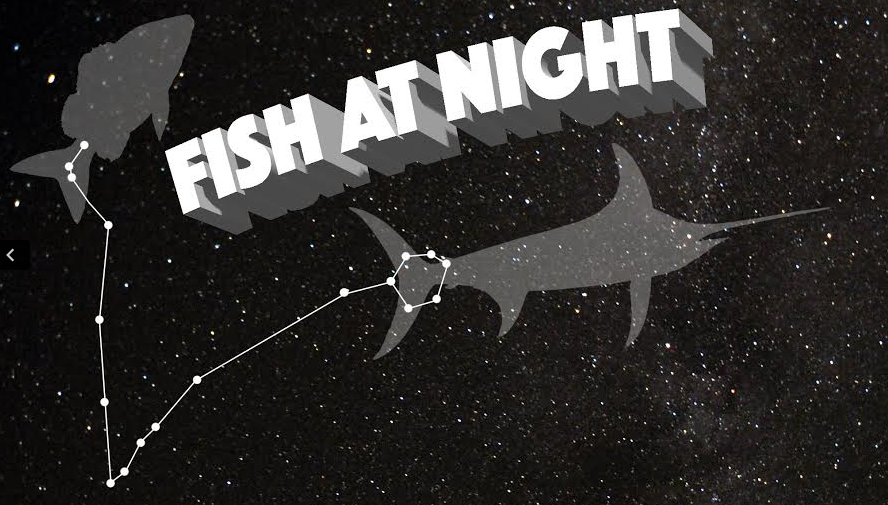
Fish at Night: Announcing a symposium focused on nocturnal fish

Posted on April 3, 2015 By Guest Writer
Blogging, Science

AGeoffrey Shideler is the Assistant Editor at Bulletin of Marine Science, an independent peer-reviewed journal at the Rosenstiel School of Marine & Atmospheric Science at the University of Miami.

AStudying the ocean at night can be difficult. Yet this is precisely the time when many fish are most active. Scientists have found that many important processes occur at night, such as spawning, larval settlement, migrations, feeding, and more. Many organisms rise toward the surface, creating massive pulses of biodiversity and biomass. In nearly every aquatic environment, from open waters to coral reefs, what one observes by day can be quite different from what is happening after the sun sets. At the same time, in polar seas and at great depths, “night” can span, months, years, and beyond. Fish and fishers in these dark systems have adopted tactics and strategies that take advantage of low-light conditions and their study may offer solutions to problems in warmer, shallower habitats.

Read More “Fish at Night: Announcing a symposium focused on nocturnal fish” »

A request to environmentalists and journalists discussing shark fin ban legislation

Posted on March 23, 2015 By David Shiffman
Blogging, Science

Many of the U.S. state-level shark fin bans which make it illegal to buy, sell, or possess shark fins include exemptions for smooth and spiny dogfish, i.e. by far the most common species of sharks caught by U.S. fishermen. Some of these fisheries have significant conservation concerns associated with them. Much of this fishing is not currently subject to catch limits or other basic management

You would never know that most locally caught sharks are not affected at all by fin bans by reading most of the action alerts that some conservation organizations send out to encourage ocean lovers to support these laws, by following most of the media coverage of these laws, or by reading most people’s excited posts after these laws pass. Many of these inaccurately say that shark fin bans “protect all sharks.”

I have a request to make to the conservation organizations supporting these laws, journalists covering them, and the shark and ocean lovers celebrating when they pass. If you want to support laws with an exemption for dogfish sharks, that’s fine, but let’s have an open and honest discussion about why you are doing this instead of just acting like it isn’t happening.

Read More “A request to environmentalists and journalists discussing shark fin ban legislation” »

How to write and publish a scientific paper in the field of marine ecology and conservation

Posted on March 6, 2015 By David Shiffman
Blogging, Science

Author’s note: The following blog post is an adaptation of a professional development training workshop that I gave to our lab’s interns. It is intended to serve as an introductory guide for advanced undergraduate and beginning graduate students who have never published a scientific paper before. It’s a combination of advice I’ve received from teachers, colleagues, and training workshops. This advice has worked well for me personally in the fields of marine ecology and conservation; as of this writing I have 14 published papers and have served as a peer reviewer for 26 different journals. However, there are lots of other strategies out there, and you should seek them out and figure out what works best for you, particularly if you’re in a radically different academic discipline. 

Part 1: What is a scientific paper?

The process of writing and publishing peer-reviewed scientific papers can be confusing and intimidating to beginning students, who may know that these papers are professionally important but not how to create their own. Different in scope, style, and significance from a class term paper or thesis, these papers are formal, technical writeups of a scientific research project or idea. They are written by scientists or technical experts, and peer-reviewed by other scientists or technical experts who (ideally) provide constructive criticism.

Read More “How to write and publish a scientific paper in the field of marine ecology and conservation” »

17 actually worthwhile things to know about mosquitoes

Posted on March 3, 2015 By Guest Writer
Blogging

ATanjim Hossain is an NSF graduate research fellow at the University of Miami. His research focuses on the intersection of microclimatology and mosquito vector ecology from an epidemiological perspective. Follow him on twitter here

BuzzFeed: the epitome of unnecessary hyperbole and an amalgam of often unoriginal content. I’ve long been convinced that this website is a waste of time and that it parrots bullshit in exchange for pageviews. Imagine my surprise, then, when I saw a recent article headlined, “17 Things Only Chronic Mosquito Victims Will Understand.”For a brief moment I was encouraged, hopeful even, that BuzzFeed might have turned a page and published something worth reading. You, wise reader, likely know this this turned out. Below I present 17 things which I think are actually worth knowing relevant to mosquitoes.

Read More “17 actually worthwhile things to know about mosquitoes” »

What Leonard Nimoy and Spock meant to me as a Jewish conservation biologist

Posted on February 27, 2015 By David Shiffman 4 Comments on What Leonard Nimoy and Spock meant to me as a Jewish conservation biologist
Blogging

Earlier today, the New York Times reported that actor Leonard Nimoy had died at the age of 83. Coming just two days after the death of Genie Clark, this means that I’ve lost two of my childhood heroes in one week. I’ve already briefly written about what Genie meant to me and to my friends here and here and am quoted here, but Leonard Nimoy’s impact on me  is a little harder to explain. I hope our readers will indulge me in an unusually personal post.

I’ve been a big fan of science fiction, something I’ve always loved sharing with my mother, since I was a kid. A world where science and intellect and technology, not brute force, are used to solve problems holds obvious appeal. To a kid who grew up struggling with some anti-Jewish discrimination, the diversity featured on shows like Star Trek was inspiring. People that were different didn’t have to hide their differences and lay low and try to avoid standing out in a crowd of people different from you, like I did. Not only did the main characters not tease and attack each other because they were different, but this behavior was actively portrayed as a problem on several episodes. The Federation wasn’t successful despite including different cultures and religions and even species, they were successful because of it.  The environmental conservation message in Star Trek plotlines like “the Voyage Home” made a budding young conservation biologist relate to it even more.

Read More “What Leonard Nimoy and Spock meant to me as a Jewish conservation biologist” »

Fun Science FRIEDay – Darwin Says Survival of the… empathetic?!

Posted on January 23, 2015 By Kersey Sturdivant
Blogging, Science

Dacher Keltner, professor of psychology and founding faculty director of the Greater Good Science Center at UC Berkeley has been pushing an idea – Humans are built to be good, because it aids in human survival.

Photo credit:  ThinkGeek @ shirtoid.com
Photo credit: Berkeley Social Interaction Lab, UC Berkley

Read More “Fun Science FRIEDay – Darwin Says Survival of the… empathetic?!” »

Sizing Sizing Ocean Giants: Patterns of #scicomm outreach in a marine megapaper

Posted on January 20, 2015February 9, 2021 By Andrew Thaler 2 Comments on Sizing Sizing Ocean Giants: Patterns of #scicomm outreach in a marine megapaper
Blogging, Conservation, Science

Last week, Craig McClain and many friends published Sizing Ocean Giants: patterns of intraspecific size variation in marine megafauna, a research paper that would better be described as a monograph. The response to the paper has been overwhelming.

Since it’s publication last Tuesday, Sizing Ocean Giants has been viewed almost 44,000 times by 38,000 people and downloaded 1200 times. If this seems like a lot for what is essentially a natural history monograph, you are correct. According to Altmetric, a service that measures the non-citation impact of scientific papers, Sizing Ocean Giants is the most discussed and shared article in the history of PeerJ. With a score of 546 (most papers average a score of 5, PeerJ papers average about 20), our paper has climbed into the 99th percentile of all articles ever tracked.

We’ve been covered in the Washington Post, Newsweek, National Geographic, and Scientific American, as well as numerous non-English media outlets from Mexico to Greece. Opa!  We’ve seen a small attention spike on twitter and tons of shares (almost 12,000) via Facebook.

So how do we account for the huge success of this massive paper?

Read More “Sizing Sizing Ocean Giants: Patterns of #scicomm outreach in a marine megapaper” »

Snowy Owls and Goliath Groupers: Why I co-authored “Trophy fishing for species threatened with extinction.”

Posted on January 9, 2015January 9, 2015 By Andrew Thaler 2 Comments on Snowy Owls and Goliath Groupers: Why I co-authored “Trophy fishing for species threatened with extinction.”
Blogging, Conservation, Science

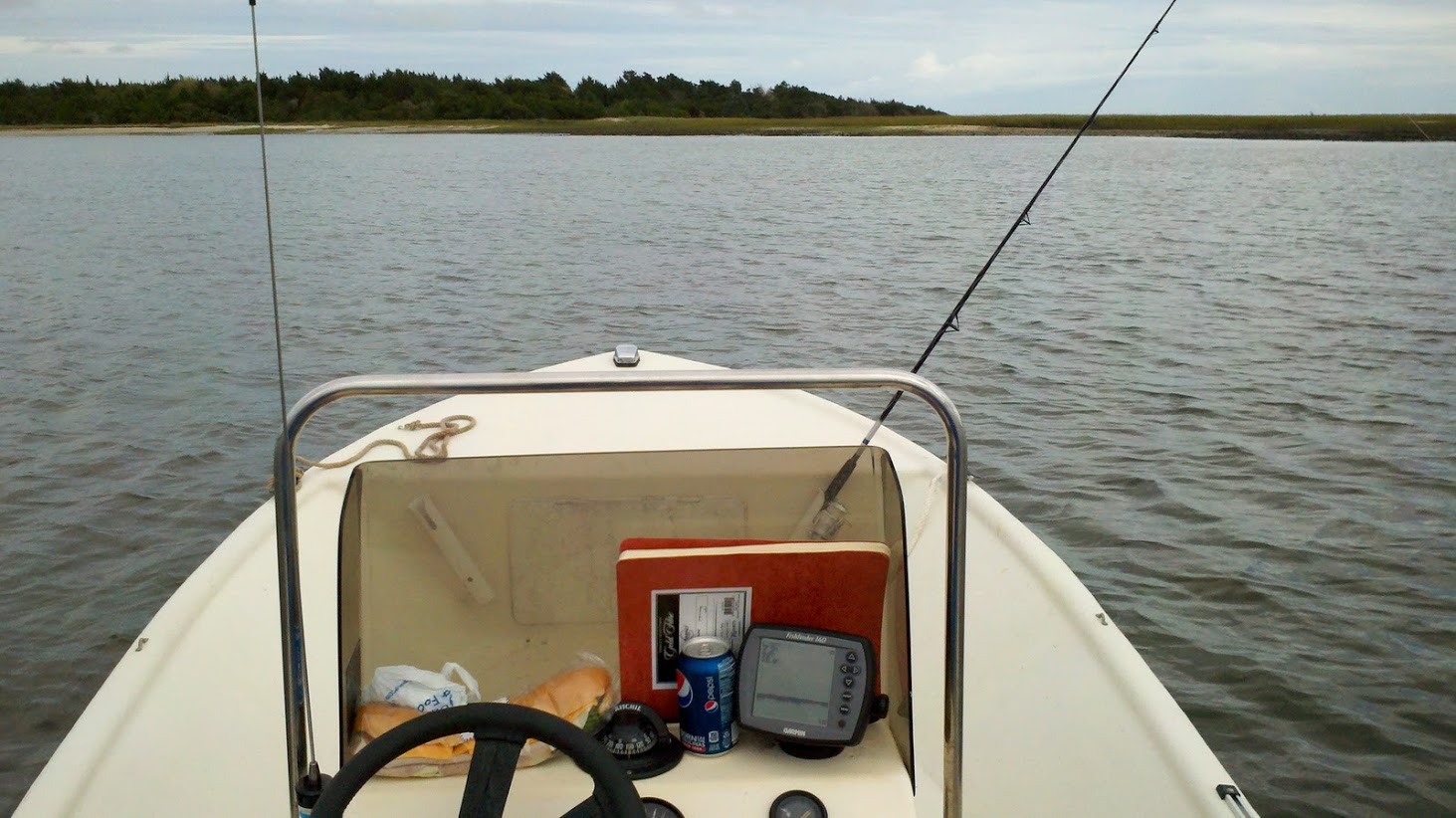
In both my professional and private life, I am a man who wears many hats. I am a deep-sea ecologist, a science writer, a goatherd, a geneticist, a conservation advocate, a grill master, and many others. When David asked me to join him in co-authoring “Trophy fishing for species threatened with extinction: A way forward building on a history of conservation” I did so not in my capacity as a marine science Ph.D., but as a recreational fisherman who cares deeply about the survival of his sport. Without fish, there is no fishing.

I was, at first, skeptical, but over the course of a summer, I came to appreciate what David was trying to accomplish.

I wrote most of my thesis on this boat, with a rod in the water.

Before I talk about fish, I need to talk about birds. 

Read More “Snowy Owls and Goliath Groupers: Why I co-authored “Trophy fishing for species threatened with extinction.”” »

Posts pagination

Previous 1 … 10 11 12 … 20 Next

Popular Posts

At least 74 practicing shark researchers: How a silly thing I said online raised thousands for conservationAt least 74 practicing shark researchers: How a silly thing I said online raised thousands for conservationFebruary 26, 2025David Shiffman
Why the new Trump order to shoot wolves is both illegal and a dreadful precedent for endangered speciesWhy the new Trump order to shoot wolves is both illegal and a dreadful precedent for endangered speciesSeptember 5, 2026Ali Gaster
Severely injured great white shark found, are scientists responsible?Severely injured great white shark found, are scientists responsible?March 29, 2011David Shiffman
5 things I learned helping to reassess the global conservation status of every species of tuna and billfish5 things I learned helping to reassess the global conservation status of every species of tuna and billfishSeptember 15, 2026David Shiffman
5 things you need to know about the proposed European Union shark finning ban, including how you can helpSeptember 17, 2012David Shiffman
13 wrong things about sharks that conservation advocates should stop saying in 2013 (and what they should say instead)December 27, 2012David Shiffman
That's not a blobfish: Deep Sea Social Media is Flooded by AI SlopThat's not a blobfish: Deep Sea Social Media is Flooded by AI SlopDecember 19, 2025Andrew Thaler
Getting a sense of porpoiseJanuary 20, 2009Andrew Thaler
What is a Sand Shark?What is a Sand Shark?November 12, 2017Chuck Bangley
How to build a canoe from scratch on a graduate student stipendHow to build a canoe from scratch on a graduate student stipendApril 17, 2010Andrew Thaler
Subscribe to our RSS Feed for updates whenever new articles are published.

We recommend Feedly for RSS management. It's like Google Reader, except it still exists.

Southern Fried Science

  • Home
  • About SFS
  • Authors
  • Support SFS


If you enjoy Southern Fried Science, consider contributing to our Patreon campaign.

Copyright © 2026 Southern Fried Science.

Theme: Oceanly Premium by ScriptsTown