Skip to content

Southern Fried Science

Over 15 years of ocean science and conservation online

  • Home
  • About SFS
  • Authors
  • Support SFS

Category: Conservation

Hawaii’s shark fin bill: Public comment period closes Monday

Posted on March 6, 2010April 4, 2010 By David Shiffman 3 Comments on Hawaii’s shark fin bill: Public comment period closes Monday
Conservation, Science

The government of Hawaii has proposed a bill banning the sale of shark fins within their state. It currently has the catchy title of  “SB 2169: A bill for an act relating to shark fins”, and you can read it here.

This bill is progressing much faster than my shark conservation friends working in Hawaii suspected. The public comment period closes Monday at 8:00 a.m. Hawaii time! If you have something you’d like to say about this bill, please do it soon.

You do not need to be a Hawaii resident to submit a comment!

Here’s how to submit a comment:

Read More “Hawaii’s shark fin bill: Public comment period closes Monday” »

Roundup, Parasites, and Fish, oh my!

Posted on March 1, 2010March 2, 2010 By Bluegrass Blue Crab 1 Comment on Roundup, Parasites, and Fish, oh my!
Conservation
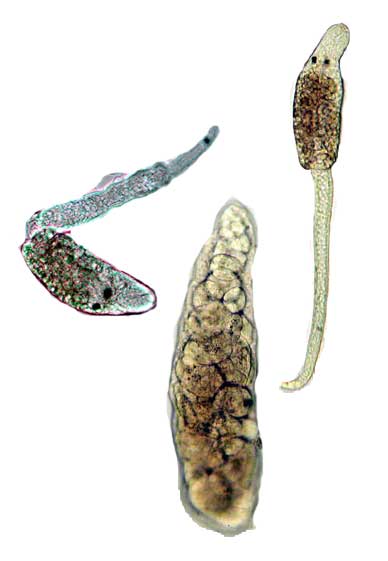
parasitic trematode
Telogaster: ubiquitous parasitic trematode helped out by a little Roundup, thanks indiana.edu

It takes a team from New Zealand to figure out that the US has its pesticide regulation wrong: toxins don’t act in the wild as they do in the carefully controlled and designed lab dosings.  Sounds reasonable, right?  Well, a recent article in the Journal of Applied Ecology by Kelly et al. was the first to describe Roundup’s ability to act synergistically with a parasitic worm.  Commercial formulations of Roundup, the most commonly used herbicide in the world, were found to increase the production of a parasitic worm’s (Telogaster opisthorchis) while at the same time decreasing a fish’s (Galaxias anomalus) immune system’s ability to fend off the parasite.

Read More “Roundup, Parasites, and Fish, oh my!” »

An update on saving the rainforest

Posted on February 27, 2010 By David Shiffman
Conservation

Last year, I wrote about an easy way to help save the rainforest. Tropicana had partnered with Cool Earth, and every time someone purchased a container of Tropicana Orange Juice, Tropicana would protect an acre of rainforest. As an avid orange juice drinker, I switched brands for a few months to help out this worthy … Read More “An update on saving the rainforest” »

Public fence-sitting then falling to one side

Posted on February 24, 2010February 23, 2010 By Bluegrass Blue Crab 1 Comment on Public fence-sitting then falling to one side
Conservation

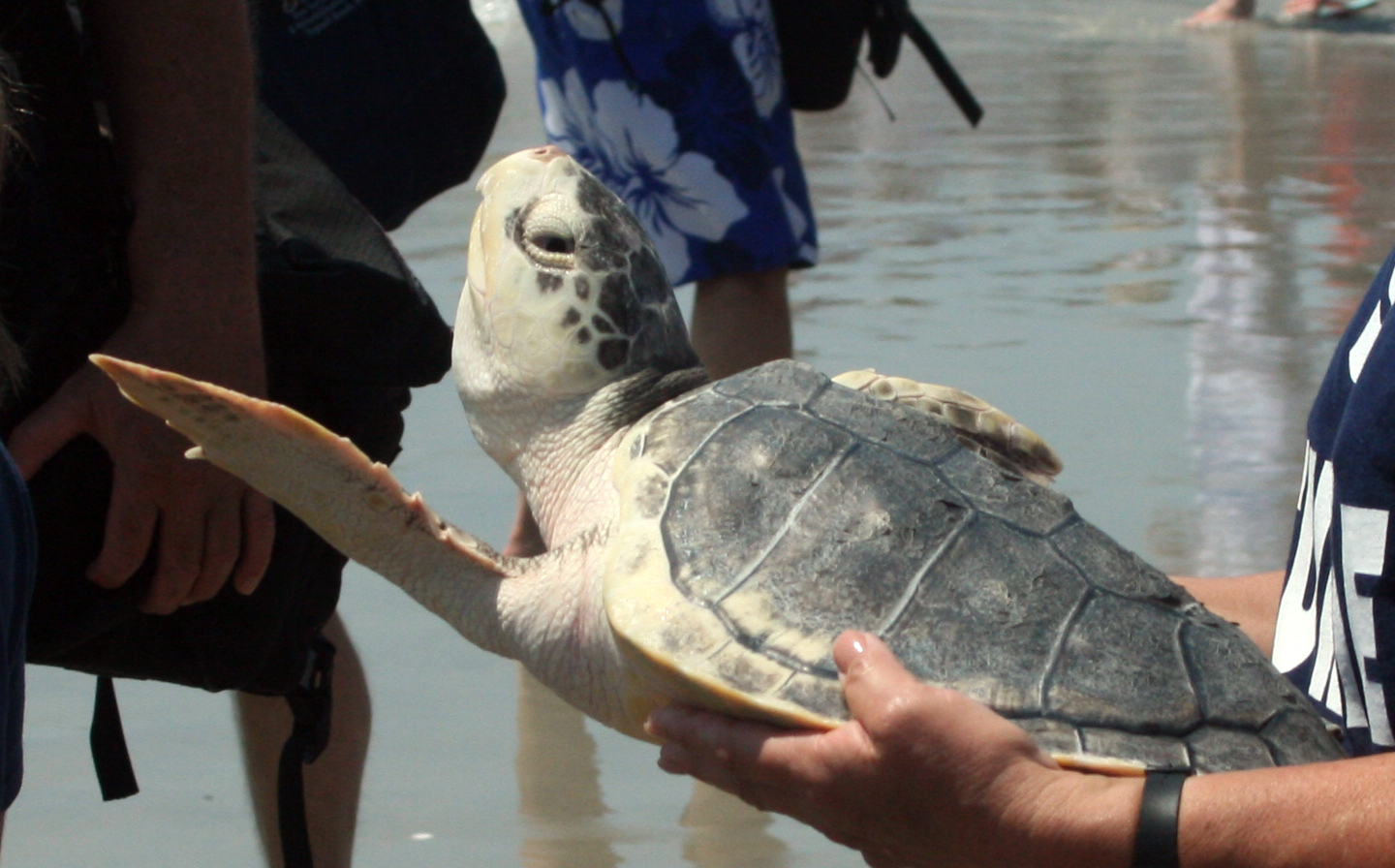
I recently attended a public hearing for a proclamation in the state of North Carolina that proposed to ban large-mesh gill nets in two areas of the state’s estuaries where sea turtle encounters have recently increased. There’s a large back story to both sides of the case and a lot of emotional motivation on both sides, leaving science flattened in the wake of charismatic leaders promoting their personal values. In fact, science became a bit of a flattened tool, left on the ground until useful to pick up and brandish, like a much-forgotten sword cast aside until it’s in a handy spot mid-battle. The meeting started as a classic jobs versus the environment case, but a few hours into the public comment period, I began to realize why this particular meeting had attracted the attendance of well over 300 people. I wasn’t in Kansas anymore, but at the crossroads of some of the largest debates in commercial fishing.

turtle release from the turtle hospital

Read More “Public fence-sitting then falling to one side” »

Lemon Sharks Protected in Florida!

Posted on February 19, 2010 By David Shiffman
Conservation, Science

From OceanicDefense.org

Several months ago, I asked for your help to get 10,000 signatures on a petition to protect lemon sharks in Florida coastal waters. Thanks to your signatures and the hard work of dedicated activists in Florida, we have succeeded! The Florida Fish and Wildlife Commission has agreed to protect lemon sharks!

Read More “Lemon Sharks Protected in Florida!” »

Ethical debate: saving owls by killing owls?

Posted on February 18, 2010March 16, 2010 By David Shiffman 71 Comments on Ethical debate: saving owls by killing owls?
Conservation

Image from OwlPages.com

This month’s Frontiers in Ecology and the Environment has a brief article about a new proposed conservation strategy that seems perfect for a Southern Fried Science ethical debate.  Northern spotted owls (Strix occidentalis caurina) are one of the most famous endangered species in the United States. While solutions to the destruction of their habitat by logging have been debated for years, a new threat has been recently identified- encroachment on their limited habitat by another species of owl (the barred owl, Strix varia).  Some conservationists now believe that we need to kill barred owls to protect spotted owls.

Read More “Ethical debate: saving owls by killing owls?” »

The Conservation Context in Population Genetics, Part 1

Posted on February 12, 2010 By Andrew Thaler 3 Comments on The Conservation Context in Population Genetics, Part 1
Conservation, Science

This is the first entry in Crowdsourcing ConGen. This entry is meant to be half of an Introduction which lays out the framework for what conservation genetics is, its philosophical basis in population genetics, and why it’s a meaningful method of inquiry for conservation. This first section is meant to outline foundational concepts in population genetics. It is not meant to be a detailed summery of population genetics, but needs to be accurate and clear.

Read More “The Conservation Context in Population Genetics, Part 1” »

The Krill Surplus Hypothesis and the Power of Data

Posted on January 14, 2010November 18, 2010 By Andrew Thaler 1 Comment on The Krill Surplus Hypothesis and the Power of Data
Conservation

This post was chosen as an Editor's Selection for ResearchBlogging.orgAlmost a year ago, we discussed briefly the Krill Surplus Hypothesis. In this model, the removal of large baleen whales created a competitive release for Minke whales, Balaenoptera bonaerensis, exponentially increasing their food supply and and allowing their population to boom. By removing all other krill eating whale from the Antarctic, Minke whales were allowed to thrive, gorging on an endless supply of krill. The flipside to this hypothesis is that now Minke whales have become competitive excluders of other baleen whales, preventing their re-population post-whaling. Minke whale may be preventing the recovery of other whale species.

Read More “The Krill Surplus Hypothesis and the Power of Data” »

Sea Shepherd: Friend or foe of shark conservation?

Posted on January 1, 2010March 23, 2010 By David Shiffman
Conservation, Science

croppedAs promised, this week’s ethical debate deals with one of the most hotly debated issues in the marine conservation community- the tactics of “Sea Shepherd”.

Though “Sea Shepherd” is most famous (or infamous) for their work with the Japanese whaling fleet, which is featured in “Whale Wars”, they are also heavily involved with the shark finning industry.

Before we get started, I want to say something about the tone of this debate. I know from our own comments sections, even ones that don’t deal directly with Sea Shepherd, that there are strong opinions on both sides of this issue. See last week’s Deep Sea News, particularly the comments section, for an example of this.  Here at Southern Fried Science, we recently came up with a new comments policy, which we will be enforcing strictly with this post. DO NOT personally attack anyone, DO NOT try to change the subject to something totally irrelevant, and DO NOT post under multiple names to create the false appearance of a majority (“sock puppetry”). Since the Deep Sea News post covered whale stuff pretty solidly, we will only be talking about shark finning here. WE ARE NOT TALKING ABOUT WHALING IN THIS POST.

Ok, now on to the debate.

Read More “Sea Shepherd: Friend or foe of shark conservation?” »

What a good conservation organization looks like

Posted on January 1, 2010March 23, 2010 By Andrew Thaler 15 Comments on What a good conservation organization looks like
Conservation

You know, we have a history on this blog of criticizing Sea Shepherd. We frequently criticize their methods, motivations, and effectiveness (we also went out of our way to add opposing views when we raised such a contentious issue). For a select group of readers, criticizing one conservation organization is tantamount to criticizing them all. If we say Sea Shepherd has been ineffective in protecting sharks, inevitably someone will assume that we’re in favor of shark finning. I don’t understand that leap of logic, but I’ve seen it come up so often that I know to expect it, probably even on this post. I can also expect someone to say “At least they’re doing something!” That is, of course, completely missing the point, since our argument is that the ‘something’ they’re doing is making it harder to affect real, lasting, change.

So let me begin by saying this – assume Sea Shepherd’s motives are absolutely pure, assume they really are try to protect the oceans, assume their commitment is absolute, then our main argument is still sound – they aren’t doing a very good job and they are generating a lot of ill will in the process. strplogo1

“Oh sure,” you say, “you can rag on Sea Shepherd ’til your face turns blue. Why don’t you show us someone who’s doing it right?”

Enter STRP.

I’m going to give a hat tip to the MarineBioBlog now, instead of at the end, since you really should go read their post before you continue. It’s very good and I’d hate to steal another blog’s thunder.

Read More “What a good conservation organization looks like” »

Posts pagination

Previous 1 … 44 45 46 Next

Popular Posts

Shark scientists want their research to help save threatened species, but don’t know how. Our new paper can help.Shark scientists want their research to help save threatened species, but don’t know how. Our new paper can help.December 1, 2025David Shiffman
Norway and Cook Islands put their deep-sea mining plans on pause.Norway and Cook Islands put their deep-sea mining plans on pause.December 3, 2025Andrew Thaler
What Ocean Ramsey does is not shark science or conservation: some brief thoughts on "the Shark Whisperer" documentaryWhat Ocean Ramsey does is not shark science or conservation: some brief thoughts on "the Shark Whisperer" documentaryJuly 2, 2025David Shiffman
The Trouble with Teacup PigsThe Trouble with Teacup PigsOctober 14, 2012Andrew Thaler
What we know we don't know: impacts of deep-sea mining on whales, dolphins, sharks, turtles, and other migratory species.What we know we don't know: impacts of deep-sea mining on whales, dolphins, sharks, turtles, and other migratory species.November 20, 2025Andrew Thaler
2025: My year in writing, public speaking, and media interviews2025: My year in writing, public speaking, and media interviewsDecember 3, 2025David Shiffman
Urea and Shark OsmoregulationUrea and Shark OsmoregulationNovember 15, 2010David Shiffman
Shark of Darkness: Wrath of Submarine is a fake documentaryShark of Darkness: Wrath of Submarine is a fake documentaryAugust 10, 2014Michelle Jewell
How tiny satellites are tracking marine wildlifeDecember 1, 2025Andrew Thaler
Build a dirt cheap, tough-as-nails field computer in a Pelican caseBuild a dirt cheap, tough-as-nails field computer in a Pelican caseJuly 21, 2015Andrew Thaler
Subscribe to our RSS Feed for updates whenever new articles are published.

We recommend Feedly for RSS management. It's like Google Reader, except it still exists.

Southern Fried Science

  • Home
  • About SFS
  • Authors
  • Support SFS


If you enjoy Southern Fried Science, consider contributing to our Patreon campaign.

Copyright © 2025 Southern Fried Science.

Theme: Oceanly Premium by ScriptsTown