Skip to content

Southern Fried Science

Over 15 years of ocean science and conservation online

  • Home
  • About SFS
  • Authors
  • Support SFS

Category: Science

Five Questions with Irene Kingma

Posted on July 24, 2019July 24, 2019 By Angelo Villagomez
Science

I spent last week in Saba in the Dutch Caribbean with the Dutch Elasmobranch Society, St. Maarten Nature Foundation, and the Saba Conservation Foundation serving as a research assistant to an international team of shark scientists participating in the Save Our Sharks Expedition 2019. I previously wrote about some of the goals of the expedition, and … Read More “Five Questions with Irene Kingma” »

Five Questions With Tadzio Bervoets

Posted on July 23, 2019July 23, 2019 By Angelo Villagomez
Science

I spent last week in Saba in the Dutch Caribbean with the Dutch Elasmobranch Society, St. Maarten Nature Foundation, and the Saba Conservation Foundation serving as a research assistant to an international team of shark scientists participating in the Save Our Sharks Expedition 2019. I previously wrote about some of the goals of the expedition, … Read More “Five Questions With Tadzio Bervoets” »

A big-hearted iron snail is the first deep-sea species to be declared endangered due to seabed mining.

Posted on July 22, 2019July 22, 2019 By Andrew Thaler
Conservation, Science

[Note: this article originally appeared on the Deep-sea Mining Observer. It is republished here with permission.]

In 2001, on an expedition to hydrothermal vent fields in the Indian Ocean, researchers made a bizarre discovery. Clustered in small aggregations around the base of a black smoker was an unusual snail, seemingly clad in a suit of armor. Rather than a single, hard, calcareous structure, the snail’s operculum was covered in a series of tough plates. On recovery to the surface, those plates, as well as the snail’s heavy shell, began to rust. This was an Iron Snail.
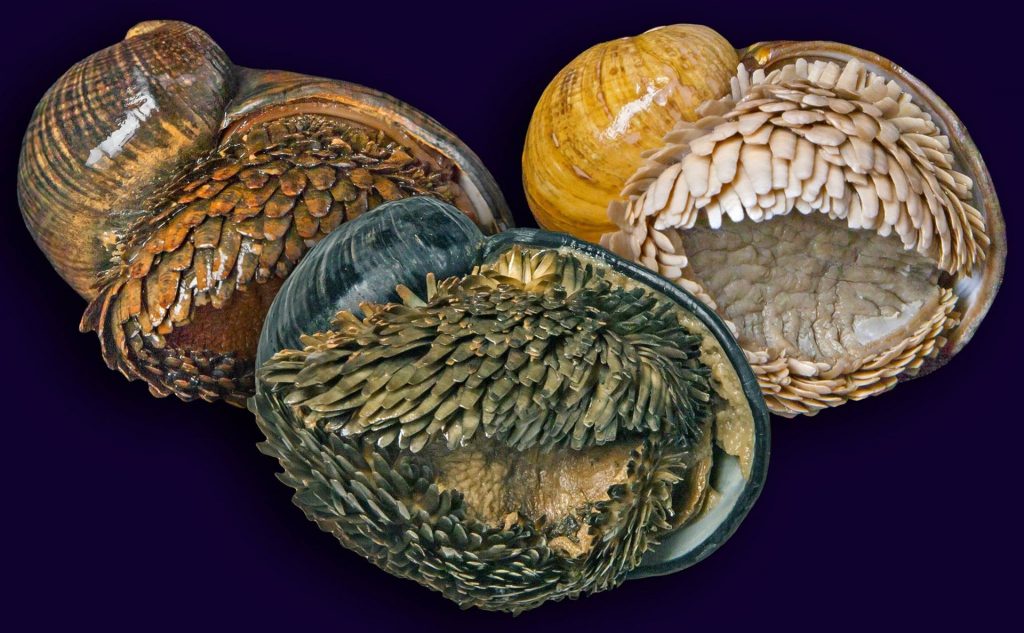
Individuals from the three known populations of C. squamiferum: Kairei, Longqi, Solitaire (left to right). Chong Chen.

Read More “A big-hearted iron snail is the first deep-sea species to be declared endangered due to seabed mining.” »

Book review: “Shark Research: Emerging Technologies and Applications for the Field and Laboratory”

Posted on June 7, 2019June 7, 2019 By David Shiffman
Reviews and Interviews, Science, Uncategorized

Editors: Jeffrey C. Carrier, Michael R. Heithaus, Colin A. Simpfendorfer. CRC Press, available here.

I can’t imagine a more useful introductory reference guide for new or prospective graduate students starting their career in marine biology than “Shark Research: Emerging Technologies and Applications for the Field And Laboratory”. This book is designed for people who have little to no familiarity with a research discipline but are about to start working in that discipline, a large and important audience that is often ignored by books and review papers geared towards people who are already experts. So many graduate students are told to learn a new research method by reading technical literature that assumes they already know this stuff, resulting in stress and frustration.

Read More “Book review: “Shark Research: Emerging Technologies and Applications for the Field and Laboratory”” »

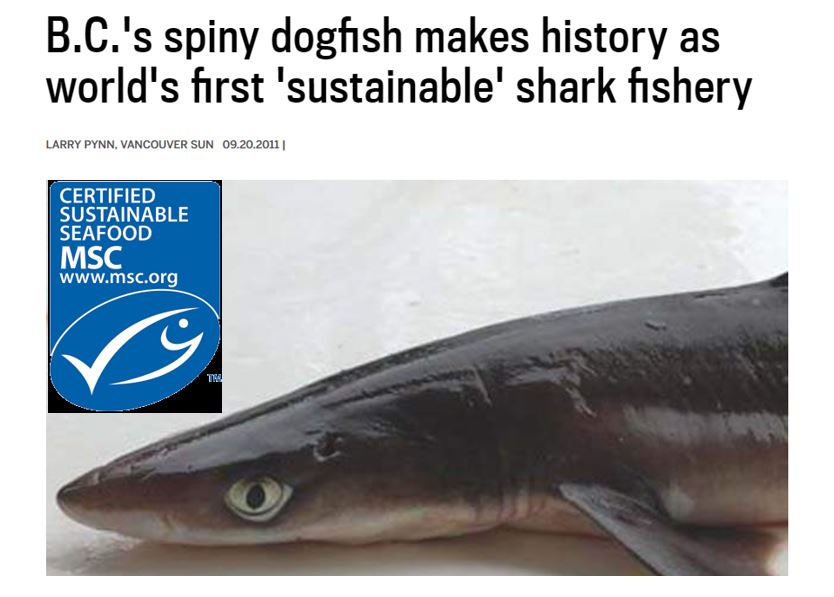
Research expedition: what ever happened to the world’s first certified sustainable shark fishery?

Posted on April 3, 2019April 3, 2019 By David Shiffman 2 Comments on Research expedition: what ever happened to the world’s first certified sustainable shark fishery?
Research expedition: what ever happened to the world’s first certified sustainable shark fishery?
Conservation, Science

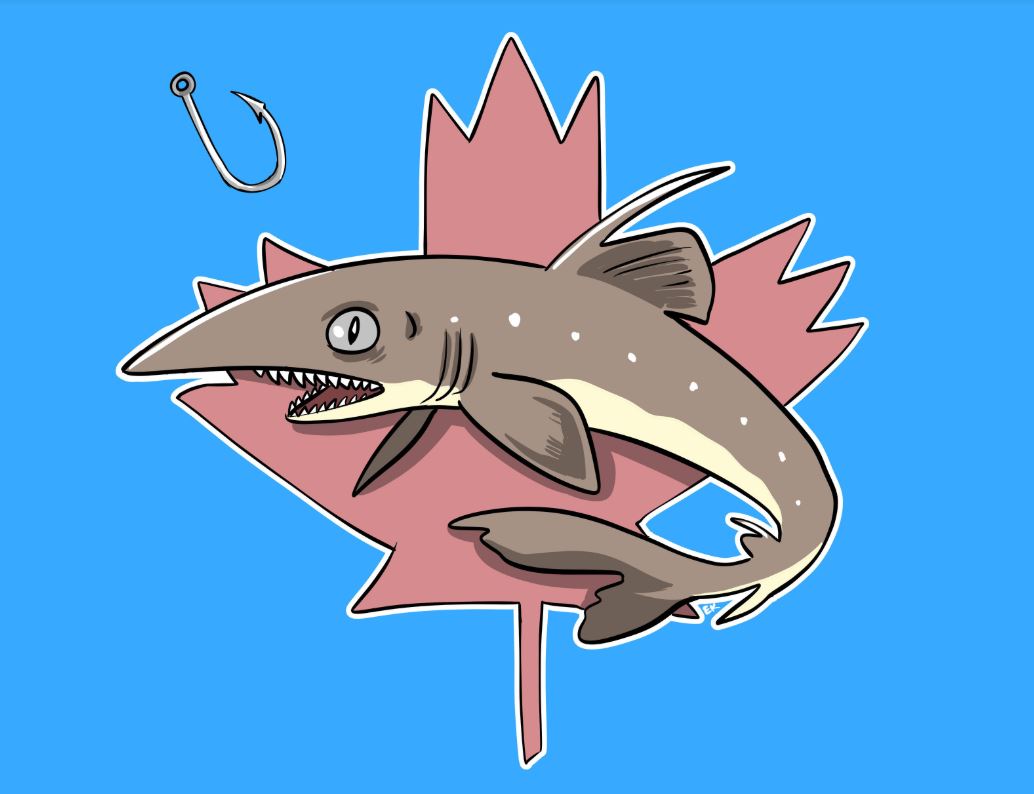
My Postdoctoral research has focused on understanding the causes and consequences of public misunderstanding about shark fisheries management. While scientists overwhelmingly support sustainable fisheries management as a solution to shark overfishing, many concerned citizens and conservation activists prefer total bans on all shark fishing and trade. Some go so far as to (wrongly) claim that sustainable shark fisheries cannot exist even in theory and do not exist in practice anywhere in the world, and that bans are the only possible solution.

There’s an important piece of data that very rarely makes it into these discussions. Amidst the ongoing discussions about whether or not sustainable shark fisheries are even possible, one right in my backyard became the first shark fishery anywhere in the world to be certified as sustainable by the Marine Stewardship Council.

However, a few years after BC’s spiny dogfish fishery got certified, the certification was quietly withdrawn. I couldn’t find any information in the MSC reports, or in associated scientific literature or government reports, that explained what happened to this fishery, which was thriving until recently. No scientists, managers, or conservation advocates who I asked about this knew exactly what happened to BC’s spiny dogfish fishery.

Read More “Research expedition: what ever happened to the world’s first certified sustainable shark fishery?” »

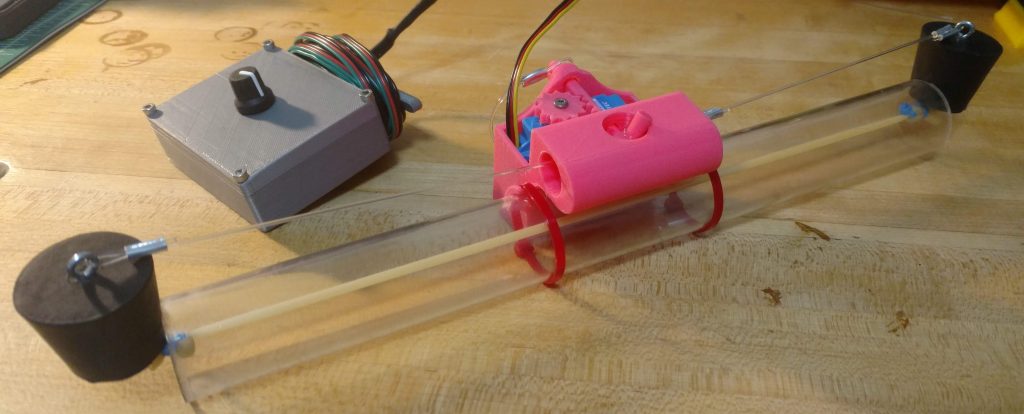
The next generation open-source, 3D-printable Niskin bottle has arrived!

Posted on February 12, 2019February 12, 2019 By Andrew Thaler
Oceanography for Everyone, Science

The Niskin bottle, a seemingly simple device designed to take water samples at discrete depths, is one of the most important tools of oceanography. These precision instruments allow us to bring ocean water back to the surface to study its chemical composition, quality, and biologic constituency. If you want to know how much plastic is circulating in the deep sea, you need a Niskin bottle. If you need to measure chemical-rich plumes in minute detail, you need a Niskin bottle. If you want to use environmental DNA analyses to identify the organisms living in a region of the big blue sea, you need a Niskin bottle.

View this post on Instagram

It's ready! The next-generation open-source, 3D-printable Niskin bottle is here! What do you want to sample? #ocean #oceanography #opensource #3dprinting #ecology #conservation

A post shared by Andrew David Thaler (@drandrewthaler) on Feb 12, 2019 at 2:52pm PST

Niskin bottles are neither cheap nor particularly easy to use. A commercial rosette requires a winch to launch and recover, necessitating both a vessel and a crew to deploy. For informal, unaffiliated, or unfunded researchers, as well as citizen scientists or any researcher working on a tight budget, getting high-quality, discrete water samples is an ongoing challenge.

Read More “The next generation open-source, 3D-printable Niskin bottle has arrived!” »

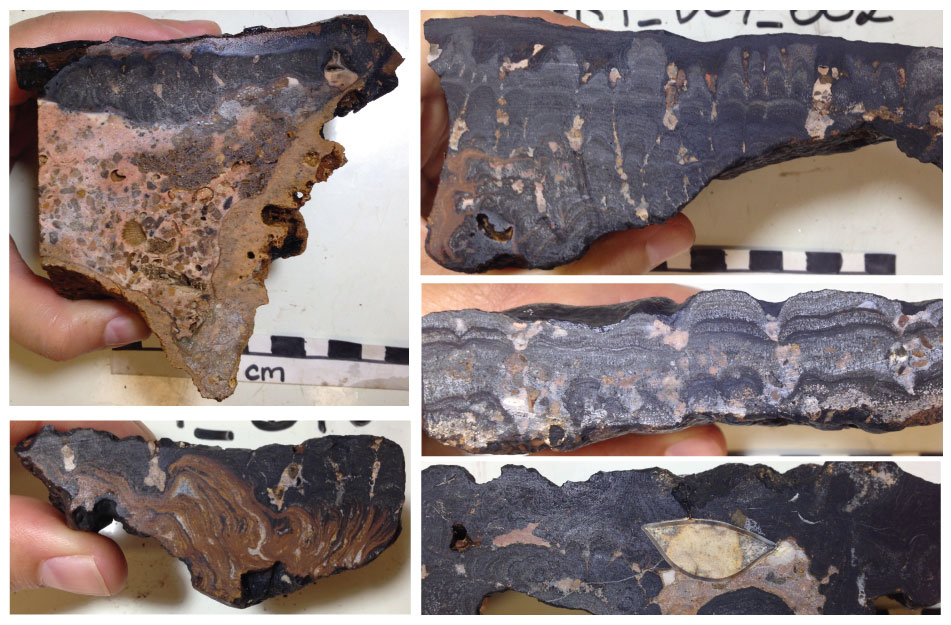
A lost continent, rich in cobalt crusts, could create a challenging precedent for mineral extraction in the high seas.

Posted on January 18, 2019January 18, 2019 By Andrew Thaler
A lost continent, rich in cobalt crusts, could create a challenging precedent for mineral extraction in the high seas.
Science

[This article originally appeared yesterday in the Deep-sea Mining Observer. ~Ed.]

The Rio Grande Rise is an almost completely unstudied, geologically intriguing, ecologically mysterious, potential lost continent in the deep south Atlantic. And it also hosts dense cobalt-rich crusts.

The Rio Grande Rise is a region of deep-ocean seamounts roughly the area of Iceland in the southwestern Atlantic. It lies west of the Mid-Atlantic Ridge off the coast of South America and near Brazil’s island territories. As the largest oceanic feature on the South American plate, it straddles two microplates. And yet, like much of the southern Atlantic deep sea, it is relatively under sampled.

Almost nothing is known about the ecology or biodiversity of the Rio Grande Rise.

Read More “A lost continent, rich in cobalt crusts, could create a challenging precedent for mineral extraction in the high seas.” »

All the slime that sticks, we print: 2018 in Hagfish Research

Posted on December 27, 2018December 27, 2018 By Andrew Thaler
Science

Hagfish. You love them. I love them. Of all the fish in all the seas, none are more magnificent than the hagfish. Across the world, children celebrate the hagfish by making slime from Elmer’s glue, their own mucous, or just, like, something. Seriously, how is is that toddler hands are always coated in some strange, unidentifiable slime?

And never, ever forget:

Your car has just been crushed by hagfish: Frequently Asked Questions.

2018 was a big year in hagfish science. Below are just a few of my favorite studies.

Biogeography

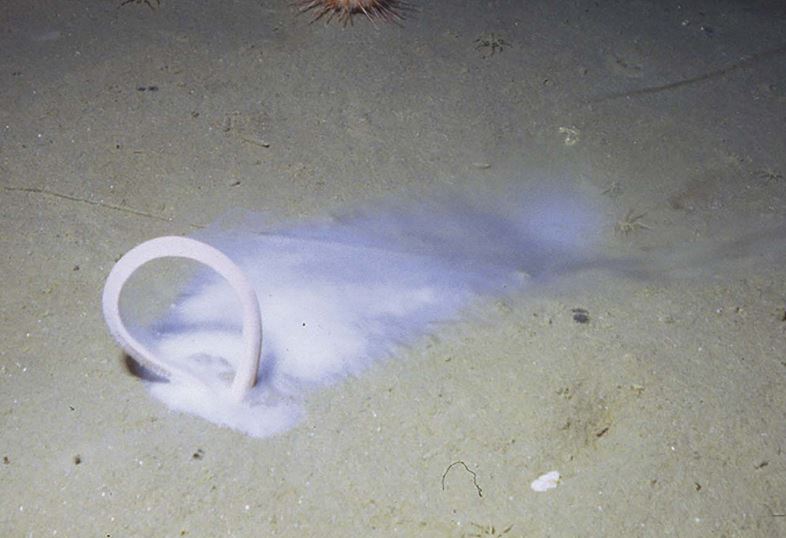
A hagfish in the high Antarctic? Hagfish have previously never been observed in the shallow waters around Antarctic, but a photograph from 1988 was determined this year to be a hagfish feeding on a large pile of clam sperm in shallow water. Neat!

Possible hagfish at 30 m in Salmon Bay in 1988. The white patch is Laternula elliptica sperm.

Incidentally, the reason the photo languished for so long is that it was originally though to be a Nemertean. Because Antarctic Nemertean worms are huge and horrifying.

  • Dayton and Hammerstrom (2018) A hagfish at Salmon Bay, McMurdo Sound, Antarctica? DOI: 10.1017/S0954102018000202.

Read More “All the slime that sticks, we print: 2018 in Hagfish Research” »

Canada announced new marine protected area standards. Here’s how science and conservation professionals reacted.

Posted on October 22, 2018 By David Shiffman
Science

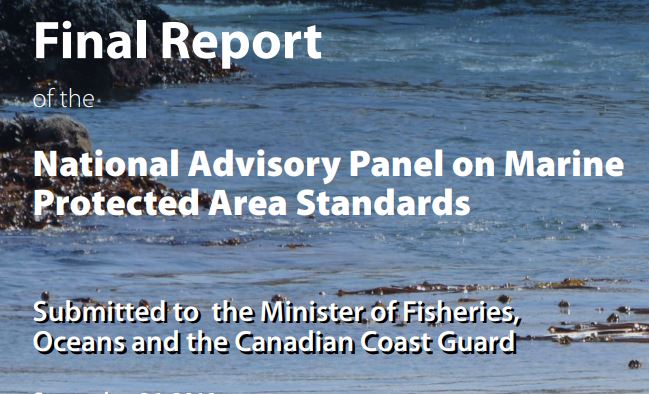
Recently, the Canadian government released the Final Report of the National Advisory Panel on Marine Protected Area Standards. This report is a set of guidelines and goals for the creation of new marine protected areas in Canada, and comes as Canada is hoping to greatly increase the number and quality of MPAs. I reached out to MPA experts and environmental nonprofits to ask what they think.

Read More “Canada announced new marine protected area standards. Here’s how science and conservation professionals reacted.” »

Barndoor skates, once a textbook example of overfishing, have recovered enough to allow fishing

Posted on October 19, 2018October 19, 2018 By David Shiffman
Science

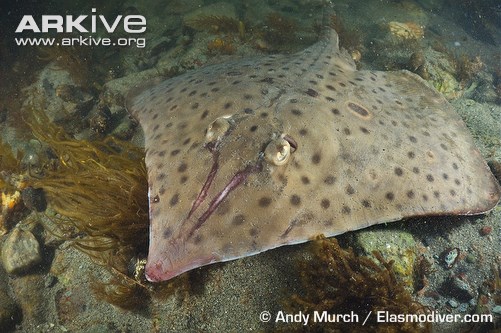
Barndoor skates were once thought to be so overfished that a highly-publicized paper from 1998 noted that they had been “driven to near extinction without anyone noticing.” One of the largest skates, barndoor skates can reach over 5 feet in wingspan, which is large enough that their diet includes small sharks like spiny dogfish; for a skate, that’s about as close as it gets to charismatic megafauna!

Recently, NOAA Fisheries announced that Barndoor skate populations off the Northeastern United States had finally recovered enough that fishing for them could resume. This move comes after a 2009 NOAA Fisheries report showed that the species had begun to recover enough that they could be removed from the species of concern list, though they remained protected at the time. “This is good news,” Mike Ruccio, a Supervisory Fishery Policy Analyst for NOAA Fisheries Greater Atlantic Regional Fisheries Office, told me. “Rebuilding overfished stocks is one of the cornerstones of the US domestic policy on fisheries.”

Read More “Barndoor skates, once a textbook example of overfishing, have recovered enough to allow fishing” »

Posts pagination

Previous 1 … 9 10 11 … 81 Next

Popular Posts

How close did the world's first deep-sea mining come to the dredging the world's largest cold-water coral reef?How close did the world's first deep-sea mining come to the dredging the world's largest cold-water coral reef?March 17, 2026Andrew Thaler
At least 74 practicing shark researchers: How a silly thing I said online raised thousands for conservationAt least 74 practicing shark researchers: How a silly thing I said online raised thousands for conservationFebruary 26, 2025David Shiffman
What Ocean Ramsey does is not shark science or conservation: some brief thoughts on "the Shark Whisperer" documentaryWhat Ocean Ramsey does is not shark science or conservation: some brief thoughts on "the Shark Whisperer" documentaryJuly 2, 2025David Shiffman
That's not a blobfish: Deep Sea Social Media is Flooded by AI SlopThat's not a blobfish: Deep Sea Social Media is Flooded by AI SlopDecember 19, 2025Andrew Thaler
Here are some ocean conservation technologies that I'm excited aboutHere are some ocean conservation technologies that I'm excited aboutFebruary 19, 2026David Shiffman
Urea and Shark OsmoregulationUrea and Shark OsmoregulationNovember 15, 2010David Shiffman
Here's what I teach my students about finding jobs in marine biology and conservationHere's what I teach my students about finding jobs in marine biology and conservationApril 10, 2024David Shiffman
I turned my woodshop into a personal solar farm.I turned my woodshop into a personal solar farm.June 21, 2021Andrew Thaler
My "Follow ocean science and conservation experts on Bluesky and Instagram" assignmentMy "Follow ocean science and conservation experts on Bluesky and Instagram" assignmentNovember 19, 2024David Shiffman
Alberta, Canada is the proud owner of the largest man-made pyramid on the planetAlberta, Canada is the proud owner of the largest man-made pyramid on the planetOctober 16, 2012Andrew Thaler
Subscribe to our RSS Feed for updates whenever new articles are published.

We recommend Feedly for RSS management. It's like Google Reader, except it still exists.

Southern Fried Science

  • Home
  • About SFS
  • Authors
  • Support SFS


If you enjoy Southern Fried Science, consider contributing to our Patreon campaign.

Copyright © 2026 Southern Fried Science.

Theme: Oceanly Premium by ScriptsTown