Skip to content

Southern Fried Science

Over 15 years of ocean science and conservation online

  • Home
  • About SFS
  • Authors
  • Support SFS

Category: Science

What can the funniest shark memes on the internetz teach us about ocean science and conservation?

Posted on November 8, 2013November 11, 2013 By David Shiffman 4 Comments on What can the funniest shark memes on the internetz teach us about ocean science and conservation?
Conservation, Science

In recent years, some of my favorite ocean predators have started to show up in memes. As part of our tradition of using internet humor to educate our readers, I’ve selected the funniest shark memes on the internetz, and I’ve tried to explain what’s going on in the photos used for those memes. I’m happy to discuss these science and conservation issues in the comments if you have any questions, but my selection of what constitutes that funniest shark memes  is obviously correct and beyond dispute.

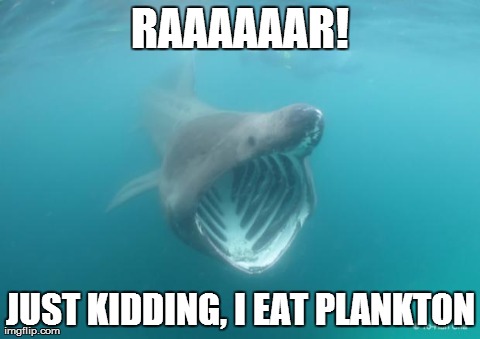
12) Ferocious planktivore is ferocious
4d7m1

Original image source: Flickr user Yohancha.
What’s going on? This shows a basking shark, the second largest shark in the world, with its mouth open wide. While this gaping maw may appear to be menacing, like whale sharks, the basking shark is a strict planktivore.
Read More “What can the funniest shark memes on the internetz teach us about ocean science and conservation?” »

Fish out of water: the necropsy of the beached oarfish

Posted on November 8, 2013November 8, 2013 By Guest Writer
Science

antonella_pretiAntonella Preti, graduated with a degree in Biology specializing in Marine Ecology from the University of Turin, Italy. She is currently attending a long distance Ph.D. program through the School of Biological Sciences of Aberdeen, Scotland.  She has been working for 15 years on the feeding ecology of large pelagic species (sharks, swordfish and cetaceans) caught in the California drift gill net fisheries at the Southwest Fisheries Science Center in La Jolla, California. She has co-authored numerous scientific publications and two books, Mako Sharks and Sharks of the Pacific Northwest.

When most people refer to a “once in a lifetime fish” they generally mean a big fish that they fought for a long time that will make an excellent trophy for their mantle or a story for their grandchildren.  When marine scientists talk about a “once in a lifetime fish,” we often mean a species that is so rarely seen that we feel lucky to have observed it, even after it has washed up on a beach somewhere.  This month we in Southern California have been lucky enough to have one such “once in a lifetime fish” appear twice in a span of a week, as two oarfish washed ashore local beaches.  The first, an 18-foot specimen was found on Catalina Island and the second, a 14-foot specimen (approximately 275 pounds), was found in Oceanside, CA.  I had the unique opportunity to assist in the necropsy of the second individual at Southwest Fisheries Science Center (SWFSC) in La Jolla, CA.  This was an interesting and exciting opportunity to learn more about a species about which little is known as it rarely encountered.

Read More “Fish out of water: the necropsy of the beached oarfish” »

10 components of a sustainable shark fishery, and how you can help implement them

Posted on November 7, 2013November 7, 2013 By David Shiffman 1 Comment on 10 components of a sustainable shark fishery, and how you can help implement them
Conservation, Science

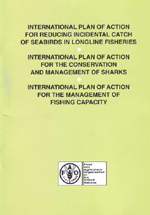
x3170e00In 1999, government officials from all over the world gathered in Rome for a meeting of the United Nations Food and Agricultural Organization’s Committee on Fisheries. The Committee meets every two years,  but one of the numerous outputs of this meeting was particularly significant, at least for sharks. Based on years of consultation and discussion by experts, the group agreed on a formal set of general principles that should make up sustainable and well-managed shark fisheries.

These 10 principles, part of a larger International Plan of Action for Sharks (IPOA-Sharks) , have helped shape more than a decade of scientific research and management priorities for the chondrichthyan fishes. When properly implemented and enforced, they allow people to use sharks (and rays and skates and chimeras, included in the IPOA-Sharks definition of “sharks”) as a natural resource while keeping populations healthy and allowing depleted stocks to recover.

According to the IPOA-Sharks, a national shark plan should aim to:

Read More “10 components of a sustainable shark fishery, and how you can help implement them” »

One-fifth of all known hydrothermal vents are threatened by deep-sea mining

Posted on November 6, 2013November 6, 2013 By Andrew Thaler
Conservation, Science
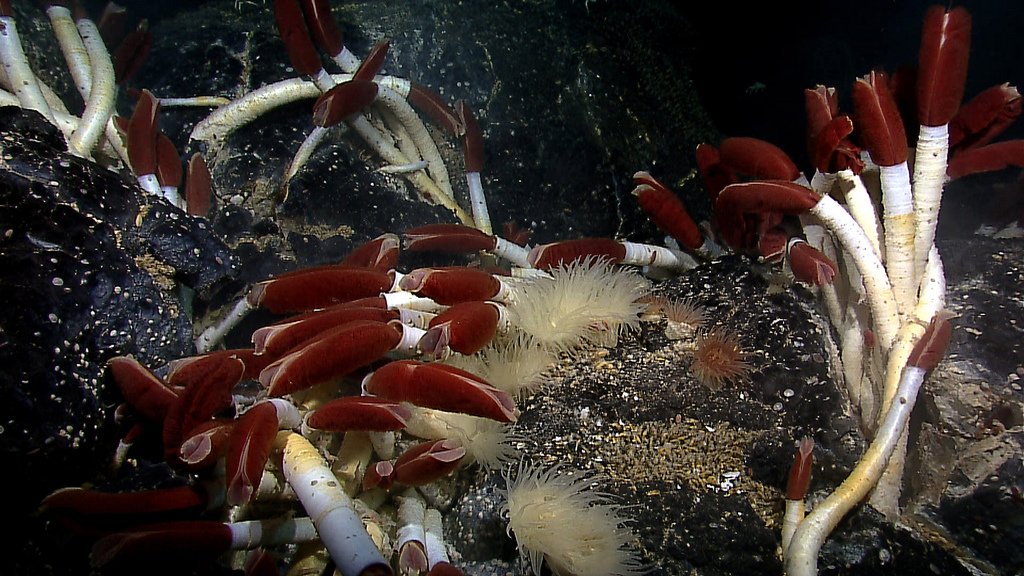
Tube worms and anemones on the Galapagos Rift. NOAA Ocean Explorer.
Tube worms and anemones on the Galapagos Rift. Photo Credit: NOAA Ocean Explorer.

Few moments have so profoundly altered our understanding of what it means to be a living thing on Planet Earth as the discovery of deep-sea hydrothermal vents and the organisms that thrive around them. The first vents visited were dominated by Riftia pachyptila, the giant tube worm, whose magnificent ruby plumage parted to reveal an entire community adapted to harness the chemical energy that poured from the vents. It is almost poetic that the first vents were found on the Galapagos Rift; the same tectonic feature contributed to another great, formative moment in biology — the Voyage of the Beagle. Hydrothermal vents provided the first evidence that the sun was not the only source of energy that living organisms could harness. They opened our eyes to the potential of chemosynthesis and hinted at an ocean of unfathomable wonders waiting to be discovered.

Read More “One-fifth of all known hydrothermal vents are threatened by deep-sea mining” »

Check out my #DrownYourTown feature at Zócalo Public Square

Posted on November 1, 2013November 1, 2013 By Andrew Thaler 2 Comments on Check out my #DrownYourTown feature at Zócalo Public Square
#DrownYourTown, Popular Culture, Science

One day, I’ll look back fondly and tell my grandkids about the week I spent flooding the planet. It began as a lark. For the past few months, I’ve been writing installments of a serialized science fiction novel about a world in which the oceans have risen nearly 80 meters and most of the human … Read More “Check out my #DrownYourTown feature at Zócalo Public Square” »

28 fallacies about the Fukushima nuclear disaster’s effect on the US West Coast

Posted on October 29, 2013November 4, 2013 By Andrew Thaler 51 Comments on 28 fallacies about the Fukushima nuclear disaster’s effect on the US West Coast
Conservation, Science

The Fukushima Daiichi nuclear power plant is back in the news, with recent reports of continued leaks. Coming on the heels of these new reports is a viral blog post entitled 28 Signs That The West Coast Is Being Absolutely Fried With Nuclear Radiation From Fukushima. The article is a paranoid, poorly reasoned attempt to link the tragedy of the Fukushima disaster to just about every environmental issue facing the US west coast in the last few months. At its best, it’s an illogical piece of post-modern absurdism. At its worst, its empirically false and intentionally misleading, rife with out-of-context quotes and cherry-picked data. The author had 28 chances to make a single reasonable point, and every single one rang hollow.

Of course it went viral.

Read More “28 fallacies about the Fukushima nuclear disaster’s effect on the US West Coast” »

Happy Fun Science Friday – First Venomous Crustacean

Posted on October 25, 2013October 28, 2013 By Kersey Sturdivant 4 Comments on Happy Fun Science Friday – First Venomous Crustacean
Science

Happy Fun Science Friday everyone! After a busy semester I hope to get into the regular groove of Fun Science Friday posts.

This week I bring you the first and only known venomous crustacean, the remipede Speleonectes tulumensis.

Remipede
A remipede (Speleonectes tanumekes). Credit: Joris van der Ham

These crustaceans were first discovered in the 1980s and suspected to be venomous after documentation that behind their jaws, they had a pair of sharp, hollow-tipped fangs that were connected to glands.  This was a strong indication that the fangs were being used to inject a chemical into prey, though it was never proven…. Until now!  Step forward Bjorn von Reumont, from the Natural History Museum in London, whose team  thoroughly described the fangs and characterized the cocktail of toxins in the venom of S. tulumensis.

Read More “Happy Fun Science Friday – First Venomous Crustacean” »

#DrownYourTown: Exploring Sea Level Rise through real-time, interactive, GIS modeling

Posted on October 16, 2013November 1, 2013 By Andrew Thaler 4 Comments on #DrownYourTown: Exploring Sea Level Rise through real-time, interactive, GIS modeling
#DrownYourTown, Science

UPDATE: These posts, and the hashtag are getting a lot of attention, so I’d like to reiterate, Caveat Tweetor (twitter beware) — these models are being generated on the fly as request come in. They are not validated and there are many variables that influence sea level rise which are not taken into account. This is a fun way to visualize potential sea level rise but it would be inadvisable to use it for real estate speculation. 

This afternoon, I took to twitter to try out a novel outreach initiative — getting people to think about sea level rise by asking them to drown their home towns. With Google Earth and a “Sea Level” image layer booted up, I was poised for 2 hours of intense map manipulation. The requests came in fast, and ranged from the expected coastal cities with a couple meters of sea level rise all the way to the radical (yes, we flooded Reno, Nevada). After 120 minutes, I had produced models at 52 locations and interacted with more than 400 people. I was also completely exhausted. Here, for your enjoyment, is the complete collection of #DrownYourTown models from the initial 2-hour marathon.

Read More “#DrownYourTown: Exploring Sea Level Rise through real-time, interactive, GIS modeling” »

Science in the Fleet: The Promise of Technology as a Panacea for Human Impacts

Posted on October 7, 2013October 27, 2013 By Andrew Thaler
Popular Culture, Science

FleetCover1-REACHToday marks the release of Fleet: Wide Open, part 2 of my serial maritime science fiction adventure. With half the story revealed, we now see the roll technology plays in both the history and the day-to-day operations of the fleet. Specifically, we see three major technological advances that seem as though they would have been major solutions to the environmental problems facing the fleet, yet somehow, the world continues to fall apart.

In our world and the world of the fleet, we often hold up technological innovation as a panacea for global problems. It’s easy to look towards the next big advancement as the solution to our current woes — from alternative energy sources to groundbreaking trash removal devices — but what is often lost in the hype is the human component. Yes, technology is a necessary component of global environmental solutions. You can even look at the arc of human advancement as one long series of bootstrap-hoists — we need to utilize dirty tech to access environmentally sustainable tech (i.e. you can’t develop the ability to produce solar panels without first harnessing the energy locked in fossil fuels). But technology alone is useless without also changing human behavior. This creates a major problem, as technological innovation is often used as a tool to bypass human behavior entirely, the assumption being that it doesn’t matter what the individual does, so long as the tech is in place to mitigate it.

The horse piles of New York

Around the turn of the last century, New York City was in crisis. Horses, the primary means of transportation for people and products within the city have an unfortunate byproduct — feces, lots and lots of feces. At its peak, more than 60,000 horses were depositing upwards of 500 tones of manure every day. The horse crisis itself was the result of a major technological innovation — more efficient fertilizer based on mass produced phosphate. Where once there was a major economic incentive to collect the manure and resell it as fertilizer, now there was also no incentive. And so, the mountains of feces piled up. It got so bad that one editorial expounded that, by the 1930’s piles of horse manure would stand three stories tall and the city would be awash in an unending tide of feces.

Read More “Science in the Fleet: The Promise of Technology as a Panacea for Human Impacts” »

A photo of people eating a shark is upsetting activists for some silly reason

Posted on September 26, 2013September 30, 2013 By David Shiffman 42 Comments on A photo of people eating a shark is upsetting activists for some silly reason
Conservation, Science

davesquare

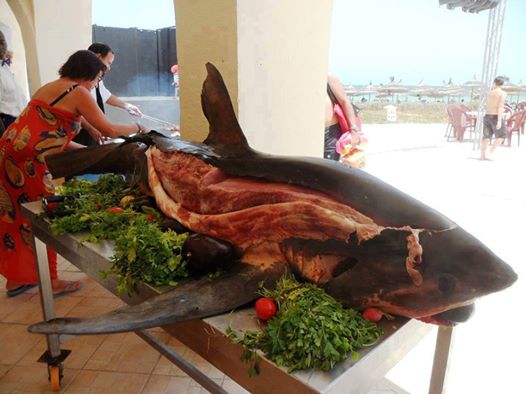
Photo via activist Andy Gray on Facebook, original photographer unknown

A photo of a single thresher shark being served for dinner at a resort is making the rounds among shark conservation activists. The photo, shown on the right, has been shared more than 12,000 times. A petition written in response to the image  (in French) has over 1,000 signatures. The story has even made it into the mainstream media. The original caption refers to this scene as “shameful and disgraceful”, while follow-up comments refer to it as “shocking,” “sickening,” “disgusting,” “beyond words,” “shameful,” and “barbaric.”  12,000 shares and a 1,000 signature petition is significantly more outrage than I’ve ever seen for any issue involving a single individual shark. Why, exactly, are activists so upset about it?

It can’t simply be reaction to the death of a single shark. If you believe that no sharks should be eaten ever (or that no animals should be eaten ever), that’s a perfectly valid belief system. You should be (and likely are) aware, however, that the overwhelming majority of the world, including almost all governments, the majority of the scientific community, and many NGOs, completely disagree with you. People have encountered photos of individual sharks being killed before, or pictures of sharks on a menu or for sale in grocery stores, and not reacted this strongly.

It likely isn’t the species of shark in question, either. This shark is either a pelagic thresher or a common thresher, and while both are considered Vulnerable to extinction by the IUCN Red List, they’re common components of shark fisheries. Thresher fisheries in U.S. waters are considered well managed (and that population is only “Near-Threatened”). Some of the comments say that “sharks are an endangered species,” which is nonsense, as there are over 500 species of sharks and most are not even Threatened. Regardless, a single individual animal doesn’t impact the population in any significant way.

Read More “A photo of people eating a shark is upsetting activists for some silly reason” »

Posts pagination

Previous 1 … 31 32 33 … 81 Next

Popular Posts

What Ocean Ramsey does is not shark science or conservation: some brief thoughts on "the Shark Whisperer" documentaryWhat Ocean Ramsey does is not shark science or conservation: some brief thoughts on "the Shark Whisperer" documentaryJuly 2, 2025David Shiffman
That's not a blobfish: Deep Sea Social Media is Flooded by AI SlopThat's not a blobfish: Deep Sea Social Media is Flooded by AI SlopDecember 19, 2025Andrew Thaler
The story of the pride flag made from NASA imagery: Bluesky's most-liked imageThe story of the pride flag made from NASA imagery: Bluesky's most-liked imageSeptember 27, 2024David Shiffman
What can the funniest shark memes on the internetz teach us about ocean science and conservation?What can the funniest shark memes on the internetz teach us about ocean science and conservation?November 8, 2013David Shiffman
The Trouble with Teacup PigsThe Trouble with Teacup PigsOctober 14, 2012Andrew Thaler
Shark of Darkness: Wrath of Submarine is a fake documentaryShark of Darkness: Wrath of Submarine is a fake documentaryAugust 10, 2014Michelle Jewell
I can serve on your graduate thesis committee. Here’s what you can expect of me, and what I expect in return.I can serve on your graduate thesis committee. Here’s what you can expect of me, and what I expect in return.October 16, 2025David Shiffman
Norway and Cook Islands put their deep-sea mining plans on pause.Norway and Cook Islands put their deep-sea mining plans on pause.December 3, 2025Andrew Thaler
Nodules, Lost Mines, and Dark Oxygen: A new documentary on deep-sea mining asks important questions about the future of the industry.Nodules, Lost Mines, and Dark Oxygen: A new documentary on deep-sea mining asks important questions about the future of the industry.July 24, 2025Andrew Thaler
Blackfish: the Science Behind the MovieBlackfish: the Science Behind the MovieSeptember 18, 2013Chris Parsons
Subscribe to our RSS Feed for updates whenever new articles are published.

We recommend Feedly for RSS management. It's like Google Reader, except it still exists.

Southern Fried Science

  • Home
  • About SFS
  • Authors
  • Support SFS


If you enjoy Southern Fried Science, consider contributing to our Patreon campaign.

Copyright © 2025 Southern Fried Science.

Theme: Oceanly Premium by ScriptsTown