Skip to content

Southern Fried Science

Over 15 years of ocean science and conservation online

  • Home
  • About SFS
  • Authors
  • Support SFS

Category: Science

#DrownYourTown Coastal States Road Trip is coming to your (virtual) town

Posted on February 11, 2014 By Andrew Thaler
#DrownYourTown, Science

Last week, I kicked off the #DrownYourTown Coastal States Road Trip with a cruise through California. Over the next few weeks, we’ll visit every coastal US state (and territory) and see what they look like after 5 meters of sea level rise. The first week of images is available at the #DrownYourTown tumblr and you can follow along in real time on twitter @DrownYourTown.

Panama City, FL after 5 meters of sea level rise.

Read More “#DrownYourTown Coastal States Road Trip is coming to your (virtual) town” »

The 45 most influential female ecologists alive today according to twitter

Posted on February 10, 2014 By Guest Writer 26 Comments on The 45 most influential female ecologists alive today according to twitter
Blogging, Science

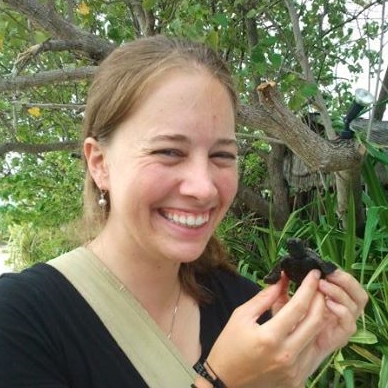
melissaMelissa Giresi is currently a PhD candidate in the Department of Biology at Texas A&M University interested in using genetic methods to assess population structure, connectivity and biodiversity of exploited marine fishes and invertebrates. For her dissertation, she is testing the null hypothesis that the dusky smoothhound shark, Mustelus canis, is a single genetically-panmictic population in U.S. waters and utilizing molecular and morphological markers to assess how many smoothhound species are present in the Gulf of Mexico.   She is also involved with projects to investigate population connectivity in fine tooth sharks, black nose sharks, cobia, and amberjack. 


Monica Turner, image courtesy University of Wisconsin

On Thursday, I tweeted “Name the most influential female ecologist (alive today) that you can think of.”  After it was re-tweeted by several of my much more twitter-savvy colleagues and friends, I received an overwhelming number of responses. In retrospect, I should have created a hashtag to keep track of the responses.  Forty-five influential female ecologists were named in this search, some of whom responded to the question themselves, naming their colleagues (but never naming themselves).  The most influential female ecologists (alive today) according to the twitter-verse are listed in the table below in alphabetical order by last name.

Read More “The 45 most influential female ecologists alive today according to twitter” »

Social media as a scientific research tool: Background info for my #scio14 session

Posted on February 6, 2014February 6, 2014 By David Shiffman 1 Comment on Social media as a scientific research tool: Background info for my #scio14 session
Blogging, Science

ScionlineAt the 2014 ScienceOnlineTogether conference, I will be moderating a session focusing on how to use social media as a scientific research tool (2:30 P.M. on Friday, February 28th in room 3).  The hashtag is #ScioResearch , so be sure to follow along, and I’ll make a Storify afterwards. This post is primarily intended to be a source of background information for participants in my session, though feel free to read, share and ask questions in the comments if you are not planning on participating in my session.

ScienceOnline community members understand the value of social media for collaborating with colleagues and communicating science to the public, but few think of the incredible resource that these tools are for scientific research. Hundreds of millions of people all over the world are constantly sharing their experiences and opinions in a format that is public, archived, searchable, and accessible, giving researchers access to this enormous dataset without the expense or logisitical difficulties involved in organizing a large-scale survey or series of focus groups. To use a technical term, for many types of scientific research, social media and “big data” is what is called “a freakin’ gold mine.”

Onion

Below are a few examples of how social media can be used for scientific research.

Read More “Social media as a scientific research tool: Background info for my #scio14 session” »

SciFund Challenge: Help support my shark feeding ecology research

Posted on February 3, 2014February 10, 2014 By David Shiffman
Blogging, Science

I am participating in the 4th SciFund Challenge, a crowdfunding event for scientific research! My project, part of my Ph.D. dissertation research, is looking at the feeding ecology of local species of sharks with the goal of generating data that can help managers to conserve and protect these species. I’d appreciate any assistance you can … Read More “SciFund Challenge: Help support my shark feeding ecology research” »

Global is Personal: 4 Lessons About Climate Change Outreach from #DrownYourTown

Posted on February 3, 2014February 3, 2014 By Andrew Thaler
#DrownYourTown, Science

Almost four months ago, I sat down at my computer with a puzzle to solve: is there an easy way to model sea level rise without using expensive GIS programs. I found that solution in Google Earth and, after a few days of experimenting and tweeking, #DrownYourTown was born.

1 meter of sea level rise would make for a very soggy superbowl.

#DrownYourTown is a tool for exploring sea level rise through real-time, interactive, GIS modeling. Anyone can submit a request via twitter or tumblr and receive a custom, 3D model of sea level rise anywhere in the world. The system allows users to produce dramatic visuals of both plausible and implausible climate change scenarios. The project is ongoing, with user generated content, an active tumblog, and a vibrant twitter community centered around the hashtag. I am constantly exploring new ways to reach a broader audience. Currently, #DrownYourTown is on a virtual road trip, visiting a new coastal state each day, and cruising through towns after 5 meters of sea level rise.

#DrownYourTown has been an exciting and sometimes humbling journey. Here are four lessons about climate change outreach I learned from drowning your town.

Read More “Global is Personal: 4 Lessons About Climate Change Outreach from #DrownYourTown” »

Look beyond Shark Week to find the ocean’s most fascinating life

Posted on February 3, 2014February 3, 2014 By Guest Writer 1 Comment on Look beyond Shark Week to find the ocean’s most fascinating life
Conservation, Science

Dr. Steve Palumbi studies the genetics, evolution, conservation, population biology and systematics of a diverse array of marine organisms. Along with Tony Palumbi he is the author of the forthcoming book The Extreme Life of the Sea. UnShark Week is a week long celebration of the ocean’s extremes. 


Dr. Palumbi, enjoying a day at the beach.

Since 1987, the Discovery Channel’s annual Shark Week pumps up the thrill of encountering a dangerous shark. Teeth, danger, lunging predation, more teeth: this is what the week is mostly about.  But most of the extreme species in the sea are not sharks. Sharks are not the biggest, the deepest, the fastest, even the deadliest.  This week is exactly midway between Shark Weeks, 26 weeks till the next one; 26 weeks since the last. And because there are so many other thrilling species in the sea, we declare this week as UnShark Week – and dedicate it to the truly extreme animals in the ocean.

The fastest fish in the sea is not a shark. Sailfish have the unofficial record at 60 mph, and well documented speed trails have clocked tuna and wahoo at nearly 50 mph. By contrast the most celebrated human swimmers manage 6-7 mph. Billfish like marlin and sailfish feed at such high speeds that their brains and eyes can not operate fast enough. So as an adaptation to speed, these fish have evolved heaters in the brains and eyes so they can form and process images fast enough to snap up prey in high velocity sorties.

Read More “Look beyond Shark Week to find the ocean’s most fascinating life” »

Your help needed: Oppose a weakened shark finning ban in Maryland

Posted on January 26, 2014January 26, 2014 By David Shiffman 56 Comments on Your help needed: Oppose a weakened shark finning ban in Maryland
Science

The state of Maryland is proposing new regulations that would, among other things, weaken the state ban on shark finning by allowing fishermen to remove the fins of smoothhound sharks at sea,  as long as the ratio of the weight of the fins does not exceed 12% of the ratio of the carcasses. These “fin ratios” are already troubling and ineffective ways to enforce finning bans. Landing sharks with fins naturally attached is considered the best practice for shark fisheries management. A 12% ratio is exceptionally high (3.5-5% are common ratios worldwide) and risks enabling unscrupulous fishermen to remove the fins of not only smoothhound sharks, but other species whose fins could be passed off as such. This makes it harder for managers to track how many sharks of which species are being killed.

In New York, smoothhounds are landed with fins naturally attached. They should be in Maryland, too! Photo credit: Sonja Fordham.
Some fishermen claim that smoothhound sharks can’t be landed with fins naturally attached, but this photo from New York challenges that notion.  Photo provided anonymously for this post.

Maryland’s Department of Natural Resources is taking public comments on this policy, which means that you can help!

Please send an e-mail to fisheriespubliccomment@dnr.state.md.us by the end of the day on Monday, January 27th containing the following information:

Read More “Your help needed: Oppose a weakened shark finning ban in Maryland” »

Abnormal is the New Normal: Shifting Baselines, Polar Vortices, and Climate Change

Posted on January 24, 2014January 24, 2014 By Andrew Thaler 1 Comment on Abnormal is the New Normal: Shifting Baselines, Polar Vortices, and Climate Change
Science

The Polar Vortex, a mass of cold air usually centered around points within the Arctic Circle, made a visit south for the second time in 2014. The Vortex brings freezing weather, snow, and ice to regions that are unaccustomed to such extreme conditions. It also brings with it a new spate of “so much for global warming” talking-points, fresh on the heals of a recent report revealing that Climate Change Denial is at an all time high.

CCD

Unfortunately for the climate change denial industry, Polar Vortices are well-understood atmospheric phenomena. They were documented as early as 1853 as currents of cold air that essentially circle the poles. High-altitude observations in the 1950’s revealed the occurrence of sudden stratospheric warming (SSW) in the Arctic Polar Vortex. These SSW’s can cause a the vortex to weaken or reverse directions, allowing it to drift off axis or split into several smaller vortices. When weakened vortices contact the jet stream, cold arctic air is forced south, resulting in anomalously cold temperatures.

The obvious next question is: Is the weakened polar vortex caused by climate change?

Read More “Abnormal is the New Normal: Shifting Baselines, Polar Vortices, and Climate Change” »

Fisherman catches cosmopolitan planktonic tunicate. You’ll never guess what various news agencies are calling it.

Posted on January 22, 2014January 22, 2014 By Andrew Thaler 3 Comments on Fisherman catches cosmopolitan planktonic tunicate. You’ll never guess what various news agencies are calling it.
Science

“Translucent fish leaves New Zealand fisherman stunned” ~UK Metro

“Shrimp-like Translucent Sea Creature Found off Northland’s East Coast” ~Science World Report

“Now that’s a jelly fish! Stunned fisherman catches wobbly shrimp-like creature” ~Daily Mail

And another half-dozen variations on translucent, fish, shrimp, and baffled.

article-2543194-1AD845CC00000578-850_634x476This creature, whose image has gone viral in the last few days, is a salp. Salps are pelagic tunicates that drift through the open ocean, sometimes solitary, but often in large aggregations. It both swims and feed by pumping water through its body, filtering out plankton and expelling a jet of water from an organ called the excurrent siphon. In the water they look quite majestic.

Read More “Fisherman catches cosmopolitan planktonic tunicate. You’ll never guess what various news agencies are calling it.” »

First systematic threat analysis reveals that 1/4 of sharks, rays, and chimaeras are threatened with extinction

Posted on January 21, 2014 By David Shiffman
Conservation, Science

It took a team of over 300 scientists nearly two decades, but the first systematic analysis of the conservation status of chondrichthyans (sharks, rays and chimaeras) has been completed. The results, published today (open access) in a paper titled “Extinction risk and conservation of the world’s sharks and rays,” are chilling.

“Our unprecedented analysis shows that sharks and their relatives – which make up one of the earth’s oldest and most ecologically diverse groups of animals  —  are facing an alarmingly elevated risk of extinction,” said Dr. Nick Dulvy, IUCN SSG Co-Chair and Professor at Simon Fraser University in British Columbia.

As of the writing of this paper, the IUCN Shark Specialist Group recognized 1,041 species of chondrichthyans. However,  a new species is described, on average, every two or three weeks! Out of these 1,041 species of chondrichthyans, approximately one in four are considered “Threatened” by IUCN Red List criteria;  113 species are Vulnerable, 43 are Endangered, and 25 species are Critically Endangered. 487 species are considered Data Deficient, but the IUCN Shark Specialist Group estimates that 68 of them are likely to be Threatened as well! Most alarmingly, only 23% of known chondrichthyan species are considered Least Concern, the lowest percentage out of any group of vertebrates on land or sea!

A hierarchy of IUCN Red List categories. Note that "Threatened" includes Vulnerable, Endangered, and Critically Endangered
A hierarchy of IUCN Red List categories. Note that “Threatened” includes Vulnerable, Endangered, and Critically Endangered

One of the two main factors influencing Threatened status is the size of the animal. Larger bodied species are sensitive to overfishing because they typically have a life history with slow growth, late age at maturity, and relatively few offspring. Additionally, living in coastal habitats (in other words, close to humans) makes a species more likely to be Threatened.

Read More “First systematic threat analysis reveals that 1/4 of sharks, rays, and chimaeras are threatened with extinction” »

Posts pagination

Previous 1 … 30 31 32 … 82 Next

Popular Posts

The story of the pride flag made from NASA imagery: Bluesky's most-liked imageThe story of the pride flag made from NASA imagery: Bluesky's most-liked imageSeptember 27, 2024David Shiffman
That's not a blobfish: Deep Sea Social Media is Flooded by AI SlopThat's not a blobfish: Deep Sea Social Media is Flooded by AI SlopDecember 19, 2025Andrew Thaler
The evolution of the International Whaling Commission – from  whaling quotas to whale conservationThe evolution of the International Whaling Commission – from  whaling quotas to whale conservationJune 10, 2026Chris Parsons
What Ocean Ramsey does is not shark science or conservation: some brief thoughts on "the Shark Whisperer" documentaryWhat Ocean Ramsey does is not shark science or conservation: some brief thoughts on "the Shark Whisperer" documentaryJuly 2, 2025David Shiffman
Tackling the least important debate in deep-sea mining: the desultory hyphenTackling the least important debate in deep-sea mining: the desultory hyphenJune 8, 2026Andrew Thaler
Shark of Darkness: Wrath of Submarine is a fake documentaryShark of Darkness: Wrath of Submarine is a fake documentaryAugust 10, 2014Michelle Jewell
What is a Sand Shark?What is a Sand Shark?November 12, 2017Chuck Bangley
"Why Sustainable Seafood Matters" is now available for preorder! Here's what it's about, and why I decided to write it."Why Sustainable Seafood Matters" is now available for preorder! Here's what it's about, and why I decided to write it.June 8, 2026David Shiffman
Fun facts and FAQs about Megalodon, Maryland's new (and definitely extinct) official state sharkFun facts and FAQs about Megalodon, Maryland's new (and definitely extinct) official state sharkApril 15, 2026David Shiffman
Isn’t ironic, don’t you think: dismantling the Ocean Observatories Initiative on World Oceans DayIsn’t ironic, don’t you think: dismantling the Ocean Observatories Initiative on World Oceans DayJune 9, 2026Southern Fried Science
Subscribe to our RSS Feed for updates whenever new articles are published.

We recommend Feedly for RSS management. It's like Google Reader, except it still exists.

Southern Fried Science

  • Home
  • About SFS
  • Authors
  • Support SFS


If you enjoy Southern Fried Science, consider contributing to our Patreon campaign.

Copyright © 2026 Southern Fried Science.

Theme: Oceanly Premium by ScriptsTown