Skip to content

Southern Fried Science

Over 15 years of ocean science and conservation online

  • Home
  • About SFS
  • Authors
  • Support SFS

Category: Science

The top 10 shark conservation stories of 2011

Posted on December 28, 2011 By David Shiffman 17 Comments on The top 10 shark conservation stories of 2011
Conservation, Science

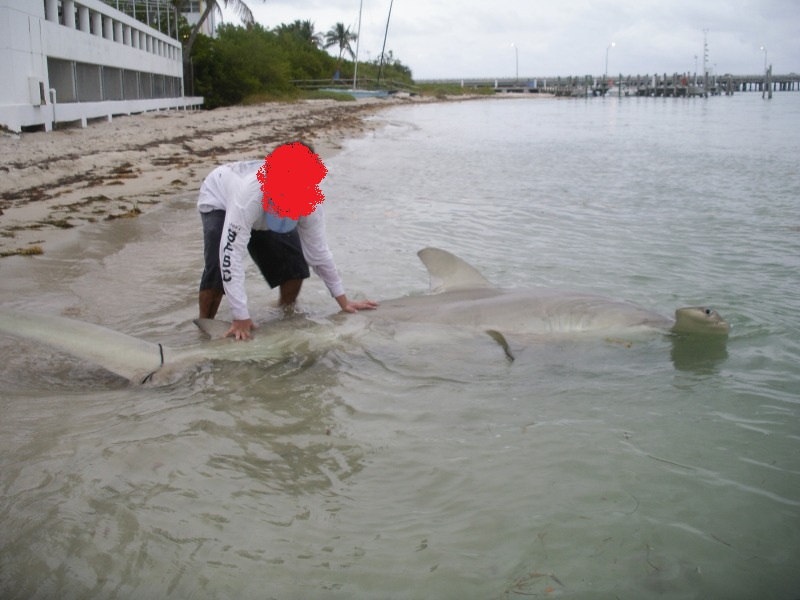
Caribbean reef shark, Bimini. Photo credit: David Shiffman

2011 was a relatively good year for sharks and rays. Presented below, in no particular order, are ten important shark conservation stories from the past year.

1. Shark sanctuaries. The world gained several new shark sanctuaries, areas where shark fishing is banned, in 2011. Nations creating new shark sanctuaries include Honduras (~92,000 square miles), the Bahamas (~240,000 square miles), Marshall Islands/Guam/Palau (a regional partnership protecting almost 2 million square miles). Numerous concerns about enforcing rules in these huge areas, as well as concerns about potential loopholes in the policies, exist among conservation scientists.

2. Fin bans. These laws ban the possession, trade, or sale of shark fins within the boundaries of a city, state/territory, or country. In 2011, Hawaii’s first-in-the-US fin ban took effect, and a few other US states (California, Washington, and Oregon) passed similar laws. There is an ongoing debate in the shark conservation community about whether blanket bans on finning are better than promoting best practices (i.e. more sustainable shark fishing techniques). Additionally, some are concerned that we aren’t focusing enough on other threats to sharks like bycatch and habitat destruction.

Read More “The top 10 shark conservation stories of 2011” »

National Marine Fisheries Service rejects petition to list 4 skate species under Endangered Species Act

Posted on December 27, 2011 By David Shiffman 8 Comments on National Marine Fisheries Service rejects petition to list 4 skate species under Endangered Species Act
Conservation, Science

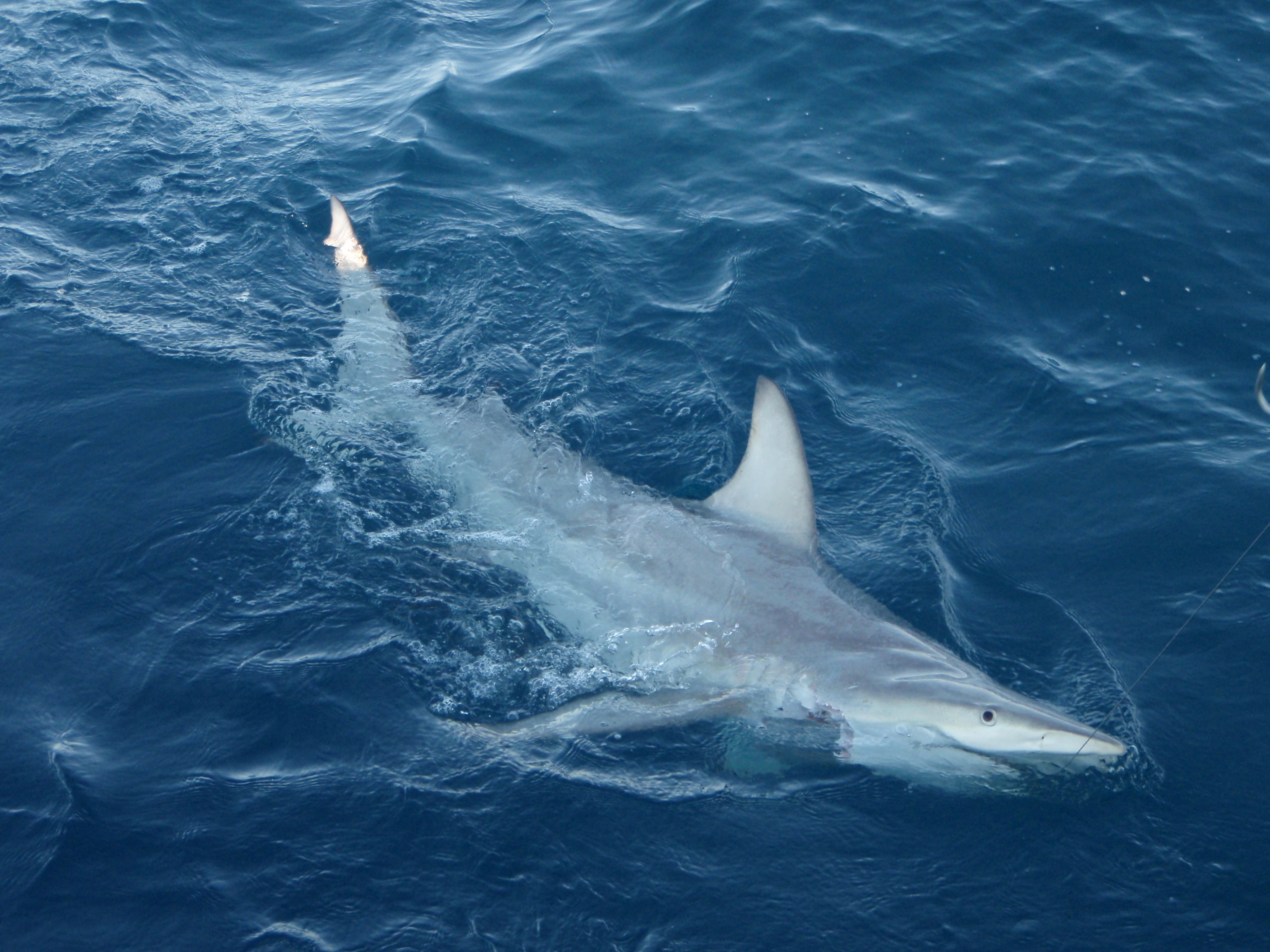
Image from nero.NOAA.gov

Last August, two petitions were sent to the National Marine Fisheries Service from three conservation organizations (the Animal Welfare Institute, WildEarth Guardians and Friends of Animals). The petitions (available in their entirety here) requested that four species of skate be listed as “threatened” or “endangered” under the Endangered Species Act, and requested that critical habitat for these species be designated and appropriately protected. These species are the thorny skate, barndoor skate, winter skate, and smooth skate.

Due to both a directed fishery (skate wings are used for lobster trap bait, and also for food for a primarily-overseas market that includes Europe) and bycatch in bottom fisheries , Northwest Atlantic populations of these species have experienced serious declines in recent years. While some skate species have rebounded (for reasons that are not entirely clear), The thorny skate remains particularly threatened- the IUCN Red List considers the subpopulation off the Northeastern U.S. coast to be Critically Endangered. It is illegal for U.S. fishermen to keep thorny skates they catch (and has been since 2004), but they are commonly taken as bycatch in fisheries for the other skates and groundfish.

Yesterday, the National Marine Fisheries Service formally responded to the petition (thorny skate and other skates), and the news isn’t good for skates:

“After reviewing the information contained in the petition and information readily available in our files, we conclude that the petition fails to present substantial scientific or commercial information indicating that the petitioned action concerning barndoor, smooth and/or winter skate may be warranted…We find that the petitions do not present substantial scientific information indicating the petitioned actions may be warranted. Accordingly, we will not initiate a review of the status of thorny skate at this time.”

The National Marine Fisheries Service listed several reasons why they believe these skates should not be listed under the Endangered Species Act.

Read More “National Marine Fisheries Service rejects petition to list 4 skate species under Endangered Species Act” »

Mining the Deep Sea: what’s it worth?

Posted on December 13, 2011December 15, 2011 By Andrew Thaler
Conservation, Science

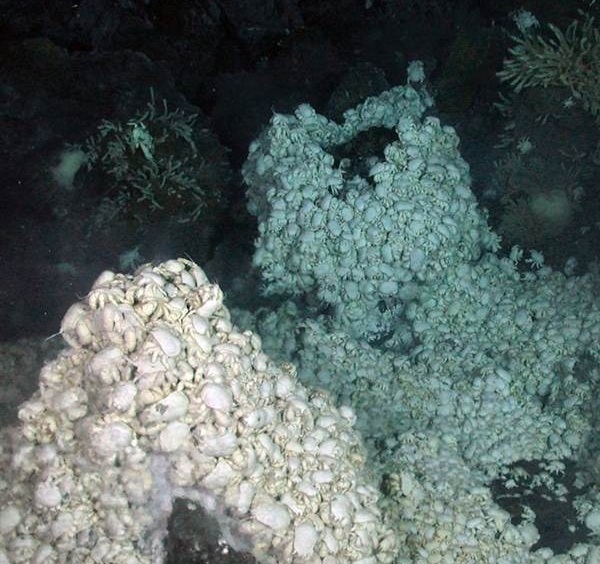
a fragment of a hydrothermal vent
The shimmering insides of a vent chimney

In Jules Verne’s 20,000 Leagues Under the Sea*, the iconic Captain Nemo announced that “in the depths of the ocean, there are mines of zinc, iron, silver and gold that would be quite easy to exploit” while predicting that the abundance of marine resources could satisfy human need. If the pace of development for deep-sea mining projects and the estimated value of deep-sea ores is any indicator, it seems as though our misanthropic mariner was wrong on both counts.

In The abundance of seafloor massive sulfide deposits, an international team of geologists attempts to quantify the total available copper and zinc contained in deep-sea massive sulfide mounds. Seafloor massive sulfide mounds are a byproduct of the processes that create deep-sea hydrothermal vents. As super-heated sea water emerges from the vent, it deposits heavy metals and other elements and minerals along the walls of the vent. Over thousands of years, an active vent field can build up a huge mound of metal and mineral rich ore – a massive sulfide mound. In addition to copper and zinc, these mounds can contain gold and silver. Generally, the ore is of much higher quality than its terrestrial counterpart. Over the last few decades, many exploration companies were eyeing these deposits, but it’s only recently that technological developments and economic incentives have aligned to permit potentially profitable deep-sea mining.

Read More “Mining the Deep Sea: what’s it worth?” »

Saving Nemo: 1 out of 6 species that appear in Finding Nemo are threatened with extinction

Posted on December 12, 2011December 13, 2011 By David Shiffman 3 Comments on Saving Nemo: 1 out of 6 species that appear in Finding Nemo are threatened with extinction
Conservation, Popular Culture, Science

WhySharksMatter found Nemo at Disney's Living Seas Aquarium

Like most marine biology geeks, I’m a huge fan of Disney/Pixar’s “Finding Nemo”. In addition to a heartwarming story of a father trying to bring his son home to their aneme…anemeneme… amenememe… anemone,  the film showcases an enormous variety of beautiful real-life coral reef species. According to  research published today in Conservation Letters, however, we may soon only be able to see some of these animals in the movies. The paper, titled “Extinction Risk and Bottlenecks in the Conservation of Charismatic Marine Species”, concluded that many of the stars of Finding Nemo are in deep trouble.

Read More “Saving Nemo: 1 out of 6 species that appear in Finding Nemo are threatened with extinction” »

Open thread for NOAA scientists to speak freely about scientific and technical matters based on their official work without approval from the public affairs office or their supervisors.

Posted on December 8, 2011 By Andrew Thaler 1 Comment on Open thread for NOAA scientists to speak freely about scientific and technical matters based on their official work without approval from the public affairs office or their supervisors.
Science

Yesterday the National Oceanic and Atmospheric Association (NOAA) released their new scientific integrity policy, which specifically states that: “To support a culture of openness, one of the policy’s key provisions affirms unequivocally that NOAA scientists may speak freely with the media and public about scientific and technical matters based on their official work without approval … Read More “Open thread for NOAA scientists to speak freely about scientific and technical matters based on their official work without approval from the public affairs office or their supervisors.” »

Better Conservation through Cloning: this cock doesn’t crow

Posted on December 7, 2011December 7, 2011 By Andrew Thaler 7 Comments on Better Conservation through Cloning: this cock doesn’t crow
Conservation, Science

Poor Vindaloo never learned to crow.
Poor Vindaloo never learned to crow. Photo by Andrew David Thaler.

I awoke one morning early last spring to a noise I has been dreading for weeks, the first crow of a chicken that was not supposed to be a rooster. It took me several minutes to fully register what I was hearing. Rather that the classic cock-a-doodle-do we often associate with the rooster’s crow, the sound emanating from my hen house was an awkward, unstable noise not unlike a turkey squawking through a vat of molasses while being vigorously shaken. Over the next several months, two more cocks arrived crowing, in my flock. All three roosters, different breeds from different parents, made noises resembling nothing like a rooster’s crow. There was no pattern; some mornings they would crow off-and-on for a few hours, other mornings they would, for lack of a better word, gargle for half-an-hour straight.

I raise my chickens from day-old hatchlings. Those three roosters, from my very first flock, had never met an adult chicken. They imprinted on Amy and me and looked to us for guidance. When we introduced them to new food, new water dispensers, even small changes to their habitat (like a particularly terrifying log), we had to teach them. Instinctively, they would scratch for food, and if left to their own devices, they would attempt to eat everything, but for the most part, we had to show them how to eat, how to drink, how to roost. But we could not teach them how to crow.

Which is why Casey B. Mulligan’s Economix article in the New York Times – Species Protection and Technology – which argues that cloning could be an effective tool to restore extinct species (a topic I’ve been thinking about quite a bit in terms of population dynamics), is fatally flawed.

Read More “Better Conservation through Cloning: this cock doesn’t crow” »

Bluefin Tuna, Big Game Hunters, and the Conservation Vortex

Posted on November 29, 2011December 9, 2011 By Andrew Thaler 4 Comments on Bluefin Tuna, Big Game Hunters, and the Conservation Vortex
Conservation, Science

Bluefin Tuna. Public Domain NOAA

Why are we still killing Bluefin Tuna? This question has resonated through the ocean blogosphere recently, as various experts weigh the issues surrounding overfishing and wonder why, when we know how limited the Bluefin Tuna populations are, and how precipitously they’ve declined in the last decade, do they demand record-breaking prices able to support an industry that must range further afield to chase that last, lonely fish? Other conservation writers discuss the recent extinction of not one, but two, rhinoceros species and ponder the fate of large terrestrial mammals. Knowing how rare these rhinoceroses were, why did they continue to be poached? Where does this demand come from?

Read More “Bluefin Tuna, Big Game Hunters, and the Conservation Vortex” »

Are Neutrinos really faster than light? Irish folk rock parody band weighs in.

Posted on November 27, 2011December 9, 2011 By Andrew Thaler
Popular Culture, Science

From the same people who brought us the eminently catchy “There’s no one as Irish as Barack O’Bama.” Quoth Ger Corrigan “for the moment we are backing Albert and his theory, I’m no Einstein but he was.” The Neutrino Song: httpv://www.youtube.com/watch?v=vpMY84T8WY0

Giant manta rays protected by Convention on Migratory Species

Posted on November 25, 2011December 9, 2011 By David Shiffman 6 Comments on Giant manta rays protected by Convention on Migratory Species
Conservation, Science

A few weeks after they were listed as Vulnerable on the IUCN Red List, giant manta rays (Manta birostris) have received major international legal protection. The Parties to the Convention on Migratory Species of Wild Animals (CMS) just agreed to list giant mantas on Appendix 1 and II of CMS at their tri-annual meeting in … Read More “Giant manta rays protected by Convention on Migratory Species” »

Check out Shark Attack Experiment Live, Friday on National Geographic Wild

Posted on November 23, 2011December 9, 2011 By David Shiffman
Popular Culture, Science

This Friday, tune in to National Geographic Wild for a day of sharks! Starting at noon, they will air a series of shark documentaries culminating at 9 p.m. with “Shark Attack Experiment: Live“. This show, aired live from the shark hotspot of South Africa, aims to test some common myths about shark attacks and to “to … Read More “Check out Shark Attack Experiment Live, Friday on National Geographic Wild” »

Posts pagination

Previous 1 … 48 49 50 … 82 Next

Popular Posts

That's not a blobfish: Deep Sea Social Media is Flooded by AI SlopThat's not a blobfish: Deep Sea Social Media is Flooded by AI SlopDecember 19, 2025Andrew Thaler
The story of the pride flag made from NASA imagery: Bluesky's most-liked imageThe story of the pride flag made from NASA imagery: Bluesky's most-liked imageSeptember 27, 2024David Shiffman
What Ocean Ramsey does is not shark science or conservation: some brief thoughts on "the Shark Whisperer" documentaryWhat Ocean Ramsey does is not shark science or conservation: some brief thoughts on "the Shark Whisperer" documentaryJuly 2, 2025David Shiffman
The evolution of the International Whaling Commission – from  whaling quotas to whale conservationThe evolution of the International Whaling Commission – from  whaling quotas to whale conservationJune 10, 2026Chris Parsons
Shark of Darkness: Wrath of Submarine is a fake documentaryShark of Darkness: Wrath of Submarine is a fake documentaryAugust 10, 2014Michelle Jewell
"Why Sustainable Seafood Matters" is now available for preorder! Here's what it's about, and why I decided to write it."Why Sustainable Seafood Matters" is now available for preorder! Here's what it's about, and why I decided to write it.June 8, 2026David Shiffman
What is a Sand Shark?What is a Sand Shark?November 12, 2017Chuck Bangley
Tackling the least important debate in deep-sea mining: the desultory hyphenTackling the least important debate in deep-sea mining: the desultory hyphenJune 8, 2026Andrew Thaler
Fun facts and FAQs about Megalodon, Maryland's new (and definitely extinct) official state sharkFun facts and FAQs about Megalodon, Maryland's new (and definitely extinct) official state sharkApril 15, 2026David Shiffman
Isn’t ironic, don’t you think: dismantling the Ocean Observatories Initiative on World Oceans DayIsn’t ironic, don’t you think: dismantling the Ocean Observatories Initiative on World Oceans DayJune 9, 2026Southern Fried Science
Subscribe to our RSS Feed for updates whenever new articles are published.

We recommend Feedly for RSS management. It's like Google Reader, except it still exists.

Southern Fried Science

  • Home
  • About SFS
  • Authors
  • Support SFS


If you enjoy Southern Fried Science, consider contributing to our Patreon campaign.

Copyright © 2026 Southern Fried Science.

Theme: Oceanly Premium by ScriptsTown