Skip to content

Southern Fried Science

Over 15 years of ocean science and conservation online

  • Home
  • About SFS
  • Authors
  • Support SFS

Category: Science

The historical origins of ‘whales as people’

Posted on October 30, 2011December 9, 2011 By Andrew Thaler 7 Comments on The historical origins of ‘whales as people’
Conservation, Popular Culture, Science

In an attempt to garner attention and raise awareness regarding the problematic use of orcas and other marine mammals in captivity for entertainment, PETA, an animal rights group, has sued Sea World, a corporation that builds and manages aquariums and marine parks. Opposition  to Sea World’s brand of entertainment-driven aquariums is nothing new, but this fresh lawsuit adds a novel twist to the boilerplate “intelligent animals don’t belong in captivity” – PETA is suing Sea World for violating these oceanic dolphin’s constitutional rights under the 13th amendment.

The 13th amendment to the United States Constitution explicitly outlaws slavery or involuntary captivity:
Read More “The historical origins of ‘whales as people’” »

Salmon, aquaculture, and the spread of Infectious Salmon Anemia

Posted on October 27, 2011October 28, 2011 By Andrew Thaler 3 Comments on Salmon, aquaculture, and the spread of Infectious Salmon Anemia
Science

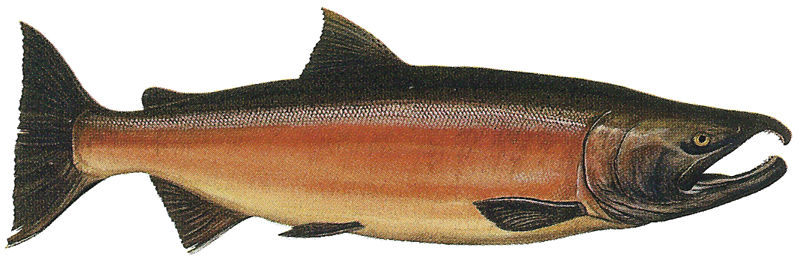
Coho salmon - public domain image

In 2008, a deadly virus decimated Chilean aquaculture facilities, causing $2 billion in damage and crippling an industry. This week, preliminary reports suggest that this same disease may have infected wild salmon in the north Pacific. The internet has been blowing up with news reports of Infectious Salmon Anemia (ISA) detected in wild salmon populations. Reports range from balanced – Deadly Fish Farm Virus Found in Wild Pacific Salmon – to hyperbolic – B.C.’s salmon feedlots need to be closed – but all hinge on the fact that ISA, a lethal salmon-infecting virus previously resigned to aquaculture facilities, has been detected in wild salmon populations in British Columbia. This has the potential to be a very big deal. ISA is 90% lethal and mortality occurs in 10 days or less. The virus is waterborn, but can also be transmitted through handling with contaminated equipment. There is no treatment once a fish is infected.

Before I go on, a couple points need to be clarified:

  1. ISA does not infect humans, though as it threatens a fishery and a major agricultural industry, it most certainly affects humans.
  2. ISA was isolated from 2 wild sockeye salmon. It has not been confirmed from independent test yet, although one statement indicates that the current infection is from a non-infectious strain of ISA (which raises some interesting questions about who currently knows what about this outbreak).

Read More “Salmon, aquaculture, and the spread of Infectious Salmon Anemia” »

A slimehead by any other name should never be on your plate

Posted on October 26, 2011 By Andrew Thaler 6 Comments on A slimehead by any other name should never be on your plate
Science

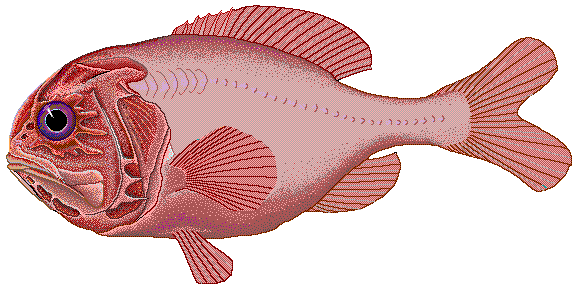
Orange Roughy - image by FishBase artist Robbie Cada

Slimehead is not a word you would expect to find on the menu of a fancy restaurant. Like dolphin*, toothfish*, goosefish*, mudbug*, hog*, and gizzard fish*, slimeheads have undergone a bit re-branding over the last few decades to make their name as palatable as their fillets. Enter the Orange Roughy, a dull, uninspired name that captures nothing of the grandeur of Hoplostethus atlanticus and ignores the defining characteristic of these deep-sea fishes.

What does Orange Roughy mean to you? Well, it’s probably orange, and I guess roughy means it might be rough, or something. The name is pretty uninformative. But slimehead! Slimehead tells you quite a bit about this creature, and leads to some interesting ecological questions. Why is it’s head covered in slime? What does the slime do? How is the slime contained in its head?

Read More “A slimehead by any other name should never be on your plate” »

Western Australia’s sharks need your help!

Posted on October 23, 2011 By David Shiffman 14 Comments on Western Australia’s sharks need your help!
Conservation, Science

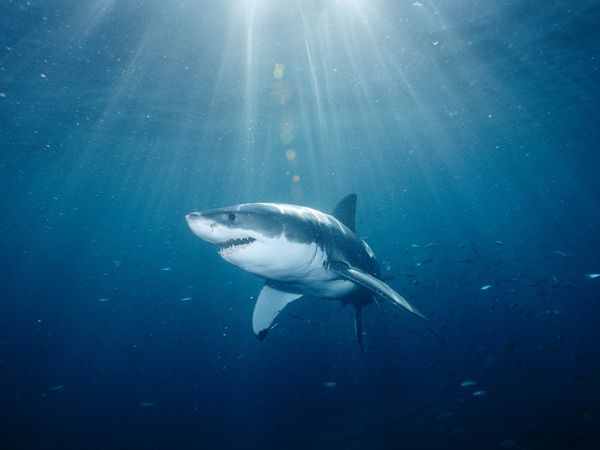
Great White Shark. Image courtesy animals.NationalGeographic.com

Last week, I wrote about three current shark conservation issues, including a proposed shark cull in Western Australia. Barbara Wueringer was able to deliver her letter to Western Australian government officials on Friday, and thanks to your help, it was signed by more than 100 scientists and conservationists from all over the world.

Yesterday, however, another swimmer was killed by a shark in Western Australian waters. George Thomas Wainwright, 32, was a native of Texas who had been working on a boat in Australia. This attack, which is the third in the last two months, has resulted in renewed calls for a “shark cull”. The proposed plan would involve both an attempt to kill the specific shark responsible for killing Mr. Wainwright and a more general killing of all the sharks in the area. It is believed that the shark that killed Mr. Wainwright was a great white shark, also known as a  “white pointer” in Australia.

Read More “Western Australia’s sharks need your help!” »

RJD Twitter teach-ins start Monday at 1 with overfishing

Posted on October 21, 2011 By David Shiffman 3 Comments on RJD Twitter teach-ins start Monday at 1 with overfishing
Science

My lab, the RJ Dunlap Marine Conservation Program at the University of Miami, will be hosting a series of Twitter teach-ins on marine biology and conservation topics. Each teach-in will cover a topic in a series of Tweets, including links to photos and videos, as well as NGO reports, blog posts, and scientific papers which people … Read More “RJD Twitter teach-ins start Monday at 1 with overfishing” »

Climate change deniers continue to be wrong, science words with friends, and support science in the classroom

Posted on October 21, 2011October 21, 2011 By Andrew Thaler 4 Comments on Climate change deniers continue to be wrong, science words with friends, and support science in the classroom
Science

The bliggityblogsphere has been abuzz with recent finding by the Berkeley Earth Project that independently confirm that global climate change is real. From the BBC:

The Earth’s surface really is getting warmer, a new analysis by a US scientific group set up in the wake of the “Climategate” affair has concluded.

The Berkeley Earth Project has used new methods and some new data, but finds the same warming trend seen by groups such as the UK Met Office and Nasa.

source

Phil Plait, the Bad Astronomer, has a nice, in depth write-up, that provides some caveats missing from most of the press releases: New independent climate study confirms global warming is real.

Read More “Climate change deniers continue to be wrong, science words with friends, and support science in the classroom” »

Just enough about “Certainly More Than You Want to Know About The Fishes of The Pacific Coast” to pique your curiosity

Posted on October 14, 2011October 17, 2011 By Andrew Thaler 2 Comments on Just enough about “Certainly More Than You Want to Know About The Fishes of The Pacific Coast” to pique your curiosity
Science

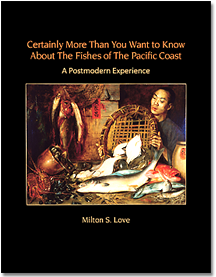
There is a website floating around the interwebs entitled “So you want to be a marine biologist?” that most future marine biologists who came of age in the early 21st century have encountered. The sage page of advice is followed up with “So you want to be a marine biologist, the revenge“. Reading through these two essays, one might come to the conclusion that their author, Dr. Milton Love of the University of California, Santa Barbara, should compose a voluminous tome to the fishes of the Pacific coast. Which is exactly what he’s done. Welcome to Certainly More Than You Want to Know About The Fishes of The Pacific Coast: a postmodern experience.

Despite it’s self-aware title, this book is far more than just an exhaustive guide to the fishes of the Pacific, though it certainly is that. The highly detailed taxonomic descriptions are rich with humor and insight into the ecology, behavior, and physiology of, if not each species, than each genus or species complex. Interspersed among the taxa are descriptions of prominent Pacific researchers, anecdotes from a lifetime of work on the water, stories by people who lived, worked, and fished these species, and the occasional poem, song, or limerick. Somehow, these disparate units manage to complement each other in a way that makes you want to read what is essential a taxonomy textbook cover-to-cover.

Read More “Just enough about “Certainly More Than You Want to Know About The Fishes of The Pacific Coast” to pique your curiosity” »

Securing the Conservation of Sharks and Rays

Posted on October 10, 2011October 9, 2011 By David Shiffman 5 Comments on Securing the Conservation of Sharks and Rays
Conservation, Science

At the 2nd International Marine Conservation Congress, Dr. Nick Dulvy and the IUCN Shark Specialist Group organized a special symposium called “Securing the Conservation of Sharks and Rays”. This symposium featured leading scientists, international policy experts, the founder of a creative non-profit, a National Geographic conservation photographer… and me. It was, without a doubt, the greatest professional honor of my (admittedly brief so far) career.

Read More “Securing the Conservation of Sharks and Rays” »

Misunderstood Marine Life # 1 – The five biggest myths about Marine Biologists

Posted on October 7, 2011November 10, 2011 By Andrew Thaler 6 Comments on Misunderstood Marine Life # 1 – The five biggest myths about Marine Biologists
Popular Culture, Science

It’s the moment we’ve all been waiting for, the single most misunderstood marine creature that calls our oceans its home: the rare, elusive, often smelly, occasionally employable, Marine Biologist! For something so incredibly popular, articulate, good-looking, and revered, there sure are a lot of misconceptions about who marine biologists are and what they do. Myth … Read More “Misunderstood Marine Life # 1 – The five biggest myths about Marine Biologists” »

The Pacific Divided

Posted on October 7, 2011October 5, 2011 By Bluegrass Blue Crab 2 Comments on The Pacific Divided
Science

Challenge: find a map of the Pacific Ocean that includes both Japan and California. Or that focuses on any of the island nations in between.

One of the casualties of mapping a three-dimensional planet on two-dimensional paper is the part of the world that is split between the edges of the paper. Usually, this is the Pacific. As Sarah Palin made famous in the 2008 presidential campaign, as an Alaskan, she can see Russia from her house. While I admit that for Palin, this is an exaggeration, but for the residents of St. Lawrence Island, this view is a reality. In fact, they are as likely (if not more) to speak Russian than English and have the capability of kayaking to Russia if so desired. But your average world map makes that distance look infinite.

Read More “The Pacific Divided” »

Posts pagination

Previous 1 … 52 53 54 … 83 Next

Popular Posts

How many of these shark Jeopardy clues can you get correct?How many of these shark Jeopardy clues can you get correct?November 5, 2026David Shiffman
What Ocean Ramsey does is not shark science or conservation: some brief thoughts on "the Shark Whisperer" documentaryWhat Ocean Ramsey does is not shark science or conservation: some brief thoughts on "the Shark Whisperer" documentaryJuly 2, 2025David Shiffman
What sharks would Odysseus have encountered during his journey?What sharks would Odysseus have encountered during his journey?October 9, 2026David Shiffman
We Asked IMCC7 Attendees What Ocean Conservation Needs. Here's What They Said.We Asked IMCC7 Attendees What Ocean Conservation Needs. Here's What They Said.November 5, 2026Angelo Villagomez
Why the new Trump order to shoot wolves is both illegal and a dreadful precedent for endangered speciesWhy the new Trump order to shoot wolves is both illegal and a dreadful precedent for endangered speciesSeptember 5, 2026Ali Gaster
For when the madness ends: a 5-point plan for getting conservation back on track in the USFor when the madness ends: a 5-point plan for getting conservation back on track in the USJuly 9, 2026Ali Gaster
That's not a blobfish: Deep Sea Social Media is Flooded by AI SlopThat's not a blobfish: Deep Sea Social Media is Flooded by AI SlopDecember 19, 2025Andrew Thaler
REPORT: The Trump Administration’s War in Iran Is Harming Fishermen in Hawaii and Across the CountryREPORT: The Trump Administration’s War in Iran Is Harming Fishermen in Hawaii and Across the CountryOctober 28, 2026Angelo Villagomez
Our favorite sea monsters – Ningen (#4)Our favorite sea monsters – Ningen (#4)September 7, 2010Andrew Thaler
Why ocean science is still one of the worst-funded scientific fields worldwideWhy ocean science is still one of the worst-funded scientific fields worldwideJune 3, 2026Chris Parsons
Subscribe to our RSS Feed for updates whenever new articles are published.

We recommend Feedly for RSS management. It's like Google Reader, except it still exists.

Southern Fried Science

  • Home
  • About SFS
  • Authors
  • Support SFS


If you enjoy Southern Fried Science, consider contributing to our Patreon campaign.

Copyright © 2026 Southern Fried Science.

Theme: Oceanly Premium by ScriptsTown