
Skip to content

Southern Fried Science

Over 15 years of ocean science and conservation online

  • Home
  • About SFS
  • Authors
  • Support SFS

Category: Science

Ethanol additives will destroy your boat, ruin your marriage, and cause California to calve off into the sea

Posted on October 5, 2011October 5, 2011 By Andrew Thaler 5 Comments on Ethanol additives will destroy your boat, ruin your marriage, and cause California to calve off into the sea
Science

A non-ethanol gas station in coastal NC. Price per gallon across the street is $3.45. People are willing to pay a premium for their ethanol fears. Photo by Andrew David Thaler

Ethanol. For many boat owners in coastal North Carolina, it’s a dirty word. Since the mid 2000’s, various federal and state regulations have mandated the addition of up to 10% ethanol in gasoline. The reaction has been a combination of legitimate concern and hyperbolic declarations of doom (ecoterrorist have taken over our government and it’s a vast conspiracy to force you to buy a new car every three years – yes, someone said that too me). The rationale for federal mandates come primarily from the Energy Policy Act (2005), the Renewable Fuel Standard Program (2006), and the Energy Independence and Security Act (2007), while state mandates tend to deal with air quality and the recent appearance of methyl tert-butyl ether (MTBE) in the drinking water (ethanol fulfills the same role as MTBE in gasoline). Renewable resources, energy independence, national security, and clean air and water, it would seem that ethanol has a little something for everyone.

Read More “Ethanol additives will destroy your boat, ruin your marriage, and cause California to calve off into the sea” »

Misunderstood Marine Life # 4 – The healing power of sharks

Posted on October 5, 2011October 5, 2011 By David Shiffman 3 Comments on Misunderstood Marine Life # 4 – The healing power of sharks
Science
Image from WholesaleDietarySupplements.com

Last year, we briefly discussed the myth that sharks don’t get cancer. This myth is easy to disprove, since sharks do, in fact, get cancer. The first cancerous tumor was discovered in a shark over 150 years ago and they have been discovered in more than twenty species. This year, I’m returning to the topic of shark medical myths.

Many parts of sharks have been utilized for their supposed medical benefits. Shark cartilage is sold as an over-the-counter alternative treatment for- you guessed it- cancer. One of the most ridiculous names it’s sold under as “BeneFin”.  According to HowStuffWorks.com, the shark cartilage industry is worth over $25 million a year. The basic idea behind this is that since sharks don’t get cancer, if you eat ground up shark cartilage, your cancer will be treated.

Read More “Misunderstood Marine Life # 4 – The healing power of sharks” »

Pseudoscience Redux: Maximum (un)Sustainable Yield

Posted on October 5, 2011October 4, 2011 By Bluegrass Blue Crab
Science

This post was originally published on September 8, 2010 as a part of our first Week of Ocean Pseudoscience. Enjoy!


In 1954 and 1957 Gordon and Schaefer respectively described the idea of maximum sustainable yield (MSY) – that is, the amount of fish that could be taken by commercial fishing operations to maximize reproduction by the system year after year. Since then, it has been heralded as the mathematical panacea to fisheries management.

Gordon and Schaefer also described the maximum economic yield which threw price relations into the mix.  It describes the point at which the fishers will make the most money, accounting for revenue and their expenses. Note in the graph below the fold that the maximum economic yield (MEY) is below the MSY in terms of effort. Gordon and Schaefer imagined a private manager or government overseer that could calculate the MEY and regulate fisher behavior in order to meet it. The idea was meant to be win-win for the fishers and the fish.

Read More “Pseudoscience Redux: Maximum (un)Sustainable Yield” »

Misunderstood Marine Life # 5 – Lionfish

Posted on October 4, 2011October 4, 2011 By Bluegrass Blue Crab
Science
Thank You Joel Rotunda, ufwildlife.ifas.ufl.edu

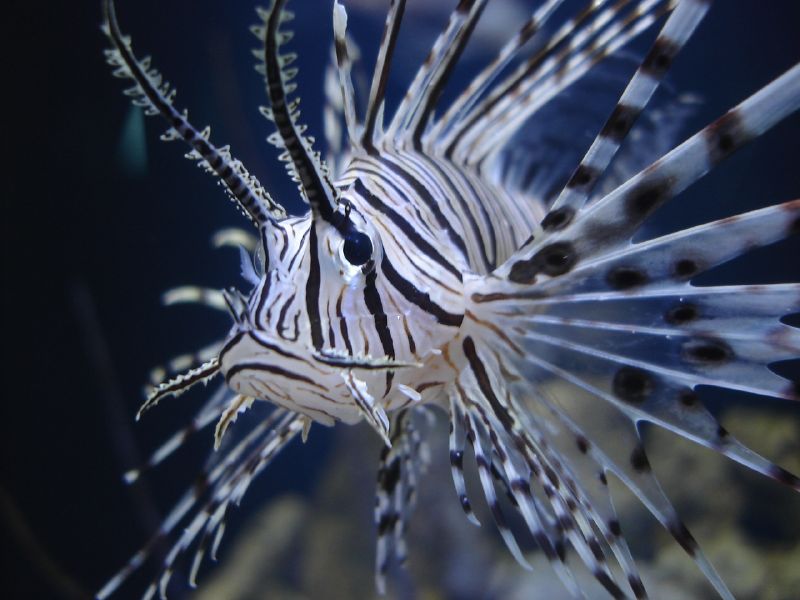
Last time you went to an aquarium, you probably saw a lionfish swimming happily in a tank filled with a bit of coral or rocky bottom, calmly flipping its fins about in the slight current created by the water pump. Now think back to the interpretive sign next to the tank – did it say that the exhibit displayed an invader or an awesome, weird aquarium fish? Depending on which part of the world you’re in, you might get a different answer. Along the east coast of the United States, though, it should say the former. Lionfish have spread from south Florida throughout the Caribbean and up to North Carolina, where they can be found on reef habitat (either natural or manmade via the sinking of ships) at a concentration of 400 fish per square meter. And they eat everything in sight.

Read More “Misunderstood Marine Life # 5 – Lionfish” »

Unraveling the mysteries of Steller’s Sea Ape

Posted on October 4, 2011September 16, 2016 By Andrew Thaler
Science

Last year for our Week of Ocean Pseudoscience, we counted down our top seven marine cryptids. Number seven was the elusive Steller’s Sea Ape, documented only once by renowned naturalist Georg Wilhelm Steller. Even though the Sea Ape has not been seen since, Steller’s deserved reputation as a world class naturalist has kept the Sea Ape story alive. In his journal, he reports that:

During this time we were near land or surrounded by it we saw large numbers of hair seals, sea otters, fur seals, sea lions, and porpoises…. On August 10, we saw a very unusual and unknown sea animal, of which I am going to give a brief account since I observed it for two whole hours. It was about two Russian ells in length, the head was like a dog’s, with pointed, erect ears. From the upper and lower lips on both sides whiskers hung down which made it look almost like a Chinaman, The eyes were large; the body was longish round and thick, tapering gradually towards the tail. The skin seemed thickly covered with hair, of a grey color on the back, but reddish white on the belly; in the water, however, the animal appeared equally reddish and cow colored. The tail was divided into two fins, of which the upper, as in the case of sharks, was twice as large as the lower.

source 

Read More “Unraveling the mysteries of Steller’s Sea Ape” »

The post-oil spill Gulf of Mexico

Posted on October 4, 2011October 4, 2011 By David Shiffman
Science

As some of you probably remember, there was an oil spill in the Gulf of Mexico last year. You can be forgiven for not remembering it, as our news media hasn’t been talking about it very much lately. In fact, if your only source of oil spill news was the mainstream media, you probably think that the Gulf is doing great! A little over a year ago, CNN ran a story about how the BP oil well that caused the spill was “effectively dead” and was “no longer a threat to the Gulf”. CNBC (and many others) ran stories about how 75 percent of the oil from the spill was gone from the Gulf. Bloomberg reported that the Gulf would recovery completely by 2012. London’s Telegraph celebrated a dramatic recovery after only one year. Whew… things aren’t as bad as we feared, and the Gulf has almost totally recovered! Or has it?

Read More “The post-oil spill Gulf of Mexico” »

Misunderstood Marine Life # 6 – Jellyfish

Posted on October 3, 2011October 1, 2011 By Bluegrass Blue Crab 3 Comments on Misunderstood Marine Life # 6 – Jellyfish
Popular Culture, Science
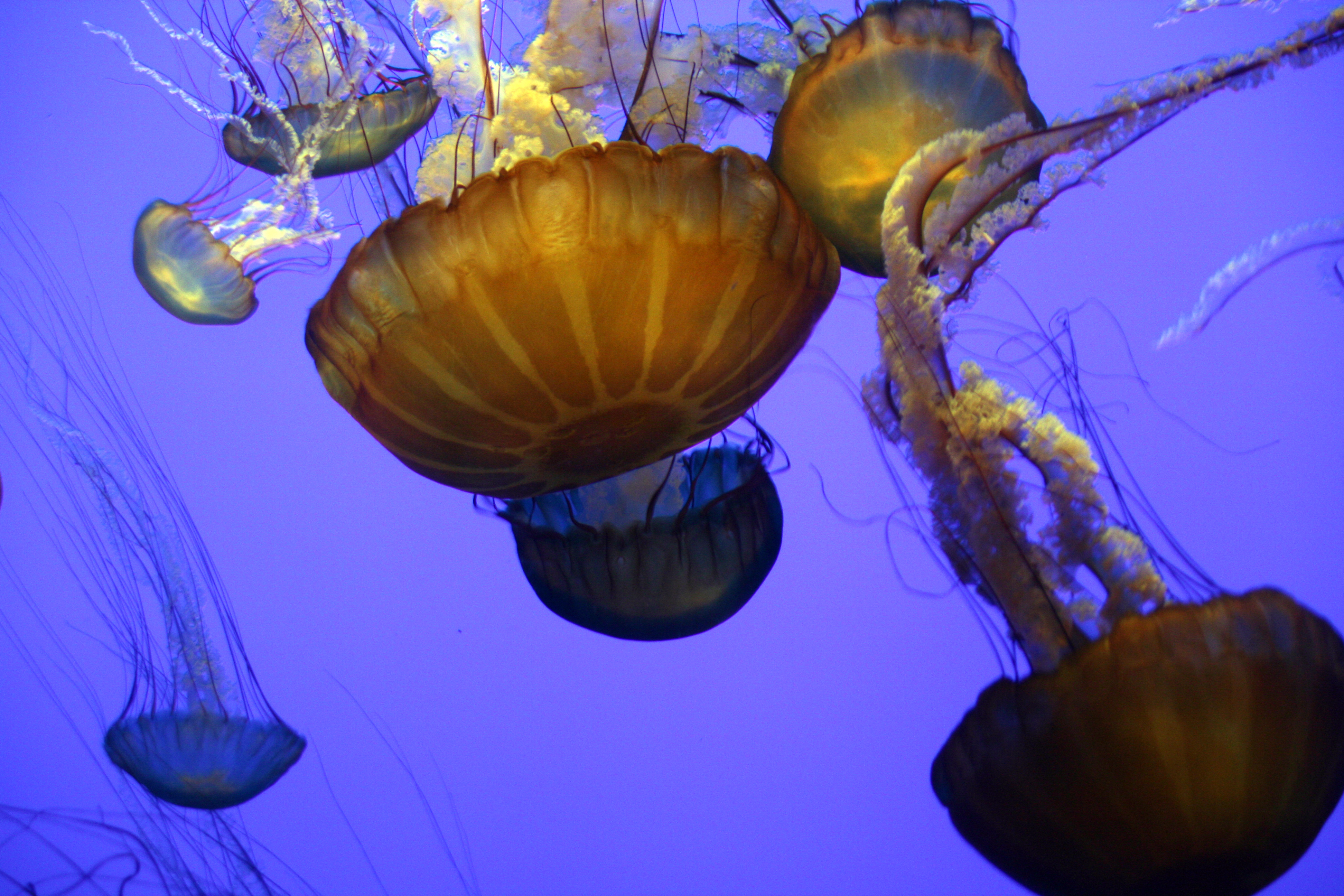
photo by Amy Freitag

“Yikes! It’s a jellyfish, get out of the water!”

I can’t remember how many times I heard this shriek from my friends as a kid around the end of July, when loads of comb jellies washed ashore, the casualties of their massive breeding efforts. Like most kids with a good poking toe, however, I figured out that these jellies couldn’t hurt me. For a number of reasons, not all jellyfish equal a painful sting.

Furthermore, like many sea creatures, they are symbolic of a beautiful greater ecosystem at work but often lead to squeaks and squeals of fear rather than smiles of appreciation. I’ll go so far to say that jellyfish are a good candidate to be a charismatic creature of the sea.

Read More “Misunderstood Marine Life # 6 – Jellyfish” »

10 misrepresentations about climate change

Posted on October 3, 2011October 2, 2011 By David Shiffman 146 Comments on 10 misrepresentations about climate change
Science

Few scientific fields generate as much controversy as climate change. Misunderstandings, misrepresentations, and outright lies are common. While environmentalists rightly criticize anti-global warming activists for not being truthful, neither side is innocent. Presented here are five common misrepresentations from both sides and the truth about those issues.

Read More “10 misrepresentations about climate change” »

Misunderstood Marine Life # 7 – The Living Fossils

Posted on October 3, 2011October 1, 2011 By Andrew Thaler 3 Comments on Misunderstood Marine Life # 7 – The Living Fossils
Science

Horseshoe Crabs - Andrew David Thaler

Horseshoe Crabs, Coelacanths, Seven-gilled sharks, hagfish. Throughout the oceans there are creatures whose primitive bodies hearken back to earlier days in our evolutionary history. They possess basal characteristics that are more akin to those of the ancestors of our contemporary phyla. Because we can look into these organisms and learn something about our own deep past, we think of them not as modern descendants, but as living fossils, relics of a primeval state.

This is, of course, a misnomer.

Read More “Misunderstood Marine Life # 7 – The Living Fossils” »

Thank You NSF

Posted on September 28, 2011September 28, 2011 By Bluegrass Blue Crab
Science

The National Science Foundation has recently announced the NSF Career-Life Balance Initiative largely in hopes of retaining women in the sciences past their the dissertation years. Most notably, the Initiative allows a year long pause in awarded grants to new parents. This pause matches the pause in the tenure process that most universities offer (but … Read More “Thank You NSF” »

Posts pagination

Previous 1 … 53 54 55 … 83 Next

Popular Posts

At least 74 practicing shark researchers: How a silly thing I said online raised thousands for conservationAt least 74 practicing shark researchers: How a silly thing I said online raised thousands for conservationFebruary 26, 2025David Shiffman
Why the new Trump order to shoot wolves is both illegal and a dreadful precedent for endangered speciesWhy the new Trump order to shoot wolves is both illegal and a dreadful precedent for endangered speciesSeptember 5, 2026Ali Gaster
Severely injured great white shark found, are scientists responsible?Severely injured great white shark found, are scientists responsible?March 29, 2011David Shiffman
5 things I learned helping to reassess the global conservation status of every species of tuna and billfish5 things I learned helping to reassess the global conservation status of every species of tuna and billfishSeptember 15, 2026David Shiffman
Getting a sense of porpoiseJanuary 20, 2009Andrew Thaler
That's not a blobfish: Deep Sea Social Media is Flooded by AI SlopThat's not a blobfish: Deep Sea Social Media is Flooded by AI SlopDecember 19, 2025Andrew Thaler
How to build a canoe from scratch on a graduate student stipendHow to build a canoe from scratch on a graduate student stipendApril 17, 2010Andrew Thaler
The Trump Administration’s latest attack on endangered speciesThe Trump Administration’s latest attack on endangered speciesSeptember 17, 2026Ali Gaster
What is a Sand Shark?What is a Sand Shark?November 12, 2017Chuck Bangley
What Ocean Ramsey does is not shark science or conservation: some brief thoughts on "the Shark Whisperer" documentaryWhat Ocean Ramsey does is not shark science or conservation: some brief thoughts on "the Shark Whisperer" documentaryJuly 2, 2025David Shiffman
Subscribe to our RSS Feed for updates whenever new articles are published.

We recommend Feedly for RSS management. It's like Google Reader, except it still exists.

Southern Fried Science

  • Home
  • About SFS
  • Authors
  • Support SFS


If you enjoy Southern Fried Science, consider contributing to our Patreon campaign.

Copyright © 2026 Southern Fried Science.

Theme: Oceanly Premium by ScriptsTown