Skip to content

Southern Fried Science

Over 15 years of ocean science and conservation online

  • Home
  • About SFS
  • Authors
  • Support SFS

Category: Science

The next generation of low-cost, open-source oceanographic instruments is here! Meet the OpenCTD rev 2!

Posted on January 7, 2020January 7, 2020 By Andrew Thaler 1 Comment on The next generation of low-cost, open-source oceanographic instruments is here! Meet the OpenCTD rev 2!
Oceanography for Everyone, Open Science, Science
Four generations of OpenCTD. Left to Right: Prototype 2, which went through sea trials in Lake Superior, rev 1, rev 1 in the smaller form factor (this one was deployed in Alaska), and OpenCTD rev 2.

In 2013, Kersey Sturdivant and I embarked upon a quixotic quest to create an open-source CTD — the core tool of all oceanographic research that measures the baseline parameters of salinity, temperature, and depth. We weren’t engineers; neither of us had any formal training in electronics or sensing. And, full confession, we weren’t (and still aren’t) even oceanographers! What we were were post-doc marine ecologists working with tight budgets who saw a desperate need among our peers and colleagues for low-cost alternatives to insurmountably expensive equipment. And we had ties to the growing Maker and DIY electronics movements: Kersey through his work developing Wormcam and me through my involvement with OpenROV. 

We had no idea what we were getting ourselves into. 
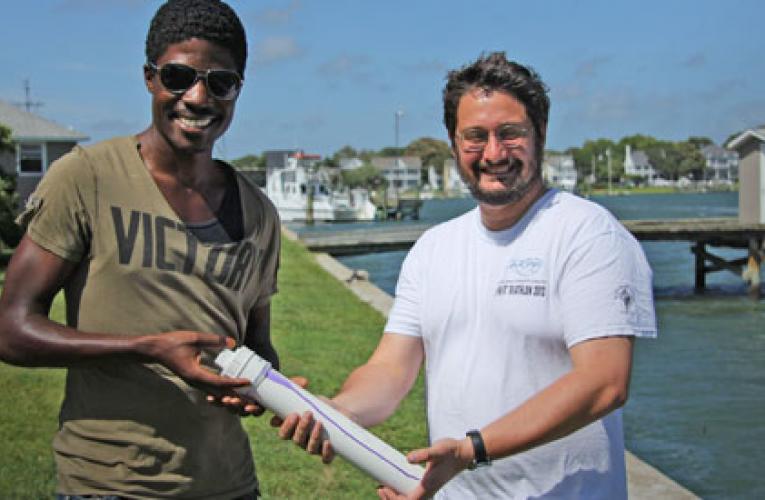
The very first OpenCTD prototype.

Seven years and five iterations later, we are releasing the long anticipated OpenCTD rev 2 as well as the comprehensive Construction and Operation Manual! OpenCTD rev 2 builds on over half a decade of iteration and testing, consultation with oceanographers, engineers, developers, and makers around the world, extensive coastal and sea trials, and a series of workshops designed to test and validate the assembly process. 

Read More “The next generation of low-cost, open-source oceanographic instruments is here! Meet the OpenCTD rev 2!” »

Shark Week 2019 reviews and thoughts

Posted on December 24, 2019December 24, 2019 By David Shiffman
Popular Culture, Reviews and Interviews, Science

I wasn’t able to watch live this year, but I DVR-ed all 18 specials and watched them eventually! Here are my reviews, ratings, and thoughts. I did not watch the feature-length movie, which they claim is the first fictional entertainment content they’ve ever produced… causing me to stare in megalodon. Overall, this was not a strong year for science, facts, or diversity (of either sharks or shark researchers).

As a reminder, I grade on the following aspects of a show: is there actual science or natural history educational content / is there made up nonsense, are actual credentialed experts with relevant expertise featured or are they self-proclaimed “shark experts” who say wrong nonsense all the time, what species are featured (with bonus points for species we rarely or never see), and do they feature diverse experts or just the same white men (reminder: my field is more than 50% women)? It’s not a perfect rubric, but it’s better than this actual system for ranking shark news introduced this year in “sharks gone wild 2:”

Rankings appear in no particular order, if you care about the order the shows actually aired in please see this Discovery press release.

Read More “Shark Week 2019 reviews and thoughts” »

10 sharks that mattered in the 2010’s

Posted on December 19, 2019December 19, 2019 By David Shiffman
Blogging, Popular Culture, Science, Uncategorized

Just when you thought it was safe to read another decade-in-review listicle…

You can buy this on a tshirt

As the 2010’s come to an end, it’s a time to reflect on the often-problematic decade that was as we plan for a hopeful future. I am a sucker for year-in-review and decade-in-review listicles, and was devastated to learn that no one had yet written a decade-in-review listicle for sharks! Please enjoy my official, scientific list of the most important science, conservation, and pop culture sharks from the past decade.

Read More “10 sharks that mattered in the 2010’s” »

Meet the newest Southern Fried Science contributor, Dr. Catherine Macdonald

Posted on November 25, 2019November 27, 2019 By Catherine Macdonald
Conservation, Science

Hello, world of Southern Fried Science.

The Field School team restrains a blacktip shark for a quick work-up during a female-scientist-led trip with the amazing non-profit Terranaut Club.

I’m Catherine—if we’re being official about it, Dr. Catherine Macdonald—and I’m the newest contributing writer around here. Before we get into science, I thought it might be helpful to get better acquainted.  

Read More “Meet the newest Southern Fried Science contributor, Dr. Catherine Macdonald” »

Emerging technologies for exploration and independent monitoring of seafloor extraction in Areas Beyond National Jurisdiction

Posted on September 3, 2019September 3, 2019 By Andrew Thaler
Conservation, Exploration, Science

[The following is a transcript from a talk I gave at the 2019 Minerals, Materials, and Society Symposium at the University of Delaware in August, 2019. It has been lightly edited for clarity.]

Good afternoon and thank you all for coming. I want to change tracks for a bit and scan the horizon to think about what the future of exploration and monitoring in the high seas might look like because ocean and conservation technology is in the midst of an evolutionary shift in who has access to the tools necessary to observe the deep ocean.

This is the Area. Areas Beyond National Jurisdiction, International Waters, the High Seas, the Outlaw Ocean. It’s the portion of the ocean that falls outside of national EEZs and is held in trust by the UN under the Convention on the Law of the Sea as the Common Heritage of Humankind. It covers 64% of the ocean and nearly half of the total surface of the Earth. It’s also the region in which most major deep-sea mining ventures intend to operate.

Read More “Emerging technologies for exploration and independent monitoring of seafloor extraction in Areas Beyond National Jurisdiction” »

Bot meets Whale: making friends in the ocean; or how I learned to stop worrying and mitigate harmful interactions between recreational ROVs and marine mammals.

Posted on August 21, 2019August 21, 2019 By Andrew Thaler
Conservation, Science
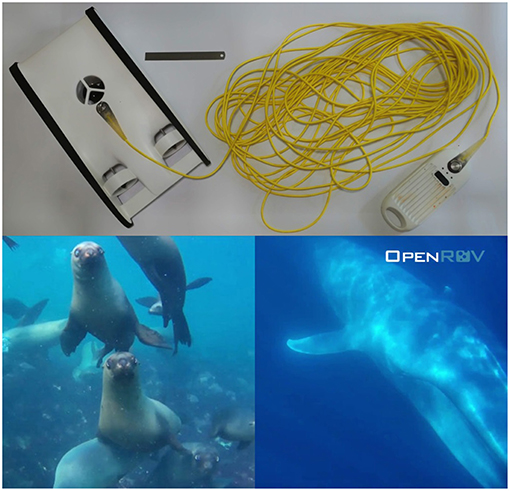
An example of a microROV system. From Thaler et al. (2019)

Today, there are more robots exploring the ocean than ever before. From autonomous ocean-crossing gliders to massive industrial remotely operated vehicles to new tools for science and exploration that open new windows into the abyss, underwater robots are giving people a change to experience the ocean like never before. The fastest growing sector of this new robotic frontier? Small, recreational, observation class ROVs.

Read More “Bot meets Whale: making friends in the ocean; or how I learned to stop worrying and mitigate harmful interactions between recreational ROVs and marine mammals.” »

Best Practices for Mitigating Negative Interactions Between Marine Mammals and MicroROVs

Posted on August 21, 2019August 21, 2019 By Andrew Thaler
Science

Today, we published our guidelines on the responsible operation of small recreational ROVs around marine mammals.

You can read the full paper here: Thaler and friends (2019) Bot Meets Whale: Best Practices for Mitigating Negative Interactions Between Marine Mammals and MicroROVs. DOI: 10.3389/fmars.2019.00506.

Reprinted below are the explicit guidelines proposed in the paper.

1. Education. Central to any mitigation strategy involving diverse stakeholders, ranging from professional to recreational, is user education. The following are critical to establishing a responsible user community: Ensuring all potential microROV users 1) not only understand the laws and regulations for wildlife viewing that apply to the jurisdiction in which they are operating, but understand why those regulations are in place; and, most importantly, 2) have internalized a stewardship ethic that motivates them to respect the rationale behind those regulations even when operating in regions where those regulations are not enforced. This is most effective when it occurs at point-of-sale or registration of the microROV. Thus, while the additional four guidelines relate to the user, this first one relates to the manufacturer. To most effectively convey the potential harm that microROVs could pose to marine mammals, the manufacturers are best positioned to educate their user base by providing informational material with each microROV sale. 

Read More “Best Practices for Mitigating Negative Interactions Between Marine Mammals and MicroROVs” »

A global assessment of biodiversity and research effort at active Seafloor Massive Sulphides: Transcript from my talk at the International Seabed Authority.

Posted on August 6, 2019August 6, 2019 By Andrew Thaler
Conservation, Science

[The following is a transcript from a talk I gave at a side event during Part II of the 25th Session of the International Seabed Authority in July, 2019. It has been lightly edited for clarity.]

I want to change gears this afternoon and talk about a very different kind of mining. For the last two years, Diva and I have been engaged in a data mining project to discover what we can learn and what we still need to learn about biodiversity at hydrothermal vents from the 40-year history of ocean exploration in the deep sea.

Read More “A global assessment of biodiversity and research effort at active Seafloor Massive Sulphides: Transcript from my talk at the International Seabed Authority.” »

What we’ve missed in the Abyss: Mining 40 years of cruise reports for biodiversity and research effort data from deep-sea hydrothermal vents.

Posted on August 6, 2019August 6, 2019 By Andrew Thaler
Science

“When the RV Knorr set sail for the Galapagos Rift in 1977, the geologists aboard eagerly anticipated observing a deep-sea hydrothermal vent field for the first time. What they did not expect to find was life—abundant and unlike anything ever seen before. A series of dives aboard the HOV Alvin during that expedition revealed not only deep-sea hydrothermal vents but fields of clams and the towering, bright red tubeworms that would become icons of the deep sea. So unexpected was the discovery of these vibrant ecosystems that the ship carried no biological preservatives. The first specimens from the vent field that would soon be named “Garden of Eden” were fixed in vodka from the scientists’ private reserves.”

Thaler and Amon 2019

In the forty years since that first discovery, hundreds of research expedition ventured into the deep oceans to study and understand the ecology of deep-sea hydrothermal vents. In doing so, they discovered thousands of new species, unraveled the secrets of chemosynthesis, and fundamentally altered our understanding of what it means to be alive on this planet. Now, as deep-sea mining crawls slowly towards production, we must transform those discoveries into conservation and management principles to safeguard the diversity and resilience of life in the deep sea.

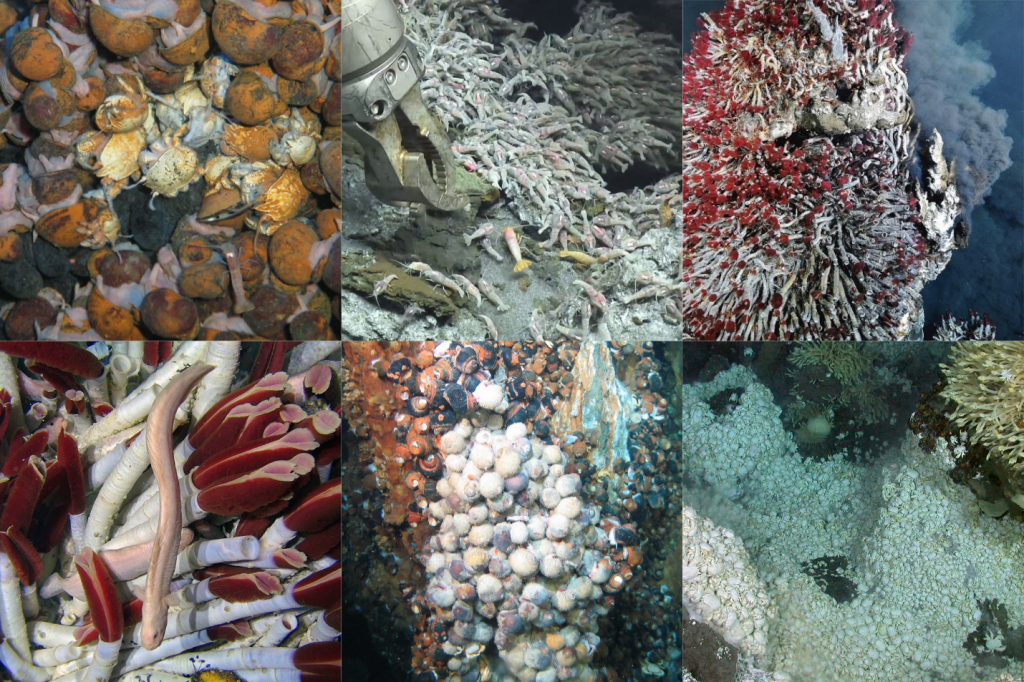
Biodiversity of hydrothermal vents from around the world. Top: Indian Ocean, Mid-Atlantic Ridge, Juan de Fuca Ridge. Bottom: East Pacific Rise, Southwest Pacific, Southern Ocean. Photo credits (top left to bottom right): University of Southampton; Woods Hole Oceanographic Institute; Ocean Networks Canada; Woods Hole Oceanographic Institute; Nautilus Minerals; University of Southampton.

Though research at hydrothermal vents looms large in the disciplines of deep-sea science, relative to almost any terrestrial system, they are practically unexplored. Over the last 2 years, Drs. Andrew Thaler and Diva Amon have poured through every available cruise report that made a biological observation at the deep-sea hydrothermal vent to assess how disproportionate research effort shapes or perception of hydrothermal vent ecosystems and impacts how we make management decisions in the wake of a new form of anthropogenic disturbance.

Read More “What we’ve missed in the Abyss: Mining 40 years of cruise reports for biodiversity and research effort data from deep-sea hydrothermal vents.” »

262 Voyages Beneath the Sea: the graphical abstract

Posted on August 6, 2019August 6, 2019 By Andrew Thaler
Science, Uncategorized

Read the full, open access paper “262 Voyages Beneath the Sea: A global assessment of macro- and megafaunal biodiversity and research effort at deep-sea hydrothermal vents” at PeerJ!

Posts pagination

Previous 1 … 8 9 10 … 81 Next

Popular Posts

How close did the world's first deep-sea mining come to the dredging the world's largest cold-water coral reef?How close did the world's first deep-sea mining come to the dredging the world's largest cold-water coral reef?March 17, 2026Andrew Thaler
At least 74 practicing shark researchers: How a silly thing I said online raised thousands for conservationAt least 74 practicing shark researchers: How a silly thing I said online raised thousands for conservationFebruary 26, 2025David Shiffman
What Ocean Ramsey does is not shark science or conservation: some brief thoughts on "the Shark Whisperer" documentaryWhat Ocean Ramsey does is not shark science or conservation: some brief thoughts on "the Shark Whisperer" documentaryJuly 2, 2025David Shiffman
That's not a blobfish: Deep Sea Social Media is Flooded by AI SlopThat's not a blobfish: Deep Sea Social Media is Flooded by AI SlopDecember 19, 2025Andrew Thaler
Here are some ocean conservation technologies that I'm excited aboutHere are some ocean conservation technologies that I'm excited aboutFebruary 19, 2026David Shiffman
Urea and Shark OsmoregulationUrea and Shark OsmoregulationNovember 15, 2010David Shiffman
Here's what I teach my students about finding jobs in marine biology and conservationHere's what I teach my students about finding jobs in marine biology and conservationApril 10, 2024David Shiffman
I turned my woodshop into a personal solar farm.I turned my woodshop into a personal solar farm.June 21, 2021Andrew Thaler
My "Follow ocean science and conservation experts on Bluesky and Instagram" assignmentMy "Follow ocean science and conservation experts on Bluesky and Instagram" assignmentNovember 19, 2024David Shiffman
Alberta, Canada is the proud owner of the largest man-made pyramid on the planetAlberta, Canada is the proud owner of the largest man-made pyramid on the planetOctober 16, 2012Andrew Thaler
Subscribe to our RSS Feed for updates whenever new articles are published.

We recommend Feedly for RSS management. It's like Google Reader, except it still exists.

Southern Fried Science

  • Home
  • About SFS
  • Authors
  • Support SFS


If you enjoy Southern Fried Science, consider contributing to our Patreon campaign.

Copyright © 2026 Southern Fried Science.

Theme: Oceanly Premium by ScriptsTown