

Skip to content

Southern Fried Science

Over 15 years of ocean science and conservation online

  • Home
  • About SFS
  • Authors
  • Support SFS

Category: Science

We need to know more about microplastics in the deep sea.

Posted on March 28, 2023March 28, 2023 By Andrew Thaler
Science

Establishing a baseline for microplastic accumulation in deep-sea animals using an historical sample archive: https://experiment.com/projects/establishing-a-baseline-for-microplastic-accumulation-in-deep-sea-animals-using-an-historical-sample-archive Most of the plastic that enters our oceans in unaccounted for. While large, charismatic macroplastics float on or just beneath the surface, making for dramatic scenes of vast swaths of garbage littering the sea, the bulk of the plastic in … Read More “We need to know more about microplastics in the deep sea.” »

The Last of Us zombie fungus has nothing on the brain-eating, sex-changing, Sacculina barnacle.

Posted on January 23, 2023January 24, 2023 By Andrew Thaler
The Last of Us zombie fungus has nothing on the brain-eating, sex-changing, Sacculina barnacle.
Science

In the Last of Us, the most gruesome live-action adaptation of a video game about people being turned into fungus since 1993’s Super Mario Bros, a mutated species of Cordyceps destroys society by converting humans into mindless, sporulating mushroom people.

Cordyceps, a fungus that most commonly parasitizes ants, is real. It really does hijack its host’s nervous system, alter its behavior, and turn it into a spore-producing zombie. The outcome is strangely beautiful.

Though the current darling of gritty, realistic, science-based zombie fiction, Cordyceps is such a lightweight in the world of brain-breaking parasites that tech bros brew it into their adaptogenic coffee.

If you want to meet a truly unsettling zombie-making parasite, allow me to introduce you to Sacculina.

Sacculina is a genus of barnacle that parasitizes crabs. While most parasitic barnacles are perfectly happy growing on the carapace of a crab, Sacculina takes this partnership to the extreme.

Female Sacculina larvae drift through the ocean, until they encounter a crab. The larva then settles on the crab and searches for a joint in the crab’s carapace. Once it finds a gap in the arthropod’s armor, it transforms into a kentrogon, a specialized phase of the barnacle life cycle that possess a stylet–an organic syringe-like structure–which allows Sacculina to inject itself into the crab, and not much else. At this point, the hard shell attached to the crab’s carapace falls off and the barnacle continues to grown within its host.

It gets so much weirder from here.

Read More “The Last of Us zombie fungus has nothing on the brain-eating, sex-changing, Sacculina barnacle.” »

22 things scientists learned about sharks in 2022

Posted on December 16, 2022 By David Shiffman
Science

2022 has been a weird year for humans, but it was a very interesting year for sharks! Shark species representing 90% of the global shark fin trade got listed on CITES Appendix II, which will require strict regulation, documentation, and dramatically improved sustainability of their fisheries. The once-every-four-years Sharks International conference was held in Valencia, Spain, and recordings of all talks are available until summer 2023. And sharks even made it into one of those “what Fox News is showing instead of current events that are bad for Republicans” memes!

There were also a lot of fascinating scientific discoveries, which this post will round up for you. As always, this is not meant to be a “best” or “top” list, so if your science isn’t included here please do not send angry letters. This is just some cool stuff I learned this year thanks to my amazing colleagues, in no particular order. Whenever possible I’ll also provide links to further reading on the topic. I hope you enjoy!

Read More “22 things scientists learned about sharks in 2022” »

Deep-Sea Mining: A whirlwind tour of the state of the industry and current policy regimes

Posted on September 23, 2022October 4, 2022 By Andrew Thaler
Science

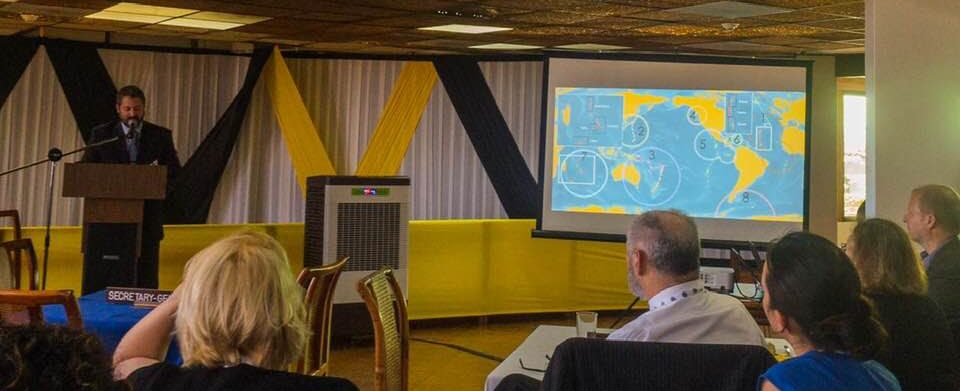
On April 28, 2022, I was invited to give a short talk to a gathering of Environmental NGO representatives to provide an overview and my perspective on the current state of development for deep-sea mining. Below is the transcript of that talk.

Good afternoon and thank you for inviting me. Today I’m going to give you a very brief whirlwind tour of the current state of deep-sea mining and the policy regime around this developing industry.

The first thing I need to highlight is that we often talk about deep-sea mining as one cohesive thing, but it’s really four separate and distinct industries, all developing in tandem, with significant differences in the types of metals targeted, the technology necessary to exploit those metals, and the motivations for doing so.

Read More “Deep-Sea Mining: A whirlwind tour of the state of the industry and current policy regimes” »

Two Years of Deep-sea Mining in Review: For Deep-sea mining, battery technology is the ultimate x-factor

Posted on March 20, 2022March 21, 2022 By Andrew Thaler
Two Years of Deep-sea Mining in Review: For Deep-sea mining, battery technology is the ultimate x-factor
Science

As in-person negotiations on the future of exploitation in the deep ocean resume this week in Kingston Jamaica, we reflect back on the last two years of development as reported on our sister site, the Deep-sea Mining Observer. This article first appeared on August 26, 2021.


Deep-sea mining is frequently framed as a race to the seafloor. While that is not technically true–deep-sea mining has, in fact, been incredibly slow to develop as an industry, with nearly half a century of technological innovation, diplomatic negotiation, and environmental exploration under its belt without producing a single ounce of commercial ore–the deep-sea mining industry is in a race against the one major technological innovation that could upend the industry’s claim to being a foundational technology for the renewable resource transition. 

The race is not to the bottom of the sea before fossil fuel consumption creates runaway global warming (with a 30-year-horizon, deep-sea mining is well positioned to facilitate the long-term transition to renewables, but is unlikely to make a major impact in the resource demands needed to meat the IPCC 2030 targets). The race is to reach commercial production before the evolving state of battery technology renders the majority of seabed resources superfluous. Battery chemistry is the x-factor that will shape the long-term prospects for the viability of deep-sea mining. 

Read More “Two Years of Deep-sea Mining in Review: For Deep-sea mining, battery technology is the ultimate x-factor” »

Two Years of Deep-sea Mining in Review: Major Brands Say No to Deep-sea Mining, for the Moment

Posted on March 20, 2022March 17, 2022 By Andrew Thaler
Two Years of Deep-sea Mining in Review: Major Brands Say No to Deep-sea Mining, for the Moment
Science

As in-person negotiations on the future of exploitation in the deep ocean resume this week in Kingston Jamaica, we reflect back on the last two years of development as reported on our sister site, the Deep-sea Mining Observer. This article first appeared on April 15, 2021.


On Wednesday, March 30, several major technology and automotive companies joined the deep-sea mining moratorium movement. Google, BMW, Volvo, and Samsung SDI (a Samsung subsidiary responsible for manufacturing small lithium-ion batteries for smartphones and other applications) signed on to the World Wide Fund For Nature’s Global Deep-sea Mining Moratorium Campaign. These are the first major corporations to commit not to source minerals from the deep seabed or finance deep-sea mining activities, and to exclude seafloor minerals from their supply chain. 

“Sustainability leaders should be concerned about how their green image could be affected by incorporating deep sea minerals into their metal supply chain,” says Kristina M. Gjerde, Senior High Seas Advisor to the IUCN Global Marine and Polar Programme. “Deep sea minerals are not solving the problem of harmful impacts, just relocating it elsewhere, where the affected communities are less able to speak for themselves. Moreover, it should be clear by now that relocating mining to the deep sea is unlikely to reduce the issues associated with terrestrial mining. By increasing the availability of minerals, deep sea mining could in fact make it harder to clean up terrestrial mining activities.”

As major automotive manufacturers in the midst of a pivot to electric vehicles, BMW and Volvo’s announcements represent a potential threat to the deep-sea metal market. BMW expects 50% of all its vehicle sales to be electric by the end of the decade, with several BMW subsidiaries, including Mini, producing only EVs by 2030. Volvo, who also intends to be fully electric by 2030, recently shipped its first all-electric vehicle to the United States, though software issues caused the long-awaited XC40 Recharge to be held in port pending a critical system update.

Read More “Two Years of Deep-sea Mining in Review: Major Brands Say No to Deep-sea Mining, for the Moment” »

Two Years of Deep-sea Mining in Review: Delegates struggle to develop Regional Environmental Management Plans during a global pandemic

Posted on March 20, 2022March 21, 2022 By Andrew Thaler
Two Years of Deep-sea Mining in Review: Delegates struggle to develop Regional Environmental Management Plans during a global pandemic
Science

As in-person negotiations on the future of exploitation in the deep ocean resume this week in Kingston Jamaica, we reflect back on the last two years of development as reported on our sister site, the Deep-sea Mining Observer. This article first appeared on January 29, 2021.


Since the pandemic brought travel to a halt, the International Seabed Authority has been working to meet contractor deadlines and make progress on a variety of issues revolving around finalizing the mining code, facilitating workshops, and engaging stakeholders and experts through remote meetings. These efforts include workshops on the development of Regional Environmental Management Plans (REMPs) for the Northwest Pacific and the Northern Mid-Atlantic Ridge. Though some stakeholders were satisfied with the efforts to move workshops online, many were left frustrated by a process that felt rushed, less transparent, and less inclusive of the breadth of stakeholders represented by the deep-sea mining community.

Regional Environmental Management Plans are one of the foundational policy instruments that determine how contractors act and interact within a geographic region. They provide guidance for not just individual lease blocks, but for how the whole of an area, including multiple lease blocks by multiple contractors, as well as areas of particular environmental interest and set asides will be managed. The process of negotiating a REMP is long and detail-oriented and includes the input of numerous stakeholder groups and expert advisors. So far, only a single REMP, for the Clarion-Clipperton  Fracture Zone, has been approved by the International Seabed Authority. 

Read More “Two Years of Deep-sea Mining in Review: Delegates struggle to develop Regional Environmental Management Plans during a global pandemic” »

Two Years of Deep-sea Mining in Review: Has pulling the Trigger already backfired?

Posted on March 19, 2022March 17, 2022 By Andrew Thaler
Two Years of Deep-sea Mining in Review: Has pulling the Trigger already backfired?
Science

As in-person negotiations on the future of exploitation in the deep ocean resume this week in Kingston Jamaica, we reflect back on the last two years of development as reported on our sister site, the Deep-sea Mining Observer. This article first appeared on August 26, 2021.


The Republic of Nauru turned the deep-sea mining world on its head this summer when it invoked Article 15, colloquially known as the Trigger, starting a 2-year countdown on the finalization of mining regulations for polymetallic nodules in areas beyond national jurisdiction. This countdown means that commercial deep-sea mining could potentially commence within 3 years. But that commencement depends on a suite of benchmarks, both procedural and technological, that have yet to be met. 

While Nauru and its deep-sea mining contractor, Nauru Ocean Resources Inc. (a wholly owned subsidiary of The Metals Company), emphasize the urgency of unlocking seafloor metals to accelerate the transition to a fossil fuel-free future, many stakeholders have expressed surprise at what they feel is a premature invocation of a rule designed to prevent oppositional member states from stonewalling progress on a mining code. 

The two year clock doesn’t guarantee that a mining code will be complete within that time frame, but rather that either the mining code be finalized or a submitted Plan of Work be considered by the Council based on current and best-available standards and guidelines. Though The Metals Company has stated in the past that it would not support invoking Article 15 unless it was certain it had the backing of the majority of the Council, those political winds could easily change in the next three years, and the Council retains the authority to reject a Plan of Work. 

It remains to be seen whether and if a mining code drafted under ticking clock of the two-year countdown will be more or less amenable to the preferences of deep-sea mining contractors and their sponsor states, but initial responses from delegations representing ISA Council members, the Legal and Technical Commission, and observers suggest that invoking Article 15 is just as likely to backfire on the Republic of Nauru and The Metals Company. 

Read More “Two Years of Deep-sea Mining in Review: Has pulling the Trigger already backfired?” »

Two Years of Deep-sea Mining in Review: A pivotal moment in the history of deep-sea mining

Posted on March 19, 2022March 17, 2022 By Andrew Thaler
Two Years of Deep-sea Mining in Review: A pivotal moment in the history of deep-sea mining
Science

As in-person negotiations on the future of exploitation in the deep ocean resume this week in Kingston Jamaica, we reflect back on the last two years of development as reported on our sister site, the Deep-sea Mining Observer. This article first appeared on June 30, 2021.


The spring and summer of 2021 will likely stand as the pivotal moment in the history of deep-sea mining. Months of intense protest amidst significant at-sea progress on environmental impact studies and prototype testing were capped off earlier this week by the explosive announcement that the Republic of Nauru, sponsoring state of Nauru Ocean Resources Inc, a wholly-owned subsidiary of The Metals Company (formerly DeepGreen), was invoking Article 15 triggering the 2-year countdown to complete the Mining Code.

An apparent sea change in the relationship between mining contractors, environmental NGOs, and other stakeholders, began in late March, when the Worldwide Fund for Nature announced a new campaign to get major corporations to pledge to exclude minerals produced from the deep sea from their supply chains until the impacts to the ocean were more thoroughly understood. These companies included BMW and Volvo, which have a major stake in electric vehicle manufacturing, and Samsung SDI, who produce small cell lithium batteries for electronic devices. 

That announcement came just days before both GSR and The Metals Company were preparing for at-sea campaigns to continue their environmental baseline work and prototype nodule collector testing in the Clarion Clipperton Zone. The Metals Company’s Expedition 5B was one of several research cruises conducted over the last few years as part of a comprehensive plan to characterize the ecosystems, including pelagic communities, around their polymetallic nodule leases in the NORI-D contract areas and assess the potential impacts of their eventual nodule extraction operations. As DeepGreen, The Metals Company had previously lent the use of their ship, the Maersk Launcher, to the high seas plastic collection program The Ocean Cleanup. 

Only days later, GSR launched its own four-week research campaign in collaboration with  the EU MiningImpact program. During a month at sea, they tested the Patania II nodule collector prototype. The Patania II did suffer an engineering failure during sea trials which left the collector detached on the seafloor for several days before successful recovery to the surface, a scenario which is not unexpected during prototype testing. “This is pioneering engineering work and we were prepared for multiple eventualities.” said Kris Van Nijen, Managing Director of GSR in a press release. “…we were able to reconnect Patania II and we look forward to completing the mission, including further deployments of Patania II.”

Read More “Two Years of Deep-sea Mining in Review: A pivotal moment in the history of deep-sea mining” »

Two Years of Deep-sea Mining in Review: What happens when we pull the trigger?

Posted on March 19, 2022March 17, 2022 By Andrew Thaler
Two Years of Deep-sea Mining in Review: What happens when we pull the trigger?
Science

As in-person negotiations on the future of exploitation in the deep ocean resume this week in Kingston Jamaica, we reflect back on the last two years of development as reported on our sister site, the Deep-sea Mining Observer. This article first appeared on November 19, 2021.


Throughout the 26th Session of the International Seabed Authority, during both the council meeting and via media interviews, deep-sea mining contractors have begun to talk about “the trigger”. The trigger is a protocol within UNCLOS which would allow sponsoring states to jumpstart the deep-sea mining process, placing a ticking clock on the development of the mining exploitation regulations. Annex I, Section 1(15) of the 1994 Agreement on the Implementation of Part XI of UNCLOS (colloquially referred to as “Article 15” or more informally, “the trigger”) allows a sponsoring state to expedite the current mining code negotiations by submitting a plan of work for a contractor that is imminently ready to begin production. 

Article 15 lays out the conditions under which a sponsoring state could initiate deep-sea mining in the Area absent a finalized mining code. If a sponsoring state submits a plan of work for a commercial deep-sea mining operation, that action starts a two-year countdown. If there is no approved code by the two-year deadline, the contractor and sponsoring state can move forward with exploitation in accordance with their own submitted plan of work and a set of provisional regulations that have been approved by the Council. 

“Without this provision,” says Pradeep Singh of the Institute for Advanced Sustainability Studies, “it was technically possible pursuant to UNCLOS for one or a few Council members to deploy filibuster tactics to frustrate or impede the adoption of key regulations. With the introduction of this provision and in the context of exploitation activities, it is possible for a member state of the Authority to request for exploitation regulations to be adopted by the Council within a prescribed period of two years from the date of the request, failing which, it would still have to consider any application submitted for exploitation activities despite the absence of the said regulations.”

Read More “Two Years of Deep-sea Mining in Review: What happens when we pull the trigger?” »

Posts pagination

Previous 1 … 7 8 9 … 82 Next

Popular Posts

What Ocean Ramsey does is not shark science or conservation: some brief thoughts on "the Shark Whisperer" documentaryWhat Ocean Ramsey does is not shark science or conservation: some brief thoughts on "the Shark Whisperer" documentaryJuly 2, 2025David Shiffman
Save the seals.  Congress is trying to shoot its way to salmon recoverySave the seals.  Congress is trying to shoot its way to salmon recoveryJuly 22, 2026Southern Fried Science
Shark of Darkness: Wrath of Submarine is a fake documentaryShark of Darkness: Wrath of Submarine is a fake documentaryAugust 10, 2014Michelle Jewell
What is a Sand Shark?What is a Sand Shark?November 12, 2017Chuck Bangley
That's not a blobfish: Deep Sea Social Media is Flooded by AI SlopThat's not a blobfish: Deep Sea Social Media is Flooded by AI SlopDecember 19, 2025Andrew Thaler
What can the funniest shark memes on the internetz teach us about ocean science and conservation?What can the funniest shark memes on the internetz teach us about ocean science and conservation?November 8, 2013David Shiffman
The “Conservation Paywall”: why saving the planet has become a luxury sportThe “Conservation Paywall”: why saving the planet has become a luxury sportJuly 23, 2026Chris Parsons
Our favorite sea monsters – Ningen (#4)Our favorite sea monsters – Ningen (#4)September 7, 2010Andrew Thaler
Jumping the shark: New study reviews the breaching behavior of sharks and raysJumping the shark: New study reviews the breaching behavior of sharks and raysSeptember 19, 2024David Shiffman
The story of the pride flag made from NASA imagery: Bluesky's most-liked imageThe story of the pride flag made from NASA imagery: Bluesky's most-liked imageSeptember 27, 2024David Shiffman
Subscribe to our RSS Feed for updates whenever new articles are published.

We recommend Feedly for RSS management. It's like Google Reader, except it still exists.

Southern Fried Science

  • Home
  • About SFS
  • Authors
  • Support SFS


If you enjoy Southern Fried Science, consider contributing to our Patreon campaign.

Copyright © 2026 Southern Fried Science.

Theme: Oceanly Premium by ScriptsTown