Skip to content

Southern Fried Science

Over 15 years of ocean science and conservation online

  • Home
  • About SFS
  • Authors
  • Support SFS

Category: Science

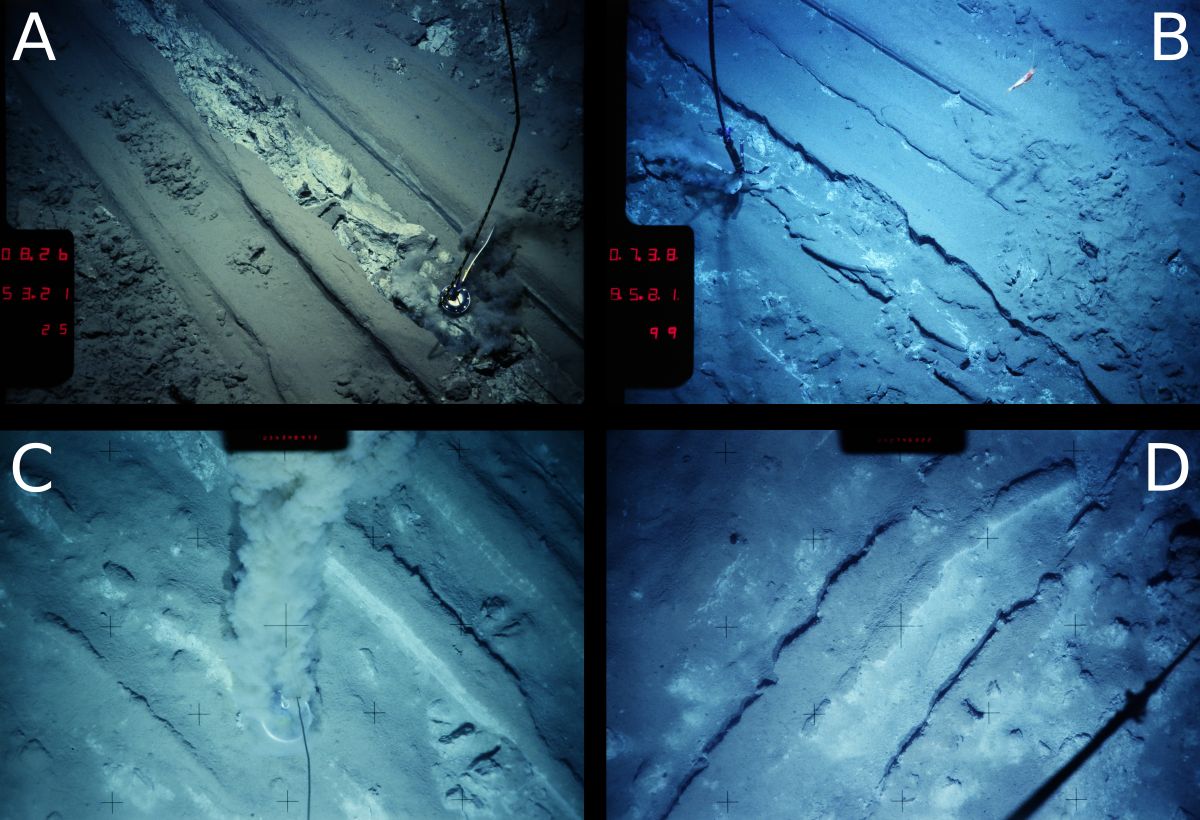
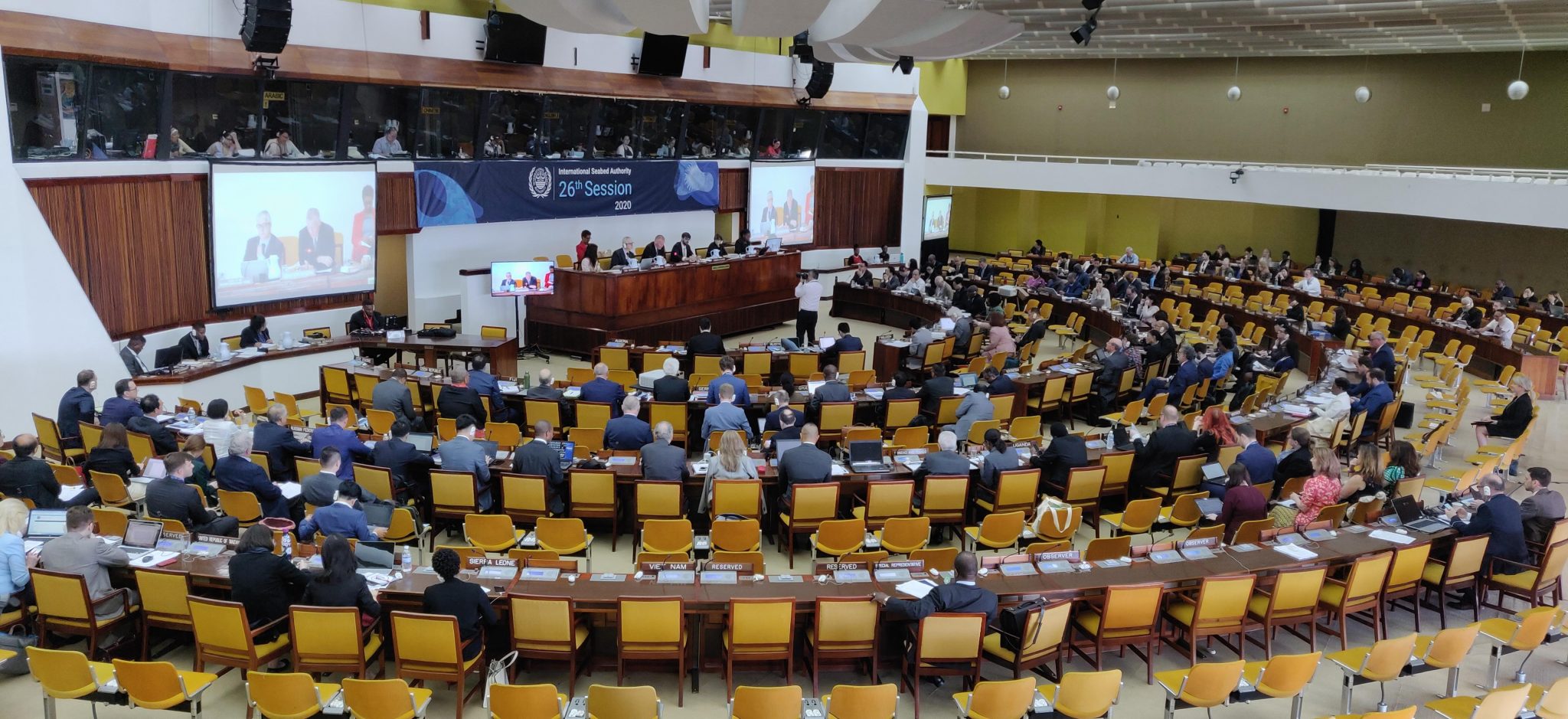
The United States moves towards exploration and exploitation of critical mineral resources in the deep ocean.

Posted on December 14, 2020December 11, 2020 By Andrew Thaler
Science

This article originally appeared in the October/November 2020 issue of the Deep-sea Mining Observer. It is reprinted here with permission. For the latest news and analysis about the development of the deep-sea mining industry, subscribe to DSM Observer here: http://dsmobserver.com/subscribe/ Since the signing of the UN Convention on the Law of the Sea and the creation of … Read More “The United States moves towards exploration and exploitation of critical mineral resources in the deep ocean.” »

How anglerfish hack their immune system to hang on to a mate

Posted on September 18, 2020September 17, 2020 By Andrew Thaler
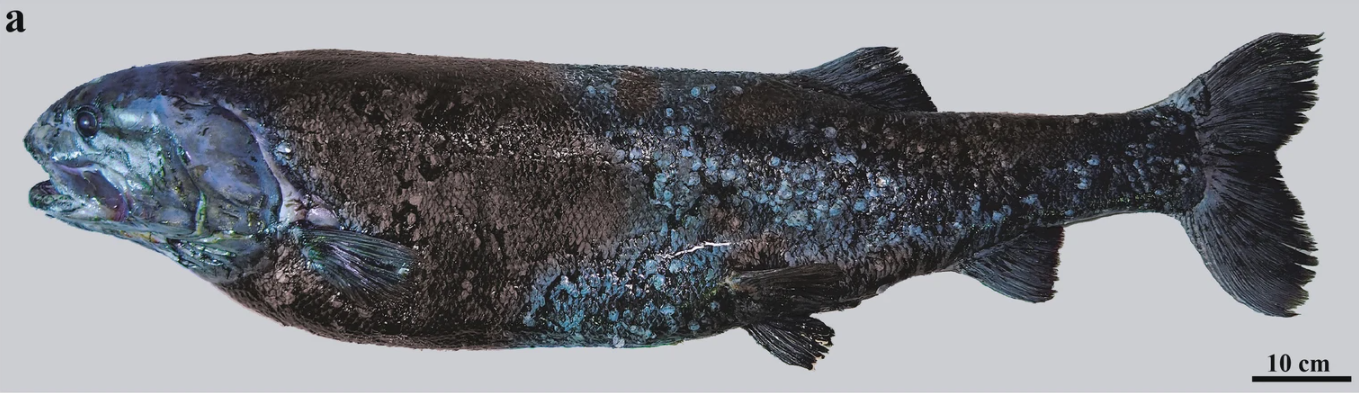
How anglerfish hack their immune system to hang on to a mate
Science

This article originally appeared in the August/September 2020 issue of the Deep-sea Mining Observer. It is reprinted here with permission. For the latest news and analysis about the development of the deep-sea mining industry, subscribe to DSM Observer here: http://dsmobserver.com/subscribe/

When you live in the darkness of the abyss, finding a partner is hard and keeping a partner is even harder. Deep-sea anglerfish, one of the iconic ambassador species of the deep ocean, have found a novel solution to this problem–dwarf males are sexual parasites that latch onto the body of the much larger female anglerfish and then physically fuse to their partner, becoming permanently attached to the point where they share a circulatory and digestive system. 

Parasitic dwarf males are uncommon, but not unheard of, throughout the animal kingdom. Osedax, the deep sea bone eating worm, also maintains a harem of dwarf males in a specialized chamber in their trunk. But few species, and no other vertebrates, go to quite the extremes of the anglerfish. And with good reason. 

Vertebrate immune systems have a long shared history. The Major Histocompatibility Complex (MHC) is a suite of genes shared among all gnathostomes–the taxonomic group that contains all jawed vertebrates, from fish to fishermen. It creates the proteins which provide the foundation for the adaptive immune system, the core complex which allows bodies to tell self from no-self, detect pathogens, and reject non-self invaders. Suppressing the MHC seriously inhibits a vertebrate’s ability to fight off infection. 

Incidentally, not all deep-sea anglerfish have parasitic dwarf males, and the species most often presented as a type specimen in the popular press, the humpback anglerfish Melanocetus johnsonii, is one of several that do not have permanently attached parasitic dwarf males. M. johnsonii males are free-swimming throughout their life, they’re just small and clingy.

Read More “How anglerfish hack their immune system to hang on to a mate” »

Bioprospecting in Practice: How a drug goes from the ocean to the clinic.

Posted on August 10, 2020August 10, 2020 By Andrew Thaler 1 Comment on Bioprospecting in Practice: How a drug goes from the ocean to the clinic.
Bioprospecting in Practice: How a drug goes from the ocean to the clinic.
Science

This article originally appeared in the June/July 2020 issue of the Deep-sea Mining Observer. It is reprinted here with permission. For the latest news and analysis about the development of the deep-sea mining industry, subscribe to DSM Observer here: http://dsmobserver.com/subscribe/

Bioprospecting, the discovery of new pharmaceutical compounds, industrial chemicals, and novel genes from natural systems, is frequently cited among the critical non-mineral commercial activities that yield value from the deep ocean. Isolating new chemicals or molecular processes from nature can provide substantial benefits to numerous industries. The value of products derived from marine genetic resources alone is valued at $50 billion while a single enzyme isolated from a deep-sea hydrothermal vent used in ethanol production has an annual economic impact of $150 million. 

In contrast to other extractive processes, bioprospecting is driven by and dependent on biodiversity. The greater the diversity and novelty of an ecosystem, the greater the likelihood that new compounds exist within that community. Bioprospecting is also viewed as light extraction, compounds only need to be identified once–actual production happens synthetically in the lab–thus leaving ecosystems relatively undisturbed compared to more intensive industries.

Despite the promise and importance of bioprospecting, there is generally a relatively poor understanding of what the process of discovery entails. How do researchers go from sponges on the seafloor to new antiviral treatments? 

Read More “Bioprospecting in Practice: How a drug goes from the ocean to the clinic.” »

Probing the submerged caves of Bermuda with Trident

Posted on January 28, 2020January 28, 2020 By Andrew Thaler
Science
Dr. Blanco-Bercial pilots the Trident ROV in one of Bermuda’s submerged caves.

Conservation research in submarine caves is among the clearest and most compelling use-cases for a small observation-class ROV like Trident, which is why, last week, we delivered the very first ROV for Good Sofar Ocean Trident to Dr. Leocadio Blanco-Bercial at the Bermuda Institute of Ocean Sciences to study the hidden biodiversity in Bermuda’s Anchialine Caves.

Dr. Blanco-Bercial is a marine biologist who studies the diversity and evolution in invertebrates, especially those in marine cave ecosystems. Bermuda is home to a network of anchialine caves (caves connected to the sea through underwater passageways) which are home to a diverse array of rare and ancient arthropod lineages, many of which are unique to Bermuda. These species are under threat from land development and other human activities.

“From the science standpoint,” says Dr.  Blanco-Bercial, “the Trident will give us independence from specialized divers availability, and will simplify the logistics associated with the sampling process – the Trident is easy to carry even by a single person – and sampling attachments and other gear is easily transportable by another colleague.”

Read More “Probing the submerged caves of Bermuda with Trident” »

We want to give you an ROV!

Posted on January 13, 2020January 13, 2020 By Andrew Thaler 1 Comment on We want to give you an ROV!
Open Science, Science

If you have access to a small, observation-class remotely operated vehicle to explore the ocean, where would you go? Would you use it to discover something new about marine ecosystems? Would you give students the opportunity to journey beneath the waves and learn about their local waterways? Would you hunt for lost lobster traps, track … Read More “We want to give you an ROV!” »

The next generation of low-cost, open-source oceanographic instruments is here! Meet the OpenCTD rev 2!

Posted on January 7, 2020January 7, 2020 By Andrew Thaler 1 Comment on The next generation of low-cost, open-source oceanographic instruments is here! Meet the OpenCTD rev 2!
Oceanography for Everyone, Open Science, Science
Four generations of OpenCTD. Left to Right: Prototype 2, which went through sea trials in Lake Superior, rev 1, rev 1 in the smaller form factor (this one was deployed in Alaska), and OpenCTD rev 2.

In 2013, Kersey Sturdivant and I embarked upon a quixotic quest to create an open-source CTD — the core tool of all oceanographic research that measures the baseline parameters of salinity, temperature, and depth. We weren’t engineers; neither of us had any formal training in electronics or sensing. And, full confession, we weren’t (and still aren’t) even oceanographers! What we were were post-doc marine ecologists working with tight budgets who saw a desperate need among our peers and colleagues for low-cost alternatives to insurmountably expensive equipment. And we had ties to the growing Maker and DIY electronics movements: Kersey through his work developing Wormcam and me through my involvement with OpenROV. 

We had no idea what we were getting ourselves into. 

The very first OpenCTD prototype.

Seven years and five iterations later, we are releasing the long anticipated OpenCTD rev 2 as well as the comprehensive Construction and Operation Manual! OpenCTD rev 2 builds on over half a decade of iteration and testing, consultation with oceanographers, engineers, developers, and makers around the world, extensive coastal and sea trials, and a series of workshops designed to test and validate the assembly process. 

Read More “The next generation of low-cost, open-source oceanographic instruments is here! Meet the OpenCTD rev 2!” »

Shark Week 2019 reviews and thoughts

Posted on December 24, 2019December 24, 2019 By David Shiffman
Popular Culture, Reviews and Interviews, Science

I wasn’t able to watch live this year, but I DVR-ed all 18 specials and watched them eventually! Here are my reviews, ratings, and thoughts. I did not watch the feature-length movie, which they claim is the first fictional entertainment content they’ve ever produced… causing me to stare in megalodon. Overall, this was not a strong year for science, facts, or diversity (of either sharks or shark researchers).

As a reminder, I grade on the following aspects of a show: is there actual science or natural history educational content / is there made up nonsense, are actual credentialed experts with relevant expertise featured or are they self-proclaimed “shark experts” who say wrong nonsense all the time, what species are featured (with bonus points for species we rarely or never see), and do they feature diverse experts or just the same white men (reminder: my field is more than 50% women)? It’s not a perfect rubric, but it’s better than this actual system for ranking shark news introduced this year in “sharks gone wild 2:”

Rankings appear in no particular order, if you care about the order the shows actually aired in please see this Discovery press release.

Read More “Shark Week 2019 reviews and thoughts” »

10 sharks that mattered in the 2010’s

Posted on December 19, 2019December 19, 2019 By David Shiffman
Blogging, Popular Culture, Science, Uncategorized

Just when you thought it was safe to read another decade-in-review listicle…

You can buy this on a tshirt

As the 2010’s come to an end, it’s a time to reflect on the often-problematic decade that was as we plan for a hopeful future. I am a sucker for year-in-review and decade-in-review listicles, and was devastated to learn that no one had yet written a decade-in-review listicle for sharks! Please enjoy my official, scientific list of the most important science, conservation, and pop culture sharks from the past decade.

Read More “10 sharks that mattered in the 2010’s” »

Meet the newest Southern Fried Science contributor, Dr. Catherine Macdonald

Posted on November 25, 2019November 27, 2019 By Catherine Macdonald
Conservation, Science

Hello, world of Southern Fried Science.

The Field School team restrains a blacktip shark for a quick work-up during a female-scientist-led trip with the amazing non-profit Terranaut Club.

I’m Catherine—if we’re being official about it, Dr. Catherine Macdonald—and I’m the newest contributing writer around here. Before we get into science, I thought it might be helpful to get better acquainted.  

Read More “Meet the newest Southern Fried Science contributor, Dr. Catherine Macdonald” »

Emerging technologies for exploration and independent monitoring of seafloor extraction in Areas Beyond National Jurisdiction

Posted on September 3, 2019September 3, 2019 By Andrew Thaler
Conservation, Exploration, Science

[The following is a transcript from a talk I gave at the 2019 Minerals, Materials, and Society Symposium at the University of Delaware in August, 2019. It has been lightly edited for clarity.]

Good afternoon and thank you all for coming. I want to change tracks for a bit and scan the horizon to think about what the future of exploration and monitoring in the high seas might look like because ocean and conservation technology is in the midst of an evolutionary shift in who has access to the tools necessary to observe the deep ocean.

This is the Area. Areas Beyond National Jurisdiction, International Waters, the High Seas, the Outlaw Ocean. It’s the portion of the ocean that falls outside of national EEZs and is held in trust by the UN under the Convention on the Law of the Sea as the Common Heritage of Humankind. It covers 64% of the ocean and nearly half of the total surface of the Earth. It’s also the region in which most major deep-sea mining ventures intend to operate.

Read More “Emerging technologies for exploration and independent monitoring of seafloor extraction in Areas Beyond National Jurisdiction” »

Posts pagination

Previous 1 … 9 10 11 … 82 Next

Popular Posts

What Ocean Ramsey does is not shark science or conservation: some brief thoughts on "the Shark Whisperer" documentaryWhat Ocean Ramsey does is not shark science or conservation: some brief thoughts on "the Shark Whisperer" documentaryJuly 2, 2025David Shiffman
Save the seals.  Congress is trying to shoot its way to salmon recoverySave the seals.  Congress is trying to shoot its way to salmon recoveryJuly 22, 2026Southern Fried Science
Shark of Darkness: Wrath of Submarine is a fake documentaryShark of Darkness: Wrath of Submarine is a fake documentaryAugust 10, 2014Michelle Jewell
What is a Sand Shark?What is a Sand Shark?November 12, 2017Chuck Bangley
That's not a blobfish: Deep Sea Social Media is Flooded by AI SlopThat's not a blobfish: Deep Sea Social Media is Flooded by AI SlopDecember 19, 2025Andrew Thaler
What can the funniest shark memes on the internetz teach us about ocean science and conservation?What can the funniest shark memes on the internetz teach us about ocean science and conservation?November 8, 2013David Shiffman
The “Conservation Paywall”: why saving the planet has become a luxury sportThe “Conservation Paywall”: why saving the planet has become a luxury sportJuly 23, 2026Chris Parsons
Our favorite sea monsters – Ningen (#4)Our favorite sea monsters – Ningen (#4)September 7, 2010Andrew Thaler
Jumping the shark: New study reviews the breaching behavior of sharks and raysJumping the shark: New study reviews the breaching behavior of sharks and raysSeptember 19, 2024David Shiffman
"Twitter sucks now and all the cool kids are moving to Bluesky:" Our new survey shows that scientists no longer find Twitter professionally useful or pleasant"Twitter sucks now and all the cool kids are moving to Bluesky:" Our new survey shows that scientists no longer find Twitter professionally useful or pleasantAugust 19, 2025David Shiffman
Subscribe to our RSS Feed for updates whenever new articles are published.

We recommend Feedly for RSS management. It's like Google Reader, except it still exists.

Southern Fried Science

  • Home
  • About SFS
  • Authors
  • Support SFS


If you enjoy Southern Fried Science, consider contributing to our Patreon campaign.

Copyright © 2026 Southern Fried Science.

Theme: Oceanly Premium by ScriptsTown