Skip to content

Southern Fried Science

Over 15 years of ocean science and conservation online

  • Home
  • About SFS
  • Authors
  • Support SFS

Category: Uncategorized

Fun Science FRIEDay – A fish without blood

Posted on March 13, 2020March 13, 2020 By Kersey Sturdivant 1 Comment on Fun Science FRIEDay – A fish without blood
Uncategorized

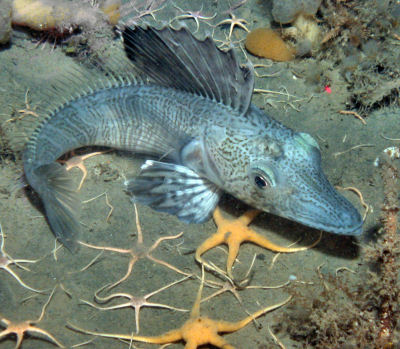
Amidst all the hysteria surrounding the seemingly unstoppable COVID-19, we bring you a story of a fish without blood. In 1928 a biologist sampling off the coast of Antarctica pulled up an unusual fish. It was extremely pale (translucent in some parts), had large eyes and a long toothed snout, and somewhat resembled a crocodile (it was later named the “white crocodile fish). Unbeknownst at the time, but the biologist had just stumbled on a fish containing no red blood pigments (hemoglobin) and no red blood cells – he iron-rich protein such cells use to bind and ferry oxygen through the circulatory system from heart to lungs to tissues and back again. The fish was one of  sixteen species of what is now commonly referred to as icefishes that comprise the family Channichthyidae, endemic around the Antarctic continent.

The Antarctic ice fish on the seafloor surrounded by brittle stars. (Photo credit:  E Jorgensen/Alfred Wegener Institute)

Read More “Fun Science FRIEDay – A fish without blood” »

Science and Conservation Media Literacy 101

Posted on February 25, 2020February 25, 2020 By David Shiffman
Uncategorized

Author’s note: This blog post is part of a multi-week assignment for students taking my introduction to marine biology course at Arizona State University, and also part of an exercise in my professional development training workshops on communicating science to the popular press. I am sharing the background information publicly because I believe it’s a topic that is of broad interest.

The internet in general and social media specifically have made it easier than ever before in human history for experts to share information relevant to their area of expertise with the interested public, with journalists, and with policymakers. Unfortunately, these same communications tools have also made it easier than ever before in human history for misinformation to be widely shared. When wrong information goes viral, it can lead to the destruction of democracy and civilization as we know it people believing factually incorrect things about fish.

Therefore, it’s important for anyone and everyone who cares about the future of democracy and civilization as we know it my marine biology students and media training workshop participants to be aware of how to find reliable and accurate news, and how to spot misleading or inaccurate news. If you can do this effectively, you may well save democracy and civilization as we know it do well in my course.

Something need not be actual “fake news,” a term we should consider using less because it’s become politically charged to the point that it’s nearly meaningless and people don’t hear what you actually mean to say, to be inaccurate and problematic. There are many different ways that a news article can be biased, misleading, and/or wrong.

First, I’ll go through some elements of a reliable, accurate science or environment news story. Then I’ll go through red flags of inaccurate, problematic news stories. Throughout, I’ll highlight representative examples. (Students, after reading this you’ll be assigned some articles to look for these elements and red flags in).

Read More “Science and Conservation Media Literacy 101” »

Fun Science FRIEDay – Suspended Animation

Posted on February 21, 2020February 21, 2020 By Kersey Sturdivant
Uncategorized

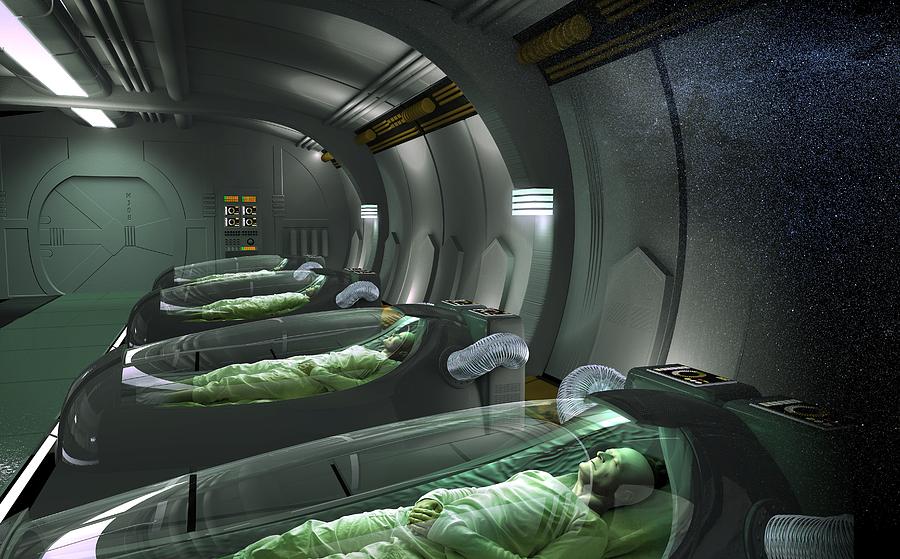
Scientists (and sci-fi fans) have to varying degrees been discussing the concept of suspended animation for years; the idea that the biological functions of the human body can somehow be put on “pause” for a prescribed period of time while preserving the physiological capabilities. If you’ve ever watched any sci-fi movie depicting interstellar travel you have probably seen some iteration of this concept as a way to get around the plot conundrum of the vastness of space and space travel times, relative to natural human aging and human life span. The basic principle of suspended animation already exists within the natural world, associated with the lethargic state of animals or plants that appear, over a period, to be dead but can then “wake-up” or prevail without suffering any apparent harm. This concept is often termed in different contexts: hibernation, dormancy, or anabiosis (this last terms refers to some aquatic invertebrates and plants in scarcity conditions). It is these real-world examples that likely inspire the human imagination of the possibilities for suspended human animation. The concept of suspended human animation is more commonly viewed through the lens of science fiction (and interstellar travel), however, the shift of this concept from scientific fiction to science reality has a more practical human application.

Computer artwork of futuristic humans in suspended animation (Photo credit: Science Photo Library).

Read More “Fun Science FRIEDay – Suspended Animation” »

Come to the geek side of #scicomm: Marine science education by Dungeons & Dragons

Posted on February 18, 2020February 18, 2020 By Chris Parsons
Uncategorized

A couple of years ago, several of the people organizing the International Marine Conservation Congress let slip in their planning discussions that they played Dungeons and Dragons (D&D). There are many of us of a certain age that remember fondly playing in our youth, some of us have kids who are now getting of an age where we can, in turn, teach them how to play, and some were drawn in by the surge in Youtube and podcast shows like the hugely popular “Critical Role” where literally millions of people turn in to watch a bunch of nerds play Dungeons and Dragons … and have fun.

This led to the idea of playing a game at the conference. After more discussion, perhaps helped by a few drinks, the idea was spawned that perhaps we could make this game marine-themed and educational? Maybe even play this game in front of an audience at the conference? Perhaps even record it and share it online…?!

Read More “Come to the geek side of #scicomm: Marine science education by Dungeons & Dragons” »

Fun Science FRIEDay – The Emperor of all Maladies

Posted on January 24, 2020January 24, 2020 By Kersey Sturdivant
Uncategorized

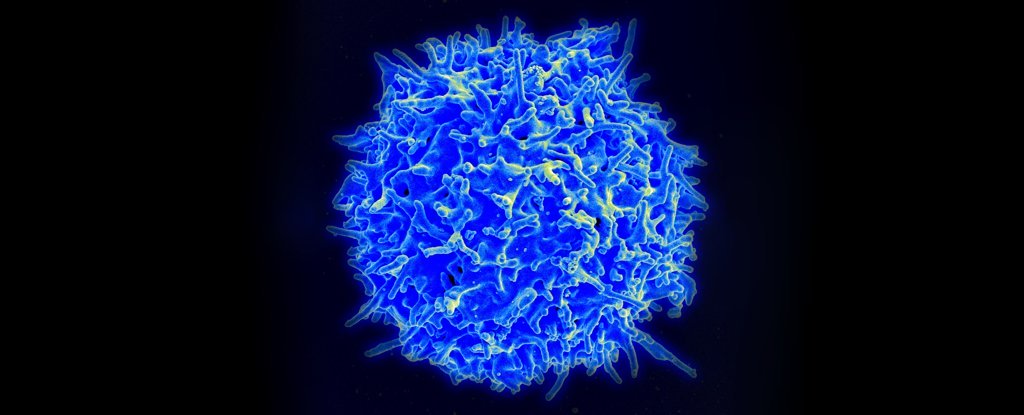
The Emperor of all Maladies is how Siddhartha Mukherjee, an Indian-born American physician and oncologist, aptly described cancer. Cancer, this scourge of mankind going back as far as 4,600 years ago when it was identified by the Egyptian physician Imhotep (the first in recorded history). Cancer takes one of the most successful traits of complex eukaryotes, cell division, and weaponizes it in unchecked cellular growth; some even consider cancer to be a more evolved form of cell division. This ailment has plagued humanity, and baffled physicians for centuries as they attempt to tackle the seemingly impossible, discover a cure for cancer.

Scanning electron micrograph of a human T cell. (NIAID/Flickr/CC BY 2.0)

Read More “Fun Science FRIEDay – The Emperor of all Maladies” »

10 sharks that mattered in the 2010’s

Posted on December 19, 2019December 19, 2019 By David Shiffman
Blogging, Popular Culture, Science, Uncategorized

Just when you thought it was safe to read another decade-in-review listicle…

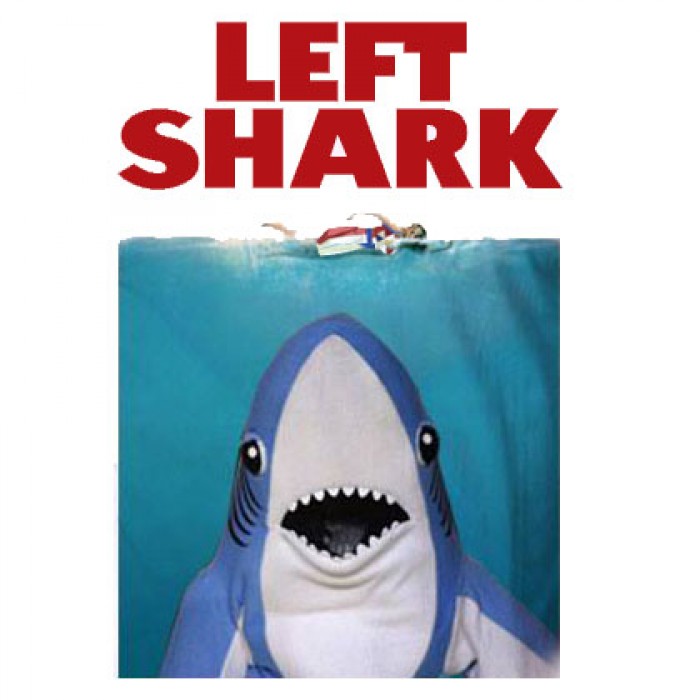
You can buy this on a tshirt

As the 2010’s come to an end, it’s a time to reflect on the often-problematic decade that was as we plan for a hopeful future. I am a sucker for year-in-review and decade-in-review listicles, and was devastated to learn that no one had yet written a decade-in-review listicle for sharks! Please enjoy my official, scientific list of the most important science, conservation, and pop culture sharks from the past decade.

Read More “10 sharks that mattered in the 2010’s” »

Finding the best dirt-cheap, field-tough 3D printer for science and conservation work: six months later.

Posted on November 15, 2019November 15, 2019 By Andrew Thaler
Uncategorized
A fully upgraded Ender-3.

Four years ago, I had the chance to lead a research cruise on Lake Superior to explore the potential of low-cost, open-source tools for marine field work. This was the proving ground for the OpenCTD, the Niskin3D, the OpenROV 2.7, and the idea that, rather than packing cases and case of gear, we could put everything we needed on a flash drive and print it at sea. 

During that cruise, as my trusty Printrbot, was churning out Niskin bottles, we caught a wave and the 3D printer was thrown to the ground. I came down hours later to find it upside down on the floor of a retrofitted fish hold, happily chugging along. I picked it up, put it back on the counter, and went back to sleep. The print didn’t even fail.

That is the kind of beast we need. 

Over the years, whenever someone asked me what the best 3D Printer for field work was, the answer was always the same: The Printrbot Simple Metal. But Printrbot is gone (for now) and we needed a replacement.

Half a year ago, we completed an exhaustive review of the cheapest 3D-printers on the market, with an eye towards low-cost, robust tools that would endure the rigors of field work without blowing our grant budget. We wanted 3D printers that were workhorses. They didn’t have to be pretty, they didn’t have to produce perfect prints, they just had to spit out strong serviceable parts with minimal fuss. They had to be reasonably portable. And they had to be able to take a beating and keep on printing.

We never found a replacement for the absolute tank that is the Printrbot Simple Metal, but after months of testing, settled on a pair of good alternatives (notably for a fraction of the cost of the Printrbot when it was still in production): for those who need big build volumes, the Creality Ender-3. For those who need portability above all, the Monoprice Mini-Delta. 

But that was six months ago. I promised to put these two machines into heavy use. After several hundred hours of printing, we’re ready to update our review of both machines. 

Executive Summary. My recommendation still stands, both both printers need a few modifications before you can call them the ultimate field machine. 

Read More “Finding the best dirt-cheap, field-tough 3D printer for science and conservation work: six months later.” »

Fun Science FRIEDay – Inception

Posted on October 4, 2019October 4, 2019 By Kersey Sturdivant
Uncategorized

Inception, a clever movie starring Leonardo DiCaprio where the premise of the story is to sneak into a person’s subconscious and implant an idea or a memory whilst they sleep. When the person awakes from their slumber they cannot distinguish the implanted memory from their own. It makes for blockbuster cinematography, but the practical concept is quite frightening to think about: the ability to artificially implant memories inches closer to the prospect of reality distortion.

Zebra Finch – Birds (Credit: Paul Dinning)

Read More “Fun Science FRIEDay – Inception” »

Announcing the #BestShark contest for David’s birthday: make sandbar shark memes and art, win prizes!

Posted on August 21, 2019August 21, 2019 By David Shiffman
Uncategorized

My 35th birthday is next week, and I am calling upon the forces of the Internetz to help make it an amusing one. As you all know, sandbar shark is #BestShark. This spectacular shark is even the logo of my new consultancy! I want you to help me celebrate my birthday by creating sandbar shark … Read More “Announcing the #BestShark contest for David’s birthday: make sandbar shark memes and art, win prizes!” »

262 Voyages Beneath the Sea: the graphical abstract

Posted on August 6, 2019August 6, 2019 By Andrew Thaler
Science, Uncategorized

Read the full, open access paper “262 Voyages Beneath the Sea: A global assessment of macro- and megafaunal biodiversity and research effort at deep-sea hydrothermal vents” at PeerJ!

Posts pagination

Previous 1 … 3 4 5 … 119 Next

Popular Posts

Shark of Darkness: Wrath of Submarine is a fake documentaryShark of Darkness: Wrath of Submarine is a fake documentaryAugust 10, 2014Michelle Jewell
What Ocean Ramsey does is not shark science or conservation: some brief thoughts on "the Shark Whisperer" documentaryWhat Ocean Ramsey does is not shark science or conservation: some brief thoughts on "the Shark Whisperer" documentaryJuly 2, 2025David Shiffman
What is a Sand Shark?What is a Sand Shark?November 12, 2017Chuck Bangley
Why would a serious scientist agree to participate in a nonsense Shark Week show?Why would a serious scientist agree to participate in a nonsense Shark Week show?July 15, 2025David Shiffman
What can the funniest shark memes on the internetz teach us about ocean science and conservation?What can the funniest shark memes on the internetz teach us about ocean science and conservation?November 8, 2013David Shiffman
That's not a blobfish: Deep Sea Social Media is Flooded by AI SlopThat's not a blobfish: Deep Sea Social Media is Flooded by AI SlopDecember 19, 2025Andrew Thaler
Save the seals.  Congress is trying to shoot its way to salmon recoverySave the seals.  Congress is trying to shoot its way to salmon recoveryJuly 22, 2026Southern Fried Science
My Journey Into Researching Historical Erasure on Public LandsMy Journey Into Researching Historical Erasure on Public LandsJuly 31, 2026Angelo Villagomez
Jumping the shark: New study reviews the breaching behavior of sharks and raysJumping the shark: New study reviews the breaching behavior of sharks and raysSeptember 19, 2024David Shiffman
The most preventable shark attack of all time?The most preventable shark attack of all time?February 19, 2013David Shiffman
Subscribe to our RSS Feed for updates whenever new articles are published.

We recommend Feedly for RSS management. It's like Google Reader, except it still exists.

Southern Fried Science

  • Home
  • About SFS
  • Authors
  • Support SFS


If you enjoy Southern Fried Science, consider contributing to our Patreon campaign.

Copyright © 2026 Southern Fried Science.

Theme: Oceanly Premium by ScriptsTown