Skip to content

Southern Fried Science

Over 15 years of ocean science and conservation online

  • Home
  • About SFS
  • Authors
  • Support SFS

Category: Uncategorized

How many nuclear weapons are at the bottom of the sea. An (almost certainly incomplete) census of broken arrows over water.

Posted on July 26, 2018January 16, 2024 By Andrew Thaler
Uncategorized

What’s the weirdest think you’ve found in the ocean?

Several week ago, we tackled this question while discussing the incredible shrinking cups the deep-sea scientists like to decorate and send into the wine-dark deep. While toilets and spam cans and beer bottles make for good headlines and shocking images of how extensive human impacts are on the deep sea, those are far from the strangest objects to grace the sea floor.

By most reasonable metrics, that honor has to go to the many nuclear weapons and nuclear weapon components that have been lost at sea over the last 70 years. While a few high-profile incidents have received tremendous coverage, most incidents remain largely shrouded in secrecy, with only sparse reports available. Which brings us to a question that’s been lodged in my brain for the last month: just how many nuclear weapons are sitting at the bottom of the sea?

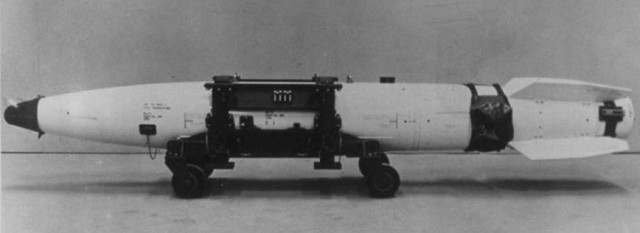
A Mark-43 nuclear bomb. One of these is at the bottom of the sea.

This, of course, does not include the many, many, many times the United States has intentionally tested nuclear weapons throughout the Pacific, often while forcibly relocating local communities away for their now-test-site homes or, occasionally, not. This also doesn’t include the rare lost nuclear submarine, who’s payloads and whether or not they carried nuclear ordinance are mostly still classified. And, of course, it doesn’t include the Soviets or any other non-US nuclear nation.

For the most part, the 1950s and 60s were a hell of a time for losing track of nuclear weapons. By the time the 70s rolled around we had decided that maybe we should be a bit more careful with these things. But by then, we had accidentally dropped at least ten nukes into the ocean in eight different incidents. And we had lost one in a Carolina swamp. And we had almost accidentally nuked Greenland.

Who the heck thought these things were a good idea?

Read More “How many nuclear weapons are at the bottom of the sea. An (almost certainly incomplete) census of broken arrows over water.” »

Fun Science FRIEDay – The Break-up

Posted on July 20, 2018 By Kersey Sturdivant
Uncategorized

Our lives are a blip in the space time continuum. As a result, it can seem that the Earth is relatively static, with many of the large scale dynamic changes that shape our sphere largely unnoticeable to us occurring on geological time-scales. One such change is the movement of landmasses on earth, better known as plate tectonics.

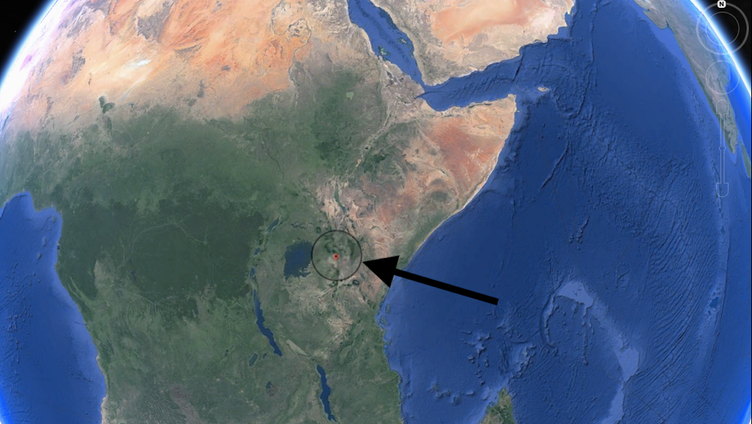
Earth’s landmasses are not static but in constant flux. The Earth’s lithosphere (formed by the crust and the upper part of the mantle) is broken up into a number of tectonic plates that move relative to each other at varying speeds, “gliding” over a viscous asthenosphere. There is still ongoing debate about what force or forces causes this movement, but whatever the forces are they can also cause the plates to rupture, forming rifts, and potential leading to the development of new plate boundaries. When this happens landmasses break-up and new continents forms; this is currently happening in the East African Rift in southwestern Kenya.

View of East African Rift in Kenya from space (Photo credit: Google Earth. Data SIO, NOAA, US Navy, NGA, GEBCO).

Read More “Fun Science FRIEDay – The Break-up” »

Pirates, conch, and surfing scientists: Thursday Afternoon Dredging, July 19th, 2018

Posted on July 19, 2018 By David Shiffman
Uncategorized

Cuttings (short and sweet):  Follow Erin Meyer, the director of conservation programs for the Seattle Aquarium, on twitter! Piracy Incident Reported in First Half of 2018 at Lowest Level in 10 Years. From GCaptain news alerts. She said she didn’t know it was illegal to take conchs. She’s heading to jail anyway. By Gwen Filosa, for … Read More “Pirates, conch, and surfing scientists: Thursday Afternoon Dredging, July 19th, 2018” »

Ice-free Arctic and salmon symphonies: Thursday Afternoon Dredging, July 12 2018

Posted on July 12, 2018 By David Shiffman
Uncategorized

Cuttings (short and sweet):  Follow environmental social scientist Angela Dean on twitter! Ice free passage for ships could cause problems for marine mammals. From MongaBay Bone scraps hint at whale harvest by ancient Romans. From Nature News. The Senate Committee on Commerce, Science, and and Transportation is holding a hearing entitled “SHARKS!”  “We don’t see many … Read More “Ice-free Arctic and salmon symphonies: Thursday Afternoon Dredging, July 12 2018” »

Summer Science Outreach Challenge: Write an OpEd.

Posted on May 30, 2018 By Andrew Thaler 1 Comment on Summer Science Outreach Challenge: Write an OpEd.
Uncategorized

If you’ve been following along with our weekly round-up of ocean news, the Monday Morning Salvage (and, if not, why aren’t you reading the Monday Morning Salvage? It’s your one stop shop for the latest and greatest in ocean science and conservation news!) you probably noticed that we called for scientists and conservation professionals to write OpEds or Letters to the Editor this May. We heard from several folks that they submitted articles, though we haven’t heard back that any have been published yet (please leave a link in the comments if yours have). So, we’re extending the challenge and asking science and conservation professionals to take a stand for something you care about and submit a letter or article to your local paper.

Simone Giertz builds the best robots on the internet.

Why? A recent study with a large sample size, published this year, demonstrated that OpEds can play a significant in shaping people’s opinions about political and social issues. Though this CATO Institute funded study has a distinctively libertarian slant in the issues they chose to use as treatments, the results are reasonably compelling. Not only did OpEds influence how readers felt about an issue, but regardless of political group, exposure to an OpEd made the reader more likely to agree with the author’s position.

“We find limited evidence of treatment effect heterogeneity by party identification: Democrats, Republicans, and independents all appear to move in the predicted direction by similar magnitudes… Despite large differences in demographics and initial political beliefs, we find that op-eds were persuasive to both the mass public and elites, but marginally more persuasive among the mass public.”

source.

Read More “Summer Science Outreach Challenge: Write an OpEd.” »

Obama’s ocean monuments, deep diving seals, and sustainable US fisheries: Thursday Afternoon Dredging, May 24th, 2018

Posted on May 24, 2018May 24, 2018 By David Shiffman
Uncategorized

Cuttings (short and sweet):  Follow Canadian ocean science communicator Kayla Glynn on twitter. NOAA’s status of stocks. By Steve Midway, for the Fisheries Blog. Antarctic seals recruited to measure the effects of climate change. By Alex Fox, for Nature News. 15,000 lionfish removed from Florida waters. By Ed Killer, for the Treasure Coast Palm. Plastic bag … Read More “Obama’s ocean monuments, deep diving seals, and sustainable US fisheries: Thursday Afternoon Dredging, May 24th, 2018” »

Defining Your Audience (Or How To Plan The Worst Birthday Ever)

Posted on May 23, 2018June 14, 2018 By Rachel Pendergrass
Uncategorized
Skeptical beardy stock-photo man at a lame party.
Credit: WAYHOME studio / Shutterstock

This is part of the new regular column on science communication. To suggest a topic, email blog@scienceartfusion.com. 

Imagine, for a moment, that you’re in middle school. The spring formal is approaching and if you don’t have a date, you will literally die ohmygod. Your goal is “find someone to go to the dance with me”. You can’t just walk into the cafeteria and scream “SOMEONE GO TO THE DANCE WITH ME”. (I mean, you can, but…) You need to be tactical. You need to have a specific audience in mind.

A poorly defined audience (or one that is overly broad) is the root cause of the vast majority of issues I run into when I’m working with someone on their science outreach. From “I don’t know where to start” to “I can’t get anyone to listen/subscribe/come to my talk/donate,” my first question is always going to be “who is your audience?”. My next question is going to be “okay, now can you narrow that down”?.

The temptation is always going to be to have the broadest audience possible. If you aren’t appealing to EVERYONE you might miss out on potential opportunities! You could turn away a potential audience! You could miss out on the chance to be the most beloved science communicator that ever communicated!

Read More “Defining Your Audience (Or How To Plan The Worst Birthday Ever)” »

Plastic Free Fish, Chainsaw Lobsters, and Artificial Horseshoe Crab Blood: Thursday Afternoon Dredging, May 17th 2018

Posted on May 17, 2018May 17, 2018 By David Shiffman
Uncategorized

Cuttings (short and sweet):  Follow the Pacific salmon network on twitter! Looking for plastic free fish? Here’s one to put on the menu! By Maggie Gillis, for CBC news Scientists find new deep sea species off Java. BBC slideshow. Unexpected walruses crowd Alaska beach. By the Associated Press. The bigger the mother fish, the more babies … Read More “Plastic Free Fish, Chainsaw Lobsters, and Artificial Horseshoe Crab Blood: Thursday Afternoon Dredging, May 17th 2018” »

Seafaring neanderthals and switchblade fish: A mega Thursday Afternoon Dredging, May 10th, 2018

Posted on May 10, 2018May 9, 2018 By David Shiffman
Uncategorized

After two weeks off, we’re back and bigger than ever! Cuttings (short and sweet):  Follow Archaeologist makes case for seafaring Neanderthals. By Christopher Ingraham, for Scientific American. Larson Creek trout may have been wiped out. By Randy Shore, for the Vancouver Sun. US Coast Guard steps up efforts to protect right whales. From GCaptain. The US … Read More “Seafaring neanderthals and switchblade fish: A mega Thursday Afternoon Dredging, May 10th, 2018” »

I love Jargon: my three biggest peeves about how we think about science communication. #SciComm

Posted on April 27, 2018 By Andrew Thaler
Uncategorized

I have a fundamentally tactical approach to science communication, which occasionally puts me at odds with more conventional practices. Some of the most common pieces of advice in scicomm tend to be the least effective for accurately and precisely communicating your message to a target audience.

Release the Kraken.

1. The J-Word.

Jargon. Jargon. Jargon. We’re all supposed to eradicate jargon from our outreach. Jargon should be avoided. We need to rehab our use of jargon. Hone your science writing by only using the ten hundred most common words (because ‘thousand’ isn’t among the top 1000 word). Sure, these are good exercises for thinking about how you communicate science, but as actual communication advice, it’s big animal that makes white drink back end drop.

Jargon is beautiful. Jargon is powerful. Not only are jargon words often more precise than their generic equivalent, but jargon acts as a form of shorthand. It tells your intended audience “hey, friend, this article/film/tweet/podcast is for you”. Outreach in all forms is always targeted towards a specific audience. Using jargon well helps define that audience and helps that audience connect to your piece. Smart use of jargon can make a good piece of outreach into a tactical piece of outreach.

Which is not to say that you shouldn’t think about jargon use at all. Understanding how different words are used in different contexts and how technical language can alienate non-specialist audiences is essential to producing high-quality outreach. But the general advice that we should all just avoid jargon the least effective approach possible.

Read More “I love Jargon: my three biggest peeves about how we think about science communication. #SciComm” »

Posts pagination

Previous 1 … 7 8 9 … 119 Next

Popular Posts

Playing God - How the ESA "God Squad" just voted for the extinction of a uniquely American whalePlaying God - How the ESA "God Squad" just voted for the extinction of a uniquely American whaleApril 9, 2026Southern Fried Science
The story of the pride flag made from NASA imagery: Bluesky's most-liked imageThe story of the pride flag made from NASA imagery: Bluesky's most-liked imageSeptember 27, 2024David Shiffman
Here's how to join my IMCC8 symposium, "Ocean Science Communication: What's New and What's Next?"Here's how to join my IMCC8 symposium, "Ocean Science Communication: What's New and What's Next?"April 22, 2026David Shiffman
What Ocean Ramsey does is not shark science or conservation: some brief thoughts on "the Shark Whisperer" documentaryWhat Ocean Ramsey does is not shark science or conservation: some brief thoughts on "the Shark Whisperer" documentaryJuly 2, 2025David Shiffman
Our favorite sea monsters – Ningen (#4)Our favorite sea monsters – Ningen (#4)September 7, 2010Andrew Thaler
Join Me at Upwell: A Wave of Ocean Justice — Our Fourth Year!Join Me at Upwell: A Wave of Ocean Justice — Our Fourth Year!March 24, 2026Angelo Villagomez
On the clarity of animals: the art and science of clearing and stainingOn the clarity of animals: the art and science of clearing and stainingDecember 17, 2013Guest Writer
Shark of Darkness: Wrath of Submarine is a fake documentaryShark of Darkness: Wrath of Submarine is a fake documentaryAugust 10, 2014Michelle Jewell
What can the funniest shark memes on the internetz teach us about ocean science and conservation?What can the funniest shark memes on the internetz teach us about ocean science and conservation?November 8, 2013David Shiffman
That's not a blobfish: Deep Sea Social Media is Flooded by AI SlopThat's not a blobfish: Deep Sea Social Media is Flooded by AI SlopDecember 19, 2025Andrew Thaler
Subscribe to our RSS Feed for updates whenever new articles are published.

We recommend Feedly for RSS management. It's like Google Reader, except it still exists.

Southern Fried Science

  • Home
  • About SFS
  • Authors
  • Support SFS


If you enjoy Southern Fried Science, consider contributing to our Patreon campaign.

Copyright © 2026 Southern Fried Science.

Theme: Oceanly Premium by ScriptsTown