Skip to content

Southern Fried Science

Over 15 years of ocean science and conservation online

  • Home
  • About SFS
  • Authors
  • Support SFS

Fun Science FRIEDay – Evolution, what’s it good for?

Posted on February 20, 2015February 19, 2015 By Kersey Sturdivant
Science, Uncategorized

It is widely accepted that the world around us is changing, and as a result the organisms that exist adapt with that change or are resigned to the fossil record. Evolution, it’s a fact of life… or is it? UCLA paleobiologist J. William Schopf, and colleagues,  have discovered an organism that has remained relatively unchanged over a 2.3 billion year period. Meh, who needs evolution? These bacteria were discovered in the muddy sediments of the deep sea and represent the greatest lack of evolution ever seen!

1871 editorial cartoon depicting Charles Darwin as an ape. (Photo credit: Unknown artist in 1871 from The Hornet newspaper - no longer in publication)
1871 editorial cartoon depicting Charles Darwin as an ape. (Photo credit: Unknown artist in 1871 from The Hornet newspaper – no longer in publication)

Schopf and colleagues compared the communities of a recently discovered species of sulfur-cycling bacteria from deep sea sediments off the coast of S. America with fossilized communities 2.3 billion and 1.8 billion years old from Western Australia. Though these three communities of sulfur-cycling bacteria are separated by billions of years, they are identical in form, function, and metabolism.
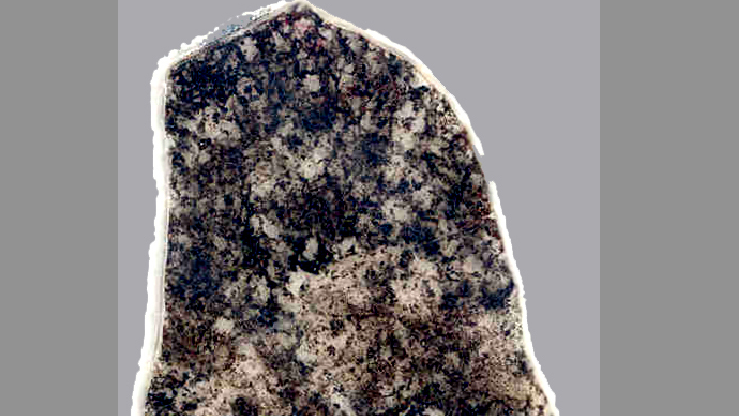
Fossilized bacteria community in a section of a 1.8 billion year old rock. (Photo credit: Schopf et al. 2015, PNAS)

At first observation these organisms would appear to be thumbing at Darwin’s greatest contribution. The theory of evolution suggests that as the environment changes, physically (e.g. disturbance) or biologically (e.g. competition), organisms respond by “evolving”.  If adapting to change is the basic tenant behind evolution, than not evolving when the environment stays stable would be its null hypothesis.  Whereas the surface environment changes fairly frequently (especially in geologic time scales), for these deep sea sediment microbes the environment with which they exist is relatively stable, and has been for billions of years. With little to no competition and a stable environment there exist no incentive for change, or evolution, in these communities. Having already perfectly adapted  to the environment in which they exist, why change if there isn’t any pressure to?

So in essences these little guys validate the theory of evolution with their extreme form of evolutionary stasis, demonstrating that even over billions of years, without environmental pressure, a community of organism will remain the same!  With these findings it’s possible that there are other non-evolved communities in other extremely stable locations on the earth. If/when those communities are discovered, we will be sure to report them! 😉

Until then you can read the full article of this awesome story in the Proceedings of the National Academy of Sciences.

Happy FSF!

Share this:

  • Click to share on Bluesky (Opens in new window) Bluesky
  • Click to share on Facebook (Opens in new window) Facebook
  • Click to share on Reddit (Opens in new window) Reddit
  • Click to share on Threads (Opens in new window) Threads
  • Click to share on WhatsApp (Opens in new window) WhatsApp
  • Click to share on Mastodon (Opens in new window) Mastodon

Related

Tags: bacteria darwin deep sea disturbance natural selection sulfur cycling

Post navigation

❮ Previous Post: Hail hydra ! Taking a super villain approach to conservation #scicomm
Next Post: #SciSpends : Scientists are paying to do their jobs ❯

You may also like

Exploration
The world’s largest cold water coral reef lies beside the first experimental deep-sea mining test site
January 22, 2024
Popular Culture
Return of the Science of Aquaman: Welcome to the Trench
September 13, 2012
Conservation
Rumors from the Abyss: visions of a future without deep sea conservation
July 6, 2011
Uncategorized
365 days of Darwin: The first 3 months
February 23, 2010

Popular Posts

Shark scientists want their research to help save threatened species, but don’t know how. Our new paper can help.Shark scientists want their research to help save threatened species, but don’t know how. Our new paper can help.December 1, 2025David Shiffman
Norway and Cook Islands put their deep-sea mining plans on pause.Norway and Cook Islands put their deep-sea mining plans on pause.December 3, 2025Andrew Thaler
What Ocean Ramsey does is not shark science or conservation: some brief thoughts on "the Shark Whisperer" documentaryWhat Ocean Ramsey does is not shark science or conservation: some brief thoughts on "the Shark Whisperer" documentaryJuly 2, 2025David Shiffman
The Trouble with Teacup PigsThe Trouble with Teacup PigsOctober 14, 2012Andrew Thaler
What we know we don't know: impacts of deep-sea mining on whales, dolphins, sharks, turtles, and other migratory species.What we know we don't know: impacts of deep-sea mining on whales, dolphins, sharks, turtles, and other migratory species.November 20, 2025Andrew Thaler
2025: My year in writing, public speaking, and media interviews2025: My year in writing, public speaking, and media interviewsDecember 3, 2025David Shiffman
Urea and Shark OsmoregulationUrea and Shark OsmoregulationNovember 15, 2010David Shiffman
Shark of Darkness: Wrath of Submarine is a fake documentaryShark of Darkness: Wrath of Submarine is a fake documentaryAugust 10, 2014Michelle Jewell
How tiny satellites are tracking marine wildlifeDecember 1, 2025Andrew Thaler
Build a dirt cheap, tough-as-nails field computer in a Pelican caseBuild a dirt cheap, tough-as-nails field computer in a Pelican caseJuly 21, 2015Andrew Thaler
Subscribe to our RSS Feed for updates whenever new articles are published.

We recommend Feedly for RSS management. It's like Google Reader, except it still exists.

Southern Fried Science

  • Home
  • About SFS
  • Authors
  • Support SFS


If you enjoy Southern Fried Science, consider contributing to our Patreon campaign.

Copyright © 2025 Southern Fried Science.

Theme: Oceanly Premium by ScriptsTown