Skip to content

Southern Fried Science

Over 15 years of ocean science and conservation online

  • Home
  • About SFS
  • Authors
  • Support SFS

One of the world’s rarest birds is also the squee-est

Posted on August 19, 2015August 23, 2015 By Michelle Jewell
Conservation

Introducing the spoon-billed sandpiper:
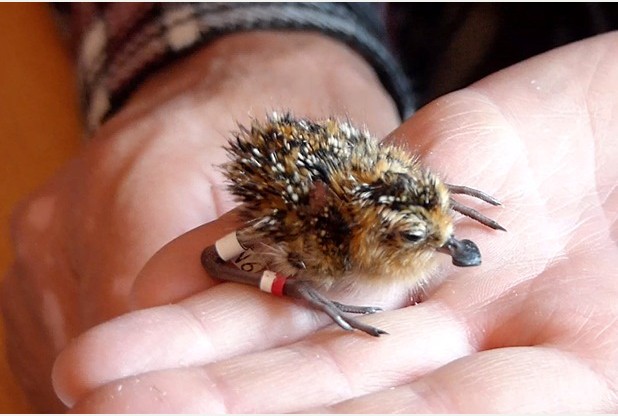
(c) Roland Digby/WWT/PA Wire, originally published http://www.westerndailypress.co.uk/world-s-rarest-birds-hand-reared-experts-returned/story-27630995-detail/story.html#ixzz3jFOW6Q43
(c) Roland Digby/WWT/PA Wire, originally published here.

Spoon-billed sandpipers are migratory wader birds that breed in the sub-Arctic and winter in southeast Asia.  Best estimates point to less than 100 breeding pairs left in the wild due to a decrease of breeding habitat in the Arctic and increase of bird-hunters in Asia.  Don’t worry, this is a story about #OceanOptimism…

The conservation managers at the UK-based Wildfoul & Wetlands Trust weren’t going to take this sitting down.  Over £350,000 was raised and the conservation team headed for the Arctic to collect spoon-billed sandpiper eggs and hand-rear them back in the UK.  The adult sandpipers in the Arctic would then lay a second clutch, effectively doubling the possible brood in one season.
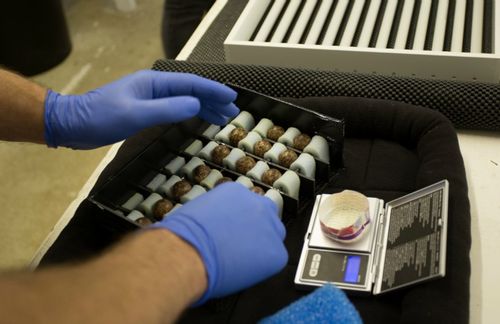
Photo originally published here.

The WWT’s goal was a momentous feat to gets the eggs back to the UK (through Heathrow), hatch them, rear the chicks, foster the spoonies until they fledged, and then transport them to southeast Asia for release.  Today, the WWT announced that five of these fostered chicks were spotted in the Arctic this season, successfully completing the 7,500 mile migration.  Three of these five went on to find a mate and lay eggs – representing a ~6% increase for the entire population.

Tonight at 8pm GMT (3pm EST), you can watch how this conservation milestone was achieved on Spoonievision, the WWT’s YouTube channel devoted to this project (obviously, the conservation managers of WWT took a page from Chris’s blog):

Personally, I will be watching this project with a very keen eye.  There are many controversial aspects to hand-rearing and artificially increasing the population of a species under threat.  Some argue that these measures are unsustainable and that marrying the future of any species to fickle funders may spell disaster.  Others argue that artificial rearing eliminates the necessary but cruel invisible hand of natural selection, and that increasing the population with unfit animals that wouldn’t normally breed is not an improvement.  Of all the fostering projects I have seen, this spoonie project has attempted to address all of these concerns.  The WWT is working in Bangladesh and Myanmar to reduce the number of bird hunters, and they are training Siberian researchers in the art of egg rearing.  Time will tell if the project is a sustainable success…

In the meantime, here’s some squee-bait:
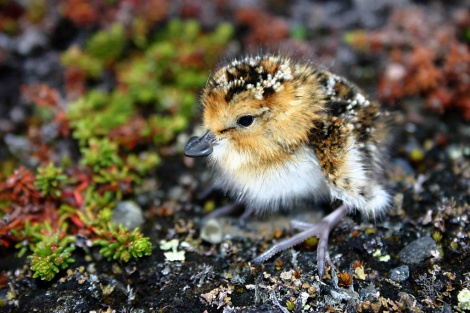
Photo: (c) Sergey Golubev

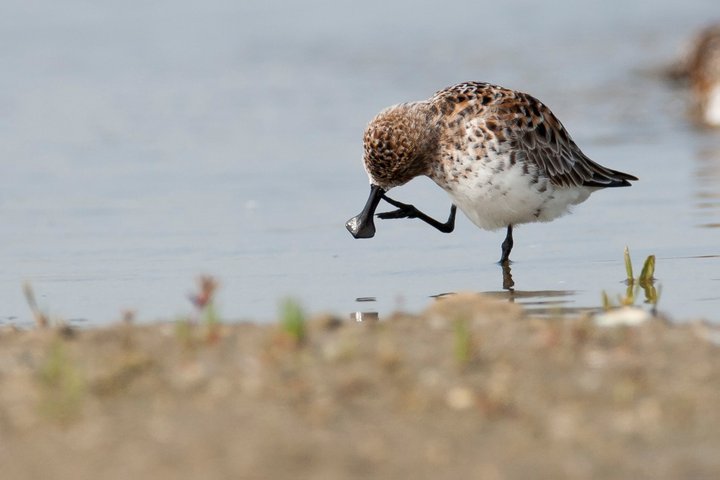
Just a little scratchy on my nose…

Photo by Raymond De Smet.

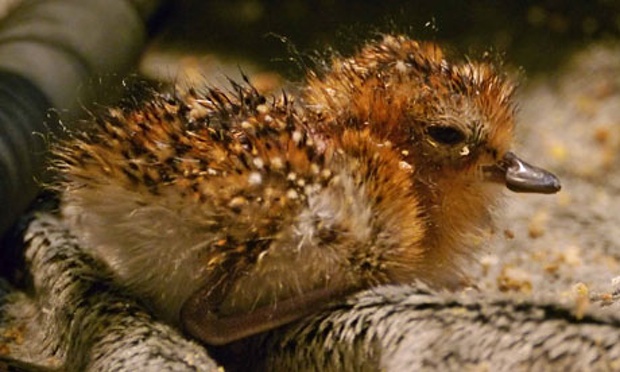
In need of a cuddle…

Photograph: Martin McGill/WWT

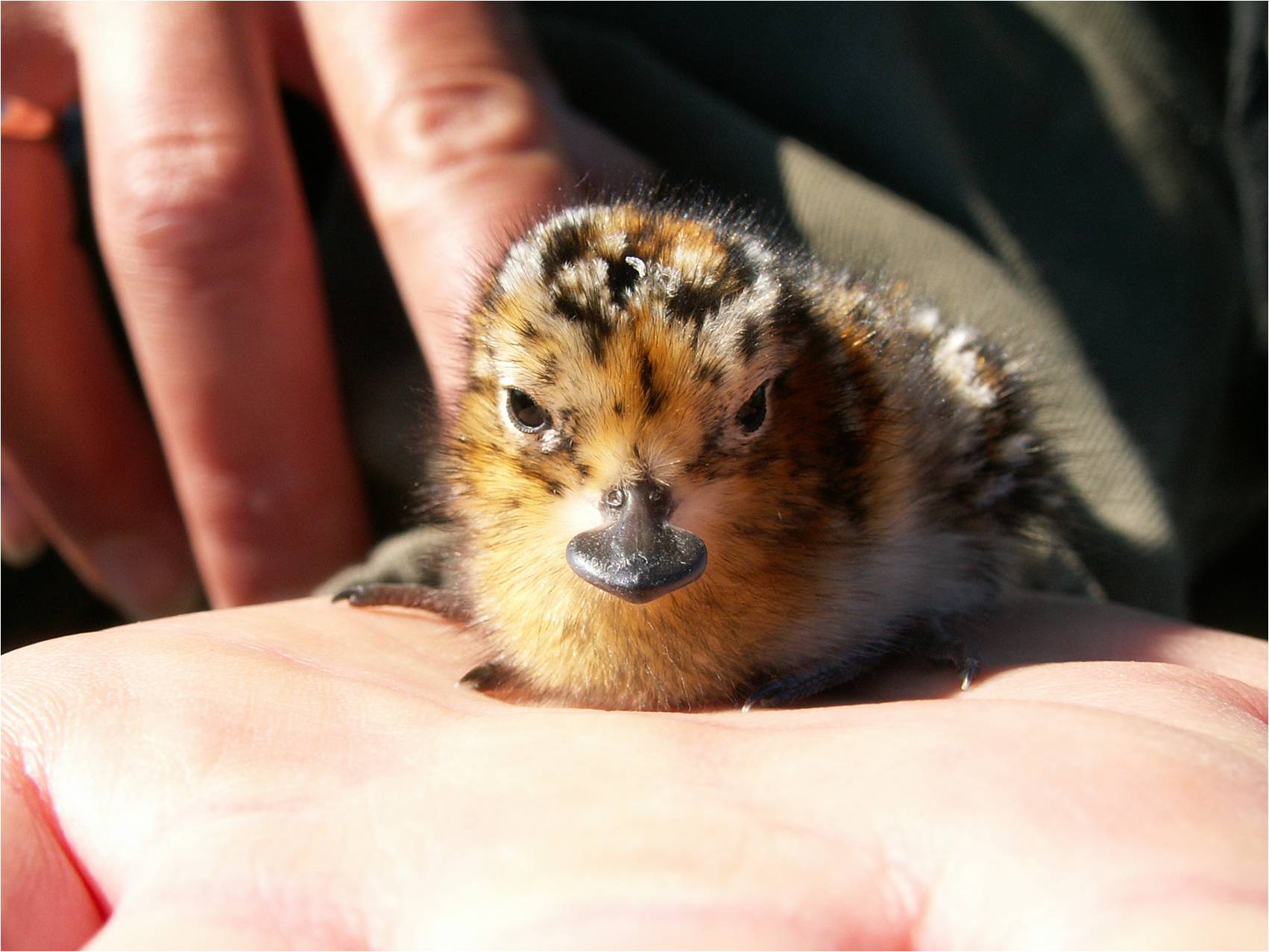
Spoonie chick is unimpressed

Photo by Elena Lappo.

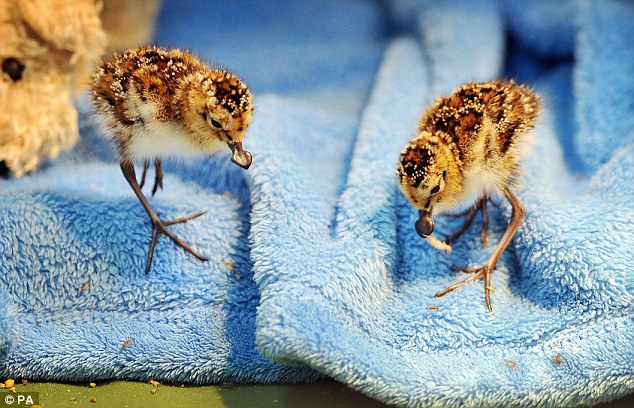
Lunch with friends, nomnomnom…

Photo originally published here.

Taking a nap after some extreme insect-nomage…

This fostering scheme to save spoonies is a collaboration between WWT, the RSPB, Birds Russia, Moscow Zoo, the British Trust for Ornithology (BTO), Birdlife International, ArcCona Consulting, and the Spoon-billed Sandpiper Task Force.

Share this:

  • Click to share on Bluesky (Opens in new window) Bluesky
  • Click to share on Facebook (Opens in new window) Facebook
  • Click to share on Reddit (Opens in new window) Reddit
  • Click to share on Threads (Opens in new window) Threads
  • Click to share on WhatsApp (Opens in new window) WhatsApp
  • Click to share on Mastodon (Opens in new window) Mastodon

Related

Tags: ArcCona Consulting Birdlife International Birds Russia Conservation Moscow Zoo ornithology RSBP spoon-billed sandpiper Spoonievision the British Trust for Ornithology (BTO) WWT

Post navigation

❮ Previous Post: Ocean Kickstarter of the Month: Recycled Fishing Net Sunglasses
Next Post: Oarfish: The true tale of the fish we can’t seem to get enough of ❯

You may also like

Weekly Salvage
High octopuses don’t love you back, sextants in space, protect our ocean monuments, and more! Monday Morning Salvage: September 24, 2018
September 24, 2018
Conservation
The difference between animal welfare and animal rights
August 11, 2015
Conservation
Sea Shepherd: Friend or foe of shark conservation?
January 1, 2010
Conservation
Polar bear feast on seabird eggs is reason we can’t have nice things
September 29, 2015

Popular Posts

Shark scientists want their research to help save threatened species, but don’t know how. Our new paper can help.Shark scientists want their research to help save threatened species, but don’t know how. Our new paper can help.December 1, 2025David Shiffman
Norway and Cook Islands put their deep-sea mining plans on pause.Norway and Cook Islands put their deep-sea mining plans on pause.December 3, 2025Andrew Thaler
What Ocean Ramsey does is not shark science or conservation: some brief thoughts on "the Shark Whisperer" documentaryWhat Ocean Ramsey does is not shark science or conservation: some brief thoughts on "the Shark Whisperer" documentaryJuly 2, 2025David Shiffman
The Trouble with Teacup PigsThe Trouble with Teacup PigsOctober 14, 2012Andrew Thaler
What we know we don't know: impacts of deep-sea mining on whales, dolphins, sharks, turtles, and other migratory species.What we know we don't know: impacts of deep-sea mining on whales, dolphins, sharks, turtles, and other migratory species.November 20, 2025Andrew Thaler
2025: My year in writing, public speaking, and media interviews2025: My year in writing, public speaking, and media interviewsDecember 3, 2025David Shiffman
Urea and Shark OsmoregulationUrea and Shark OsmoregulationNovember 15, 2010David Shiffman
Shark of Darkness: Wrath of Submarine is a fake documentaryShark of Darkness: Wrath of Submarine is a fake documentaryAugust 10, 2014Michelle Jewell
How tiny satellites are tracking marine wildlifeDecember 1, 2025Andrew Thaler
Build a dirt cheap, tough-as-nails field computer in a Pelican caseBuild a dirt cheap, tough-as-nails field computer in a Pelican caseJuly 21, 2015Andrew Thaler
Subscribe to our RSS Feed for updates whenever new articles are published.

We recommend Feedly for RSS management. It's like Google Reader, except it still exists.

Southern Fried Science

  • Home
  • About SFS
  • Authors
  • Support SFS


If you enjoy Southern Fried Science, consider contributing to our Patreon campaign.

Copyright © 2025 Southern Fried Science.

Theme: Oceanly Premium by ScriptsTown