

Skip to content

Southern Fried Science

Over 15 years of ocean science and conservation online

  • Home
  • About SFS
  • Authors
  • Support SFS
Latest News
  • Norway and Cook Islands put their deep-sea mining plans on pause

Recent Posts

What we know we don’t know: impacts of deep-sea mining on whales, dolphins, sharks, turtles, and other migratory species.
November 20, 2025
Norway and Cook Islands put their deep-sea mining plans on pause.
December 3, 2025
Beyoncé is Right: History Can’t Be Erased
October 23, 2025
Teaching with D&D: My favorite source books for running a great Dungeons & Dragons campaign.
September 23, 2025
9 Quick Questions About Deep-Sea Mining from My Congressional Briefing
September 22, 2025
Help support a new shark science and conservation exhibit in Maryland!
September 15, 2025

Fun Science Friday – BP Oil Spill Impacts Dolphins

Posted on January 3, 2014January 7, 2014 By Kersey Sturdivant 2 Comments on Fun Science Friday – BP Oil Spill Impacts Dolphins
Uncategorized

Happy Fun Science Friday!

Though this post does not present such a happy story, given the recent discussion about dolphin photobombing, this week’s FSF is topically related.  In the spring of 2010 the Deepwater Horizon oil rig experienced catastrophic failure resulting in the worst oil spill in human history. The Gulf of Mexico (GoM) was the unfortunate host of this catastrophe and the GoM community is still feeling the ecological, social, and economic consequences of this disaster.
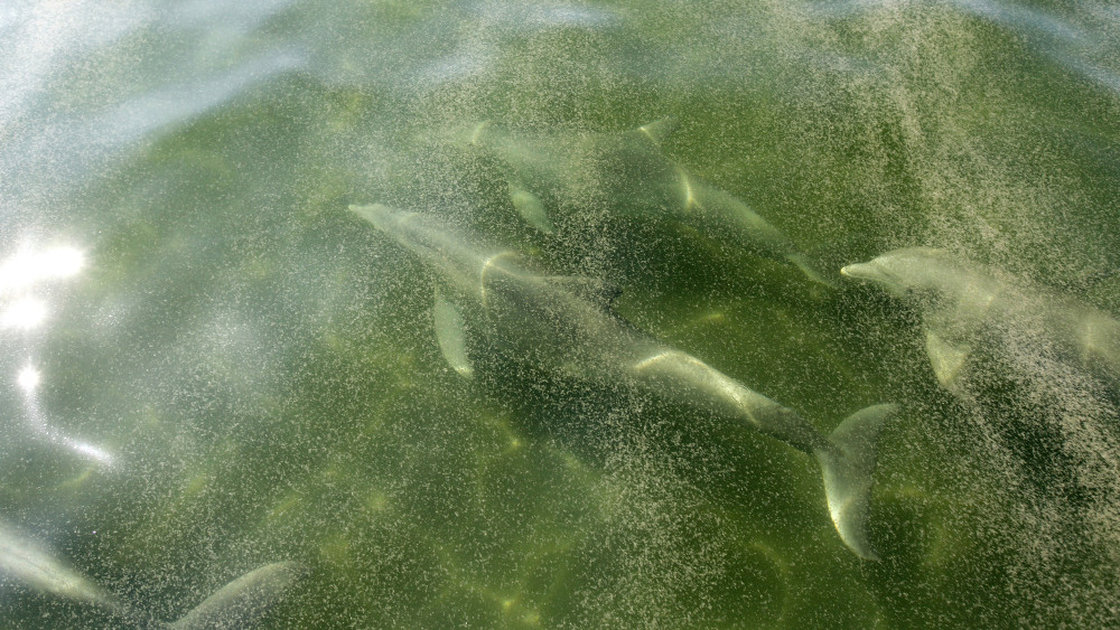
Pod of bottlenose dolphins swimming underneath oily water of Chandeleur Sound, La., May 6, 2010. Photo Credit: Alex Brandon/AP
Pod of bottlenose dolphins swimming underneath oily water of Chandeleur Sound, La., May 6, 2010.
Photo Credit: Alex Brandon/AP

One such impact that received little TV coverage during the spill was the uncharacteristic spike in dolphin deaths. A few months following the BP spill there was an unprecedented spike in dead dolphins washing ashore along the Gulf Coast; 67 dead dolphins by February of 2011, with more than half (35) of the dead dolphins being calves. This is in stark contrast to years preceding the spill when one or two dead dolphins per year were normally documented to wash ashore.  Despite the spike in dolphin deaths, there was no definitive evidence linking the dead cetaceans to the oil spill as a number of other factors could have been responsible for the deaths, including infectious disease or the abnormally cold winter proceeding the spill.

Read More “Fun Science Friday – BP Oil Spill Impacts Dolphins” »
3 sharks that were on twitter before being a shark on twitter was cool

Posted on January 3, 2014January 15, 2014 By David Shiffman 3 Comments on 3 sharks that were on twitter before being a shark on twitter was cool
Science

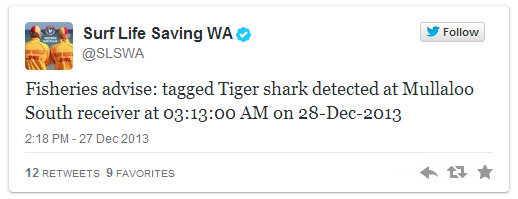
Recent plans in Western Australia to place acoustic tags in sharks and have them tweet their location when they approach a beach have resulted in a sharknado of media coverage. The plan has been covered by internet technology news giant Mashable, Fox News, NPR news, Popular Science, and NBC news (which, with “sharks with frickin’ tweets,” has what I believe to be the best headline. That one also interviews me.) When a tagged shark approaches the beach, a tweet like this results:

tweet


I can understand why a project involving both sharks and twitter caught the media’s eye… and why about a billion of you e-mailed or tweeted the news to me. However, these aren’t the first sharks to be on twitter!

Read More “3 sharks that were on twitter before being a shark on twitter was cool” »

The ups and downs of 2013 shark conservation policy, and a forecast for the new year

Posted on January 1, 2014 By Guest Writer
Uncategorized

Sonja Fordham President, Shark Advocates International
Sonja Fordham
President, Shark Advocates International

SAISonja Fordham founded Shark Advocates International as a project of The Ocean Foundation in 2010 based on her two decades of shark conservation experience at  Ocean Conservancy.  She is Deputy Chair of the IUCN Shark Specialist Group and Conservation Committee Chair for the American Elasmobranch Society, has co-authored numerous publications on shark fisheries management, and serves on most of the U.S. federal and state government advisory panels relevant to sharks and rays.  Her awards include the U.S. Department of Commerce Environmental Hero Award, the Peter Benchley Shark Conservation Award, and the IUCN Harry Messel Award for Conservation Leadership.

It’s been another exciting year in shark and ray conservation policy!  Once again, there’s a lot to herald, quite a bit to regret, and much work yet to be done.  Here’s my take on the year’s high and low points as well as a preview of key opportunities in 2014.  This post obviously reflects my perspective, and is therefore focused on science-based limits on shark and ray fishing and trade.  While the work has sometimes been exhausting, and this review is quite long, the scope is by no means exhaustive.

Read More “The ups and downs of 2013 shark conservation policy, and a forecast for the new year” »

Southern Fried Science Year-in-Review

Posted on December 31, 2013December 31, 2013 By Andrew Thaler
Blogging

2013 starter with a bang. More specifically, it started with a Bang! Zop! Pow! when I published Five organisms with real super powers that rival their comic book counterparts, a post that set the tenor of my writing style for the rest of the year. The ongoing posts in “Andrew makes lists of ridiculous organisms with tenuous pop-culture connections” have been among the most widely read articles on Southern Fried Science.

David followed suit with his delightfully perverse 50 Shades of Grey Reef Shark: A Valentine’s Day Special Report on Shark Sex (With Pictures! And Video!). Amy kicked of the SFS Department of Human Dimensions in Fisheries Management with Know Your Fishermen as well as your Farmer to which Chuck adds — Fishermen Are Not Evil in his inaugural post. Iris taught us all about Issues facing Puget Sound Chinook salmon in her first post as well.

Read More “Southern Fried Science Year-in-Review” »

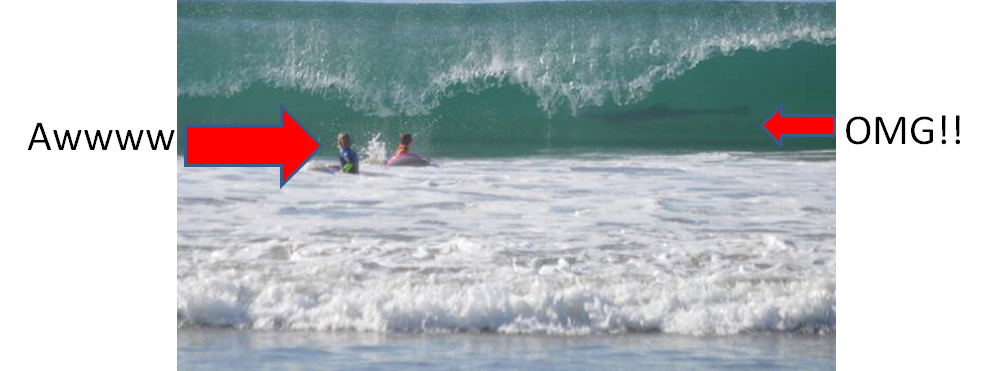
Here’s how you can tell that the “shark” photobombing kids is actually a dolphin

Posted on December 31, 2013December 31, 2013 By David Shiffman 10 Comments on Here’s how you can tell that the “shark” photobombing kids is actually a dolphin
Blogging, Science

When California resident June Emerson snapped a photo of her children playing at the beach, she didn’t expect it to generate international news. Although the kids seem to be adorable, that isn’t what captured the attention of the media. In a wave behind them, you can see the outline of a large animal swimming by (or being “terrifying” and “creeping up on them,” as the Daily Mail called it).

Photo by June Emerson, snarky comments by yours truly

The media, including local, national, and international outlets, wasted no time in calling it a shark. However, as Jason Goldman wryly noted, “not all grey things with dorsal fins in the ocean are sharks.” This animal  is almost certainly a dolphin. I asked a dozen shark scientists and a handful of dolphin scientists, and all quickly agreed that this is a dolphin.

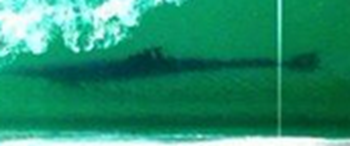
As I’m no fan of merely appealing to authority (though I’ll trust someone with years of training over the painful to read comments on many of the news pieces), I’ll share with you how we can tell. First, let’s clean up and brighten the image. Since I am not a photoshop master, let’s borrow a cleaned up and enhanced image from KTLA.

Original image by June Emerson, enhancement done by KTLA.
Original image by June Emerson, enhancement by KTLA.

Even though the image is somewhat blurry (understandable, as June was trying to photograph her children and not the animal behind them,) there are still easily identifiable features that clearly show that this is not a great white shark, but a dolphin.

Read More “Here’s how you can tell that the “shark” photobombing kids is actually a dolphin” »

An open challenge to journalists covering next week’s Bluefin Tuna Auction

Posted on December 29, 2013 By Andrew Thaler 3 Comments on An open challenge to journalists covering next week’s Bluefin Tuna Auction
Conservation

Every year, on the first Saturday of January, crowds gather at the Tsukiji fish market in Tokyo to watch the auction of the first Bluefin Tuna of the year. For the last three years, the legendary first tuna broke the record for most expensive fish ever purchased — $396,000 in 2011, $736,000 in 2012, and a staggering $1,800,000 in 2013. Often highlighted as a symbol of the extent people are willing to go to eat that last bluefin tuna, the annual sale of this fish sets the tone for tuna conservation. With the relocation of the Tsukiji fish market to Toyosu in 2014, next week’s auction promises to be the biggest one yet.

Southern Bluefin Tuna are critically endangered, yet political maneuvering has kept tuna fisheries open and several Pacific nations have been caught falsifying their catch reports. Even still, the massive sale of the first tuna of the year is not indicative of the real demand for Bluefin Tuna.

Read More “An open challenge to journalists covering next week’s Bluefin Tuna Auction” »

13 amazing things scientists discovered about sharks in 2013

Posted on December 28, 2013December 30, 2013 By David Shiffman 5 Comments on 13 amazing things scientists discovered about sharks in 2013
Conservation, Science

Other than a certain week in August whose name we shall not speak here, 2013 was a great year for both shark science and the communication of that shark science. There were many important and fascinating discoveries, and many of the world’s top media outlets covered them. Presented here is a list of 13 amazing scientific discoveries made in 2013, in no particular ranking order. To make the list, research must have been published in a peer-reviewed scientific journal in 2013, and someone else other than me must have also thought it was awesome (i.e. it received mainstream media or blog coverage). In the interest of objectivity, I did not include any papers that I or my lab were directly involved with. Whenever possible, I’ve linked to an accessible version of the paper.


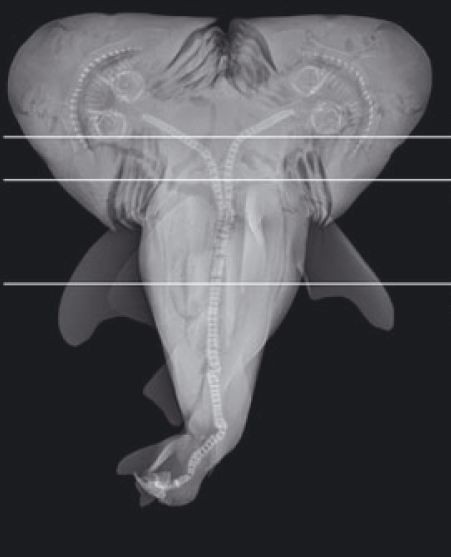
1) A two-headed bull shark!

From Wagner et al. 2013


Citation: Wagner, CM, Rice, PH, and Pease, AP 2013. First record of dicephalia in a bull shark Carcharhinus leucas foetus from the Gulf of Mexico. Journal of Fish Biology 82: 1419-1422.

Brief description: Researchers presented the first case of a bull shark embryo with 2 heads (the mother was caught by a Florida fishermen). In response to the most common question I received about this study, no, this animal would not have survived to adulthood.  While this is a cool discovery, the broader significance is somewhat minimal. As I told science writer Douglas Main in an interview about a similar study, “There have been a number of reports of deformed shark and ray embryos in recent years— two heads, one eye, etc. There’s no evidence to suggest these defects represent a new phenomenon or that they are harmful to shark populations as a whole.”

Media coverage highlights: A figure from this study was named one of the coolest science photos of the year by the International Science Times. It was also covered by National Geographic, the Guardian, and TIME magazine.

Read More “13 amazing things scientists discovered about sharks in 2013” »

More than 100 shark scientists, including me, oppose the cull in Western Australia

Posted on December 23, 2013December 23, 2013 By David Shiffman 10 Comments on More than 100 shark scientists, including me, oppose the cull in Western Australia
Uncategorized

Image via Terry Goss, Wikimedia Commons

Following the tragic fatal bite of surfer Chris Boyd, the government of Western Australia has again proposed a misinformed policy that would harm populations of threatened animals without making surfers or swimmers safer. By targeting any large shark that swims within a specific area, including endangered species and species not considered a safety risk to humans, this policy is essentially a cull. The family of one of the victims of a fatal shark bite opposes the cull, as do scientific experts,  local surfers and thousands of concerned environmentalists around the world.

Dr. Ryan Kempster, shark biologist and founder of Support Our Sharks, provided a brief statement on this issue:

There is no denying that each and every shark fatality is a tragedy and our sympathy is, of course, with the family and friends of the victims. However, based on statistical data, the number of shark related fatalities is negligible when you consider the vast and increasing number of swimmers entering our coastal waters every year.

So often the argument in favour of a cull comes down to the emotional question of who is more important: a human or a shark. Rather, we need to ask the question, will culling sharks actually reduce the risk of an attack?

The answer is likely to be no. In fact, when shark culling was carried out in Hawaii, between 1959 and 1976, over 4,500 sharks were killed and yet there was no significant decrease in the number of shark bites recorded. We need to invest in more research to better understand the movement patterns of sharks and learn more about the cues that entice sharks to bite people in the first place so that we can avoid these situations in the future.

Dr. Kempster also drafted an open letter to the government of Western Australia. This letter, which has been co-signed by more than 100 shark scientists from all over the world (including me), is reproduced below. It highlights why a shark cull is ineffective at reducing shark bites and why culls harm threatened species, in addition to proposing alternative suggestions. Additionally, shark biologist Dr. Barbara Wueringer started an online petition, which currently has over 34,000 signatures.

I urge the government of Western Australia to enact the alternative policies proposed by Dr. Kempster and other experts. Culls do nothing to help make people safer, and they can do great harm to populations of threatened (and legally protected) species.

Read More “More than 100 shark scientists, including me, oppose the cull in Western Australia” »

25 signs that you were a conservation child of the 90’s

Posted on December 22, 2013December 22, 2013 By Andrew Thaler
Conservation, Popular Culture

The 90’s were a big decade for the environmental movement. The media landscape was filled with environmentally-themed programming. Major laws in the US and internationally were passed to protect the planet. Formative events galvanized, diversified, and sometimes radicalized the conservation community. And, like many other of our generation, we came of age right in the middle of it.

Here are 25 signs that your laid the foundation for your environmental ethic squarely in the 1990’s. Happy Holidays from Southern Fried Science.

1. Captain Planet taught us that “The Power is Yours!”

captain-planet

You knew this would be on the list, so let’s get it out of the way. Moving on.

Read More “25 signs that you were a conservation child of the 90’s” »

Mythbusting Citizen Science Roundup

Posted on December 20, 2013December 20, 2013 By Bluegrass Blue Crab 1 Comment on Mythbusting Citizen Science Roundup
Conservation

Over where I hang my workday hat, recently we’ve thought a lot about the field of citizen science and how it’s developing. Specifically, the push from leaders and scholars in the field to “retake citizen science” by broadening the definition to include the many formulations of decentralized expertise present in our world in the quest for new knowledge.

As part of that ‘re-taking’, I’ve taken on some of the major stereotypes about citizen science and volunteers. I hope to take on more, and would appreciate suggestions, Mythbusters-style, of stereotypes to investigate. But for now, here’s a roundup of the perceptions thus far:

Participation is Empowering: the verdict is still out

Read More “Mythbusting Citizen Science Roundup” »

Posts pagination

Previous 1 … 111 112 113 … 269 Next

Popular Posts

What Ocean Ramsey does is not shark science or conservation: some brief thoughts on "the Shark Whisperer" documentaryWhat Ocean Ramsey does is not shark science or conservation: some brief thoughts on "the Shark Whisperer" documentaryJuly 2, 2025David Shiffman
I can serve on your graduate thesis committee. Here’s what you can expect of me, and what I expect in return.I can serve on your graduate thesis committee. Here’s what you can expect of me, and what I expect in return.October 16, 2025David Shiffman
What can the funniest shark memes on the internetz teach us about ocean science and conservation?What can the funniest shark memes on the internetz teach us about ocean science and conservation?November 8, 2013David Shiffman
I turned my woodshop into a personal solar farm.I turned my woodshop into a personal solar farm.June 21, 2021Andrew Thaler
Shark of Darkness: Wrath of Submarine is a fake documentaryShark of Darkness: Wrath of Submarine is a fake documentaryAugust 10, 2014Michelle Jewell
Build a dirt cheap, tough-as-nails field computer in a Pelican caseBuild a dirt cheap, tough-as-nails field computer in a Pelican caseJuly 21, 2015Andrew Thaler
Norway and Cook Islands put their deep-sea mining plans on pause.Norway and Cook Islands put their deep-sea mining plans on pause.December 3, 2025Andrew Thaler
Breaking News! "Most Comprehensive Estimate of Mortality": Between 63 and 273 Million Sharks Killed Each YearBreaking News! "Most Comprehensive Estimate of Mortality": Between 63 and 273 Million Sharks Killed Each YearMarch 1, 2013David Shiffman
Mermaids: The New Evidence is a Fake DocumentaryMermaids: The New Evidence is a Fake DocumentaryMay 28, 2013Andrew Thaler
I spent 50 days working out in Virtual Reality and everything went better than expected.I spent 50 days working out in Virtual Reality and everything went better than expected.May 16, 2019Andrew Thaler

squishy

Subscribe to our RSS Feed for updates whenever new articles are published.

We recommend Feedly for RSS management. It's like Google Reader, except it still exists.

Southern Fried Science

  • Home
  • About SFS
  • Authors
  • Support SFS


If you enjoy Southern Fried Science, consider contributing to our Patreon campaign.

Copyright © 2025 Southern Fried Science.

Theme: Oceanly Premium by ScriptsTown