
Back in the day, I worked as an intern at Rhode Island Marine Fisheries, where my job was basically to provide general field work help with whatever survey needed an extra pair of hands (yes, it was an awesome job). One of these was a beach seining survey looking at juvenile fishes using Rhode Island’s coastal salt ponds as nursery habitat. Among the usual silversides, mummichogs, and juvenile flounder, two of the ponds were also home to entire schools of something that I was only familiar with due to having relatives in Virginia: spot. These little Scianids, a member of the same family as Atlantic croaker and red drum, are caught in droves in the waters of Virginia and the Carolinas but traditionally have been rare north of the Chesapeake Bay. They were one of the more common species we caught in these two Rhode Island salt ponds, and occurred so consistently that we could actually observe them growing over the course of the summer. It isn’t unheard of for stray tropical fishes to get swept into Narragansett Bay on Gulf Stream eddies, where they’re either collected by aquarists or die during their first winter. However, these were populations of spot that we were seeing. I don’t know if these fish survived their first winter or have come back since I moved down to North Carolina, but even at the very beginning of my interest in fisheries ecology I knew this was odd.
 If you treat yourself to a salmon dinner in Manhattan, that delicious fish most likely came from the Faroe Islands. Should you be scratching your head and trying to remember your geography, you’re not alone. Yet, this tiny country in the North Atlantic is one of the world leaders in salmon aquaculture. While in the Faroes, I had the good fortune of a tour of a site run by the company Hiddenfjord in the town of Vestmanna by Jogvan Egholm. Since aquaculture is still a new and developing field, it’s always nice to see how things are done. Once I learned of the market connections to the US, however, I began to consider the tour the story of our food as well.
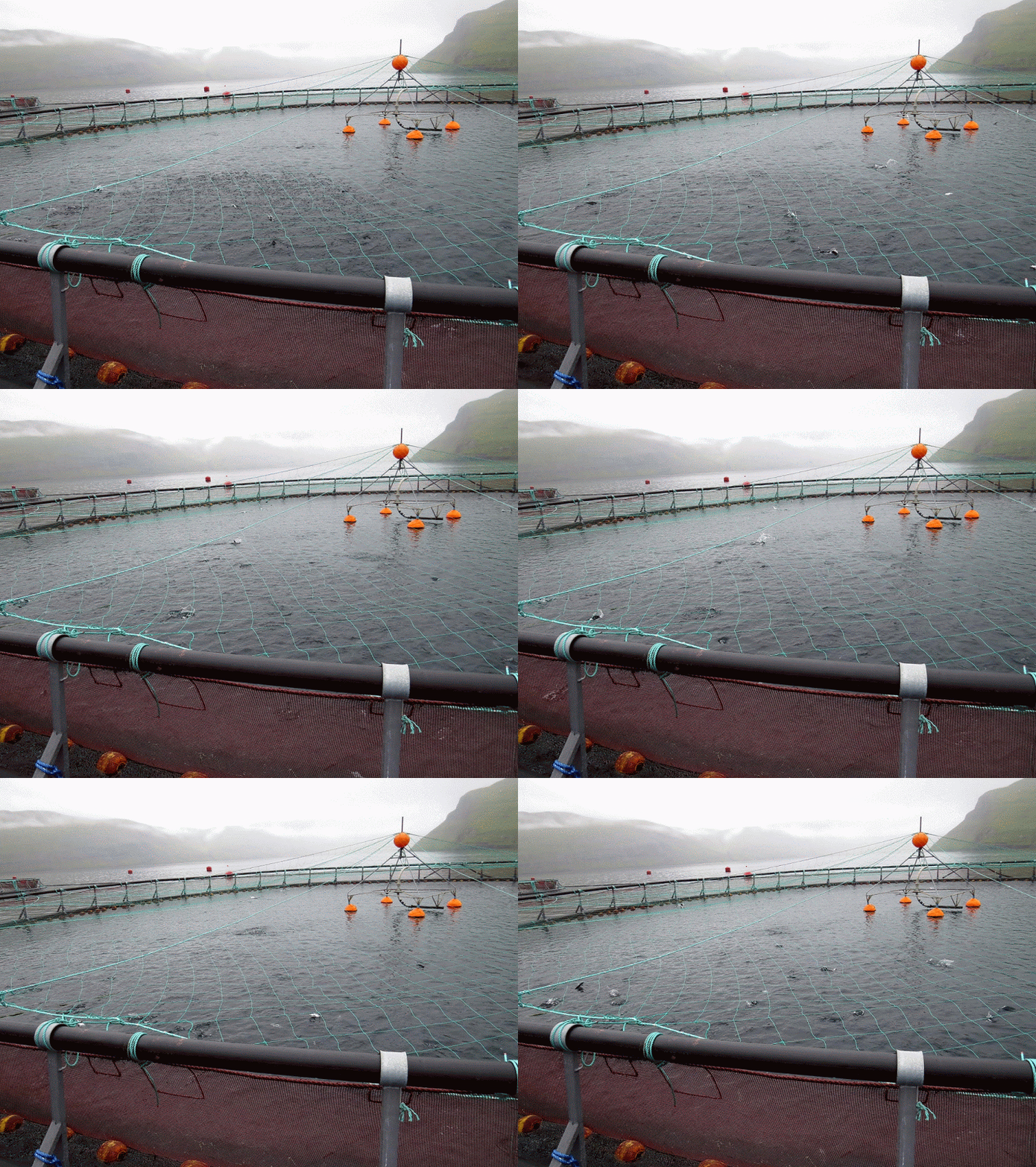
The salmon we visited were destined for the US and China, countries with the best market price. Recently, we’ve had salmon on the brain after a controversial taste-test by the Washington Post revealed testers preferred frozen, farmed salmon. Bottom line of the controversy: understand where your fish come from and the environmental and health implications of certain production styles. Not all farming is created equal – Europe does a much better job using salmon from their native range than us westerners. So here’s a story of a fish. After fully grown in the Faroes, they’ll be shipped to the UK by boat and flown the rest of the way by plane. Smaller fish stay in the European market. But it starts with an egg…

Last week, in response to a viral image of hotel guests eating a shark, I wrote a post explaining why I felt that the response from many in the activism community was disproportionate to the degree of the problem represented by that photo (and how other more serious problems got much less attention). Based on feedback I received from people who have read the post, the points I was trying to make were lost among my exasperated, and sometimes hostile, tone. This is my fault as a writer and not yours as a reader. I am writing this follow-up post to both briefly explain what I was trying to say and to apologize for not saying it well. Additionally, like all blog posts, this represented a personal opinion and not any sort of official consensus statement from the scientific community, though I often consult with leaders of the scientific community when writing posts.
This was the first blog post in a very long time that I wrote in the proverbial “heat of the moment,” in the midst of a long argument with activists on Facebook and twitter. The discussion went way outside of the boundaries of polite conversation, and I received numerous personal attacks and a few threats. The hotel owners and the people who ate the shark in the photo also received plenty of threats, though all of the threatening tweets seem to have now been deleted. In short, I was exasperated. I was in “argument mode” and not “educator mode”.
This was also the first blog post in a very long time that I published the day it was written. I normally like to leave a post alone for a day or two after writing it before looking it over again. I will often have other Southern Fried Science writers or scientific colleagues read posts before I publish them. That did not happen in this case. I say all of this not to excuse my error, but to explain it.
Additionally, I was not saying that people eating a large Threatened species is totally insignificant. Many shark populations are being overfished, which is a big problem, and consumption is part of that problem. The point I tried to make was that he level of attention that this incident received was disproportionate to the level of threat it represented, that other issues that are much more serious get much less attention, and that some of the tactics that activists used in this case were inappropriate and even harmful.
People felt that I was mocking, belittling, or insulting activists who felt that a photo of resort guests eating a shark represented a major conservation issue. That was not my intent and I truly apologize for presenting myself in that way.
Read More “An apology for my post on activists’ response to hotel guests eating a shark” »
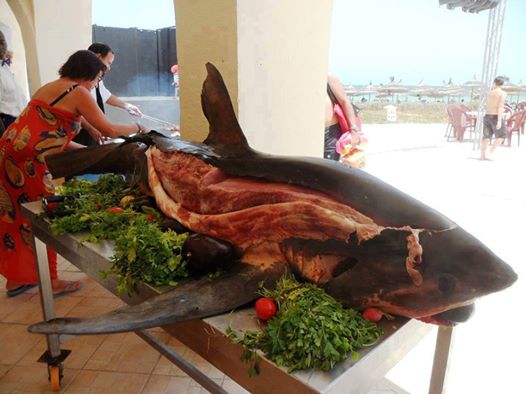
A photo of a single thresher shark being served for dinner at a resort is making the rounds among shark conservation activists. The photo, shown on the right, has been shared more than 12,000 times. A petition written in response to the image (in French) has over 1,000 signatures. The story has even made it into the mainstream media. The original caption refers to this scene as “shameful and disgraceful”, while follow-up comments refer to it as “shocking,” “sickening,” “disgusting,” “beyond words,” “shameful,” and “barbaric.” 12,000 shares and a 1,000 signature petition is significantly more outrage than I’ve ever seen for any issue involving a single individual shark. Why, exactly, are activists so upset about it?
It can’t simply be reaction to the death of a single shark. If you believe that no sharks should be eaten ever (or that no animals should be eaten ever), that’s a perfectly valid belief system. You should be (and likely are) aware, however, that the overwhelming majority of the world, including almost all governments, the majority of the scientific community, and many NGOs, completely disagree with you. People have encountered photos of individual sharks being killed before, or pictures of sharks on a menu or for sale in grocery stores, and not reacted this strongly.
It likely isn’t the species of shark in question, either. This shark is either a pelagic thresher or a common thresher, and while both are considered Vulnerable to extinction by the IUCN Red List, they’re common components of shark fisheries. Thresher fisheries in U.S. waters are considered well managed (and that population is only “Near-Threatened”). Some of the comments say that “sharks are an endangered species,” which is nonsense, as there are over 500 species of sharks and most are not even Threatened. Regardless, a single individual animal doesn’t impact the population in any significant way.
Read More “A photo of people eating a shark is upsetting activists for some silly reason” »
It was an early winter’s morning in 2009. The participants of Science Online 2009 were slowly, wearily emerging from the haze of the night before — the reputation that marine science bloggers had livers of steel was not yet a stone-carved edict. We sat down for a session, I don’t remember which, that was ostensibly about managing commenters. This was they heyday of Web 2.0, the nascent social media ecosystem was in its early successional stages — no longer larval, but still bursting with untapped potential. Blogs were still king. There were earnest debates about whether Twitter or FriendFeed was a better platform.
Someone stood up, I don’t remember who, but they were certainly qualified, and made the startling (thought paraphrased) statement: “If you moderate comments, your legally liable for anything said in those comments. You’re only protected if you let all comments through.” This is not true, but it was certainly the mentality of the 2000’s, where comment threads were fast and loose. Newspapers took this advice to heart to such a degree that even the spam was left exposed to the world. Even today, articles on your local news site may boast more comments about how much money Freddy Fakename makes working from home than actual responses to the article.
 As I never stop telling you, I’m writing a book. Fleet is a dystopian maritime adventure in which sea level rise and disease has driven the last survivors of the human race to sea. I’m releasing the story in serials — 3 chapters per month — on Amazon. Loyal readers who can’t wait for the next installment can slate their thirst with a series of short stories set in the world of Fleet that will be published on Southern Fried Science every few weeks. Please enjoy the second of these distractions, Shift, a story that takes place before the main events of Fleet and fills in some of the backstory surrounding the fleet.
A version of Shift appeared last year in Eno Magazine, but this iteration has been revised to fit into the world of Fleet.
150 years before the Great Hurricane.
The old winch groaned under the strain of a full net. Captain Willis sighed. A heavy haul was a bad sign.
“Well, that’s the last cast this season, probably the last I’ll ever do.” He said the same thing last year.
The net cleared the ship’s deck. It bulged with the unmistakable quiver of a thousand tire-sized jellies, each one a tiny ecosystem. We dumped them into the shaker tray that violently separated the worthless goo from the precious catch.
I grabbed a few jellies to measure before tossing them over the side. They were smaller this year, a good sign. Something was eating them.
I turned back to the shaker. The captain was smiling. At the bottom of the catch bin were eight hollow-eyed shrimp, the largest haul we’d had all week. Hollow-eyes were a luxury, favored by the new international elite, who, despite living in massive floating cities that circled the world, imported more seafood than any other demographic. Hollow-eyes were particularly desirable, as they had the dual caché of being both new to the world market and already extremely rare. At current market price, they would cover the repairs to the winch, with a little left over for fuel. We counted sixty-seven hollow-eyes in the Miss Amy’s hold. It had been a very good week.
Read More “Shift: an adventure in marine science from the not-too-distant future” »
Good news came out of Namibia last night, as the government declared an 18-month moratorium on all experimental seabed mining in Namibian waters, pending a more comprehensive environmental impact assessment. Pressure from both environmental groups and the fishing industry ultimately led to this decision. Both sets of stakeholders, as well as scientists and members of the international community, have legitimate concerns regarding the safety of seabed mining. This is the precautionary principal as it was meant to be implemented.
According to Swakopmund Matters, a seafloor mining protest group in Namibia:
The message conveyed by the Namibian decision is bold and clear. It will resonate throughout the world where battles are being fought against actions by mining companies that will harm, if not destroy, important marine areas. It will embolden all those who are standing up for the protection of their marine environments. But even more important, it will demonstrate to other governments that environmental concerns do take precedent over companies’ questionable actions when it comes to their exploitation of the oceans. Furthermore, that the Namibia government is not prepared to be a guinea pig for an untested and unknown endeavor. It refused to let its ocean and marine resources become the proverbial experimental playground.
(Source is a press release e-mailed to me.)
Read More “Namibian Government Announces 18-month Moratorium on Seabed Mining” »
Several users have e-mailed me about a weird .torrent file that automatically started downloading when thy loaded the mainpage. According to Business Insider, this is the result of a bug/exploit in twitter’s share buttons. For the moment, we have disabled all twitter sharing buttons on the site. Please contact me here if you continue to … Read More “Housekeeping note regarding weird torrent files” »
Last month I debuted Fleet: The Reach, the first part of my dystopian maritime science fiction adventure. Part Two: Wide Open will be hitting the Amazon Kindle store in a few week. If you’ve read Fleet: The Reach and are are looking for a way to get your Fleet fix, you can check out the … Read More “News from the Fleet, plus the cover unveiling for episode 2: Wide Open” »
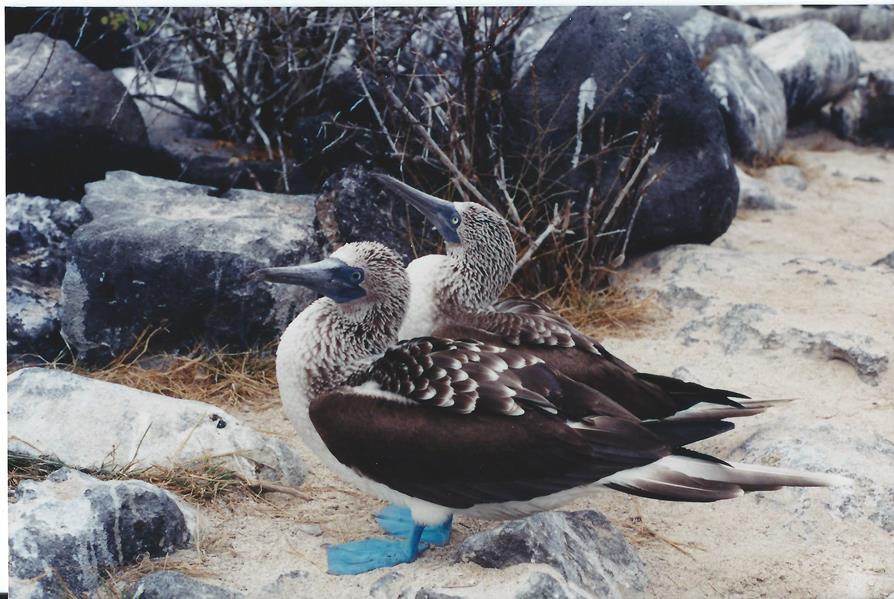
This week we learned that several blue footed boobies were sighted along the California coast, a rare, but not unprecedented occurrence. The news reports flooding in reminded me of my own experience with blue footed boobies in the Galapagos, so I decided to dig out my old photo album (yes, this predates the age of digital cameras) and pull out the booby photographs. Here, for your Friday enjoyment, are a bunch of pictures of Blue Footed Boobies.
Read More “Happy Friday! Here’s some pictures of Blue Footed Boobies” »