
Black Manta. Ocean Master. The Trench. Scavenger. King Shark. Toxin. The Fisherman. Aquaman has had some pretty memorable villains over the last 80 years. Also, the Fisherman. This is Southern Fried Science, a blog famous for two things – inspiring the world with our unique blend of marine science and conservation and doing horrible, horrible things to Aquaman.
Catch me flounder for I have finned. It has been 98 days since my last Aquaman is Awesome post.
Sure, Black Manta has some pretty sweet gear, a compelling back story that justifies his hatred of the Atlantean king, and he looks like he’s poised for some serious awesome during DC’s Villains Month. The Trench even appear to be able to utilize chemosynthesis, when they’re not trapping dogs in cocoons. You know where I’m going with this, don’t you?
That’s right. No matter how ridiculous Aquaman’s comic book foes become, you can bet all your clams I’ll find real marine organisms that would make equally amazing villains. Here’s eleven of them.
Meet Man-o-War, the colonial killer that understands the value of teamwork.
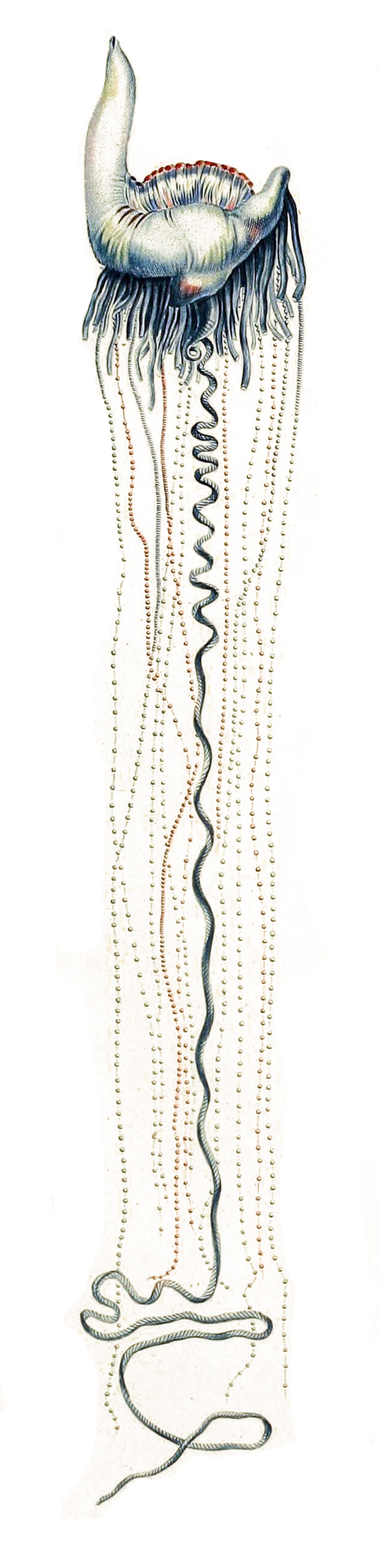
Imagine a super villain composed of thousand of individual organisms that form one giant super-organism. Rather than a body filled with vital organs, this villain can take massive damage without a loss of ‘self’, only to spawn new minions to replaced the damaged parts. Now give this deadly foe 60-foot long venom-filled tentacles whose sting brings excruciating pain. Such a villain would certainly assume the identity ‘Man-o-War’.
The Portuguese Man-o-War (Physalia physalis), arguably the best known of the siphonophores (it is a cnidarian, but it is not a jellyfish) possess tentacles that unleash an unbelievably painful sting, the weapon of choice for our newest menace. But the weapon does’t make the man (o-war), and our villain has a strategic secret. Man-o-Wars are not singular animals, they are a colony of highly specialized polyps — each one an individual animal that combines to form a deadly super-organism.
The pneumatophore is a polyp the creates a gas-filled bladder for flotation. This produces the distinctive ‘sail’ of the Man-o-War, a bilaterally symmetric air sac that allows the colonial to remain at the surface and provides some propulsion by catching the wind. The sail is not just a sac of air, it also has defensive capabilities. When attacked, the sail is able to deflate, allowing the colony to sink below the surface and avoid predators. The gonozooids, which occur in tight clusters, are responsible for reproduction. Man-o-Wars engage in both asexual and sexual reproduction. Young colonies can reproduce clonally by budding, but as the colony becomes more mature, that gonozooids become sexually differentiated and release eggs and sperm to form new colonies. The gastrozooid takes care of all the digestion-related needs and surround the dastardly dactylozooids. Finally, the dactylozooids produce 10-meter (or longer!) tentacles that capture prey and drag them towards the gastrozooids. This is some serious teamwork.
Man-o-War even has minions. The shepherd fish is immune t the stinging tentacles and hangs out within the tentacles. The fish gains the protection of its lethal ally while the Man-o-War gets to use the shepherd fish as bait to lure other fish into its deadly trap.
Imagine Aquaman facing off against a colony of polyps that combine to form a deadly super-organism with massive stinging tentacles. Siphonophores have no nervous system, so Aquaman’s fish-talking power are useless. No matter how many dactylozooids, gatrozooids, and pneumatophores he destroyed, the gonozooids are there, churning out more.
But Man-o-Wars are not without their own predators, the largest of which is the enormous, cnidarian nom nom-ing Leatherback Turtle. Despite their size, leatherbacks are the largest live sea turtle, they survive exclusively on large numbers of jelly-like organisms — to the tune of the equivalent of eating 16 cucumbers per day. Leatherbacks aren’t the only animals that prey on Man-o-War, the salacious siphonophore has many foes, two of which join this list as super-villains in their own right.
Read More “Eleven Marine Organisms that would make Amazing Aquaman Villains” »