
Skip to content

Southern Fried Science

Over 15 years of ocean science and conservation online

  • Home
  • About SFS
  • Authors
  • Support SFS

Recent Posts

Here’s how to join my IMCC8 symposium, “Ocean Science Communication: What’s New and What’s Next?”
April 22, 2026
Deep Sea Mining Symposium Announcement
April 21, 2026
Join Me at Upwell: A Wave of Ocean Justice — Our Fourth Year!
March 24, 2026
How close did the world’s first deep-sea mining come to the dredging the world’s largest cold-water coral reef?
March 17, 2026
Here are some ocean conservation technologies that I’m excited about
February 19, 2026
Walking Backwards Into the Future: Applying Indigenous Knowledge to Deep Sea Mining
February 5, 2026

New app: Learn about great white sharks while supporting research

Posted on January 11, 2012 By David Shiffman 4 Comments on New app: Learn about great white sharks while supporting research
Science

Earlier today, the Marine Conservation Science Institute launched a new iPhone and iPad app focusing on great white sharks. The app, called Expedition White Shark , includes numerous features that let users learn more about these amazing animals.

A game (called “Shark Life”) lets you learn about the life history of great white sharks by controlling a virtual baby great white. Users explore the marine environment near Southern California white eating fish and avoiding threats like gillnets and pollution.

A “news” interface lets you keep up to date on some of the latest exciting discoveries the Marine CSI team makes, and you can learn more about great whites from the “facts” tab. The app also includes numerous photos and videos of great whites and the research team in action.The coolest feature this app contains, however, is the ability to track satellite-tagged great whites.

Read More “New app: Learn about great white sharks while supporting research” »

Updates from the Deep: New and Noteworthy in Hydrothermal Vent Research

Posted on January 10, 2012January 12, 2012 By Andrew Thaler 7 Comments on Updates from the Deep: New and Noteworthy in Hydrothermal Vent Research
Conservation, Science

From hairy-chested yeti crabs to the deepest known fields, hydrothermal vents have been enjoying a bit of science celebrity in the last few weeks. Beneath the headlines, there has been an eruption of vent-related research published in the scientific literature and some exciting new expeditions just left port.

The Discovery of New Deep-Sea Hydrothermal Vent Communities in the Southern Ocean and Implications for Biogeography

'Hoff' crabs in paradise. Image from ChEss Southern Ocean Consortium

The exhaustive author list on this paper reads like a who’s who in hydrothermal vent biogeography. This is the paper that introduced “the Hoff” crab to the world, but the findings are far more significant. Hydrothermal vent systems are sorted into biogeographic provinces, with different regions supporting different communities. The iconic giant tube worms dominate the eastern Pacific, while the western Pacific (prominently featured in Deep Fried Sea) plays host to fist sized snails, and the Atlantic features shrimp as its dominant species. There are several missing gaps in our understanding of how these qualitatively different communities are connected – the Southern Ocean, the south Atlantic, the Indian Ocean, and the Cayman Trough, among others. Filling in these gaps in our knowledge can help us understand the history and evolution of hydrothermal vent ecosystems.

Read More “Updates from the Deep: New and Noteworthy in Hydrothermal Vent Research” »

Bipartisan Fisheries Policy: A Worldwide First

Posted on January 9, 2012January 9, 2012 By Bluegrass Blue Crab 4 Comments on Bipartisan Fisheries Policy: A Worldwide First
Conservation

commercial shrimper, photo by author

According to the Washington Post, the US has overcome bipartisan politicking long enough to enact amendments to the Magnusen-Stevens Act that puts all fishery stocks into management – not just those threatened by overfishing. In practice, that means each stock has an absolute maximum catch limit for 2012. Perhaps the most resounding success of this policy is that it actually addresses scientific criticism of current management (covered fairly well by MAST) that implementing catch limits for one species just shifts fishing effort to other species – which then must have yet another species-specific policy put in place after overfishing occurs. Implementing fishery management plans for all fishery species at once eliminates the by-the-seat-of-your-pants feeling that previous US management conjures.

Read More “Bipartisan Fisheries Policy: A Worldwide First” »

What hybrid sharks mean (and don’t mean) for climate change and evolution: fact-checking the media coverage

Posted on January 6, 2012January 6, 2012 By David Shiffman 37 Comments on What hybrid sharks mean (and don’t mean) for climate change and evolution: fact-checking the media coverage
Conservation, Science

Photo credit: study author Pascal Geraghty, New South Wales Department of Primary Industry

Last week, a team of 10 Australian scientists announced that they had found the world’s first “shark hybrids”, offspring of individuals from two different shark species which had interbred. During a routine survey of Australian marine life, 57 sharks were found that physically resembled one species of shark, but had genetic markers inconsistent with that species. Subsequent genetic investigation revealed that these 57 animals were hybrids between common blacktip sharks (Carcharhinus limbatus) and Australian blacktip sharks (C. tilstoni).

Some of these hybrids were “F1″, meaning that one parents was a common blacktip and one was an Australian blacktip. Others were “B+”(backcrossed), which means that one parent was a common blacktip/Australian blacktip hybrid, and the other was a “purebreed” of one of those two species. According to the study’s lead author, Dr. Jess Morgan of the University of Queensland, “our genetic marker tells us that these hybrids are ‘at least’ F1, and that these animals are reproductively viable and can produce an F2…the hybrids may be generations past F2 but the existing genetic markers can’t distinguish how many generations past the second cross have occurred.”

Read More “What hybrid sharks mean (and don’t mean) for climate change and evolution: fact-checking the media coverage” »

Fishing on Your Phone: Apps for the Ocean-Savvy

Posted on January 5, 2012January 6, 2012 By Bluegrass Blue Crab 1 Comment on Fishing on Your Phone: Apps for the Ocean-Savvy
Uncategorized

In recent months, I’ve been hearing snippets of conversation about the use of smartphones for lots of things involving fish: guiding seafood choices, fishing identification, even reporting to the state. Most are free, some cost money, and there’s a bunch that haven’t reached the Android market yet (so no review from me). Feel free to add your own reviews, and iPhone users out there – add to the sketch of a review here. Here’s the results of my app playing:

Fish eating:

The Green Seafood Guide

by Lificious Software, cost: free

Start by browsing a list of “highly recommended”, “good choices”, or “to avoid” for either seafood or sushi – or search for a particular species in the search bar. Either the lists or your search results will link you to the appropriate information sheet on the Monterey Bay Aquarium website. The Aquarium facts sheets aren’t exactly smart-phone friendly, so the text comes up small, but it’s manageable. The search left something to be desired, as a search for “clams” offered me just the farmed variety and routed me directly to these fact sheets rather than telling me the basics firts. The app itself is fairly streamlined and straightforward, with just one basic home screen that also boasts a button “What should I eat today”, that from what I can tell provides a random suggestion from the “highly recommended” seafood list. I’m guessing this is an alternative interface to the Monterey Bay Aquarium’s more clunky app. Overall, it’s no more helpful than the card the Aquarium puts out, but less easy to lose and offers links to more information should you feel so compelled.

Read More “Fishing on Your Phone: Apps for the Ocean-Savvy” »

Kakapo: The world’s largest parrot and the birth of active conservation

Posted on January 4, 2012 By David Shiffman 8 Comments on Kakapo: The world’s largest parrot and the birth of active conservation
Conservation

Our world is facing a biodiversity crisis so severe that many scientists have labeled it as the sixth great mass extinction in Earth’s history. Conservation efforts to date have focused on endangered species and  “biodiversity hotspots” , relatively small areas with large numbers of species. Most of these hotspots are in areas you’d expect them to be, places like coral reefs and tropical rain forests. One surprising biodiversity hotspot is New Zealand.

Though New Zealand is best known for it’s two largest islands, the country has over 700 islands larger than one hectare. Additionally, New Zealand is isolated- hundreds of miles of Pacific ocean separate it from Australia, and it’s farther still from Asia or South America.  Similar to the Galapagos, this isolation has led to an extremely high rate of “endemic” species, plants and animals that are native to an area and aren’t found anywhere else on Earth.

New Zealand is particularly famous for its unique birds. You may have heard of the kiwi, a word which has become slang for a New Zealander*, but this nation is also known as the “seabird capital of the world“. In total, there are more than 60 endemic bird species found there.

Read More “Kakapo: The world’s largest parrot and the birth of active conservation” »

Four fish fight for the future

Posted on January 4, 2012 By Andrew Thaler
Conservation

How much of the world’s food supply is locked up in a few crops – corn, wheat, rice (for example) – and even fewer livestock – cows, pigs, chickens? Of the major commercial food production industries, only fish, and even then, only some fish, are still hunted. In a very real sense, fish are the last wild food. That may be changing. In Four Fish: The Future of the Last Wild Food, published last year, Paul Greenberg highlights the ways in which commercial fishing is becoming less like hunting and more like agriculture, with a few, often farm raised species, dominating the market.

Greenberg, a native of Long Island Sound who fished there since the 1970’s, documents the changes in four major fisheries – salmon, sea bass, cod, and tuna – and the changing attitudes of the (mostly) men who catch them. He travels to Alaska to meet with First Nation salmon fishermen, to Greece to visit groundbreaking aquaculture facilities, he charters a tuna boat to experience the fight first hand, and across the world he talks to those of whom fishing matters most, including himself. At times, the book becomes autobiographical, focusing on Greenberg’s personal journey – but this is a book about fish and fishermen, and he is, if only recreationally, a fisher.

Read More “Four fish fight for the future” »

That sinking feeling: Hog lagoons, superbugs, and the proliferation of antibiotics in livestock

Posted on January 2, 2012January 2, 2012 By Andrew Thaler 9 Comments on That sinking feeling: Hog lagoons, superbugs, and the proliferation of antibiotics in livestock
Science

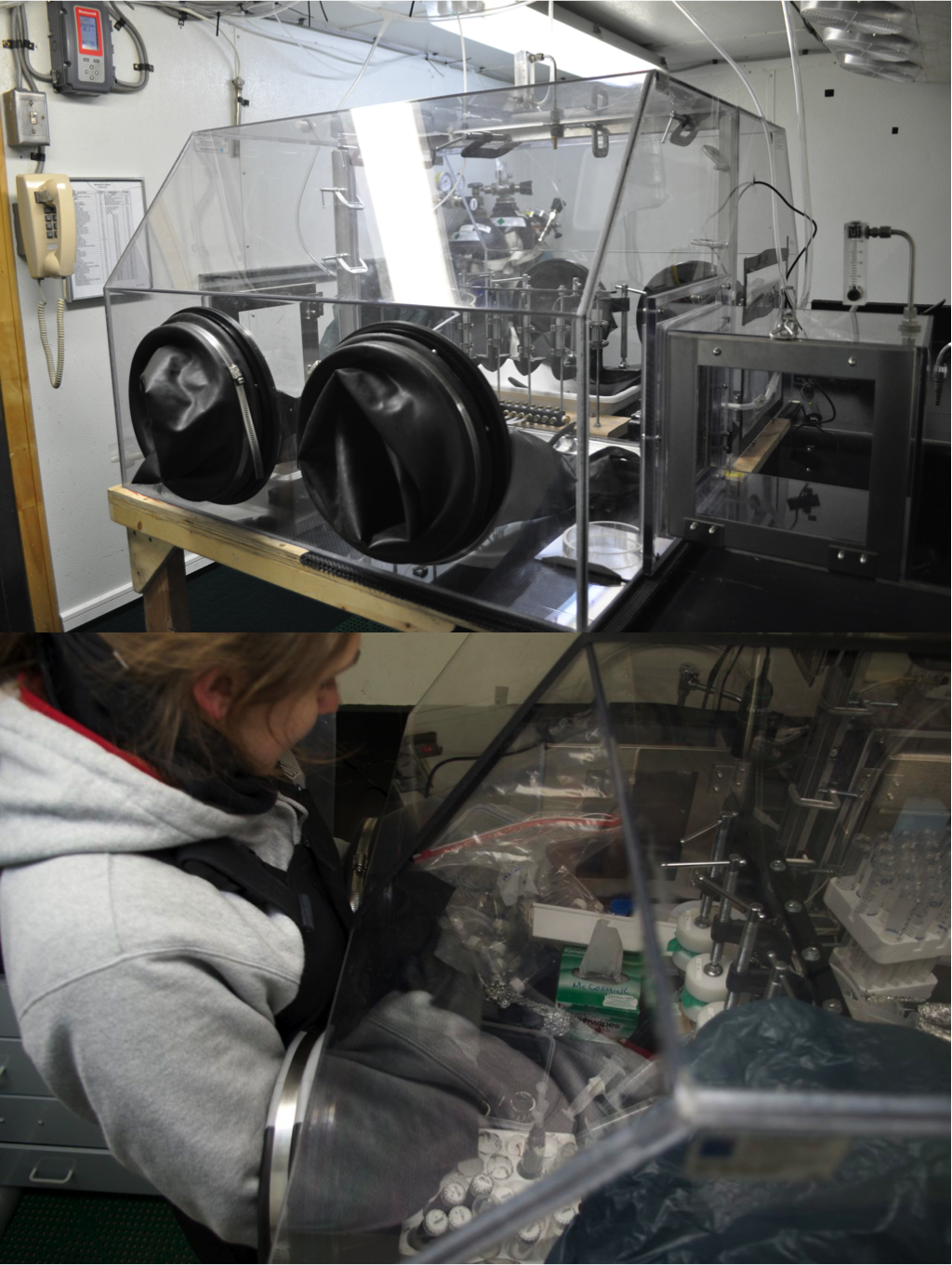
From here, it looks like such a lovely pond. Photo by Andrew David Thaler

The murky brown water was still, reflecting, perfectly, the drifting clouds above. Had I not known what it was, an acre-wide manmade pond almost a dozen feet deep filled to the brim with hog feces, I might be tempted to describe it as “beautiful”. Hog lagoons like this are a common sight in North Carolina, though their use is in decline. My lab group arrived at this particular lagoon to take microbial samples, fungi in this case, from the steaming cauldron of organic waste: an ideal culture medium. Carefully, we loaded a small skiff and rowed out into the stink. Near the center, we gingerly dipped our sampling vials, affixed to the end of an old fishing pole, into the dense fluid. It was then that we noticed the rising waterline, the slow trickle at the stern, the shift in balance. We locked the oars and rowed, frantically, towards shore. Our labmates on shore had, thankfully, tied a line to the bow before we departed. The skiff’s gunwales were creeping closer and closer to the water. We were sinking. We were sinking in a lake of pig shit.

Read More “That sinking feeling: Hog lagoons, superbugs, and the proliferation of antibiotics in livestock” »

The Connected Professor

Posted on January 2, 2012December 31, 2011 By Bluegrass Blue Crab
Science

Here at SFS, we seem to have an affinity for cyborgs. I recently had a dream in which I envisioned my future as such a creature. I had aged, achieved a professorship, and was teaching an introductory geography class. Contrary to the current classroom, however, there was not a learned scholar standing in front of pupils transferring information from my brain to theirs through lecture and leading discussions. Instead, there was a flurry of multimedia flying around the room and the “lecture” was really a snippet of a semester-long conversation involving the entire class intended to immerse them in geographic thinking, in and out of class. My thoughts and the in-person conversation was immediately digitized and encoded to be connected to parallel tweets, emails, blogs, and other online content.

Read More “The Connected Professor” »

The top eleven science hashtags of 2011

Posted on December 30, 2011December 31, 2011 By Andrew Thaler 8 Comments on The top eleven science hashtags of 2011
Uncategorized

Science is a conversation, and in 2011, a significant portion of that conversation happened on twitter. 2011 saw some fascinating new discoveries, bizarre assertions, disheartening revelations, and brilliant discussions. Twitter, it seems, is both a petri dish for nuggets of insight and an autoclave for steaming piles. So, without any further ado, here are the top 11 science hastags of 2011.

Read More “The top eleven science hashtags of 2011” »

Posts pagination

Previous 1 … 148 149 150 … 272 Next

Popular Posts

The story of the pride flag made from NASA imagery: Bluesky's most-liked imageThe story of the pride flag made from NASA imagery: Bluesky's most-liked imageSeptember 27, 2024David Shiffman
Playing God - How the ESA "God Squad" just voted for the extinction of a uniquely American whalePlaying God - How the ESA "God Squad" just voted for the extinction of a uniquely American whaleApril 9, 2026Southern Fried Science
What Ocean Ramsey does is not shark science or conservation: some brief thoughts on "the Shark Whisperer" documentaryWhat Ocean Ramsey does is not shark science or conservation: some brief thoughts on "the Shark Whisperer" documentaryJuly 2, 2025David Shiffman
Here's how to join my IMCC8 symposium, "Ocean Science Communication: What's New and What's Next?"Here's how to join my IMCC8 symposium, "Ocean Science Communication: What's New and What's Next?"April 22, 2026David Shiffman
I just told 850 shark scientists a hard truth: We’re not communicating shark conservation correctly.I just told 850 shark scientists a hard truth: We’re not communicating shark conservation correctly.June 1, 2026David Shiffman
Our favorite sea monsters – Ningen (#4)Our favorite sea monsters – Ningen (#4)September 7, 2010Andrew Thaler
Shark of Darkness: Wrath of Submarine is a fake documentaryShark of Darkness: Wrath of Submarine is a fake documentaryAugust 10, 2014Michelle Jewell
Join Me at Upwell: A Wave of Ocean Justice — Our Fourth Year!Join Me at Upwell: A Wave of Ocean Justice — Our Fourth Year!March 24, 2026Angelo Villagomez
On the clarity of animals: the art and science of clearing and stainingOn the clarity of animals: the art and science of clearing and stainingDecember 17, 2013Guest Writer
That's not a blobfish: Deep Sea Social Media is Flooded by AI SlopThat's not a blobfish: Deep Sea Social Media is Flooded by AI SlopDecember 19, 2025Andrew Thaler

squishy

Subscribe to our RSS Feed for updates whenever new articles are published.

We recommend Feedly for RSS management. It's like Google Reader, except it still exists.

Southern Fried Science

  • Home
  • About SFS
  • Authors
  • Support SFS


If you enjoy Southern Fried Science, consider contributing to our Patreon campaign.

Copyright © 2026 Southern Fried Science.

Theme: Oceanly Premium by ScriptsTown