Skip to content

Southern Fried Science

Over 15 years of ocean science and conservation online

  • Home
  • About SFS
  • Authors
  • Support SFS

Recent Posts

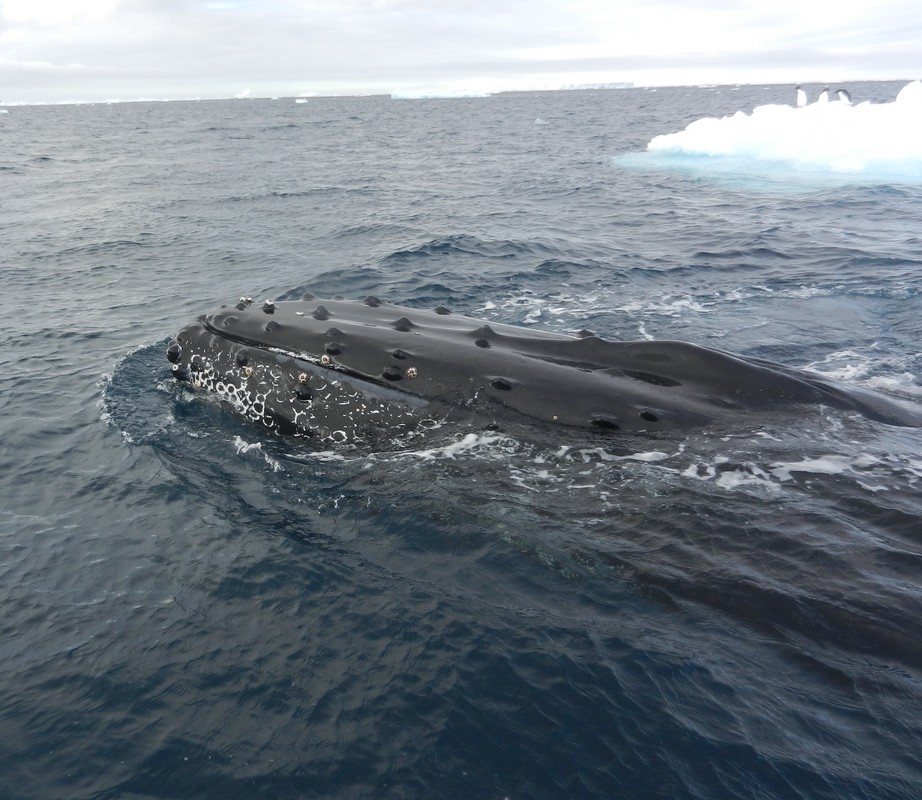
humpback whale in Antarctica
The evolution of the International Whaling Commission – from  whaling quotas to whale conservation
June 10, 2026
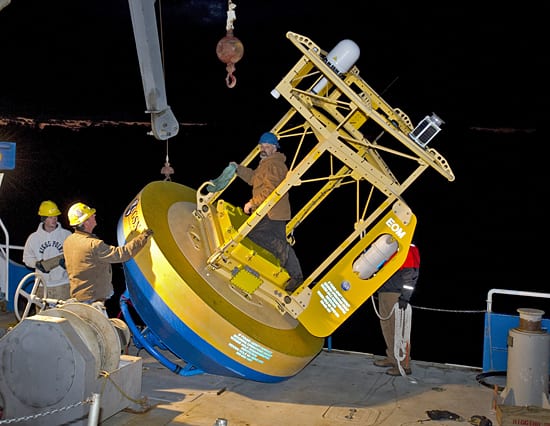
Isn’t ironic, don’t you think: dismantling the Ocean Observatories Initiative on World Oceans Day
June 9, 2026
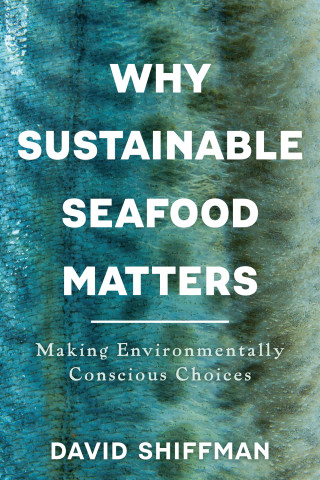
“Why Sustainable Seafood Matters” is now available for preorder! Here’s what it’s about, and why I decided to write it.
June 8, 2026
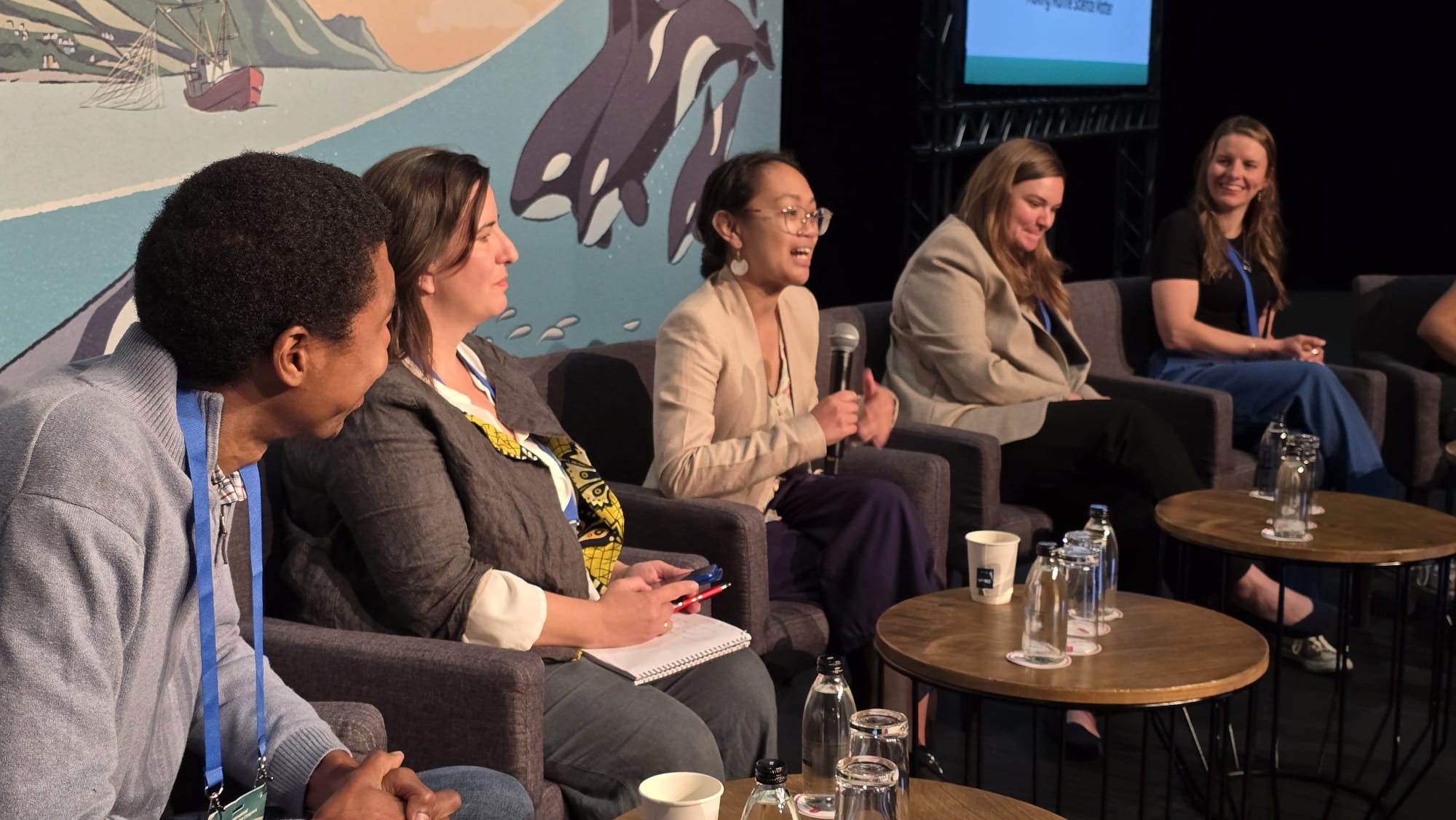
Here’s how to join my IMCC8 symposium, “Ocean Science Communication: What’s New and What’s Next?”
April 22, 2026
Deep Sea Mining Symposium Announcement
April 21, 2026
Join Me at Upwell: A Wave of Ocean Justice — Our Fourth Year!
March 24, 2026

State of the Field: First World or Third World?

Posted on March 15, 2011March 21, 2011 By Bluegrass Blue Crab 1 Comment on State of the Field: First World or Third World?
Uncategorized

Ever stop to think what divides the first from the third world? Why don’t we ever hear about the second and why don’t countries move between categories as they develop? Well, because the categories are historical – the second world is reserved for post-soviet countries attempting to rebuild governance. The first world is reserved for those who shone through as leaders at the end of World War 2. The third world – everybody else. But what does that mean for development research? And what about those places within our own country without running water and electricity?

This post was chosen as an Editor's Selection for ResearchBlogging.orgLooking inward to the researcher’s own countries means questioning the benefit of some institutions that are part of the dominant narrative of success in those countries. Before any differences are made explicit between investigation of the First and Third World, there is the question of outsider/insider position that must be attended to. Identifying and challenging assumptions as an insider may prove much more difficult than analysis of a foreign society as an outsider (Perin 1977). For example, community forestry in Canada was assumed to not exist because Canada is fully embedded in a capitalist economy, but was discovered to be successfully functioning in British Columbia, largely due to a regional difference in values diverging from capitalism (McCarthy 2006).
Perin (1977) suggests analyzing controversies to identify such assumptions that may also inherently be part of the inside researcher’s worldview. First World political ecologists have focused on controversies, largely looking at land use or resource management controversies. In the process, they have identified different processes at work in the First World than the Third World. These differences add a few key concepts to the political ecology toolbox: a need to explicitly recognize heterogeneity in a seemingly unified nation (St. Martin 2001), the role of a strong central state (Walker 2003), the role of larger capitalist economy and culture (Escobar 2004), and the process of rural gentrification (Schroeder 2005).

Read More “State of the Field: First World or Third World?” »

Shark Science Monday: How you can help WhySharksMatter tag sharks!

Posted on March 14, 2011September 6, 2017 By David Shiffman 7 Comments on Shark Science Monday: How you can help WhySharksMatter tag sharks!
Uncategorized

EDITOR’S NOTE: THIS OPPORTUNITY IS FROM 2011, AND IS NO LONGER VALID 

Those of you who follow me on twitter know that in addition to being a grad student, I work with the South Carolina Department of Natural Resources coastal shark survey. This summer, we will be catching and tagging sharks, and we need your help!  From mid-May through August, we’ll take the boat out 2-4 times a week for single-day surveys. We leave around 6 or 7 in the morning and return mid to late afternoon. There is often room for a volunteer or two, and the help is always appreciated.

Since I started advertising this opportunity last week, I’ve received over 150 e-mails inquiring about it. Many of you are asking the same questions, and while I”m always happy to answer questions about sharks, I’m instead going to answer the most common questions in this post.

Read More “Shark Science Monday: How you can help WhySharksMatter tag sharks!” »

Grok my Flock

Posted on March 14, 2011March 13, 2011 By Andrew Thaler 1 Comment on Grok my Flock
Conservation

The Nicholas School of the Environment is hosting the Flat Grok Video Contest. We are on an unsustainable course. While world populations and consumption grow, resources diminish and global warming threatens our way of life.  In his blog The Green Grok, Dr. Bill Chameides, dean of the Nicholas School of the Environment at Duke University, elucidates … Read More “Grok my Flock” »

SFS Gear Review: The Vehicle

Posted on March 11, 2011March 11, 2011 By Bluegrass Blue Crab 1 Comment on SFS Gear Review: The Vehicle
Uncategorized

A field vehicle can be just a means of shuttling gear or a home away from home. Most people think of a rough and tumble truck tackling aged logging roads, but depending on your needs and your discipline, something different might play the role. For instance, I work relatively close to home as all of my field sites are less than three hours away by highway and any sample collecting occurs on the water, generally in a borrowed boat (something this series will come to later).

Read More “SFS Gear Review: The Vehicle” »

Weekly dose of TED – Janine Benyus: Biomimicry in action

Posted on March 11, 2011March 4, 2011 By Andrew Thaler
Uncategorized

The theme this month is design in nature. Last week we posted a video that discusses how we can use nature to design our cities. This week, Janine Benyus talks about using nature to inspire technology. I don’t have a bigger point to make this week. Biology is cool and we can learn a lot … Read More “Weekly dose of TED – Janine Benyus: Biomimicry in action” »

Light bulbs on the Colbert Report

Posted on March 10, 2011March 11, 2011 By David Shiffman 2 Comments on Light bulbs on the Colbert Report
Uncategorized

Last year, we wrote about the bizarre “save the light bulb” movement. The issue hasn’t gone away. Far Right politicians continue to actively resist energy efficiency. This Wednesday’s episode of the Colbert Report covered the light bulb “controversy”.

Read More “Light bulbs on the Colbert Report” »

Building Policies for Stewardship

Posted on March 10, 2011February 22, 2011 By Bluegrass Blue Crab
Uncategorized

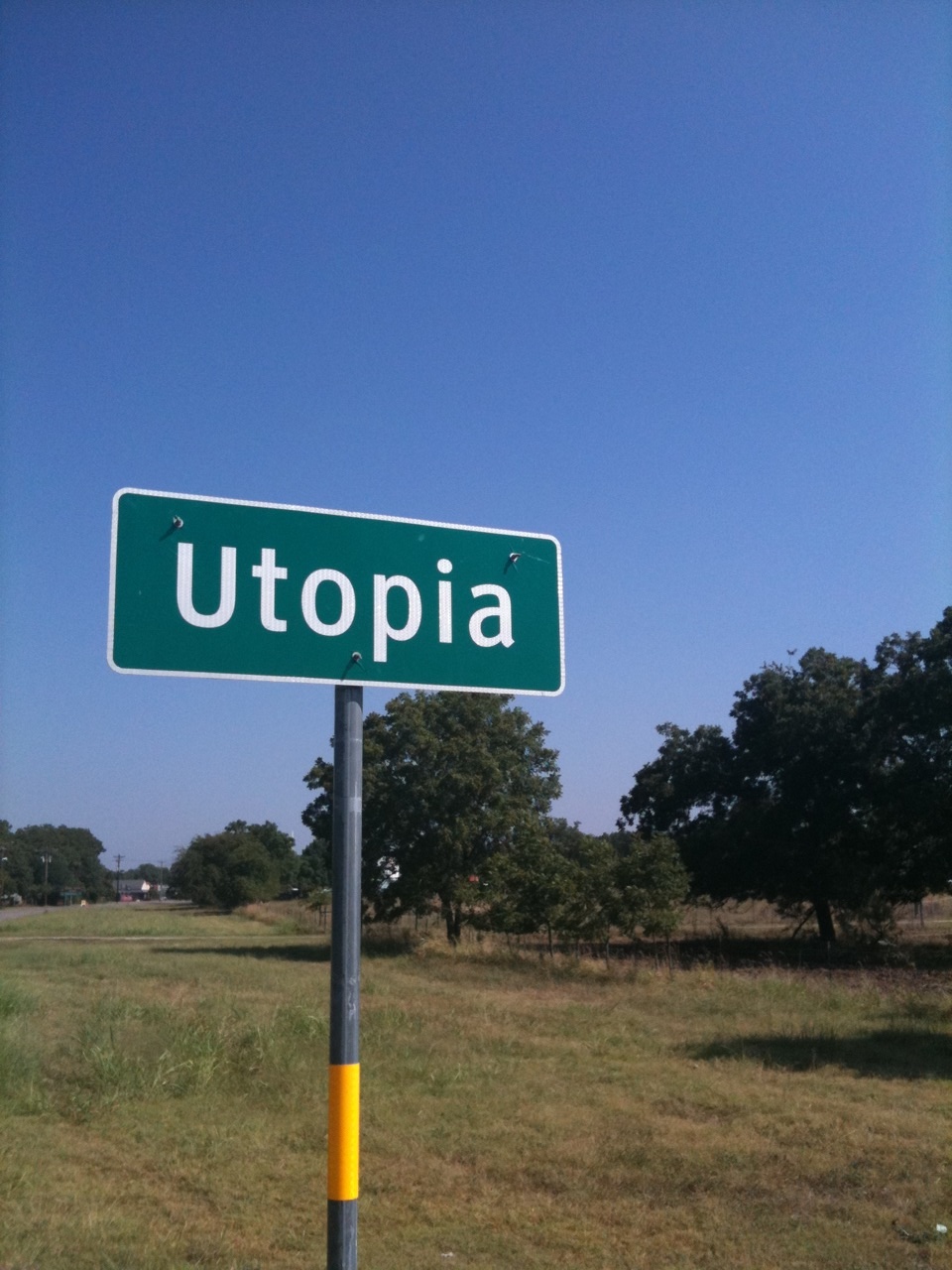
A dream? tomschlueter.blogspot.com

We as humans and especially here at SFS like to picture an ideal government and hope that as we learn more about science and political theory, government can take steps in that direction. By any measure, governance within the United States is far from meeting the theoretical ideal. Implementation and enforcement are often pointed at as more important factors than policy design in terms of effectiveness in meeting policy goals. But if we ever had the chance to change the design, here’s four principles that will help make sure we move in the right direction.

Addressing Scale: Appropriate information gathering

If scale is unified at the ecosystem level – bounded by hydrological and geophysical boundaries – then information about the system must also represent the ecosystem scale. Fisheries management, for example, requires information on all the potential factors that could affect stock size – habitat, water quality, fishing pressure, competition with other native and nonnative species, productivity of the food web, etc. Furthermore, the total fishery stock in an area would have to be considered together – total biomass of market species, for example. These types of measurements will delineate threats to conservation to a particular species versus threats to the health of the whole system.

Read More “Building Policies for Stewardship” »

Help protect sharks in the Bahamas

Posted on March 9, 2011March 8, 2011 By David Shiffman
Uncategorized

Last week, I summarized shark conservation laws and policies from around the world. In the wake of recent successes,  several shark conservation NGOs are hoping to get similar laws passed in the Bahamas. Guy Harvey is heavily involved in this project, and explained why protecting sharks in the Bahamas is so important:

“These magnificent animals have been admired for years by divers visiting The Bahamas and revered by people around the world as one of the great wonders of the ocean.”

Read More “Help protect sharks in the Bahamas” »

Biodiversity Wednesday: The Skeleton Coast

Posted on March 9, 2011November 7, 2011 By Andrew Thaler
Uncategorized

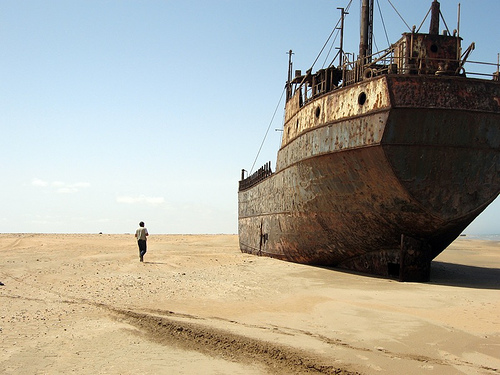
Image from http://www.safari-namibia.co.uk/

A 900-mile coastline runs perpendicular to the border of Angola and Namibia. The cold water carried up from the antarctic by the Benguela Current meets the warm, dry air of the Namib Desert and the resulting depression forms a cold, dense fog that extends out into the sea. The currents and wind combine to produce a force pushing inexorably towards shore. These conditions led mariners to christen this seemingly desolate and inhospitable stretch of sand the Skeleton Coast.

Read More “Biodiversity Wednesday: The Skeleton Coast” »

State of the Field: Playing with Policy

Posted on March 8, 2011February 22, 2011 By Bluegrass Blue Crab
Uncategorized

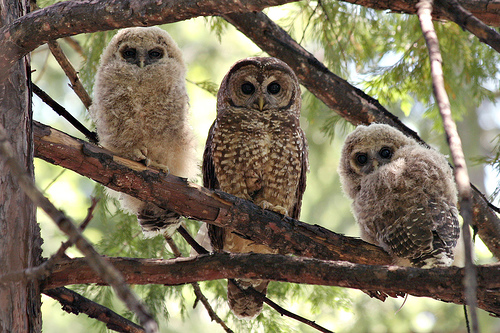
Successful owl populations in CA are credited to adaptive management, from ceplacer.ucdavis.edu

Following our discussion of scale, management boundaries must match ecological processes which are now recognized to be dynamic and complex. This means that management must manage not for a known equilibrium, but a dialectic system full of uncertainty (Berkes 2008). Instead of attempting to predict from the instigation of a policy what the effects may be, governance should be structured to constantly evaluate the system and incorporate feedbacks. This process, known as adaptive management (also check out statements on the subject from the Resilience Alliance and US Department of Interior), provides for the co-evolution of the system and its governance to ensure that they remain an effective match.

Under adaptive management, episodes of disturbance are learning opportunities, not a signal of policy failure. Berkes (2008) describes this phenomenon: “’conservation’ is not a state of being. It is a response to a people’s perceptions about the state of their environment and its resources, and a willingness to modify their behaviors to adjust to new realities”. He goes on to say that disturbances are not only opportunities for learning, but that they are necessary for that learning to occur. Gunderson and Carpenter (2006) add that disturbance is necessary for transformational learning – the type of learning that allows for the emergence of novelty. Therefore, disturbances should be allowed to occur in order to foster community and governmental innovation.

Read More “State of the Field: Playing with Policy” »

Posts pagination

Previous 1 … 176 177 178 … 273 Next

Popular Posts

That's not a blobfish: Deep Sea Social Media is Flooded by AI SlopThat's not a blobfish: Deep Sea Social Media is Flooded by AI SlopDecember 19, 2025Andrew Thaler
What Ocean Ramsey does is not shark science or conservation: some brief thoughts on "the Shark Whisperer" documentaryWhat Ocean Ramsey does is not shark science or conservation: some brief thoughts on "the Shark Whisperer" documentaryJuly 2, 2025David Shiffman
The story of the pride flag made from NASA imagery: Bluesky's most-liked imageThe story of the pride flag made from NASA imagery: Bluesky's most-liked imageSeptember 27, 2024David Shiffman
The evolution of the International Whaling Commission – from  whaling quotas to whale conservationThe evolution of the International Whaling Commission – from  whaling quotas to whale conservationJune 10, 2026Chris Parsons
Shark of Darkness: Wrath of Submarine is a fake documentaryShark of Darkness: Wrath of Submarine is a fake documentaryAugust 10, 2014Michelle Jewell
I can serve on your graduate thesis committee. Here’s what you can expect of me, and what I expect in return.I can serve on your graduate thesis committee. Here’s what you can expect of me, and what I expect in return.October 16, 2025David Shiffman
What is a Sand Shark?What is a Sand Shark?November 12, 2017Chuck Bangley
Tackling the least important debate in deep-sea mining: the desultory hyphenTackling the least important debate in deep-sea mining: the desultory hyphenJune 8, 2026Andrew Thaler
"Why Sustainable Seafood Matters" is now available for preorder! Here's what it's about, and why I decided to write it."Why Sustainable Seafood Matters" is now available for preorder! Here's what it's about, and why I decided to write it.June 8, 2026David Shiffman
Our favorite sea monsters – Ningen (#4)Our favorite sea monsters – Ningen (#4)September 7, 2010Andrew Thaler

squishy

Subscribe to our RSS Feed for updates whenever new articles are published.

We recommend Feedly for RSS management. It's like Google Reader, except it still exists.

Southern Fried Science

  • Home
  • About SFS
  • Authors
  • Support SFS


If you enjoy Southern Fried Science, consider contributing to our Patreon campaign.

Copyright © 2026 Southern Fried Science.

Theme: Oceanly Premium by ScriptsTown