


Skip to content

Southern Fried Science

Over 15 years of ocean science and conservation online

  • Home
  • About SFS
  • Authors
  • Support SFS
Latest News
  • Norway and Cook Islands put their deep-sea mining plans on pause

Recent Posts

Join Me at Upwell: A Wave of Ocean Justice — Our Fourth Year!
March 24, 2026
How close did the world’s first deep-sea mining come to the dredging the world’s largest cold-water coral reef?
March 17, 2026
Here are some ocean conservation technologies that I’m excited about
February 19, 2026
Walking Backwards Into the Future: Applying Indigenous Knowledge to Deep Sea Mining
February 5, 2026
The Urgency Does Not Exist: My statement on Deep-sea Mining to the Subcommittee on Energy and Mineral Resources
January 24, 2026
Bipartisan Concern Expressed Over Deep Sea Mining at Congressional Hearing
January 23, 2026

SFS Gear Reviews: When the current changes, you have to adapt – Digipower Universal Travel Adapter

Posted on February 10, 2011February 10, 2011 By Andrew Thaler
Uncategorized

Digipower

For a prolonged tour in the field, the little things matter just as much as the big things. And nothing is smaller or more easily forgettable than the lowly travel adapter. I picked mine up in an airport somewhere in Japan as an afterthought, like many travelers, once I got to my destination and realized I had no way to charge up my netbook.

The travel adapter seems inconsequential, but choosing the wrong one can be fatal. I got lucky, because the only one in stock turned out to be a workhorse, but horror stories abound of the unsuspecting graduate student plugging their vital equipment into a suspect outlet and frying a computer, blowing a critical sensor, or setting their shack on fire. Electricity is not to be taken lightly.

Read More “SFS Gear Reviews: When the current changes, you have to adapt – Digipower Universal Travel Adapter” »

Biodiversity Wednesday: Ngorongoro Crater

Posted on February 9, 2011February 9, 2011 By David Shiffman
Uncategorized

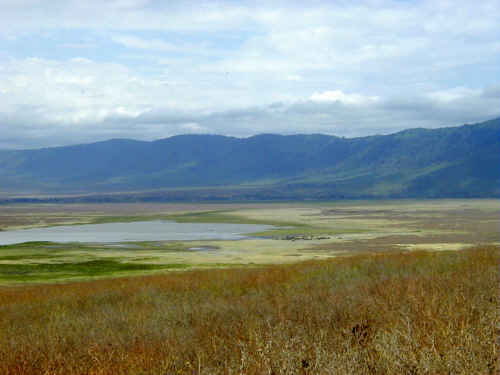
Located in the East African nation of Tanzania, Ngorongoro Crater (pronounced just like it’s spelled, 😉 ) is one of the coolest places I’ve ever had the privilege to visit. Technically a caldera, the remnants of a collapsed volcano, the floor of Ngorongoro provides over 100 square miles of habitat surrounded by steep walls to more than 25,000 animals.

Ngorongoro Crater- what looks like mountains in the distance actually surrounds the habitat. Photo credit: David Shiffman, 2001

Read More “Biodiversity Wednesday: Ngorongoro Crater” »

State of the Field: Is catch-and-release fishing harmful to sharks?

Posted on February 8, 2011February 2, 2011 By David Shiffman 10 Comments on State of the Field: Is catch-and-release fishing harmful to sharks?
Conservation, Science

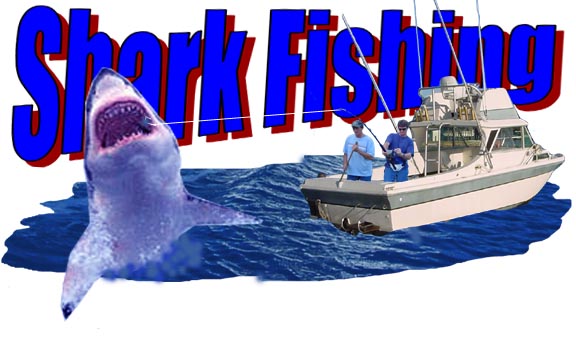
In the wake of the new Marianas Islands shark conservation law, a debate has been raging on the shark  listservs. The law wouldn’t have been possible without support from several local recreational fishermen- people who often take tourists catch-and-release fishing for sharks.

“When I heard of your effort in Hawaii to ban the sale,trade and possession of shark fins I knew if the CNMI was to follow someone with inside connections to the fishing world there had to espouse it and grow it.  They do not like being told what to do from outsiders.  I was not an outsider, and I fished alongside two of the very top level fishermen who happened to be upper level politicians whom I respected.  Rep. Diego Benevente was one of them.  I spoke with him and asked him to introduce a bill which replicated Hawaii’s law, and he did so. I kept constant contact with him and his staff in the effort to see this bill become law.”- Captain William McCue

Image from FishingDestin.info

Many shark conservationists support catch-and-release fishing, claiming that it allows fishermen the thrill of catching a large animal without killing it. Captain McCue reports that in the last 20 years:

“I’ve caught over 300 sharks in the that time a killed four- and if you include spiny dogfish it’s caught well over 2000 sharks and still killed only four- two of which were promptly eaten.”

However, some (such as “My Sunset Rendezvous” author Ila France Porcher) claim that even when a shark is released, the stress from being caught often still causes long-term damage or even death.

“As a shark ethologist, I have personally witnessed sharks who were hooked and fought, and who broke the line, emerge from the ordeal with a jaw so damaged that they lost weight and died over the following weeks or months. A high fraction of sharks caught suffered this fate, and they suffered greatly as a result of this enjoyable passtime pursued by sports fishermen. It would be great news to hear that you switched from a blood sport to a sport that celebrates the life that still remains in our seas, such as diving and photography.” – Ila France Porcher

Read More “State of the Field: Is catch-and-release fishing harmful to sharks?” »

Reader Survey Closed

Posted on February 7, 2011February 7, 2011 By Andrew Thaler
Uncategorized

A big thanks to everyone who filled out the readers’ survey. We’ll pick and inform the winners tonight and have a full write-up of the survey results later this week.

Finding Melville’s Whale – Moby Dick (Chapter 41)

Posted on February 6, 2011February 6, 2011 By Andrew Thaler 2 Comments on Finding Melville’s Whale – Moby Dick (Chapter 41)
Uncategorized

After reading some of the reviews from our Readers’ Survey, many people list these among their favorite posts, while many others consider them their least favorite. So, we’ve decided to change the posting schedule for Finding Melville’s Whale. From now on, one or two new entries will appear every Sunday, instead of Tuesdays and Thursdays. We … Read More “Finding Melville’s Whale – Moby Dick (Chapter 41)” »

Weekly dose of TED – Barbara Block: Tagging tuna in the deep ocean

Posted on February 4, 2011February 4, 2011 By Andrew Thaler 1 Comment on Weekly dose of TED – Barbara Block: Tagging tuna in the deep ocean
Uncategorized

Tuna are rather magnificent fish. Do you still eat tuna? Why or why not? Do you draw a line at different species?

A couple of tips when requesting papers

Posted on February 2, 2011February 3, 2011 By Andrew Thaler 2 Comments on A couple of tips when requesting papers
Science

As search algorithms are getting better and better, some scientific papers are getting more difficult to access. Journal subscriptions are expensive and many institutions are foregoing all but the highest impact journals. For those working outside of academia, only open access journals are a viable option. I’m fortunate that my university subscribes to most scientific journals, which means that many of my colleagues will drop me an e-mail, tweet, or phone call along the lines of “Hey, I don’t have access to this article. Can you send me a copy?”

The answer is, without hesitation, always yes. Science can only progress when we have access to the literature. At this point, I’m fielding 4 or 5 paper requests per week, and I imagine many other scientists are doing the same. Most of the time the requests are simple and straight forward. Sometimes they’re so cryptic that it takes another round of e-mails before I even know it’s a paper request. I thought it would be helpful to compile a short list of advice for how to make it all just a little easier.

Read More “A couple of tips when requesting papers” »

Biodiversity Wednesday: Great Smoky Salamanders

Posted on February 2, 2011February 1, 2011 By Bluegrass Blue Crab 2 Comments on Biodiversity Wednesday: Great Smoky Salamanders
Uncategorized

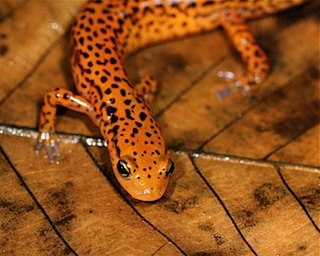
herpetology.us

The Great Smoky Mountains are one of those places of wonder right in our own backyard. Not only have the coal and timber communities cultivated the banjo, bluegrass, and moonshine, but they are one of the most unique habitats in the world due to their forest canopy chemistry. As one of the oldest mountains chains on earth, their caps are often rounded and covered in trees, providing sheltered habitat at a variety of altitudes for critters great and small. In fact, it’s the small ones that actually deserve the most notoriety – the mountain chain boasts the highest diversity of amphibians in the world and herpetologists travel long distances to find the many salamanders hiding under the Smokies’ logs and leaf litter. This kind of refuge is increasingly important in the struggle to keep amphibians alive.

Read More “Biodiversity Wednesday: Great Smoky Salamanders” »

State of the Field: Policy is not just for policymakers anymore

Posted on February 1, 2011 By Bluegrass Blue Crab 1 Comment on State of the Field: Policy is not just for policymakers anymore
Uncategorized

Even the Governator believes in public participation, thanks cdcr.ca.gov

Continuing this series’ recent theme of ways to make policy work, let’s consider a broader view of what policy is and therefore who gets to create policy. It’s not just the elected officials with legislation in their job description. For one, those people are accountable to the people who elected them. Second, formal written policy is not the only kind that is effective – informal rules, community traditions, and other forms of policy are often best. Plus, these types of policy offer the general public a change to be involved in creation and implementation.

There is a large literature on the value of participation in policymaking, especially in fisheries (Silver and Campbell 2005). Here I will focus on three particularly important aspects of participation to management at the scale of an estuary, where I work: a) additional knowledge creation, b) community buy-in, and c) tighter feedback loops. These are important for relatively large-scale systems with several communities and many variables that could affect management.

Read More “State of the Field: Policy is not just for policymakers anymore” »

Ethical Debate: Clean Energy and the State of the Union

Posted on February 1, 2011January 30, 2011 By David Shiffman 7 Comments on Ethical Debate: Clean Energy and the State of the Union
Uncategorized

I’ve been critical of President Obama’s policies concerning science, technology and education in the past. I think he uses a lot of great-sounding rhetoric, but I have yet to see very much in the way of actual results. Despite lofty promises about climate change, we remain without a cap-and-trade system or any sort of meaningful response plan. To make things worse, the administration recently fired their primary adviser for climate change policy. Is all hope lost? Perhaps not.

Read More “Ethical Debate: Clean Energy and the State of the Union” »

Posts pagination

Previous 1 … 178 179 180 … 271 Next

Popular Posts

Reflections on science and my role in it, ten years since my Ph.D. defenseReflections on science and my role in it, ten years since my Ph.D. defenseApril 1, 2026David Shiffman
What Ocean Ramsey does is not shark science or conservation: some brief thoughts on "the Shark Whisperer" documentaryWhat Ocean Ramsey does is not shark science or conservation: some brief thoughts on "the Shark Whisperer" documentaryJuly 2, 2025David Shiffman
Shark Science Monday: How you can help WhySharksMatter tag sharks!Shark Science Monday: How you can help WhySharksMatter tag sharks!March 14, 2011David Shiffman
We Need a "Starfleet" for the OceansMarch 30, 2026Chris Parsons
Phantom science - how "AI slop" is making environmental policyPhantom science - how "AI slop" is making environmental policyMarch 30, 2026Chris Parsons
That's not a blobfish: Deep Sea Social Media is Flooded by AI SlopThat's not a blobfish: Deep Sea Social Media is Flooded by AI SlopDecember 19, 2025Andrew Thaler
The UN Decade of Ocean Science: A failure to launchApril 1, 2026Chris Parsons
Shark of Darkness: Wrath of Submarine is a fake documentaryShark of Darkness: Wrath of Submarine is a fake documentaryAugust 10, 2014Michelle Jewell
What is a Sand Shark?What is a Sand Shark?November 12, 2017Chuck Bangley
Build a dirt cheap, tough-as-nails field computer in a Pelican caseBuild a dirt cheap, tough-as-nails field computer in a Pelican caseJuly 21, 2015Andrew Thaler

squishy

Subscribe to our RSS Feed for updates whenever new articles are published.

We recommend Feedly for RSS management. It's like Google Reader, except it still exists.

Southern Fried Science

  • Home
  • About SFS
  • Authors
  • Support SFS


If you enjoy Southern Fried Science, consider contributing to our Patreon campaign.

Copyright © 2026 Southern Fried Science.

Theme: Oceanly Premium by ScriptsTown