Uncategorized
You know we’d have to get Josh in there eventually.
Over 15 years of ocean science and conservation online

You know we’d have to get Josh in there eventually.
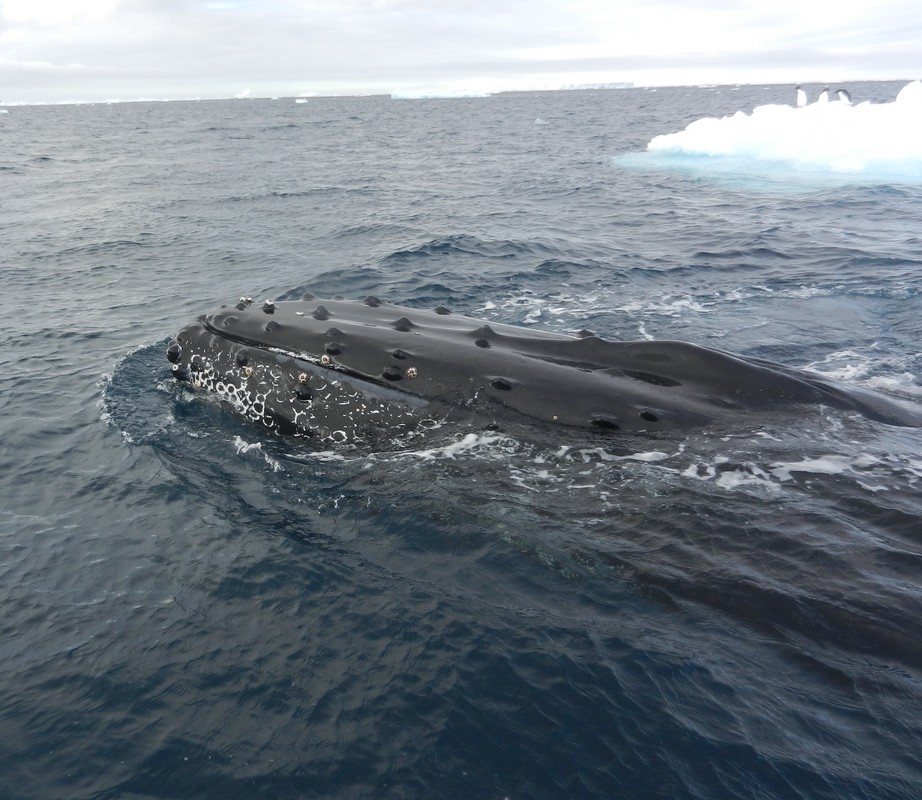
Chapter 32 of Herman Melville’s classic – Moby Dick. Read along with us and discuss this chapter or the book as a whole in the comments. Visit this page for the complete collection to date: Finding Melville’s Whale. Cetology Let this be the book of the whale, chronicle of tortured naturalists. For who could fathom those … Read More “Finding Melville’s Whale – Cetology (Chapter 32)” »
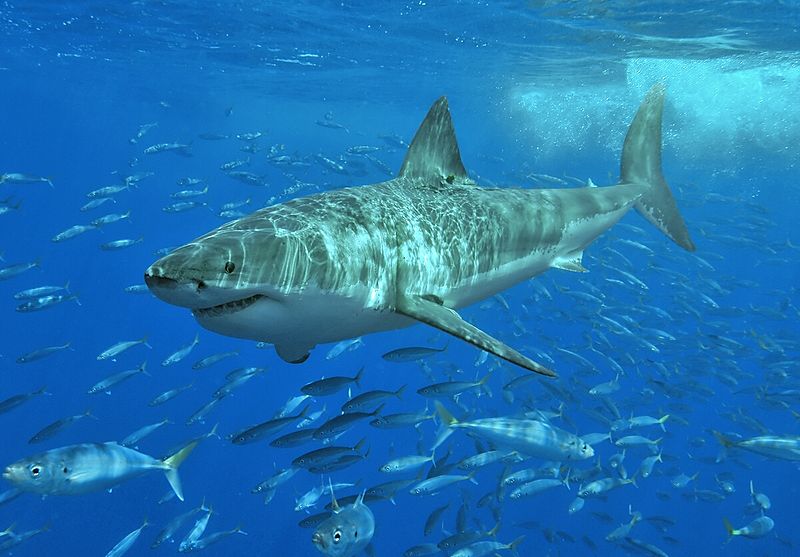
In this edition of Shark Science Monday, James Cook University researcher Sally Whatmough discusses using content analysis of magazines to track how SCUBA diver attitudes towards sharks have changed over the last fifty years. If you have a question for Sally, leave it in the comments below. ~WhySharksmatter
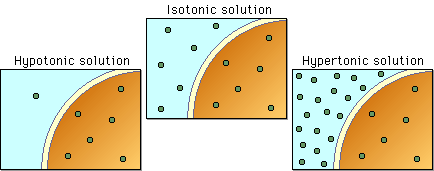
 One of the challenges inherent in a marine lifestyle is in maintaining an internal balance against external osmotic pressures. Cell membranes are permeable to water, and water tends to flow from areas of low ion concentration to areas of high ion concentration (which is called ‘osmosis’). Though the cell is incredibly complex, from an osmotic perspective it is basically a small sack of water with some ions in it. If cells aren’t isosmotic (i.e. containing the same concentrations of ions) to the surrounding environment, then water will flow across a cell membrane. Depending on the relative ionic concentration of the cell to the environment, water may flow either into or out of a cell. Either way, this water flow is bad for the organism and may result in cells shriveling up or bursting.
 The dissemination of science follows the conventional route of rigorous peer-review followed by publication in an accredited scientific journal. This process has been the standard foundation from which the general public can trust that the science is, at the very least, valid and honest. Of course this system is not without its flaws. Scientific papers of questionable authority, dishonest methodology, or simply flawed design frequently make it through the gates of peer-review. Politically charged papers possess strong biases and many high impact journals favor sexy or controversial topics.
Beyond the conventional route of peer-review, there exist a vast accumulation of gray literature – conference reports, technical notes, institutional papers, various articles written for specific entities that enter into general circulation without the filter of peer-review. Much of gray literature is valid, robust science, but much of it is not. The challenge is that sometimes gray literature is the only science available.
In case anyone was under the impression that the Gulf of Mexico oil spill is over just because the well has been closed, it isn’t.
We continue to maintain our Gulf of Mexico Oilspill Page and will soon be adding a post-spill section to cover the ongoing effort in the Gulf.
Amy and Erin hang out with Charlie at the Wine Bar
Looks like journal club at the pub.
Luke feeds Charlie some pizza.
CNN’s reporting of science issues is admittedly not the best around, but a story on their website this morning looks like it was written by a fifth grader. First of all, the headline is absurd. “Science figures out”? Really? How about something like “researchers determine”? “cats display a mastery of physical dynamics that leaves their … Read More “Another science journalism fail from CNN” »