Uncategorized
Naturally.
Over 15 years of ocean science and conservation online
Naturally.

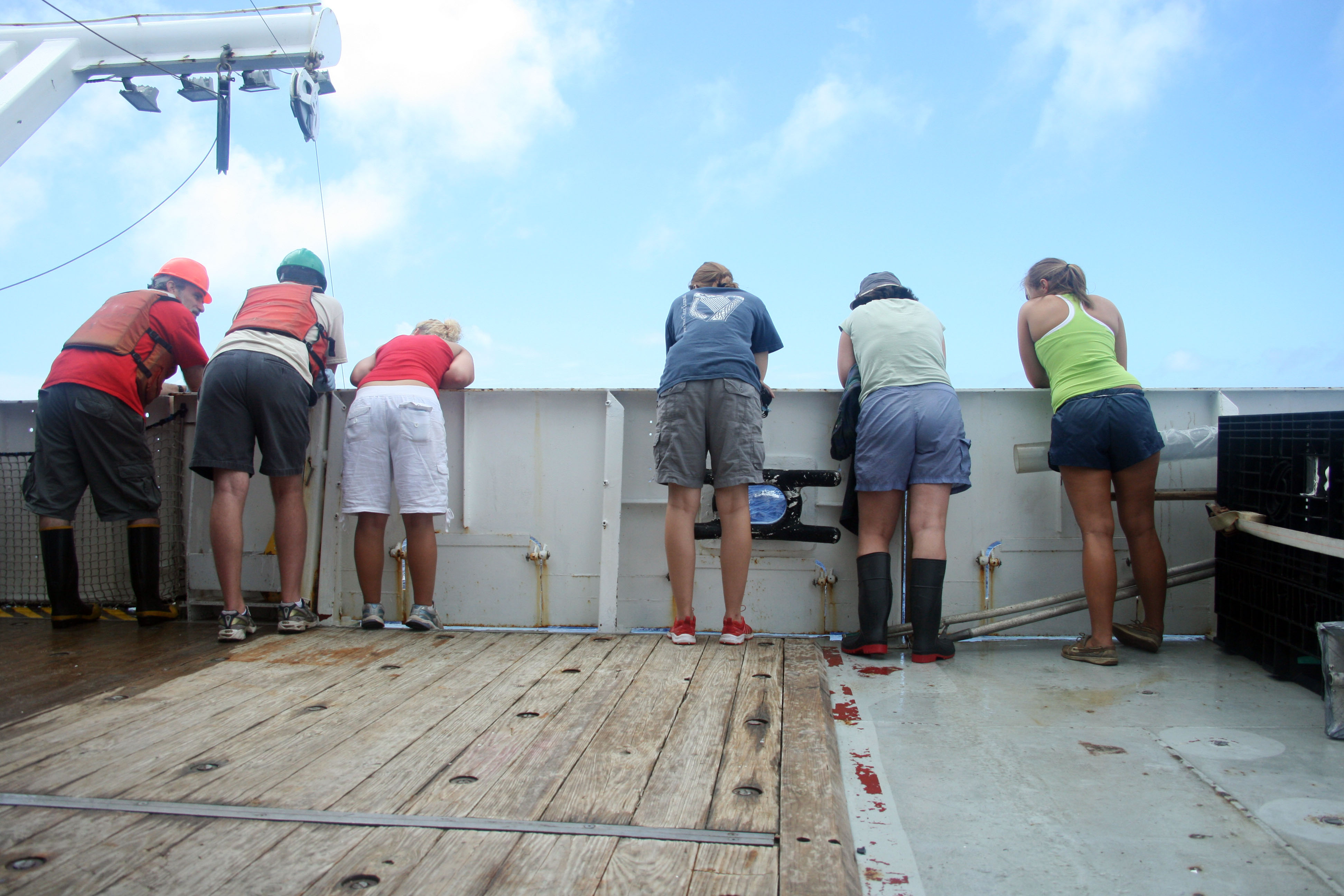
I began my maritime adventure with the statement “I have absolutely no reason to be at sea”. That isn’t entirely true. I decided to join the cruise as a helping hand mostly in order to be able to say that I had been out on the high seas. During the first day or two on board, when people were still learning each other’s names and expertise, I received the initial raised eyebrow as to why a grad student in environmental policy was on the ship. The almost unanimous next response was ‘it’s so good to see a future policymaker understanding what it’s like out here’.
Even though I’m not sure that I will ever be in the position of writing legislation (as opposed to analyzing policies and broader governance structures), it’s nice to know that my two weeks on the Atlantic gained me some professional legitimacy. And since I’m in the business of studying how the creation of scientific knowledge turns into conservation policy, I think it was an important experience to have. One of the biggest issues in environmental policy is how to deal with uncertainty. And a trip at sea certainly yields enough uncertainty to stymie and army of policymakers for decades.
Charlie checks out a fiddle-head.


While attending last year’s American Elasmobranch Society conference, I was asked to fill out a survey concerning my views on lethal shark research. My response, along with those of many other participants, has now been analyzed and written up into a new essay in the Journal of Conservation Biology. Michelle Heupel and Colin Simpendorfer argue that lethal sampling of some individual sharks is sometimes necessary in order to get the data needed to protect those animals’ entire species. However, attitudes about conservation in general and sharks specifically are changing, and many (including these authors) feel that this is starting to affect marine biology as a science.
Charlie chills out in the moss after a long day of hiking.
Later this week, I’m headed to the land down under to attend Sharks International, a once-a-decade shark science conference. Scientists from six continents and dozens of countries will be presenting their research on sharks, rays, skates, and chimeras. This will be the first time I’ve presented my own research at any scientific conference. I’ll try … Read More “WhySharksMatter is going to Cairns, Australia!” »
At this point we’re running on autopilot a bit. As one of the Georgia students pointed out earlier today, we’ve become incredibly efficient at the protocols, just in time to start heading home tomorrow.
People have also had time to start analyzing their data from the first round of experiments. Interestingly, the phytoplankton community has changed significantly in our little patch of ocean over just the short time we’ve been here. Brian commented “I always assume, incorrectly, that the system will be static throughout the cruise. But it’s not, it’s surprisingly dynamic every year”.
New proposed regulations for the red snapper fishery have conservationists celebrating and fishermen marching on Washington, DC in protest. Quota reductions are some of the most extreme and far-reaching I’ve ever come across. A huge area of the ocean (over 10,000 square miles) has been targeted for closure of not just the red snapper fishery… but all “bottom fishing” of the 73 species in the snapper-grouper management complex. According to the South Atlantic Fisheries Management Council, such severe regulations are necessary because of the degree of overfishing that has been occurring (8 times the sustainable level since 1970). As a result of this overfishing, the stock is also considered to be seriously overfished- the National Marine Fisheries Service estimates that current stocks are 3% of target size. A total area closure is necessary, according to the SAFMC, because even accidental bycatch of red snapper while trying to catch other snapper-grouper complex fishes can seriously impact such a reduced population. Since these fish live in relatively deep water, they often die after being released. Finally, an 87% reduction in red snapper mortality needs to occur over many years (possibly decades) to rebuild stocks. These regulations are in place right now via a process called “the interim rule”, and meetings will take place later this year to determine if they should remain in place.
Because of the controversy surrounding this topic, SAFMC science personnel were unable to be interviewed. However, . Zack Bowen, a charter boat operator from Savannah, Georgia, and Blaine Dickenson, a recreational fishermen and SAFMC advisor, agreed to participate.
Read More “The red snapper controversy: Interviews with fishermen” »
Charlie chills out on the gate to the Asheville Arboretum.