Skip to content

Southern Fried Science

Over 15 years of ocean science and conservation online
  • Home
  • About SFS
  • Authors
  • Support SFS

Recent Posts

small boy holding Miss Abyss Dumbo Octopus
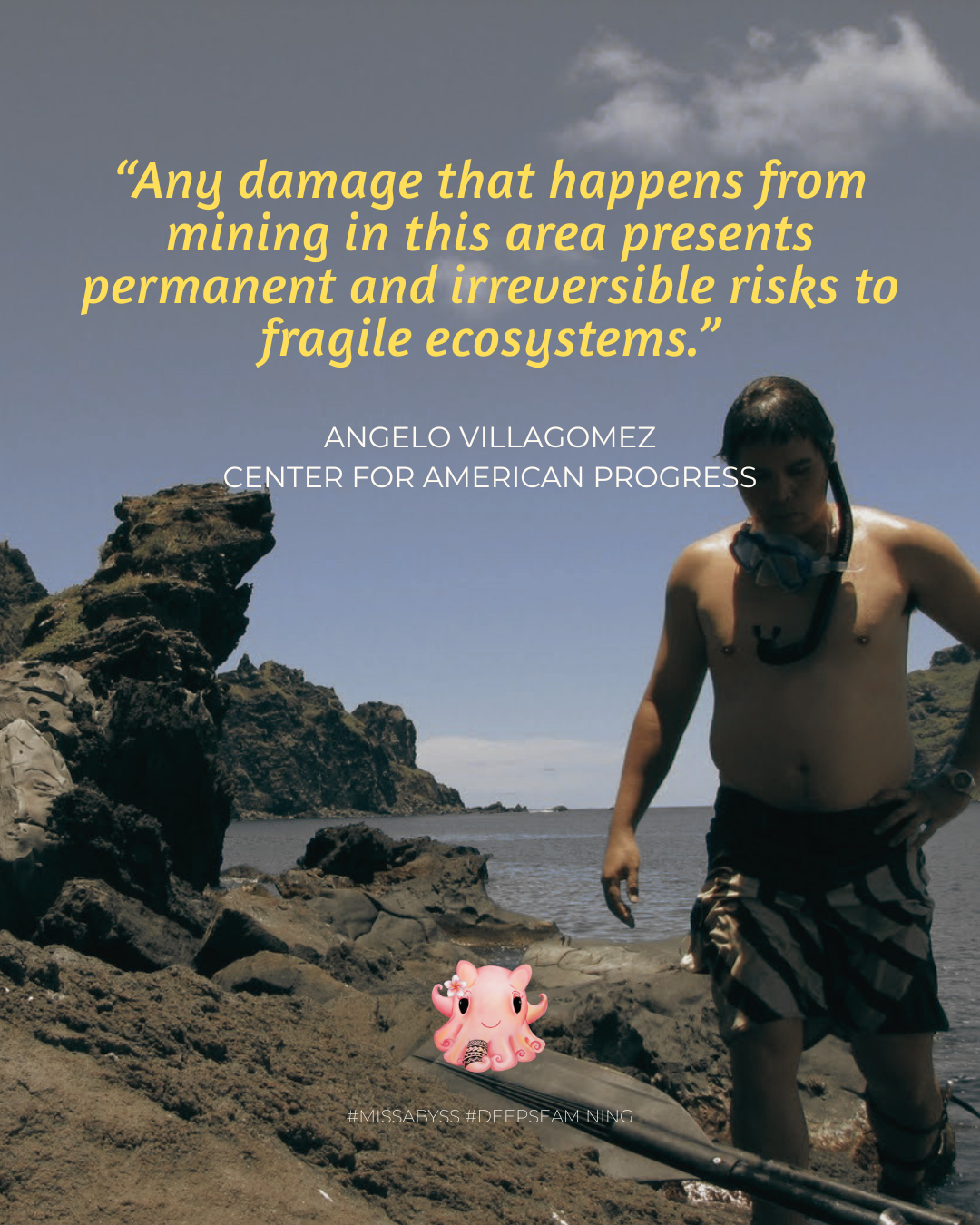
Please Help This Little Dumbo Octopus Travel Across America
August 3, 2026
Isn’t ironic, don’t you think: dismantling the Ocean Observatories Initiative on World Oceans Day
June 9, 2026
My Journey Into Researching Historical Erasure on Public Lands
July 31, 2026
The next OpenCTD is here!
June 22, 2026
humpback whale in Antarctica
The evolution of the International Whaling Commission – from  whaling quotas to whale conservation
June 10, 2026
“Why Sustainable Seafood Matters” is now available for preorder! Here’s what it’s about, and why I decided to write it.
June 8, 2026

Epistemological Idioms

Posted on April 23, 2010April 21, 2010 By Bluegrass Blue Crab
Science

My research is embedded in political ecology. Though no one can agree on an exact definition, suffice it to say that it’s an outgrowth of geography that focuses on human-environment interactions with specific emphasis on the role of power. It’s a field that is deeply academic and there’s nothing like a week of political ecology discussions to send your head spinning. Also, as the field is new, we like to create terms to help define a disciplinary jargon. In addition, the field’s methodology relies on discourse analysis and units of analysis defined by epistemic communities. Therefore at the recent annual meeting of the Annual Association of Geographers, I spent more time than I was willing thinking about word usage and incorporating some new ones into my syntax.

My favorite quote:

“given it’s mainly men climbing, I’d be interested in starting a rumor that it decreases virility but I thought it would be unethical to start a rumor” on feeling the need to help the Australian aboriginal group, the Anangu people, in keeping climbers off their sacred rock formation (Uluru/Ayer’s Rock)

But read on for my collection of a few gems from my colleagues…

Read More “Epistemological Idioms” »

365 Days of Darwin: April 23, 2010

Posted on April 23, 2010April 21, 2010 By Bluegrass Blue Crab
Uncategorized

What the hell happened to the environmental movement?

Posted on April 22, 2010April 21, 2010 By Andrew Thaler
Conservation, Popular Culture, Science

This post was originally published on Earth Day, 2009. The responses I received from it were tremendous, both positive and negative. Were I to write it again today, I would include a discussion of Carbon Offsets and Eco-Guilt.

There is a real challenge in the environmental movement. On one hand, the science is on our side, but on the other hand, there is a growing group within the movement committed to dogma and willing to sacrifice facts for pseudoscience. So, this Earth day, we once again bring you “What the hell happened to the environmental movement?”


473px-rachel-carsonForty-seven years ago, a brilliant, passionate scientist who understood the power of public outreach, noticed a decline in songbird populations, discovered a trend of decreasing egg shell thickness, and correlated this effect with the increase in the use of DDT as a pesticide. After thoroughly and rigorously verifying her results and conclusions, she did something revolutionary; she wrote a book. The publication of Silent Spring in 1962 marks the beginning of the modern environmental movement in America. Its simple, elegant prose made the complex interaction between humankind and the environment accessible to a public that had limited exposure to scientific writing. Like other works of literary science, Silent Spring, wove the scientific method into a narrative; observations, questions, conflicts, discoveries, joy and sorrow. To struggle and to understand, never the last without the first. The beauty of her words still echo with that same power today.

Read More “What the hell happened to the environmental movement?” »

365 Days of Darwin: April 22, 2010

Posted on April 22, 2010April 21, 2010 By Bluegrass Blue Crab
Uncategorized

Seeing Green

Posted on April 21, 2010April 21, 2010 By Bluegrass Blue Crab
Conservation

Is eco-chic all is cut out to be?

Did you ever meet that gear-head who had a shelf full of Nalgenes or a trunk full of those reusable shopping bags?  At the time, did you stop and think about the environmental impact of these eco-friendly products? In honor of Earth Day, I’d like to take a moment to step back and evaluate the state of our environmental movement.

Yes, at some level these things reduce your personal environmental impact.  They save millions of plastic bags and cups from entering the waste stream and therefore our biosphere.  At the same time, they promote the consumer culture that created many of our environmental issues in the first place.

Read More “Seeing Green” »

Census of Marine Life Creature Feature – small matters

Posted on April 21, 2010April 21, 2010 By Andrew Thaler
Science

Census of Marine Life (CoML) recently released this awesome video of some of the smallest and most beautiful creatures in the ocean. Hat tip @DrCraigMC. Check out the rest of CoML’s YouTube Channel. ~Southern Fried Scientist

Crowdsourcing ConGen – Effective size of a population in flux

Posted on April 21, 2010June 16, 2010 By Andrew Thaler 2 Comments on Crowdsourcing ConGen – Effective size of a population in flux
Conservation, Science

ResearchBlogging.org

When presented with a threatened population in need of conservation, the simplest and most basic question a manager can ask is “how big is it?” Unfortunately, this is one of the most challenging questions to answer. Determining the number of individuals in a population is fundamental to effective management. Small, concentrated populations can be destroyed in a single sweep, while large, broadly distributed populations require more resources and complex management involving many stakeholders.

A population that is easy to sample is rare. Animals move – sometimes over enormous distances. Habitats are difficult or impossible to access. Entire popualtions may be adept at avoiding capture. For most populations, it is impossible to count every individual. In marine ecosystems populations can span the entire globe, and the cost of mounting an expedition to systematically sample all members is huge. In order to get accurate estimates of the number of individuals, ecologists have had to devise statistical techniques to estimate the size of a population.

Read More “Crowdsourcing ConGen – Effective size of a population in flux” »

365 Days of Darwin: April 21, 2010

Posted on April 21, 2010April 21, 2010 By Bluegrass Blue Crab
Uncategorized

Charlie and the orchid family

local coastal dinner

Posted on April 20, 2010April 20, 2010 By Bluegrass Blue Crab 2 Comments on local coastal dinner
Science

When I first moved to coastal North Carolina, my garden yielded miniature sweet potatoes, a handful of blueberries, and an abundance of mustard greens.  That’s it.  After trying pretty much every vegetable under the sun.  Turns out, not many plants like to grow in our soil… wait, I mean sand.

Coastal gardening and farming presents some unique challenges that I thought would mean the end of my quest to become a locavore.  But after a year of learning and connecting with our local farms, which aren’t necessarily the type to market to the local buyer, I have resumed my quest.  And I think I’ve succeeded, at least for today.

My dinner included only a few things not from the coast: champagne vinegar, olive oil, gin, and avocado.

Read More “local coastal dinner” »

365 Days of Darwin: April 20, 2010

Posted on April 20, 2010April 20, 2010 By Bluegrass Blue Crab
Uncategorized

Posts pagination

Previous 1 … 248 249 250 … 274 Next

Popular Posts

What Ocean Ramsey does is not shark science or conservation: some brief thoughts on "the Shark Whisperer" documentaryWhat Ocean Ramsey does is not shark science or conservation: some brief thoughts on "the Shark Whisperer" documentaryJuly 2, 2025David Shiffman
What is a Sand Shark?What is a Sand Shark?November 12, 2017Chuck Bangley
Zombie ideas in conservation: trophy hunting and conservationZombie ideas in conservation: trophy hunting and conservationAugust 6, 2026Ali Gaster
Jumping the shark: New study reviews the breaching behavior of sharks and raysJumping the shark: New study reviews the breaching behavior of sharks and raysSeptember 19, 2024David Shiffman
Shark of Darkness: Wrath of Submarine is a fake documentaryShark of Darkness: Wrath of Submarine is a fake documentaryAugust 10, 2014Michelle Jewell
That's not a blobfish: Deep Sea Social Media is Flooded by AI SlopThat's not a blobfish: Deep Sea Social Media is Flooded by AI SlopDecember 19, 2025Andrew Thaler
Please Help This Little Dumbo Octopus Travel Across AmericaPlease Help This Little Dumbo Octopus Travel Across AmericaAugust 3, 2026Angelo Villagomez
Is Academic Publishing is breaking conservation science?Is Academic Publishing is breaking conservation science?August 10, 2026Chris Parsons
Considering writing a popular science book? Here's my adviceConsidering writing a popular science book? Here's my adviceJuly 7, 2025David Shiffman
Fun facts and FAQs about Megalodon, Maryland's new (and definitely extinct) official state sharkFun facts and FAQs about Megalodon, Maryland's new (and definitely extinct) official state sharkApril 15, 2026David Shiffman

squishy

Subscribe to our RSS Feed for updates whenever new articles are published.

We recommend Feedly for RSS management. It's like Google Reader, except it still exists.

Southern Fried Science

  • Home
  • About SFS
  • Authors
  • Support SFS


If you enjoy Southern Fried Science, consider contributing to our Patreon campaign.

Copyright © 2026 Southern Fried Science.

Theme: Oceanly Premium by ScriptsTown