Skip to content

Southern Fried Science

Over 15 years of ocean science and conservation online

  • Home
  • About SFS
  • Authors
  • Support SFS
Latest News
  • Norway and Cook Islands put their deep-sea mining plans on pause

Recent Posts

What we know we don’t know: impacts of deep-sea mining on whales, dolphins, sharks, turtles, and other migratory species.
November 20, 2025
Norway and Cook Islands put their deep-sea mining plans on pause.
December 3, 2025
Beyoncé is Right: History Can’t Be Erased
October 23, 2025
Teaching with D&D: My favorite source books for running a great Dungeons & Dragons campaign.
September 23, 2025
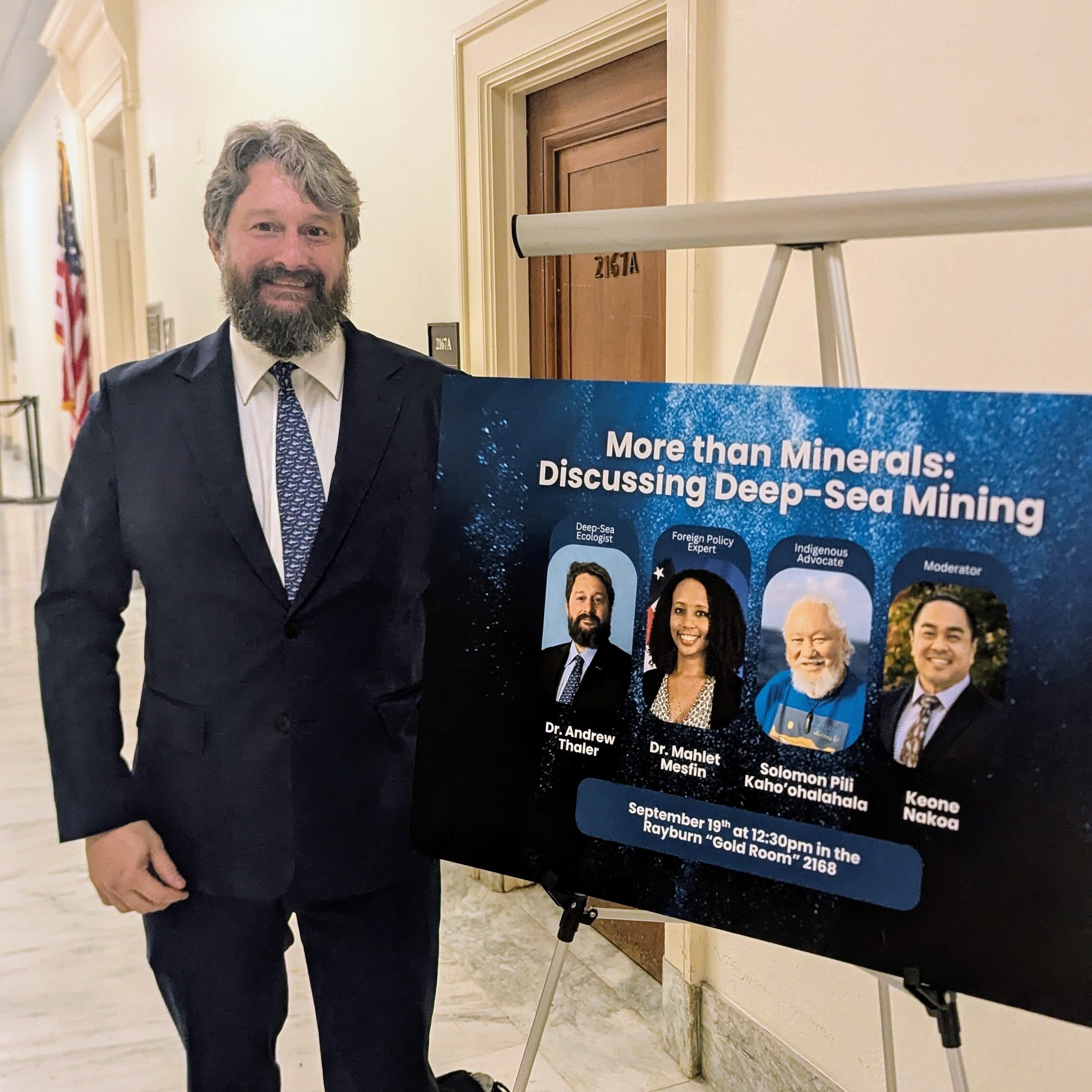
9 Quick Questions About Deep-Sea Mining from My Congressional Briefing
September 22, 2025
Help support a new shark science and conservation exhibit in Maryland!
September 15, 2025

Bot meets Whale: making friends in the ocean; or how I learned to stop worrying and mitigate harmful interactions between recreational ROVs and marine mammals.

Posted on August 21, 2019August 21, 2019 By Andrew Thaler
Conservation, Science
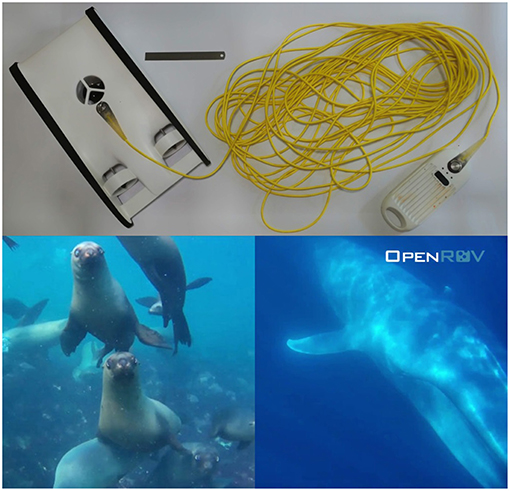
An example of a microROV system. From Thaler et al. (2019)

Today, there are more robots exploring the ocean than ever before. From autonomous ocean-crossing gliders to massive industrial remotely operated vehicles to new tools for science and exploration that open new windows into the abyss, underwater robots are giving people a change to experience the ocean like never before. The fastest growing sector of this new robotic frontier? Small, recreational, observation class ROVs.

Read More “Bot meets Whale: making friends in the ocean; or how I learned to stop worrying and mitigate harmful interactions between recreational ROVs and marine mammals.” »

Best Practices for Mitigating Negative Interactions Between Marine Mammals and MicroROVs

Posted on August 21, 2019August 21, 2019 By Andrew Thaler
Science

Today, we published our guidelines on the responsible operation of small recreational ROVs around marine mammals.

You can read the full paper here: Thaler and friends (2019) Bot Meets Whale: Best Practices for Mitigating Negative Interactions Between Marine Mammals and MicroROVs. DOI: 10.3389/fmars.2019.00506.

Reprinted below are the explicit guidelines proposed in the paper.

1. Education. Central to any mitigation strategy involving diverse stakeholders, ranging from professional to recreational, is user education. The following are critical to establishing a responsible user community: Ensuring all potential microROV users 1) not only understand the laws and regulations for wildlife viewing that apply to the jurisdiction in which they are operating, but understand why those regulations are in place; and, most importantly, 2) have internalized a stewardship ethic that motivates them to respect the rationale behind those regulations even when operating in regions where those regulations are not enforced. This is most effective when it occurs at point-of-sale or registration of the microROV. Thus, while the additional four guidelines relate to the user, this first one relates to the manufacturer. To most effectively convey the potential harm that microROVs could pose to marine mammals, the manufacturers are best positioned to educate their user base by providing informational material with each microROV sale. 

Read More “Best Practices for Mitigating Negative Interactions Between Marine Mammals and MicroROVs” »

Announcing the #BestShark contest for David’s birthday: make sandbar shark memes and art, win prizes!

Posted on August 21, 2019August 21, 2019 By David Shiffman
Uncategorized

My 35th birthday is next week, and I am calling upon the forces of the Internetz to help make it an amusing one. As you all know, sandbar shark is #BestShark. This spectacular shark is even the logo of my new consultancy! I want you to help me celebrate my birthday by creating sandbar shark … Read More “Announcing the #BestShark contest for David’s birthday: make sandbar shark memes and art, win prizes!” »

Ballard’s hunt for Earhart’s wrecked plane, sink or swim for deep-sea mining, prints of whales, and more! Monday Morning Salvage, August 19, 2019.

Posted on August 19, 2019August 19, 2019 By Andrew Thaler
Weekly Salvage

Flotsam (what we’re obsessed with right now)

  • Bob Ballard is off on a quest to find the wreckage of Amelia Earhart’s Electra 10E. Many attempts have been made to discover the famed aviator’s fate, but never with the technological tools at Robert Ballard’s disposal.
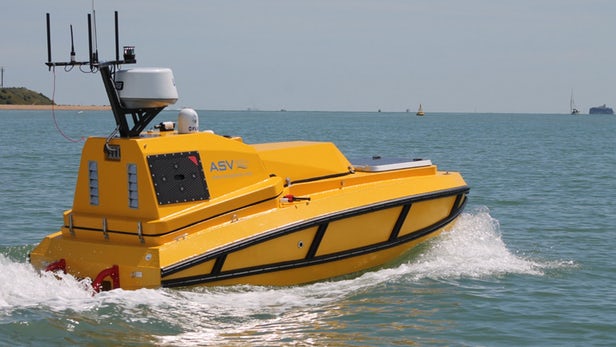
  • But make no mistake: behind the flashy headlines is a chance to test some of the most advance seafloor searching autonomous systems in the research armada.
BEN (Bathymetric Explorer and Navigator) was made for the University of New Hampshire by marine autonomy tech company ASV Global(Credit: University of New Hampshire)
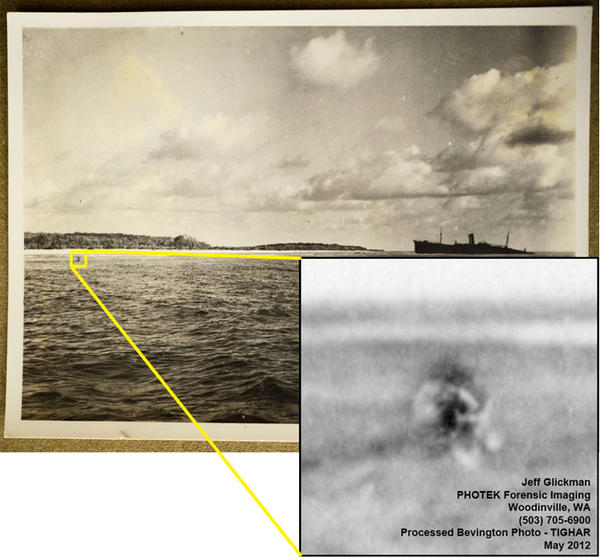
  • The motivating photo, however, is a bit of a stretch.

Read More “Ballard’s hunt for Earhart’s wrecked plane, sink or swim for deep-sea mining, prints of whales, and more! Monday Morning Salvage, August 19, 2019.” »

A brutal slog through some of the worst ocean and climate news of the summer. Also, fish cannons. [Tuesday] Morning Salvage: August 13, 2019.

Posted on August 13, 2019August 13, 2019 By Andrew Thaler
Weekly Salvage

Foghorn (A Call to Action!)

  • Trump Administration Guts Endangered Species Act, setting back conservation efforts by decades, dooming thousands of charismatic species to extinction, and sealing his legacy as the racist president that is unambiguously worse than Nixon. Look, at this point, if you aren’t calling your representatives on the regular to demand impeachment, I don’t know what to tell you.

Flotsam (what we’re obsessed with right now)

  • This Satellite Image Shows Everything Wrong With Greenland Right Now.
Image: Pierre Markuse (Flickr)
  • Ballard announces new plan to search for Amelia Earhart’s plane. Cool.
    • Side Note: Ballard’s search for the Titanic has now been revealed as a front to search for two lost US nuclear submarines. Many defense experts also believe Earhart’s flight was used to provide cover as the Navy populated the Pacific with airfields. So perhaps something else is happening here, too.
  • Whooshh! Salmon Cannons Are A Thing.
https://twitter.com/i/status/1159610222148669440

Read More “A brutal slog through some of the worst ocean and climate news of the summer. Also, fish cannons. [Tuesday] Morning Salvage: August 13, 2019.” »

A global assessment of biodiversity and research effort at active Seafloor Massive Sulphides: Transcript from my talk at the International Seabed Authority.

Posted on August 6, 2019August 6, 2019 By Andrew Thaler
Conservation, Science

[The following is a transcript from a talk I gave at a side event during Part II of the 25th Session of the International Seabed Authority in July, 2019. It has been lightly edited for clarity.]

I want to change gears this afternoon and talk about a very different kind of mining. For the last two years, Diva and I have been engaged in a data mining project to discover what we can learn and what we still need to learn about biodiversity at hydrothermal vents from the 40-year history of ocean exploration in the deep sea.

Read More “A global assessment of biodiversity and research effort at active Seafloor Massive Sulphides: Transcript from my talk at the International Seabed Authority.” »

What we’ve missed in the Abyss: Mining 40 years of cruise reports for biodiversity and research effort data from deep-sea hydrothermal vents.

Posted on August 6, 2019August 6, 2019 By Andrew Thaler
Science

“When the RV Knorr set sail for the Galapagos Rift in 1977, the geologists aboard eagerly anticipated observing a deep-sea hydrothermal vent field for the first time. What they did not expect to find was life—abundant and unlike anything ever seen before. A series of dives aboard the HOV Alvin during that expedition revealed not only deep-sea hydrothermal vents but fields of clams and the towering, bright red tubeworms that would become icons of the deep sea. So unexpected was the discovery of these vibrant ecosystems that the ship carried no biological preservatives. The first specimens from the vent field that would soon be named “Garden of Eden” were fixed in vodka from the scientists’ private reserves.”

Thaler and Amon 2019

In the forty years since that first discovery, hundreds of research expedition ventured into the deep oceans to study and understand the ecology of deep-sea hydrothermal vents. In doing so, they discovered thousands of new species, unraveled the secrets of chemosynthesis, and fundamentally altered our understanding of what it means to be alive on this planet. Now, as deep-sea mining crawls slowly towards production, we must transform those discoveries into conservation and management principles to safeguard the diversity and resilience of life in the deep sea.

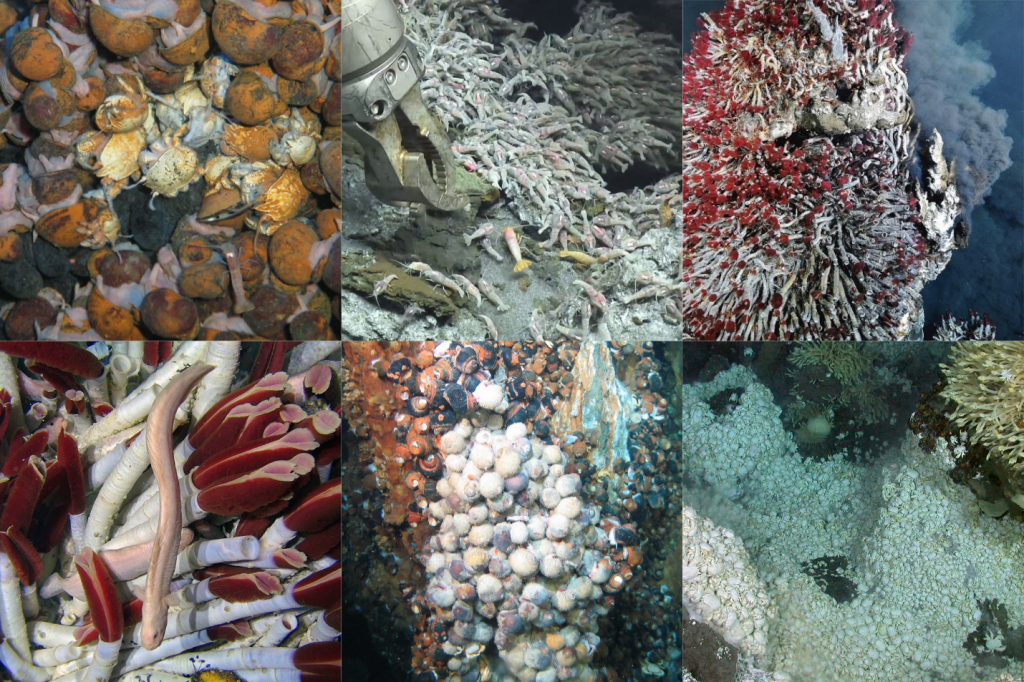
Biodiversity of hydrothermal vents from around the world. Top: Indian Ocean, Mid-Atlantic Ridge, Juan de Fuca Ridge. Bottom: East Pacific Rise, Southwest Pacific, Southern Ocean. Photo credits (top left to bottom right): University of Southampton; Woods Hole Oceanographic Institute; Ocean Networks Canada; Woods Hole Oceanographic Institute; Nautilus Minerals; University of Southampton.

Though research at hydrothermal vents looms large in the disciplines of deep-sea science, relative to almost any terrestrial system, they are practically unexplored. Over the last 2 years, Drs. Andrew Thaler and Diva Amon have poured through every available cruise report that made a biological observation at the deep-sea hydrothermal vent to assess how disproportionate research effort shapes or perception of hydrothermal vent ecosystems and impacts how we make management decisions in the wake of a new form of anthropogenic disturbance.

Read More “What we’ve missed in the Abyss: Mining 40 years of cruise reports for biodiversity and research effort data from deep-sea hydrothermal vents.” »

262 Voyages Beneath the Sea: the graphical abstract

Posted on August 6, 2019August 6, 2019 By Andrew Thaler
Science, Uncategorized

Read the full, open access paper “262 Voyages Beneath the Sea: A global assessment of macro- and megafaunal biodiversity and research effort at deep-sea hydrothermal vents” at PeerJ!

Protecting the Iron Snail, more then meets the eye, ROV-bot in disguise, saying farewell to a glacier, and more! Monday Morning Salvage: July 29, 2019.

Posted on July 29, 2019July 28, 2019 By Andrew Thaler
Weekly Salvage

Foghorn (A Call to Action!)

  • For US Citizens: Call your representatives and demand Impeachment Hearings. Now. It is, in point of fact, the absolute least you can do.

Flotsam (what we’re obsessed with right now)

  • I can’t speak to the practicality of this beyond a few very niche applications, but it is still awesome. Aquanaut, an autonomous submarine that transforms into a humanoid robot.
  • Scientists Just Discovered a 310-Mile Coral Reef Corridor in the Gulf of Mexico.
  • The Trek to Bid Farewell to an Icelandic Glacier: A plaque will soon mark the site of Okjökull, one of Iceland’s dearly departed.
The copper plaque will be installed on Ok in August 2019. COURTESY RICE UNIVERSITY.

Read More “Protecting the Iron Snail, more then meets the eye, ROV-bot in disguise, saying farewell to a glacier, and more! Monday Morning Salvage: July 29, 2019.” »

Five Questions with Irene Kingma

Posted on July 24, 2019July 24, 2019 By Angelo Villagomez
Science

I spent last week in Saba in the Dutch Caribbean with the Dutch Elasmobranch Society, St. Maarten Nature Foundation, and the Saba Conservation Foundation serving as a research assistant to an international team of shark scientists participating in the Save Our Sharks Expedition 2019. I previously wrote about some of the goals of the expedition, and … Read More “Five Questions with Irene Kingma” »
Posts pagination

Previous 1 … 27 28 29 … 269 Next

Popular Posts

What Ocean Ramsey does is not shark science or conservation: some brief thoughts on "the Shark Whisperer" documentaryWhat Ocean Ramsey does is not shark science or conservation: some brief thoughts on "the Shark Whisperer" documentaryJuly 2, 2025David Shiffman
I can serve on your graduate thesis committee. Here’s what you can expect of me, and what I expect in return.I can serve on your graduate thesis committee. Here’s what you can expect of me, and what I expect in return.October 16, 2025David Shiffman
Shark scientists want their research to help save threatened species, but don’t know how. Our new paper can help.Shark scientists want their research to help save threatened species, but don’t know how. Our new paper can help.December 1, 2025David Shiffman
Norway and Cook Islands put their deep-sea mining plans on pause.Norway and Cook Islands put their deep-sea mining plans on pause.December 3, 2025Andrew Thaler
I turned my woodshop into a personal solar farm.I turned my woodshop into a personal solar farm.June 21, 2021Andrew Thaler
Mermaids: The New Evidence is a Fake DocumentaryMermaids: The New Evidence is a Fake DocumentaryMay 28, 2013Andrew Thaler
Build a dirt cheap, tough-as-nails field computer in a Pelican caseBuild a dirt cheap, tough-as-nails field computer in a Pelican caseJuly 21, 2015Andrew Thaler
Shark of Darkness: Wrath of Submarine is a fake documentaryShark of Darkness: Wrath of Submarine is a fake documentaryAugust 10, 2014Michelle Jewell
"Twitter sucks now and all the cool kids are moving to Bluesky:" Our new survey shows that scientists no longer find Twitter professionally useful or pleasant"Twitter sucks now and all the cool kids are moving to Bluesky:" Our new survey shows that scientists no longer find Twitter professionally useful or pleasantAugust 19, 2025David Shiffman
I spent 50 days working out in Virtual Reality and everything went better than expected.I spent 50 days working out in Virtual Reality and everything went better than expected.May 16, 2019Andrew Thaler

squishy

Subscribe to our RSS Feed for updates whenever new articles are published.

We recommend Feedly for RSS management. It's like Google Reader, except it still exists.

Southern Fried Science

  • Home
  • About SFS
  • Authors
  • Support SFS


If you enjoy Southern Fried Science, consider contributing to our Patreon campaign.

Copyright © 2025 Southern Fried Science.

Theme: Oceanly Premium by ScriptsTown