
Skip to content

Southern Fried Science

Over 15 years of ocean science and conservation online

  • Home
  • About SFS
  • Authors
  • Support SFS

Recent Posts

small boy holding Miss Abyss Dumbo Octopus
Please Help This Little Dumbo Octopus Travel Across America
August 3, 2026
Isn’t ironic, don’t you think: dismantling the Ocean Observatories Initiative on World Oceans Day
June 9, 2026
My Journey Into Researching Historical Erasure on Public Lands
July 31, 2026
The next OpenCTD is here!
June 22, 2026
humpback whale in Antarctica
The evolution of the International Whaling Commission – from  whaling quotas to whale conservation
June 10, 2026
“Why Sustainable Seafood Matters” is now available for preorder! Here’s what it’s about, and why I decided to write it.
June 8, 2026

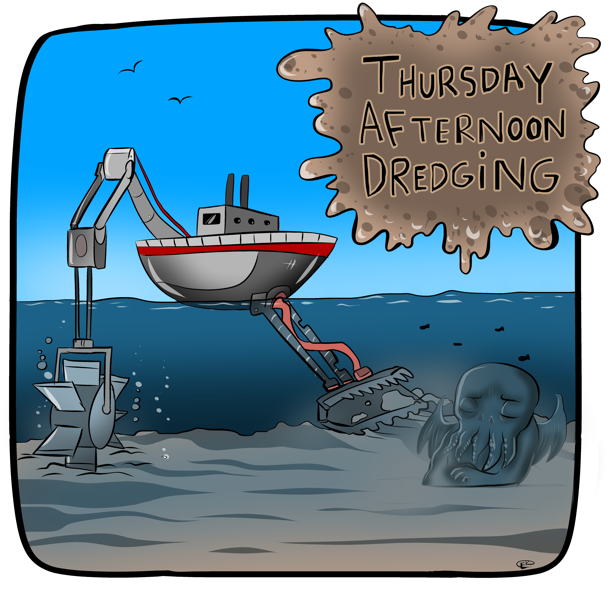
Pacifist fighting fish and entangled right whales: Thursday Afternoon Dredging, December 4th 2017

Posted on December 7, 2017December 7, 2017 By David Shiffman
Uncategorized

Cuttings (short and sweet): 

  • Watch this manta ray in footage from Blue Planet 2!

    From Blue Planet 2
  • Follow Dr. Douglas Rasher, a marine ecologist, on twitter! (And read my interview with him for Gizmodo’s Earther here)
  • Sea lions have unique whiskers that help them catch even the fastest fish. By Robyn Grant, for the Conversation.

Read More “Pacifist fighting fish and entangled right whales: Thursday Afternoon Dredging, December 4th 2017” »

Vegetarian sharks, non-lethal research, and friggin’ laser beams: Dear Shark Man, Volume 4

Posted on December 6, 2017December 6, 2017 By David Shiffman 1 Comment on Vegetarian sharks, non-lethal research, and friggin’ laser beams: Dear Shark Man, Volume 4
Uncategorized

Welcome to Volume #4 of Dear Shark Man, an advice column inspired by a ridiculous e-mail I received. You can send your questions to me via twitter (@WhySharksMatter) or e-mail (WhySharksMatter at gmail).


Dear Shark Man,

I feel more and more guilty about my own meat consumption. I wonder, are there any vegan sharks?

Sincerely,
Eager in England

Dear Eager,

There are more than 500 species of sharks, and they range widely in shape, size, habitat, and behavior. However, every single species eats animals. Many eat fish, some eat invertebrates, and few eat mammals and birds, but they all eat animals. Even the filter-feeders like whale sharks are eating zooplankton, which are (tiny) animals.

Bonnethead sharks have been documented with seagrass in their stomachs, which is likely the result of accidentally ingesting seagrass while eating crabs that live among the grass. (Sometimes I fail to pick all the lettuce off of my turkey sandwich and eat it accidentally, that doesn’t mean I’m seeking out lettuce or that lettuce is a major component of my diet). Recent work by Samantha Leigh has shown that bonnetheads may be able to partially digest this seagrass, which is pretty neat. However, that does not make them vegans, or even vegetarians.

Incidentally, a member of an influential marine conservation family whose name rhymes with Mousteau once claimed that there are more than 1,000 species of sharks and most of them are vegetarian, which is…extremely not correct.

Read More “Vegetarian sharks, non-lethal research, and friggin’ laser beams: Dear Shark Man, Volume 4” »

Customer Service for Science.

Posted on December 6, 2017December 1, 2017 By Andrew Thaler
Academic life

Travis Nielsen is the founder and CEO of Azurigen Management and Consulting Solutions Inc. A STEM project management firm that specializes in linking conservation based science to business and government. He is a published scientist specializing in Marine Biology with 10 years experience in STEM, and 10 years of experience in management and leadership. He has been responsible for projects with budgets up to $500,000, working with multiple stakeholders, large public engagement mandates, and with staffs up to 100 people in locations all across the globe.


Walking into the airport one morning, my mind was still addled by the fog of waking up at 4am. I was heading to a conference for work and as I get to my ticket counter to check-in for my flight I am politely told by the counter staff that the flight had been cancelled. Confused, and curious as to why the flight was shut down, I enquired around until I found a friend that was on shift as a TSA agent, I asked what she knew, and it turns out that the flight was cancelled because one of the flight crew didn’t show up for work. The rumor was the crew member had a little too much fun at the pub and was nursing off a self-inflicted illness… I sighed and laughed to myself about how it was just my luck. This led to a magic adventure of cancellations and bookings for multiple flights and waiting for hours, just to leave the airport.  The reason that this cancellation is now a funny story and not a vivid nightmare – the airline that cancelled the flight went out of its way to help me when things went sideways, giving me vouchers for food and hotel stays, helping me as best they could to get where I needed to go, and generally doing all it could to help.  This help is what the business world calls ‘customer service’ and it is a critical part of every business out there, and for many small businesses, it can be the difference between success and failure.

In science, even though we deal with businesses daily, we rarely realize that we engage in customer service constantly! From professors dealing with the students they teach to the post-docs searching for in-kind services and grant money. To restate the cliché – Science is not done in a vacuum. Scientists should consider themselves an unconventional type of business entity that doesn’t sell a product or service, but instead deals in data and discovery – this is an invaluable product and service that keeps many industries going. As a result, customer service is an integral part of how we do science, and it should be obvious we need to keep our customer service skills sharp.

Read More “Customer Service for Science.” »

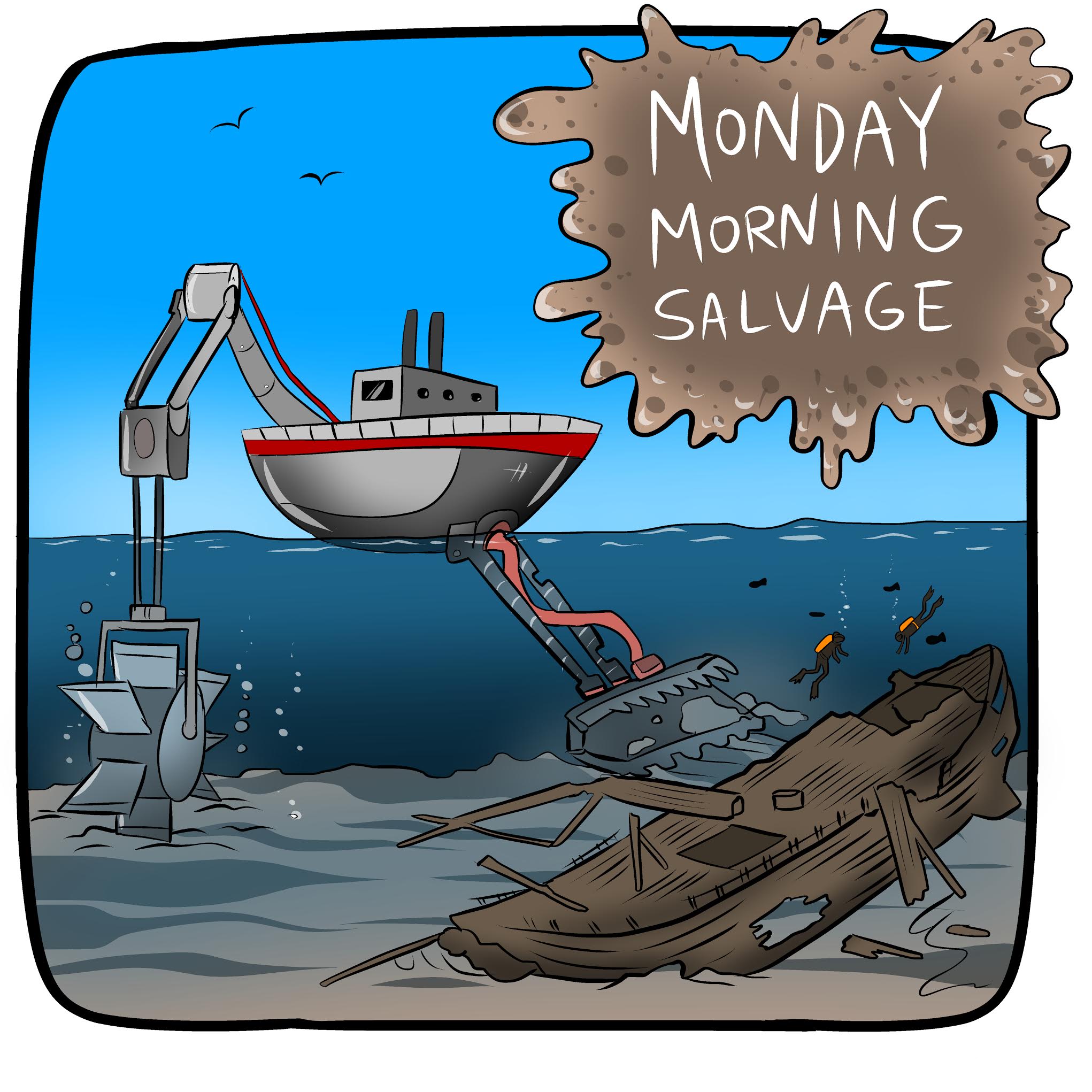
A year of brutal hurricanes, the wonderful resilience of limpets, talking about meat consumption, and more! The Monday Morning Salvage: December 4, 2017.

Posted on December 4, 2017December 4, 2017 By Andrew Thaler
Weekly Salvage

Flotsam (what we’re obsessed with right now)

  • ‘Extremely Active’ 2017 Atlantic Hurricane Comes to a Close – Here’s the Full Season in One Four-Minute Video:
  • The final news, for now, from the missing Argentinian submarine: Argentine Navy: Water Entered Missing Sub’s Snorkel and Argentina Abandons Rescue Mission for Missing Sub.

The Argentine military submarine ARA San Juan and crew are seen leaving the port of Buenos Aires, Argentina June 2, 2014. Picture taken on June 2, 2014. Armada Argentina/Handout via REUTERS

Read More “A year of brutal hurricanes, the wonderful resilience of limpets, talking about meat consumption, and more! The Monday Morning Salvage: December 4, 2017.” »

Parasitic mussel babies and big whale brains: Thursday Afternoon Dredging, November 30th, 2017

Posted on November 30, 2017November 30, 2017 By David Shiffman
Uncategorized

Cuttings (short and sweet): 

  • Watch this incredible footage from Blue Planet 2!
  • Follow Annmarie Fearing, a graduate student researching sawfish conservation, on twitter!
  • Lobster found with Pepsi logo fuels fears over ocean litter. By Ashifa Kassam, for the Guardian.

Read More “Parasitic mussel babies and big whale brains: Thursday Afternoon Dredging, November 30th, 2017” »

#GivingTuesday, freshwater sharks, and hammerhead schooling: Dear Shark Man, Volume 3

Posted on November 28, 2017November 28, 2017 By David Shiffman
Uncategorized

Welcome to volume #3 of Dear Shark Man, an advice column inspired by a ridiculous e-mail I received. You can send your questions to me via twitter (@WhySharksMatter) or e-mail (WhySharksMatter at gmail).


Dear Shark Man,

Since it’s #GivingTuesday, what are some shark conservation charities you recommend?

Sincerely,
Generous in Georgia

Read More “#GivingTuesday, freshwater sharks, and hammerhead schooling: Dear Shark Man, Volume 3” »

Beware the walrus, explosion detected near missing submarine, diamond mining, and more! Monday Morning Salvage: November 27, 2017

Posted on November 27, 2017 By Andrew Thaler
Weekly Salvage

Fog Horn (A Call to Action)

  • In Port Moresby this Wednesday? The University of Papua New Guinea is hosting a public lecture and panel on experimental seabed mining in the Bismark Sea.

Flotsam (what we’re obsessed with right now)

  • Text abbreviations for marine biologists. Courtesy of New Scientist. via Francis Villatoro.

Read More “Beware the walrus, explosion detected near missing submarine, diamond mining, and more! Monday Morning Salvage: November 27, 2017” »

Announcing oceansocial.us, a Mastodon instance for marine professionals!

Posted on November 23, 2017 By Andrew Thaler
Uncategorized

Mastodon is a new(ish), decentralized Twitter-like social network that’s grown quite a bit in the last few months. Mastodon allows individuals to host their own “instances” (i.e. run a full suite of the software on a private server in order to distribute the network), which connect to the larger universe of open-source social networks. This means that, unlike Twitter and Facebook and pretty much every major social networking platform, there’s no one person in control of Mastodon (though the largest instance is run by Mastodon’s creator). Accounts from any Mastodon instance can follow any account from any public instance.

So what, there’s another social network we have to check now?

This is Southern Fried Science. We like to push forward into new digital ecosystems and create places for marine science and conservation. In that spirit, I’ve created oceansocial.us, a Mastodon instance specifically for marine professionals working in science, education, conservation, policy, and management. Craig McClain’s latest science communication paper, Practices and promises of Facebook for science outreach: Becoming a “Nerd of Trust”., I want to see if there’s value in having an instance that makes it easy to find experts talking about the ocean. For the moment, anyone with an oceansocial.us Mastodon handle is immediately identifiable on the network, making is easier for journalist and the public to find ocean experts.

This, of course, is contingent on Mastodon actually taking off. It could still totally crash and burn and be dead as Google+ in 3 months. Mastodon is still growing, and my experience watching new social networks form (and often fail) is that’s there’s a tremendous first-mover advantage in getting something new and novel running right out the gate.

Read More “Announcing oceansocial.us, a Mastodon instance for marine professionals!” »

Speaking out about sexual harassment in shark science

Posted on November 21, 2017November 21, 2017 By Guest Writer 7 Comments on Speaking out about sexual harassment in shark science
Academic life

Dr. Lisa Whitenack is an Associate Professor of Biology of Allegheny College. She is a shark paleobiologist, studying modern and fossil shark teeth over their 400 million year history. While she is also a member of the Board of Directors and acting chair of the Equity and Diversity committee of the American Elasmobranch Society (AES), this piece is not written under the umbrella of AES. Follow her on twitter at @WhitenackLab.

Author’s note: italicized quotations in this piece come from many different female shark researchers who gave Lisa permission to share their stories in this post.


“Funny that all of this Harvey Weinstein nonsense triggers feelings of AES in me…”

Back in mid-October, a colleague of mine sent the above to me in a private message on social media.

Over the last few years, there has been an increase in stories of sexual harassment and assault coming out of the scientific community. There have been papers and commentary published on the prevalence of harassment and assault in STEM fields such as anthropology, astronomy, and geology. There have been some high profile cases that have made it into the popular media as well. It’s easy to point to the fact that some of these fields are male-dominated as an excuse or a reason. Despite the fact that women are well represented in the biosciences, earning approximately 58% of the Bachelors degrees, 57% of the Masters degrees, and 53% of the Doctorates in 2014, the field of biology is not immune from these issues (see these articles about allegations against Ebola researcher Michael Katze, mammalogist Miguel Pinto, and molecular biologist Jason Lieb.)

“I arranged my desk so he couldn’t sneak up and rub my shoulders anymore.”

Even before the Weinstein news broke, harassment and assault have been at the forefront of my mind, and have been for the last 3 years or so. Until July 2017, part of my committee work at the institution I work at was to evaluate our student code of conduct and to serve on panels for student misconduct cases, including Title IX related cases. As is typical for many female faculty, students tend to visit my office looking for a sympathetic ear or help. Most recently, I have been helping American Elasmobranch Society (AES) write a Code of Conduct for its meetings and am serving as chair of the Equity & Diversity committee. It’s hard to escape these topics when it’s your job. But, it’s really more than just my job. These are issues that infiltrate most aspects of my life, and have for a long time.

“I’ve been told that women can’t do fieldwork.”

Read More “Speaking out about sexual harassment in shark science” »

Farting oysters, bombing sea lions, and a new trash island? It must be the Monday Morning Salvage! November 20, 2017

Posted on November 20, 2017 By Andrew Thaler
Weekly Salvage

Fog Horn (A Call to Action)

  • It’s Native American History Month. Southern Fried Science recognizes that our servers are housed on the occupied land of the Timpanogos people while the majority of our writers live on unceded Powhatan territory. This November, Try Something New: Decolonize Your Mind.

Flotsam (what we’re obsessed with right now)

  • Boaters stumble on massive Caribbean “gyre” of plastic garbage. “Gyre is in quotes because I’m almost certain that this is debris from the 2017 Atlantic Hurricane season, rather than an accumulation of decades of plastic is a circulating ocean current. It’s still shocking to see.

https://www.youtube.com/watch?v=GSMGKwZBaWM

  • The ARA San Juan, one or Argentina’s two diesel-electric submarines, is missing. Search and rescue is mobilizing and there’s hints that the sailors tried to send out a signal Saturday.
  • Without a Treaty to Share the Arctic, Greedy Countries Will Destroy It. Cosign.

Read More “Farting oysters, bombing sea lions, and a new trash island? It must be the Monday Morning Salvage! November 20, 2017” »

Posts pagination

Previous 1 … 53 54 55 … 274 Next

Popular Posts

What Ocean Ramsey does is not shark science or conservation: some brief thoughts on "the Shark Whisperer" documentaryWhat Ocean Ramsey does is not shark science or conservation: some brief thoughts on "the Shark Whisperer" documentaryJuly 2, 2025David Shiffman
What is a Sand Shark?What is a Sand Shark?November 12, 2017Chuck Bangley
Zombie ideas in conservation: trophy hunting and conservationZombie ideas in conservation: trophy hunting and conservationAugust 6, 2026Ali Gaster
Jumping the shark: New study reviews the breaching behavior of sharks and raysJumping the shark: New study reviews the breaching behavior of sharks and raysSeptember 19, 2024David Shiffman
Shark of Darkness: Wrath of Submarine is a fake documentaryShark of Darkness: Wrath of Submarine is a fake documentaryAugust 10, 2014Michelle Jewell
That's not a blobfish: Deep Sea Social Media is Flooded by AI SlopThat's not a blobfish: Deep Sea Social Media is Flooded by AI SlopDecember 19, 2025Andrew Thaler
Is Academic Publishing is breaking conservation science?Is Academic Publishing is breaking conservation science?August 10, 2026Chris Parsons
Considering writing a popular science book? Here's my adviceConsidering writing a popular science book? Here's my adviceJuly 7, 2025David Shiffman
Emergency room conservation: why waiting for the Endangered Species Act to save a species is a fiscal disasterEmergency room conservation: why waiting for the Endangered Species Act to save a species is a fiscal disasterAugust 11, 2026Ali Gaster
How the Bluespotted Ribbontail Stingray got its SpotsHow the Bluespotted Ribbontail Stingray got its SpotsMarch 28, 2024David Shiffman

squishy

Subscribe to our RSS Feed for updates whenever new articles are published.

We recommend Feedly for RSS management. It's like Google Reader, except it still exists.

Southern Fried Science

  • Home
  • About SFS
  • Authors
  • Support SFS


If you enjoy Southern Fried Science, consider contributing to our Patreon campaign.

Copyright © 2026 Southern Fried Science.

Theme: Oceanly Premium by ScriptsTown