

Skip to content

Southern Fried Science

Over 15 years of ocean science and conservation online

  • Home
  • About SFS
  • Authors
  • Support SFS
Latest News
  • Norway and Cook Islands put their deep-sea mining plans on pause

Recent Posts

What we know we don’t know: impacts of deep-sea mining on whales, dolphins, sharks, turtles, and other migratory species.
November 20, 2025
Norway and Cook Islands put their deep-sea mining plans on pause.
December 3, 2025
Beyoncé is Right: History Can’t Be Erased
October 23, 2025
Teaching with D&D: My favorite source books for running a great Dungeons & Dragons campaign.
September 23, 2025
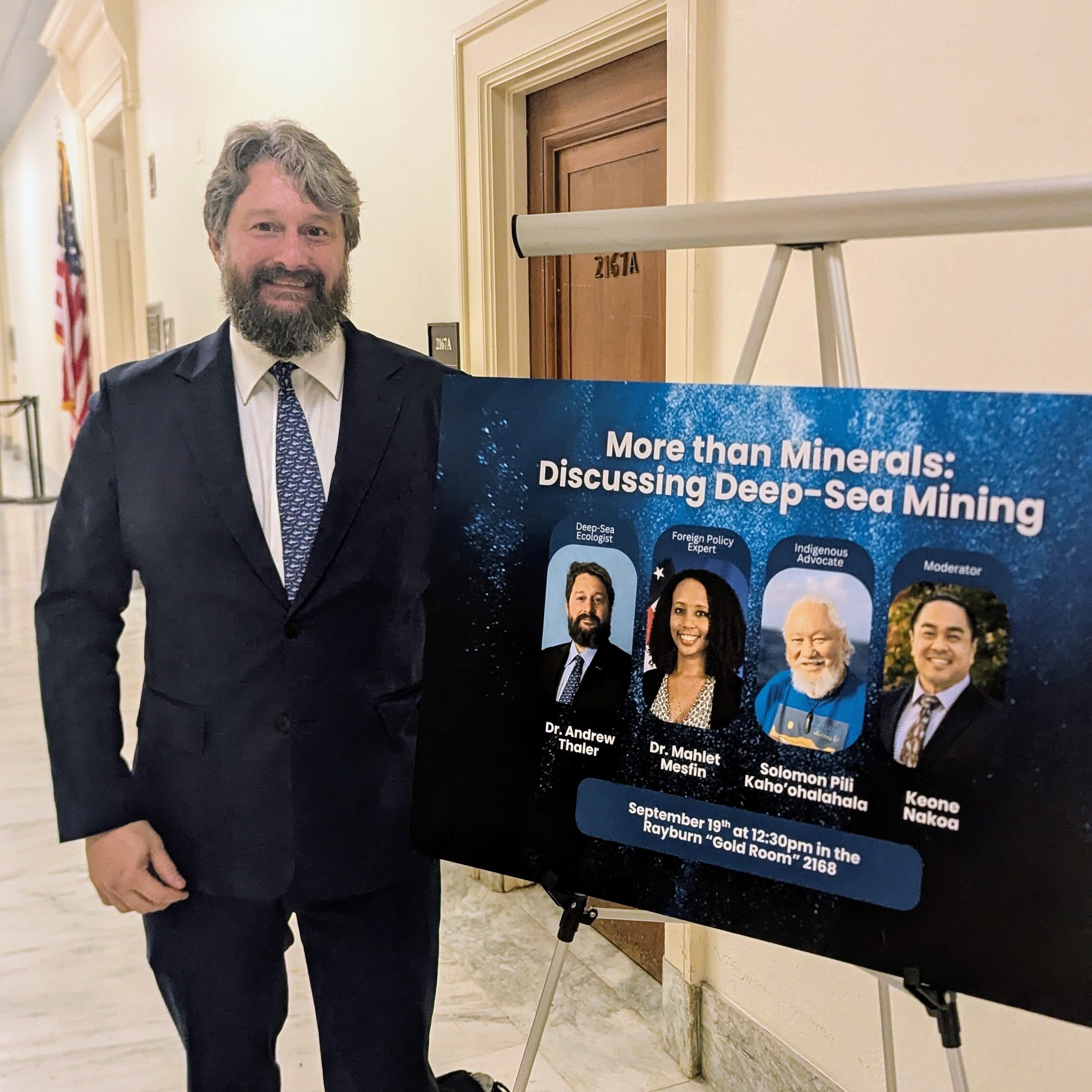
9 Quick Questions About Deep-Sea Mining from My Congressional Briefing
September 22, 2025
Help support a new shark science and conservation exhibit in Maryland!
September 15, 2025

Micronations and poop dreams: Strange tales from the Guano Islands Act of 1856

Posted on January 11, 2017 By Andrew Thaler
Popular Culture

I’m just going to lay this out there right now: This story ends with Ernest Hemingway’s brother sitting on a 30-foot raft in the middle of the Caribbean.

But first, let’s talk about Bill Warren.

Bill Warren is an entrepreneur, treasure hunter, Frank Sinatra impersonator, former Christian music host, and about 30 other descriptors. He’s probably a huckster, but he’s our kind of huckster. You’ve almost certainly seen something about him: This Treasure Hunter Says He Has Located Bin Laden’s Body. I could spend the next 2,000 words just writing about Bill Warren, but you’re here for the guano, so just read this exhaustive, entertaining, hilarious article bout him by CJ Ciaramella: The Nearly Astonishing Tale Of Bill Warren, Treasure Seeker.

Read More “Micronations and poop dreams: Strange tales from the Guano Islands Act of 1856” »
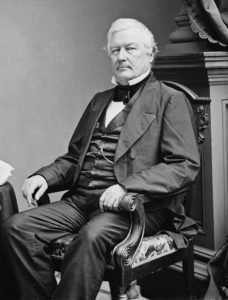
How Millard Fillmore reshaped the oceans in a quest for guano.

Posted on January 10, 2017January 11, 2017 By Andrew Thaler
Conservation

President Millard Fillmore

The numbers are in, and over the last eight years, President Barack Obama has protected more ocean than any other president in history. His expansion of NOAA and implementation of a National Ocean Policy will impact ocean health and fisheries management for generations. By almost any measure, he has had the biggest impact on the ocean of any modern presidency. Which raises the obvious question: is President Obama the most influential ocean president in history? Not by a long shot. That honor has to go to the president who’s policies have fundamentally shaped and reshaped how we view and control ocean territory, who laid the foundation for almost all the ocean protections we currently enjoy, and who set the precedent for the American Empire. That man is President Millard Fillmore, and he did it all for bird poop.

1850.

Agricultural science is beginning to understand that soil is not just soil, but a collection of nutrients that are slowly drawn from the ground by growing crops. Nitrogen, phosphorus, and potassium are crucial ingredients. The Industrial Revolution is pushing agriculture away from passive crop re-nourishment processes and towards intensive, fertilizer-driven farming. Fertilizer producers can’t keep up. At the same time, the American whaling industry had reached its zenith and began to fall. Coastal whales were harder to find and the bold men of Nantucket ventured out across the Pacific in search of the last great whaling grounds.

In these voyages, the whalers found numerous tiny, often uncharted islands in the Pacific. These remote islands were refuges, not just for weary sailors, but for generations of seabirds. From these seabirds rose great mountains of guano, guano rich in the nutrients plants crave. Guano was the solution to the fertilizer crises.

Read More “How Millard Fillmore reshaped the oceans in a quest for guano.” »

Monday Morning Salvage: January 9, 2017

Posted on January 9, 2017January 9, 2017 By Andrew Thaler
Weekly Salvage

Flotsam (what we’re obsessed with right now)

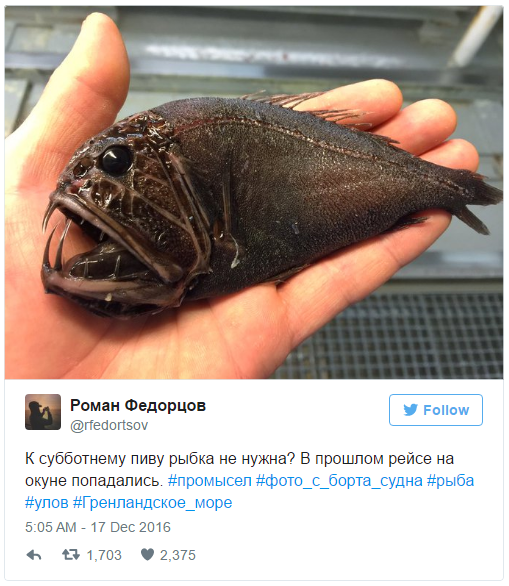
  • Roman Fedorsov, a Russian fisherman who posts all the weirdest bycatch from deep-sea trawls to his twitter account.

Jetsam (what we’re enjoying from around the web)

Read More “Monday Morning Salvage: January 9, 2017” »

Small changes and new faces at Southern Fried Science

Posted on January 6, 2017 By Andrew Thaler
Blogging

We’ve got some small changes and new additions to the growing Southern Fried Science family. Due to their long and consistent commitment to maintaining the blog, Drs. Kersey Sturdivant and Chris Parsons have been promoted to the lofty and prestigious rank of Senior Correspondent. Congratulations! We’re also thrilled to announce the addition of a new … Read More “Small changes and new faces at Southern Fried Science” »

Thursday Afternoon Dredging: January 5th, 2017

Posted on January 5, 2017January 9, 2017 By David Shiffman
Uncategorized

Cuttings (short and sweet):

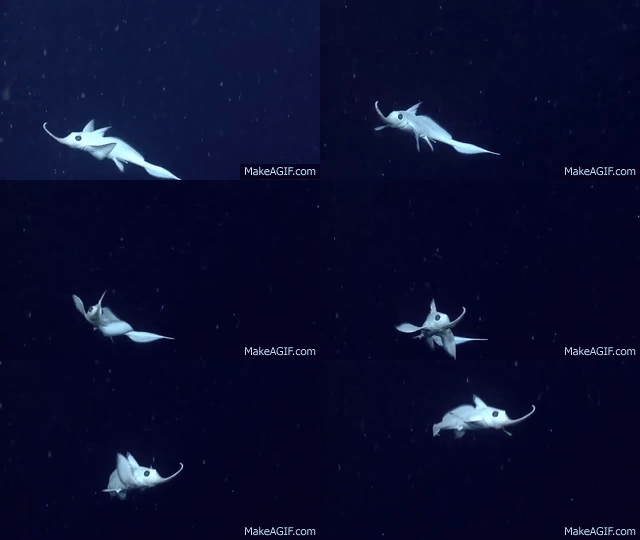
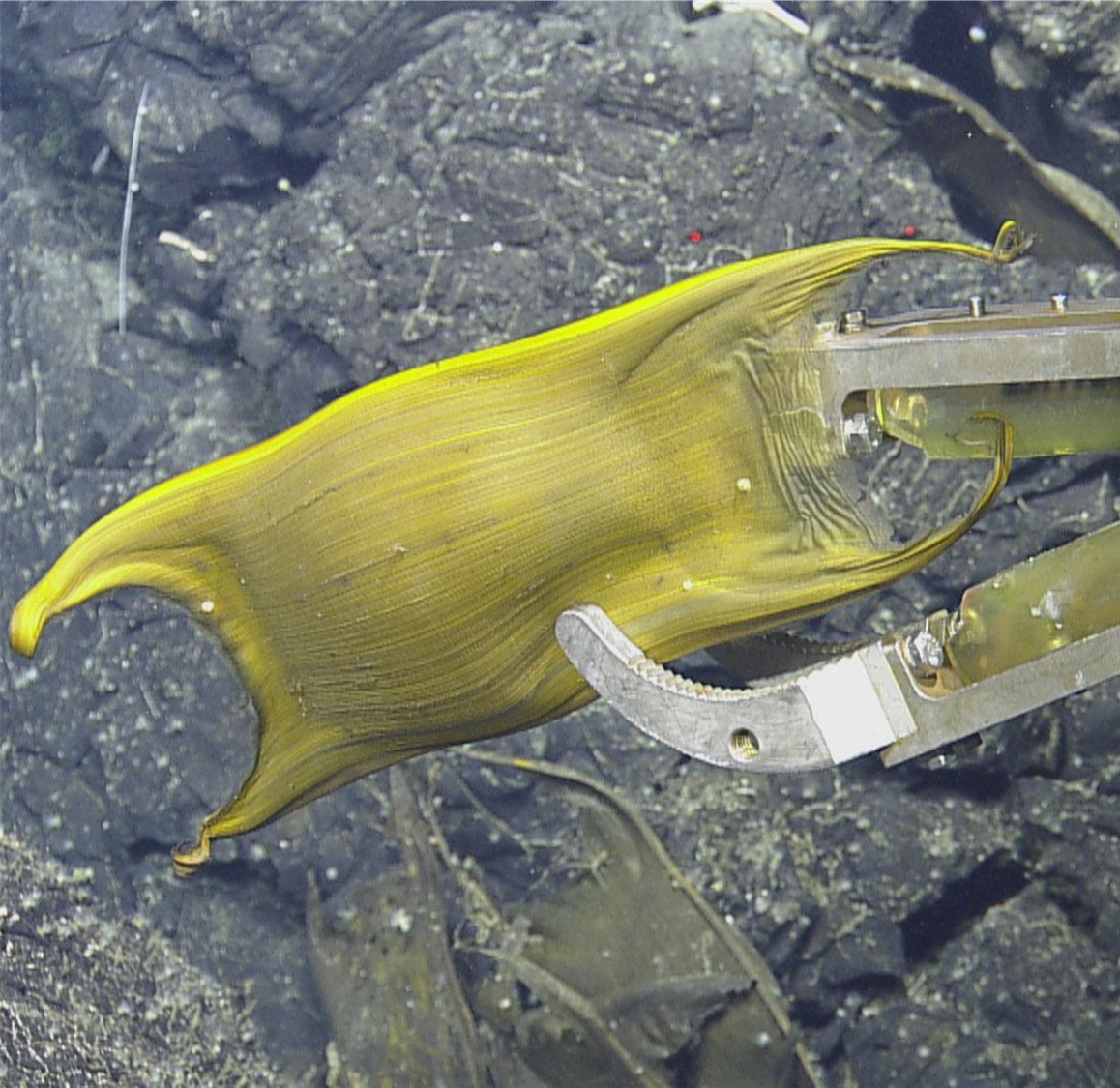
  • Here’s NOAA Okeanos video of a “ghost shark” from 2013.

  • Follow Dr. Brooke Flammang, a functional ecologist who works with sharks, robots, and lasers, on twitter!
  • Here are the 9 species named after President Obama, a new record. By Jessica Boddy, for Science

Read More “Thursday Afternoon Dredging: January 5th, 2017” »

Bonnethead sharks, one of the smallest hammerheads, may actually be more than one species

Posted on January 5, 2017January 5, 2017 By David Shiffman 2 Comments on Bonnethead sharks, one of the smallest hammerheads, may actually be more than one species
Science

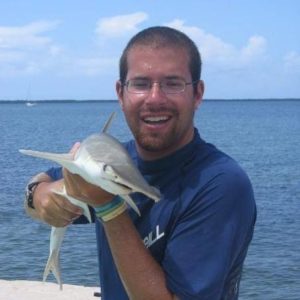
Bonnethead sharks, one of the smallest members of the hammerhead shark family Sphyrnidae, have a special place in my heart. For many years, the avatar I used for science communication efforts, including posts on this blog, was a picture of me with a bonnethead.

Remember this avatar? That’s a bonnethead (on the left).

These sharks, which can grow up to about 5 feet long, are found throughout North, Central, and South America. However, new research by Fields and friends suggests that they may actually be a species complex, not a true species. “A species complex is a group of distinct species that are incorrectly classified as one species because they look very similar to one another,” explained Dr. Demian Chapman, an Associate Professor of Biology at Florida International University and a co-author on this new study. “A great example is the white spotted eagle ray (Aetobatus narinari) that was once thought to be one, globally distributed species, but now has been shown to be a group of very similar-looking species, each of which lives in a particular region.”

Read More “Bonnethead sharks, one of the smallest hammerheads, may actually be more than one species” »

When I talk about Climate Change, I don’t talk about science.

Posted on January 3, 2017January 6, 2017 By Andrew Thaler
Conservation, Science

Climate Change is real. It’s happening now. And the best available data points to us as the cause.

That the foundational science is settled is a point of unending frustration to scientists, science writers, and policy advocates who face continuous partisan push back, from whitewashing government websites to threatening scientists with legal repercussions for reporting the data.  During my International Marine Conservation Congress keynote last year, I argued that Climate Change denial is not a science literacy problem, but rather a product of increasing political bifurcation. Political ideology is a much stronger predictor of Climate Change understanding than science literacy.

The term “Climate Change” is now loaded with so much political baggage that it becomes almost impossible to hold a discussion across political lines. In stakeholder interviews, people generally understand and acknowledge the impacts of climate change on local and regional scales, as long as you don’t call it “Climate Change”. This has been my experience working in rural coastal communities, which tend to be strongly conservative and intimately connected to the changing ocean.

Which is why, when I talk about Climate Change, I don’t talk about science. 

Read More “When I talk about Climate Change, I don’t talk about science.” »

Bachelor contestant wears a shark costume and calls it a dolphin costume

Posted on January 3, 2017March 7, 2017 By David Shiffman 1 Comment on Bachelor contestant wears a shark costume and calls it a dolphin costume
Uncategorized

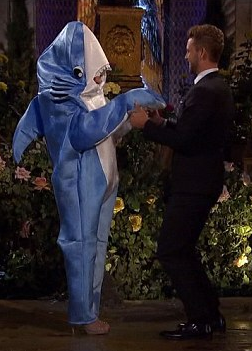
Last night was the premiere of the Bachelor, which is just about the only reality TV show that I do not watch. However, an incident occured on last night’s episode that several of you brought to my attention. Apparently, one of the contestants wore a shark costume for the entire episode…but kept referring to it as a dolphin costume. (While not everyone can reasonably be expected to know the difference between a shark and a dolphin, this contestant stated that she wants to be a dolphin trainer.)

Here is a screenshot:

Screenshot from the Bachelor season 21 premiere, H/T Buzzfeed

Read More “Bachelor contestant wears a shark costume and calls it a dolphin costume” »

Monday Morning Salvage: January 2, 2017

Posted on January 2, 2017January 1, 2017 By Andrew Thaler
Weekly Salvage

Welcome to 2017 and the ninth year of marine science and conservation at Southern Fried Science!

Flotsam (what we’re obsessed with right now)

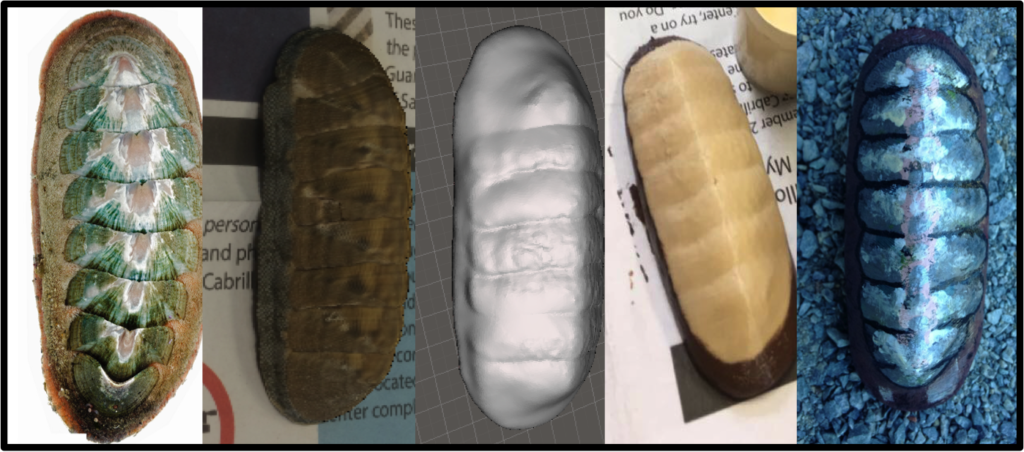
  • Alex Warneke knows exactly how to push all of my ocean outreach buttons: Low-cost teaching tools? Check! Hands on student engagement? Check! Open-source materials and datasets? Check! 3D Printing? Check! Meet 3D Cabrillo:

Courtesy A. Warneke, DSN.

  • Learn more about this awesome project from the National Park Service: How to Build a Better Biomodel.

Jetsam (what we’re enjoying from around the web)

Read More “Monday Morning Salvage: January 2, 2017” »

Fun Science Holidays – The World’s Smallest Snowman

Posted on December 31, 2016 By Kersey Sturdivant
Uncategorized

As 2016 winds to a close, and in the spirit of the holiday season behold the world’s smallest snowman, measuring in at 3 microns. To put that into perspective, the smallest grains of sands are approximately 60 microns. This creation is the work of Canadian nanotechnologists from the Western Nanofabrication Facility. The snowman is made from … Read More “Fun Science Holidays – The World’s Smallest Snowman” »

Posts pagination

Previous 1 … 63 64 65 … 269 Next

Popular Posts

What Ocean Ramsey does is not shark science or conservation: some brief thoughts on "the Shark Whisperer" documentaryWhat Ocean Ramsey does is not shark science or conservation: some brief thoughts on "the Shark Whisperer" documentaryJuly 2, 2025David Shiffman
I can serve on your graduate thesis committee. Here’s what you can expect of me, and what I expect in return.I can serve on your graduate thesis committee. Here’s what you can expect of me, and what I expect in return.October 16, 2025David Shiffman
I turned my woodshop into a personal solar farm.I turned my woodshop into a personal solar farm.June 21, 2021Andrew Thaler
What can the funniest shark memes on the internetz teach us about ocean science and conservation?What can the funniest shark memes on the internetz teach us about ocean science and conservation?November 8, 2013David Shiffman
Shark of Darkness: Wrath of Submarine is a fake documentaryShark of Darkness: Wrath of Submarine is a fake documentaryAugust 10, 2014Michelle Jewell
Build a dirt cheap, tough-as-nails field computer in a Pelican caseBuild a dirt cheap, tough-as-nails field computer in a Pelican caseJuly 21, 2015Andrew Thaler
Breaking News! "Most Comprehensive Estimate of Mortality": Between 63 and 273 Million Sharks Killed Each YearBreaking News! "Most Comprehensive Estimate of Mortality": Between 63 and 273 Million Sharks Killed Each YearMarch 1, 2013David Shiffman
Mermaids: The New Evidence is a Fake DocumentaryMermaids: The New Evidence is a Fake DocumentaryMay 28, 2013Andrew Thaler
I spent 50 days working out in Virtual Reality and everything went better than expected.I spent 50 days working out in Virtual Reality and everything went better than expected.May 16, 2019Andrew Thaler
Blackfish: the Science Behind the MovieBlackfish: the Science Behind the MovieSeptember 18, 2013Chris Parsons

squishy

Subscribe to our RSS Feed for updates whenever new articles are published.

We recommend Feedly for RSS management. It's like Google Reader, except it still exists.

Southern Fried Science

  • Home
  • About SFS
  • Authors
  • Support SFS


If you enjoy Southern Fried Science, consider contributing to our Patreon campaign.

Copyright © 2025 Southern Fried Science.

Theme: Oceanly Premium by ScriptsTown