

Skip to content

Southern Fried Science

Over 15 years of ocean science and conservation online

  • Home
  • About SFS
  • Authors
  • Support SFS

Recent Posts

We Asked IMCC7 Attendees What Ocean Conservation Needs. Here’s What They Said.
November 5, 2026
Researching Historical Erasure on Public Lands
July 31, 2026
5 things I learned helping to reassess the global conservation status of every species of tuna and billfish
September 15, 2026
Key takeaways from my Convention on Migratory Species report on fish aggregating devices in the Mediterranean Sea
September 3, 2026
Jabberwocks and Snallygasters: teaching environmental education with monsters, mayhem, and dice.
August 31, 2026
The conservation impacts of recreational fishing
August 25, 2026

Everything’s bigger in Texas, even shark research!

Posted on July 6, 2015June 9, 2016 By Guest Writer
Science

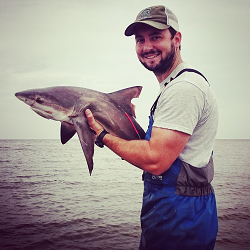
DavisJonathan Davis is a marine biologist, shark researcher, and Fish and Wildlife Tech for the Texas Parks and Wildlife Department based out of Sabine Lake, Texas.  He has researched elasmobranchs for over 10 years all around the world from New Zealand to Australia and along the U.S. coast from Massachusetts to Texas.  Currently, he is continuing research as part of his PhD along the Texas coast focusing on bull shark ecology.  In addition to research, Jonathan does outreach to inform the general public about sharks and inspire interest rather than fear to promote conservation rather than destruction. 

This year marks the 27th Shark Week.  For the past 27 years, Discovery Channel has had the unrivaled and incomparable attention of the world for one week in regards to all things ‘shark’.  These 27 years have brought out the best in shark science in the beginning but have sadly declined by bringing out the worst in fear-mongering and sensationalist misinformation more recently.  As a shark scientist who grew up watching Shark Week for the science the last several years have been disheartening to say the least.  The science seemed to all but disappear and replaced by completely inaccurate information, scary attacks that never happened, and an epidemic of Megalodon sized proportions.  Not to mention the fact that my lifelong dream of being on Shark Week was fulfilled only to have my research superimposed into a show about a ridiculous mythical shark #VoodooShark.  In the midst of all these years of Shark Week, real shark science has been increasing and advancing.  Sharks are an integral part of our ecosystems but many are endangered and in need of conservation.  This is why shark scientists work in the background to learn as much as possible about these creatures that spark such awe and interest worldwide, not to feed fear-mongering and sensationalist desires of money hungry producers.  With that being said, it would behoove all of us to utilize the unparalleled platform that is Shark Week to spread correct information and promote shark conservation.

Read More “Everything’s bigger in Texas, even shark research!” »
Need a #SharkWeek Alternative? Watch classic Cousteau documentaries with us for #JacquesWeek

Posted on July 6, 2015July 9, 2015 By Andrew Thaler
Blogging

Last night, I was in the mood for some Cousteau. The classics from the Undersea World, Odyssey, River Expeditions, and  host of other long running series, still hold up as some of the best ocean documentaries of all time. So I picked a few of my favorites, pulled some people together online, and called it #JacquesWeek, an alternative to Shark Week for those who either don’t get the Discovery Channel or just want something different.

“The sea, once it casts its spell, holds one in its net of wonder forever.”

Jacques Yves Cousteau

I’ll be honest, I’m burned out on Shark Week. After several years of intense livetweeting, post-show debunking, and high-level critique (look for my and Shiffman’s paper on best practices for responding to fake mass media documentaries in Ocean and Coastal Management later this year), I find that I just don’t have much more to say. Some shows will be good. Some shows will be great. Some shows will be bad.

Jacques Cousteau has never let me down. Sure, sometimes the science is off (pretty much everything in Blind Prophets of Easter Island is incorrect, for example), but that’s because the Calypso crew was working at the boundaries of human knowledge, and their work comes off earnest, heartfelt, and compassionate. And so full of wonder. Much of what Cousteau’s team did was done for the very first time.

Read More “Need a #SharkWeek Alternative? Watch classic Cousteau documentaries with us for #JacquesWeek” »

8 ways to tell if Shark Week has really improved this year

Posted on July 3, 2015 By David Shiffman 1 Comment on 8 ways to tell if Shark Week has really improved this year
Uncategorized

sharkThe 27th Shark Week starts this Sunday, July 5th. It’s no secret that I’ve been very critical of Shark Week content in the recent past. However, Discovery has made a public commitment to do better this year, and everything I’ve seen suggests that they really mean it. But what exactly does “better” mean? Here are eight specific things to look out for while you watch Shark Week this year.

1) Are there any totally fake documentaries? Like, 100% fake, as in the events that take place in those documentaries did not occur at all, and everyone in the show is an actor, and all the images and videos are computer generated? It’s worth noting that the new Discovery President has specifically promised not to do this anymore.  

Prediction: There will be no totally fake documentaries in 2015.  Woo hoo! Keep an eye out for “Super Predator,”though.  Some folks (incorrectly) claimed that the actual events it describes were proof that megalodon was still alive.

Read More “8 ways to tell if Shark Week has really improved this year” »

Does Shark Week portrayal of sharks matter?

Posted on June 29, 2015July 3, 2015 By David Shiffman 6 Comments on Does Shark Week portrayal of sharks matter?
Blogging, Popular Culture, Science

sharkI’ve been critical of factual inaccuracy and fearmongering on Shark Week documentaries for years. But how big of a problem is this, and how do we know? I asked some of the authors of three recent scientific studies*  to summarize the evidence.

Many species of sharks are in desperate need of conservation. Twenty-four percent of all known species of sharks, skates and rays are considered Threatened with extinction by the IUCN Red List. Using a variety of different methods, scientists have documented rapid and severe population declines in many species of sharks all over the world.

Conservation requires public support. In a participatory democracy, new policies and regulations require some public support to pass. It’s easy to get public support to conserve cute and cuddly animals, but ugly animals need protection too. So do animals that scare people, like sharks.

Read More “Does Shark Week portrayal of sharks matter?” »

Lionfishing, Green Crabbing, and Carp Dunking: Southern Fried Science Book Club, week 3

Posted on June 22, 2015 By Andrew Thaler 2 Comments on Lionfishing, Green Crabbing, and Carp Dunking: Southern Fried Science Book Club, week 3
Blogging

First off, let me just say, that invasive Asian Carp really do jump out of the water and whack people in the face.

httpv://www.youtube.com/watch?v=qfG4vsJ5_xI

Of all the chapters we’ve read so far, these three were the first that really made me want to try eating invasive species. Maybe it’s because I’m an ocean person, but those fish sounded delicious.

The lionfish chapter was especially intriguing, since I spent a lot of time on the southern tip of Eleuthera during 2001, though I don’t recall ever seeing a single lionfish. I do remember lionfish from the coast of North Carolina, where they’ve taken hold and now completely dominate the local shipwrecks. Lionfish are a nightmare. They have no predators in Atlantic waters. They are extremely fecund. They are voracious generalists, happy to eat anything that fits in their mouths. Most worrying, they can’t be fished via conventional means. Lionfish don’t take the bait, they have to be speared, but they also occur at depths of greater then 200 meters, well beyond any recreation SCUBA or freediving limits.

Read More “Lionfishing, Green Crabbing, and Carp Dunking: Southern Fried Science Book Club, week 3” »

Tactical Activism: Four characteristics of an Astroturfing campaign

Posted on June 16, 2015September 21, 2016 By Andrew Thaler
Blogging

Astroturfing is the strategy of using multiple, fabricated social media accounts to produce the appearance of grassroot support for an issue or movement. At its most basic, astroturfing involves ‘sockpuppets’ fake accounts designed to get around bans and blocks or make it seem like more people are participating in a conversation than actually are. At its most sinister, astroturfing enlists a massive industry that specializes in blanketing the internet with apparently unique content that is nevertheless the product of just a few, often paid participants. The New York Times recently ran an exposé on The Agency, a notorious Russian spamhouse that generates mountains of content designed specifically to sow discord across the internet. Somewhere lying between these extremes is Persona Management Software, tools specifically designed to allow institutions to operate multiple, apparently genuine, social media profiles. Many social media PR firms use persona management (or the more palatable “reputation management”) to boost their client’s online reputation. The federal government, incidentally, does, too.

Astroturfing tactics have only gotten more sophisticated in the past five years. Its nearly impossible to tell, at a glance, whether the person your interacting with is part of a sophisticated astroturfing campaign or a genuine human that simply disagrees with you. There are, unfortunately, no guaranteed tests to confirm whether someone is or is not an astroturfer, but there are general patterns that suggest you’re dealing with a managed-persona rather than a genuine person. Taking multiple lines of evidence into account can help you identify and excise astroturfing from your online experience.

Note: in the past five years, I have identified numerous campaigns of which I confidently identify as astroturfing (and in at least two cases have had my suspicions confirmed by directly contacting their PR departments), both in opposition to, and in agreement with environmental (and particularly ocean) issues. However, as this article is intended to be a resource for anyone looking to identify an astroturfing campaign and I am neither interested in dragging up old history nor unnecessarily politicizing this article by calling out bad actors (who may or may not have learned their lesson), I am not going to identify specific instances. Assume that both your favorite and least favorite ocean/environment/political groups have, at some point, attempted to astroturf an issue. 

It’s important to recognize that astroturfing is about volume. If you recognize some of these patterns in specific social media profiles, but they are not part of larger movement, you’re likely not dealing with astroturfing. At worst, you might have a run-of-the-mill troll. In order of least to most complicated, here are four patterns to look for when identifying an astroturfing campaign.

Read More “Tactical Activism: Four characteristics of an Astroturfing campaign” »

A series of hunting misfortunes: Southern Fried Science Book Club, week 2

Posted on June 10, 2015June 10, 2015 By Andrew Thaler
Blogging

Jackson Landers does not like the USDA. Twice now, we’ve encountered government oversight in invasive game management, and twice we’ve seen nothing but hard criticism coming from the author. On one hand, I can see where he’s coming from. Government oversight can be frustrating. Bureaucracies are slow to act and often stifled by their own size and internal politics. But some of it, particularly as he tries to hunt pigs in coastal Virginia, seems to be due to his own poor planning–bringing the wrong firearm, for example–or failing to understand the totality of the management effort, focusing instead on what would work well for eradicating pigs from the island, without considering the overall consequences of that eradication process. Longitudinal studies are a good thing, especially when examining a major ecologic regime shift, invasive or not.

Landers, incidentally, also has an article up on Slate about killing pigs to save the environment. I do not disagree.

Read More “A series of hunting misfortunes: Southern Fried Science Book Club, week 2” »

For World Oceans Day, ask David anything!

Posted on June 8, 2015 By David Shiffman
Blogging

Happy World Oceans Day, everyone! To celebrate, I’m participating in the Consortium for Ocean Leadership “My Ocean Question” twitter panel, and doing a Reddit “Ask Me Anything.” From 1-5 p.m. eastern, ask questions about the ocean on twitter using hashtag #MyOceanQ , and tag @OceanLeadership ! I’m on deck to answer questions about sharks from … Read More “For World Oceans Day, ask David anything!” »

How to support Southern Fried Science

Posted on June 5, 2015June 4, 2015 By Andrew Thaler
Blogging

Southern Fried Science is entering its 8th year of continuous posting. During that time we’ve grown from a single author to eleven writers and have published over 2,000 articles. While we did briefly flirt with ad-support, we ultimately decided that, in order to best serve the ocean community, Southern Fried Science would be ad free … Read More “How to support Southern Fried Science” »

Three facts (and a lot of questions) about The Ocean Cleanup

Posted on June 4, 2015February 19, 2016 By Andrew Thaler
Conservation, Science

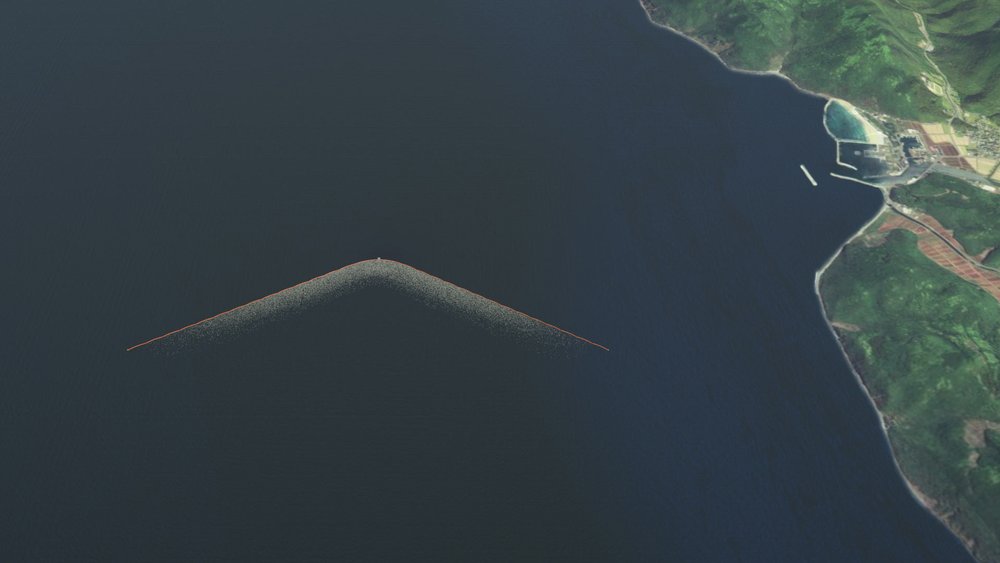
The Ocean Cleanup is back in the news, with their first test deployment happening imminently off the coast of Japan. From reviews of their current material, it seems clear that they have not taken the critical assessment of their feasibility study, graciously provided pro-bono by Drs. Martini and Goldstein, to heart. This is unfortunate. As the project has progressed, many in the ocean science and conservation community have not only grown more skeptical of its effectiveness, but are increasingly wary of the potential this project has to cause significant environmental harm. As of yet, The Ocean Cleanup has presented no formal Environmental Impact Assessment, a critical document which would provide the data necessary to properly gauge the potential for environmental harm from large-scale engineering projects.

Image produced by The Ocean Cleanup.

Goldstein and Martini’s technical review is essential reading for anyone tracking the progress of The Ocean Cleanup, but there are many additional issues that the Ocean Cleanup has not yet addressed. Here, I present three issues related to the construction and operation of The Ocean Cleanup and the necessary information that, were I in charge of regulating the high seas, would need to know before such a project could be approved.

1. The Ocean Cleanup will be the largest offshore structure ever assembled. 

When completed, The Ocean Cleanup will span 100 km of open sea with a massive array of booms and moored platforms. If successfully constructed in the proposed region, the mooring used will be the deepest ever constructed. The booms will stretch across a major oceanic current, interacting with plankton transport and pelagic migrations.

What I want to know: How will The Ocean Cleanup monitor changes in ocean-wide population structure? What community baselines have been established from which ecosystem impact can be assessed? What contingency are in place should catastrophic failure occur? Ultimately, what chronic threshold will be used to trigger a shutdown of the Ocean Cleanup, should major environmental impacts be detected as a result of standard operation, who will access to the data necessary to monitor those impacts, and who will have authority to trigger a shutdown?

Read More “Three facts (and a lot of questions) about The Ocean Cleanup” »

Posts pagination

Previous 1 … 95 96 97 … 277 Next

Popular Posts

Getting a sense of porpoiseJanuary 20, 2009Andrew Thaler
This is the worst academic presentation in the world ... tributeApril 23, 2015Chris Parsons
That's not a blobfish: Deep Sea Social Media is Flooded by AI SlopThat's not a blobfish: Deep Sea Social Media is Flooded by AI SlopDecember 19, 2025Andrew Thaler
Shark of Darkness: Wrath of Submarine is a fake documentaryShark of Darkness: Wrath of Submarine is a fake documentaryAugust 10, 2014Michelle Jewell
Have we found the city of Atlantis?Have we found the city of Atlantis?September 1, 2026Chris Parsons
What Ocean Ramsey does is not shark science or conservation: some brief thoughts on "the Shark Whisperer" documentaryWhat Ocean Ramsey does is not shark science or conservation: some brief thoughts on "the Shark Whisperer" documentaryJuly 2, 2025David Shiffman
Ethical Debate: Killing sharks for science?Ethical Debate: Killing sharks for science?June 1, 2010David Shiffman
The 45 most influential female ecologists alive today according to twitterThe 45 most influential female ecologists alive today according to twitterFebruary 10, 2014Guest Writer
Soon may the explainer come: Everything you’ve always wanted to know about sea shanties but were afraid to askSoon may the explainer come: Everything you’ve always wanted to know about sea shanties but were afraid to askNovember 22, 2022David Shiffman
Our favorite sea monsters – The Kraken (#1)Our favorite sea monsters – The Kraken (#1)September 10, 2010Andrew Thaler

squishy

Subscribe to our RSS Feed for updates whenever new articles are published.

We recommend Feedly for RSS management. It's like Google Reader, except it still exists.

Southern Fried Science

  • Home
  • About SFS
  • Authors
  • Support SFS


If you enjoy Southern Fried Science, consider contributing to our Patreon campaign.

Copyright © 2026 Southern Fried Science.

Theme: Oceanly Premium by ScriptsTown