

Skip to content

Southern Fried Science

Over 15 years of ocean science and conservation online

  • Home
  • About SFS
  • Authors
  • Support SFS

Recent Posts

small boy holding Miss Abyss Dumbo Octopus
Please Help This Little Dumbo Octopus Travel Across America
August 3, 2026
Isn’t ironic, don’t you think: dismantling the Ocean Observatories Initiative on World Oceans Day
June 9, 2026
My Journey Into Researching Historical Erasure on Public Lands
July 31, 2026
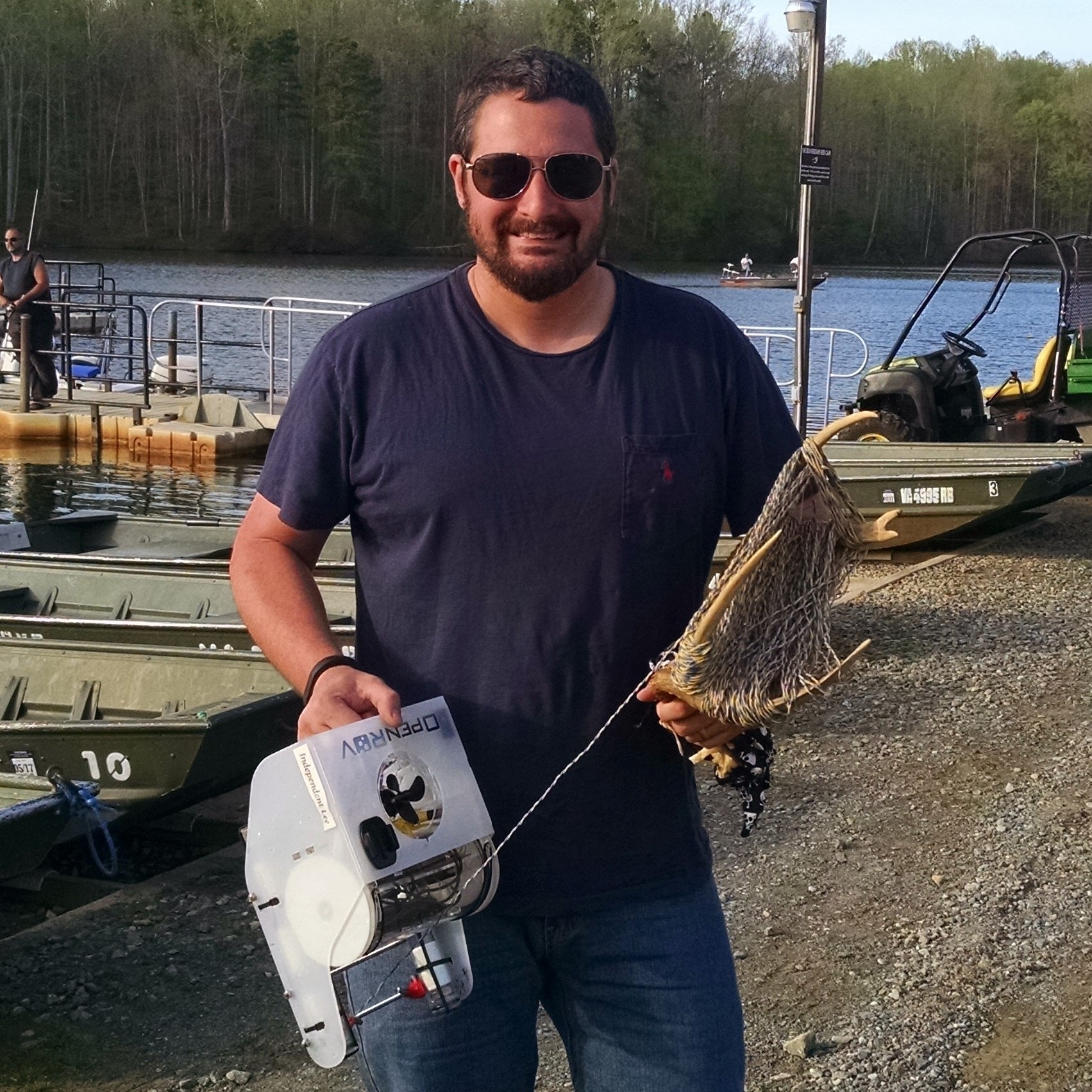
The next OpenCTD is here!
June 22, 2026
humpback whale in Antarctica
The evolution of the International Whaling Commission – from  whaling quotas to whale conservation
June 10, 2026
“Why Sustainable Seafood Matters” is now available for preorder! Here’s what it’s about, and why I decided to write it.
June 8, 2026

What Conservationists Need to Know About Surveys

Posted on April 2, 2015April 2, 2015 By Bluegrass Blue Crab 1 Comment on What Conservationists Need to Know About Surveys
Science

This post in the first of a new series entitled “The Basics of the Human Dimensions”, which gives the most basic tips for how to work with social scientists and social questions in marine conservation efforts. Whether you are the stakeholder, the collaborating natural scientist, or both, this series will hopefully make the journey into the human dimensions easier. 

Whether someone has emailed you a survey asking for your expert opinion on something or you would generally like to poll the audience of your research about their thoughts, the basic survey is often the first experience with social science one encounters. And yes, these surveys come in a wide variety of forms and quality, and you are right to judge and raise an eyebrow at them to a certain degree, whether that is out of sheer curiosity or justified skepticism. If you are on the side of wanting to deploy a survey, my best piece of advice would be to hire or consult with a survey writer, particularly if you’re not crystal clear on how the questions and the later statistical analysis will relate. But there’s some more subtle things you should know in dealing with surveys at all stages of the process.

When someone asks you to take a survey

Read More “What Conservationists Need to Know About Surveys” »

David Shiffman wears ugly sunglasses. We need to fix that. For the sharks.

Posted on April 1, 2015March 31, 2015 By Andrew Thaler
Uncategorized

David is a legend in the online ocean conservation world, but that doesn’t mean he’s a legend of style. Everywhere, in every picture, he wears these:

Just terrible.
Just terrible.

Let’s be clear: these sunglasses, if you can even call a second pair of glasses worn over his normal glasses that, are ugly. Really ugly. Distractingly ugly. In an non-parametric, multivariate analysis of his outreach effort, David is 7% less effective* at disseminating ocean content than he should be, given his follower base and content stream. I believe that the majority of this deficit can be directly attributed to his sunglasses.

It’s time to change that.

Buy David Shiffman a less ugly pair of sunglasses.


David Shiffman has spent his life saving sharks. Isn’t it time he did so in style? I think so. And I hope you do too. Let’s buy him some sunglasses that reflect how cool his shark conservation work really is. Support our efforts to buy David less ugly sunglasses on Indiegogo.

Read More “David Shiffman wears ugly sunglasses. We need to fix that. For the sharks.” »

The War on Climate Change is a Guaranteed Job Creator

Posted on March 26, 2015 By Michelle Jewell
Uncategorized

Our human history is measured in a sequence of “epochs”, periods of time defined by events or advancements. Today, we are entering the epoch of climate change.  In this era, Lindsay Graham acknowledges that climate change is real and humans are causing it. Conversations finally turn away from “Do we need to do anything?” to “What are we going to do now?”

This question terrifies conservative political parties across the globe. “What are we going to do now?” cannot be answered by old techniques aging politicians are comfortable with. The beginning of the climate change epoch is the end of their political/economical relevance just as the DVR was the death of Laser Disc. We cannot save our economies and address these new challenges by using strategies developed 30+ years ago during a completely different environment.  

Read More “The War on Climate Change is a Guaranteed Job Creator” »

A request to environmentalists and journalists discussing shark fin ban legislation

Posted on March 23, 2015 By David Shiffman
Blogging, Science

Many of the U.S. state-level shark fin bans which make it illegal to buy, sell, or possess shark fins include exemptions for smooth and spiny dogfish, i.e. by far the most common species of sharks caught by U.S. fishermen. Some of these fisheries have significant conservation concerns associated with them. Much of this fishing is not currently subject to catch limits or other basic management

You would never know that most locally caught sharks are not affected at all by fin bans by reading most of the action alerts that some conservation organizations send out to encourage ocean lovers to support these laws, by following most of the media coverage of these laws, or by reading most people’s excited posts after these laws pass. Many of these inaccurately say that shark fin bans “protect all sharks.”

I have a request to make to the conservation organizations supporting these laws, journalists covering them, and the shark and ocean lovers celebrating when they pass. If you want to support laws with an exemption for dogfish sharks, that’s fine, but let’s have an open and honest discussion about why you are doing this instead of just acting like it isn’t happening.

Read More “A request to environmentalists and journalists discussing shark fin ban legislation” »

The disastrous feedback of what happens when fisheries funding dries up

Posted on March 20, 2015March 31, 2015 By Bluegrass Blue Crab
Conservation

Last week I had the good fortune of attending the NC Oyster Summit, hosted  by the NC Coastal Federation in the Museum of Natural Sciences. We talked about the wonders that oyster restoration and aquaculture development can do for water quality, economic development, and taste buds. We enjoyed the demonstration of ‘merriore’, or the taste of the sea that lends a particular flavor to each oyster that captures the ecosystem it grew in. Yet, the fact that stuck with me most is that despite all of these wonderful celebrations of the oyster for the health and well-being of NC’s coastal communities, funding cuts of around 40% to the Department of Marine Fisheries mean that a large portion of the Albemarle Sound remains closed to harvest or aquaculture because there are no staff to check those oysters for public health risks.

The “Administrative Closure” of the most northern stretches of the state’s prized Albemarle-Pamlico estuary system is a worrying precedent in many ways that highlight how leadership withdrawal of support for science can trickle down to real economic, environmental, and cultural harm.

Economic flight

Read More “The disastrous feedback of what happens when fisheries funding dries up” »

The place where dissertations go to die …

Posted on March 19, 2015 By Chris Parsons 6 Comments on The place where dissertations go to die …
Uncategorized

So you’ve just spent the last few years of your life working on your research project, and now in front of you, you have the final thesis, all smartly bound with a rather dashing cover that would not look out of place in Mr Darcy’s library, with your thesis title and your name glistening in silver or gold lettering. You have a sense of achievement. It has been a difficult labor, but finally your baby has been born, and you cradle it in your arms lovingly as you walk it to the library, and hand over your precious bundle of academic joy to the librarian. They take it from you and head back to the dusty shelves where theses of thousands of past graduate students have accumulated, the place where your dissertation will go to…to die.

Nawlins_cemetary_ECMparsons

Read More “The place where dissertations go to die …” »

Dipping a Toe in the Confluence

Posted on March 17, 2015 By Chuck Bangley 1 Comment on Dipping a Toe in the Confluence
Uncategorized

North Carolina is well known for both its distinctive barrier islands (making Pamlico Sound the largest lagoon in the U.S.) and highly productive fisheries.  Both of these features exist in large part because North Carolina sits that the point where two of the largest ocean currents in the Atlantic meet. From the north, the Labrador Current meanders from the Arctic Circle along the Canadian, New England, and Mid-Atlantic shorelines and crashes into the Gulf Stream at Cape Hatteras, deflecting this warm current off its own shore-hugging course from the south and out across the Atlantic Ocean.  Aside from literally defining the shape of the Outer Banks, the collision zone represents the boundary between temperate waters to the north and subtropical waters to the south.  This presence of this border means that, depending on the time of year and local weather conditions, you can catch just about any marine fish native to the Northwest Atlantic Ocean off of the Outer Banks.

This satellite image of sea surface temperatures shows the Gulf Stream (warm red current coming from the south) meeting the Labrador Current (cold purple current coming from the north). Image from Woods Hole Oceanographic Institute (whoi.edu).

Read More “Dipping a Toe in the Confluence” »

How to write and publish a scientific paper in the field of marine ecology and conservation

Posted on March 6, 2015 By David Shiffman
Blogging, Science

Author’s note: The following blog post is an adaptation of a professional development training workshop that I gave to our lab’s interns. It is intended to serve as an introductory guide for advanced undergraduate and beginning graduate students who have never published a scientific paper before. It’s a combination of advice I’ve received from teachers, colleagues, and training workshops. This advice has worked well for me personally in the fields of marine ecology and conservation; as of this writing I have 14 published papers and have served as a peer reviewer for 26 different journals. However, there are lots of other strategies out there, and you should seek them out and figure out what works best for you, particularly if you’re in a radically different academic discipline. 

Part 1: What is a scientific paper?

The process of writing and publishing peer-reviewed scientific papers can be confusing and intimidating to beginning students, who may know that these papers are professionally important but not how to create their own. Different in scope, style, and significance from a class term paper or thesis, these papers are formal, technical writeups of a scientific research project or idea. They are written by scientists or technical experts, and peer-reviewed by other scientists or technical experts who (ideally) provide constructive criticism.

Read More “How to write and publish a scientific paper in the field of marine ecology and conservation” »

17 actually worthwhile things to know about mosquitoes

Posted on March 3, 2015 By Guest Writer
Blogging

ATanjim Hossain is an NSF graduate research fellow at the University of Miami. His research focuses on the intersection of microclimatology and mosquito vector ecology from an epidemiological perspective. Follow him on twitter here

BuzzFeed: the epitome of unnecessary hyperbole and an amalgam of often unoriginal content. I’ve long been convinced that this website is a waste of time and that it parrots bullshit in exchange for pageviews. Imagine my surprise, then, when I saw a recent article headlined, “17 Things Only Chronic Mosquito Victims Will Understand.”For a brief moment I was encouraged, hopeful even, that BuzzFeed might have turned a page and published something worth reading. You, wise reader, likely know this this turned out. Below I present 17 things which I think are actually worth knowing relevant to mosquitoes.

Read More “17 actually worthwhile things to know about mosquitoes” »

What Leonard Nimoy and Spock meant to me as a Jewish conservation biologist

Posted on February 27, 2015 By David Shiffman 4 Comments on What Leonard Nimoy and Spock meant to me as a Jewish conservation biologist
Blogging

Earlier today, the New York Times reported that actor Leonard Nimoy had died at the age of 83. Coming just two days after the death of Genie Clark, this means that I’ve lost two of my childhood heroes in one week. I’ve already briefly written about what Genie meant to me and to my friends here and here and am quoted here, but Leonard Nimoy’s impact on me  is a little harder to explain. I hope our readers will indulge me in an unusually personal post.

I’ve been a big fan of science fiction, something I’ve always loved sharing with my mother, since I was a kid. A world where science and intellect and technology, not brute force, are used to solve problems holds obvious appeal. To a kid who grew up struggling with some anti-Jewish discrimination, the diversity featured on shows like Star Trek was inspiring. People that were different didn’t have to hide their differences and lay low and try to avoid standing out in a crowd of people different from you, like I did. Not only did the main characters not tease and attack each other because they were different, but this behavior was actively portrayed as a problem on several episodes. The Federation wasn’t successful despite including different cultures and religions and even species, they were successful because of it.  The environmental conservation message in Star Trek plotlines like “the Voyage Home” made a budding young conservation biologist relate to it even more.

Read More “What Leonard Nimoy and Spock meant to me as a Jewish conservation biologist” »

Posts pagination

Previous 1 … 96 97 98 … 275 Next

Popular Posts

What Ocean Ramsey does is not shark science or conservation: some brief thoughts on "the Shark Whisperer" documentaryWhat Ocean Ramsey does is not shark science or conservation: some brief thoughts on "the Shark Whisperer" documentaryJuly 2, 2025David Shiffman
Zombie ideas in conservation: trophy hunting and conservationZombie ideas in conservation: trophy hunting and conservationAugust 6, 2026Ali Gaster
What is a Sand Shark?What is a Sand Shark?November 12, 2017Chuck Bangley
Shark of Darkness: Wrath of Submarine is a fake documentaryShark of Darkness: Wrath of Submarine is a fake documentaryAugust 10, 2014Michelle Jewell
Is Academic Publishing is breaking conservation science?Is Academic Publishing is breaking conservation science?August 10, 2026Chris Parsons
Considering writing a popular science book? Here's my adviceConsidering writing a popular science book? Here's my adviceJuly 7, 2025David Shiffman
How the Bluespotted Ribbontail Stingray got its SpotsHow the Bluespotted Ribbontail Stingray got its SpotsMarch 28, 2024David Shiffman
That's not a blobfish: Deep Sea Social Media is Flooded by AI SlopThat's not a blobfish: Deep Sea Social Media is Flooded by AI SlopDecember 19, 2025Andrew Thaler
Emergency room conservation: why waiting for the Endangered Species Act to save a species is a fiscal disasterEmergency room conservation: why waiting for the Endangered Species Act to save a species is a fiscal disasterAugust 11, 2026Ali Gaster
Ten very bad, no good things the latest Trump Administration has done to the oceansTen very bad, no good things the latest Trump Administration has done to the oceansAugust 14, 2026Ali Gaster

squishy

Subscribe to our RSS Feed for updates whenever new articles are published.

We recommend Feedly for RSS management. It's like Google Reader, except it still exists.

Southern Fried Science

  • Home
  • About SFS
  • Authors
  • Support SFS


If you enjoy Southern Fried Science, consider contributing to our Patreon campaign.

Copyright © 2026 Southern Fried Science.

Theme: Oceanly Premium by ScriptsTown