Skip to content

Southern Fried Science

Over 15 years of ocean science and conservation online

  • Home
  • About SFS
  • Authors
  • Support SFS

Tag: Vaquita

Reducing seabird bycatch, rescuing vaquita, and cod comebacks: Thursday Afternoon Dredging: October 26, 2017

Posted on October 26, 2017 By David Shiffman
Uncategorized

Cuttings (short and sweet): 

  • Watch aquarists at the PPG Aquarium at the Pittsburgh zoo target train a zebra shark so it comes when it’s called
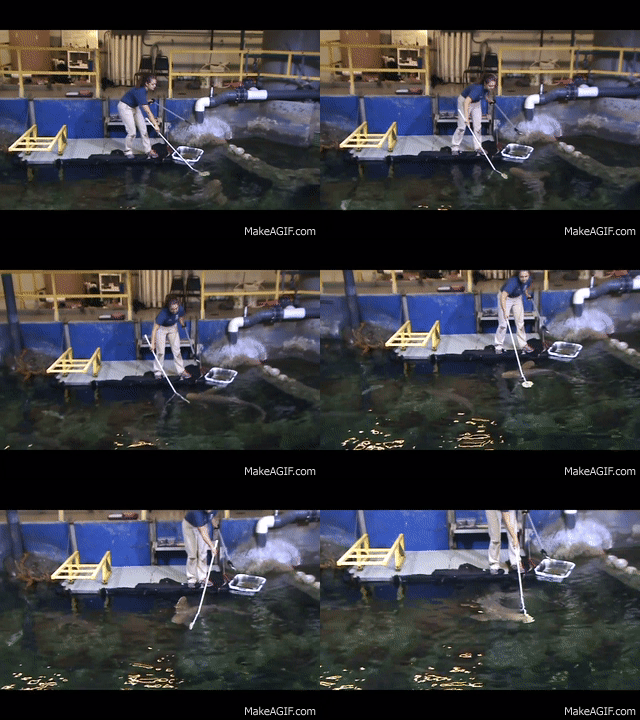
    Video by PennLive.com
  • Follow PNG Sharks and Rays, a twitter account associated with a project studying “one of the last frontiers of marine biodiversity research,” on twitter.
  • 5 things you should know about the Marine Mammal Protection Act. By Katie Hogge, for the Ocean Conservancy blog.
  • First vaquita “rescued” in effort to save the species. By John Cannon, for MongaBay.
Read More “Reducing seabird bycatch, rescuing vaquita, and cod comebacks: Thursday Afternoon Dredging: October 26, 2017” »

Chasing Genius, aquatic brain blobs, hurricanes, bats, and more! Monday Morning Salvage: September 4, 2017

Posted on September 4, 2017September 3, 2017 By Andrew Thaler
Weekly Salvage

Fog Horn (A Call to Action)

  • Hurricane Harvey has passed, but its impacts will continue to be felt for years to come. There’s lots of great organizations to donate to, but in the immediate aftermath,it’s often best to donate to local relief programs that already have a ground team in place, rather than national groups that will take weeks to build up their infrastructure. I’m a fan of the Texas Diaper Bank and Portlight Inclusive Disaster Strategies, both of which serve communities that tend to be particularly vulnerable during natural disasters.
  • Gratuitous self promotion! The OpenCTD and Oceanography for Everyone has been selected as a finalist in National Geographic’s Chasing Genius Challenge! Please help me win the People’s Choice award by voting for the OpenCTD. Visit http://www.natgeochasinggenius.com/video/776, create or sign into your Chasing Genius account, and click the yellow star to vote on my video. Thank you!

Flotsam (what we’re obsessed with right now)

  • It will take months, if not years, to fully understand the impacts of Hurricane Harvey, which already looks to be the costliest storm in US history. These drone videos give you some idea of the sheer scale of the damage. The Washington Post has an interactive map to help visualize what the equivalent deluge would look like around the world: What the Harvey deluge would look like where you live.

Read More “Chasing Genius, aquatic brain blobs, hurricanes, bats, and more! Monday Morning Salvage: September 4, 2017” »

One-eyed sea eagles, deep reefs, crispy jellyfish, and more! Monday Morning Salvage: August 7, 2017.

Posted on August 7, 2017 By Andrew Thaler
Weekly Salvage

Fog Horn (A Call to Action)

  • One week left! The deadline for comments on Marine National Monuments and National Marine Sanctuaries has been extended due to overwhelming responses. You now have until August 14, 2017 to leave a comment. Scientists, researchers, explorers, and conservationists with particular ties to the Mariana Trench Marine National Monument can sign on the this letter co-authored by me, James Cameron, and numerous researchers who’s worked has benefited from the Mariana Trench.
  • Chasing Genius: Andrew has applied for a National Geographic Chasing Genius Award to fund more development for the OpenCTD and Oceangraphy for Everyone. Please share and like the video over at NatGeo!

Flotsam (what we’re obsessed with right now)

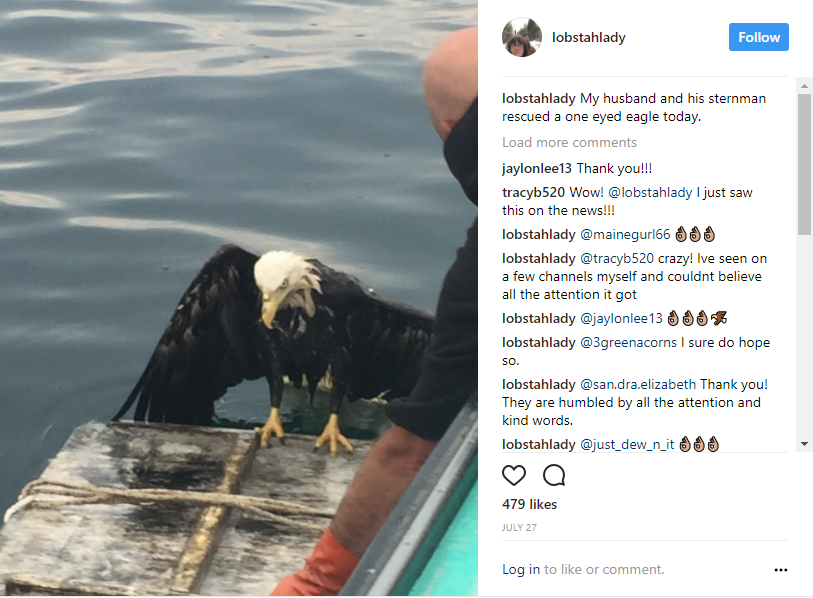
  • A Maine Lobsterman catching a one-eyed bald eagle struggling to swim has got to be a metaphor for something, right?

Read More “One-eyed sea eagles, deep reefs, crispy jellyfish, and more! Monday Morning Salvage: August 7, 2017.” »

Half-safe, climate change, deep-sea mining’s last frontier, and more! Monday Morning Salvage: Junes 12, 2017.

Posted on June 12, 2017June 12, 2017 By Andrew Thaler
Weekly Salvage

Fog Horn (A Call to Action)

  • 27 National Monuments are under review by the Department of the Interior. Our Nation Monuments are our National Treasures. Don’t let them be sold to the highest bidder! Submit formal public comments on the DOI Monument Review and make your voice heard.

Flotsam (what we’re obsessed with right now)

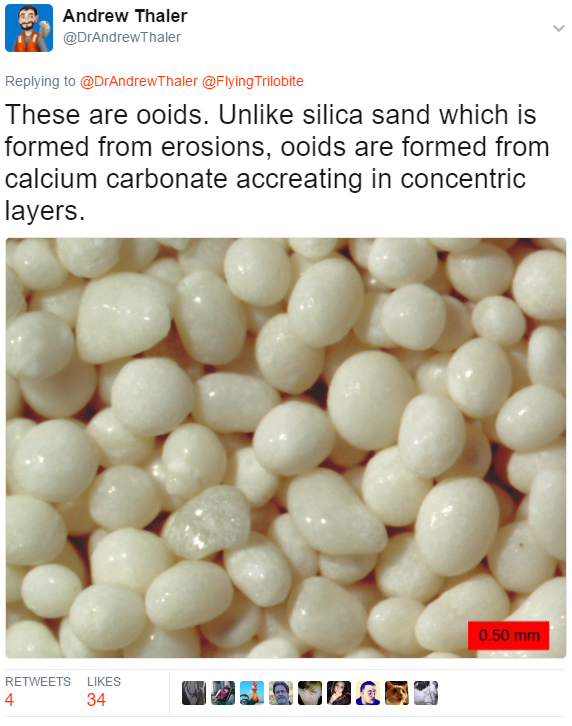
  • Sand. Over the weekend I asked Twitter if they were into sand, and Twitter said yes. So now I’m trapped in an endless cycle of ‘likes’ and facts about sand. it’s a sandstorm!

Jetsam (what we’re enjoying from around the web)

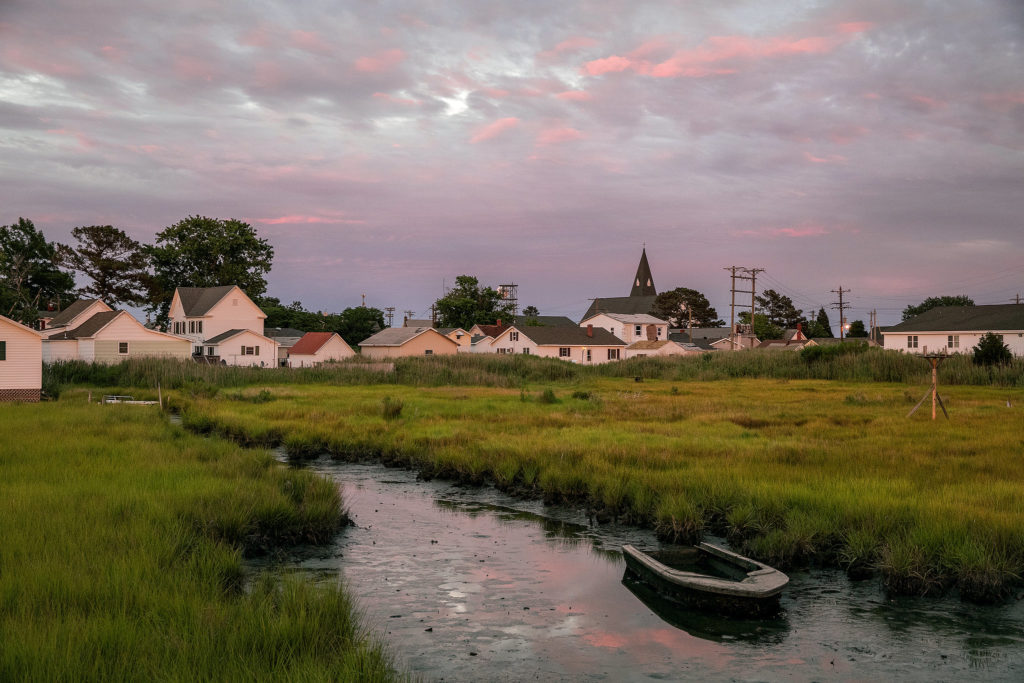
  • Tangier Island. It’s disappearing, due to a combination of erosion and sea level rise, and when it goes,Virginia’s last offshore fishing community vanishes, too. We’re visiting Tangier next week, so now is a great time to read up on the challenges facing the island.
The view from Long Bridge Road on Tangier Island. Credit Andrew Moore for The New York Times
  • Autonomous Cargo Ships Extend Miner’s Technology Drive to Seas.
  • Beasts from the sea dominated the monster flick of the 60s and 70s. Hakai is on the hunt for these leading monsters.
  • I’m sure this is fine. Trump Said to Mull Combining Agencies Separated After Gulf Oil Spill.
  • Donald Trump vs. the Tide of History on Climate Change. A great piece by my old college roommate. Hi Victor!
  • In 1950, an Australian adventurer set out to sail and drive around the world in an old amphibious jeep. It did not go entirely to plan.
  • The world’s smallest porpoise has caused a big battle in Baja California.
  • Paleoshorelines: Time capsules of the ocean’s ancient shorelines from our friends at oceanbites.
  • This week in deep-sea mining: Huge rare metal reserve found on seabed 350 km off Japan.
  • The protests against deep-sea mining are also ramping up. This video, which is perhaps the best I’ve seen capturing local concerns about near-shore hydrothermal vent mines, was featured at the UN Ocean Summit.
  • Japan’s famous fish market, where the world’s most expensive tuna are sold, is closing down to relocate from it’s historic home: Visit Tsukiji, a ‘Great Wonder of the World,’ While You Still Can.

Read More “Half-safe, climate change, deep-sea mining’s last frontier, and more! Monday Morning Salvage: Junes 12, 2017.” »

Parasitic barnacles, a code of conduct for marine conservation, #BillMeetScienceTwitter, and more! Monday Morning Salvage: May 22, 2017.

Posted on May 22, 2017May 22, 2017 By Andrew Thaler
Weekly Salvage

Fog Horn (A Call to Action)

  • 27 National Monuments are under review by the Department of the Interior. Our Nation Monuments are our National Treasures. Don’t let them be sold to the highest bidder! Submit formal public comments on the DOI Monument Review and make your voice heard.

Flotsam (what we’re obsessed with right now)

  • This parasitic barnacle, Sacculina carcini, replacing the reproductive organs of a crab.
  • Hat tip to Tommy Leung, who’s twitter feed is a gold mine of fantastic parasites and where to find them.
  • #BillMeetScienceTwitter. What started as an inquiry into whether science celebrities really engage with practicing scientists on a regular basic morphed into the best way to find new scientists to follow on Twitter. I’m curating a massive list of all the self-identified Ocean Scientists that participated.

Jetsam (what we’re enjoying from around the web)

  • Deep-sea mining is gearing up on the high seas, and international regulations is still lagging far behind technology: The Wild West of Deep-Sea Mining.
  • oceanbites rolls out an excellent overview of the different kinds of robots used in conducting deep-sea research.
  • Beyond drug lords and conservationists: Who is missing in the coverage of the vaquita’s demise? from the legendary team at Deep Sea News.
  • Henderson Island is isolated and uninhabited, so why are all its beaches so completely covered in garbage? Spoilers: It’s because the planet is an interconnected global system with impacts felt far beyond the source of insult.
  • Bone-eating snot flower worm will never not be my favorite common name. Tiny Zombie Worms Are the Beavers of the Deep.
  • The history of the entire world, in one entertaining YouTube video (via Vox):
  • Are Ships The Careless Giants Of The Sea? Yes, but they don’t have to be.
  • Trump’s EPA Greenlights a Nasty Chemical. A Month Later, It Poisons a Bunch of Farmworkers.
  • Trump country is flooding, and climate ideas are shifting.
  • The Ocean as the New Frontier of Climate Action.
  • The Antarctic Peninsula is 3 degrees warming than is used to be, and that means plants are growing and Antarctica is getting greener.
  • The long history of ocean drilling and scientific discovery.
  • A tiny anchovy could be a silver bullet for malnutrition in Peru—if only we would let it: The Fish that Smells like Money.
  • I talk alot about e-waste and disposable electronics, which is why I’m excited to see modular, open-source smartphone projects finally start to mature. The ZeroPhone looks like on of the most promising additions to this space.
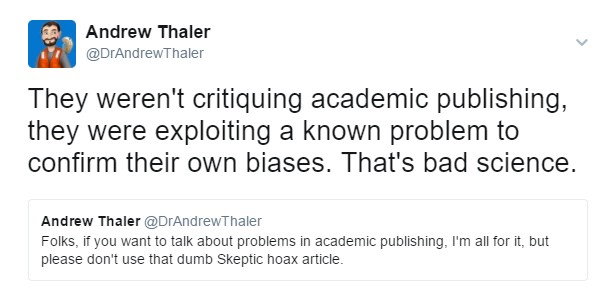
  • Skeptic Magazine has a pseudoscience problems. Unfortunately, this time it’s the skeptics promoting some pretty eyebrow-raising junk science. I went a little deeper into this on Twitter.

Read More “Parasitic barnacles, a code of conduct for marine conservation, #BillMeetScienceTwitter, and more! Monday Morning Salvage: May 22, 2017.” »

Thursday Afternoon Dredging: February 9th, 2017

Posted on February 9, 2017 By David Shiffman
Uncategorized

Cuttings (short and sweet):

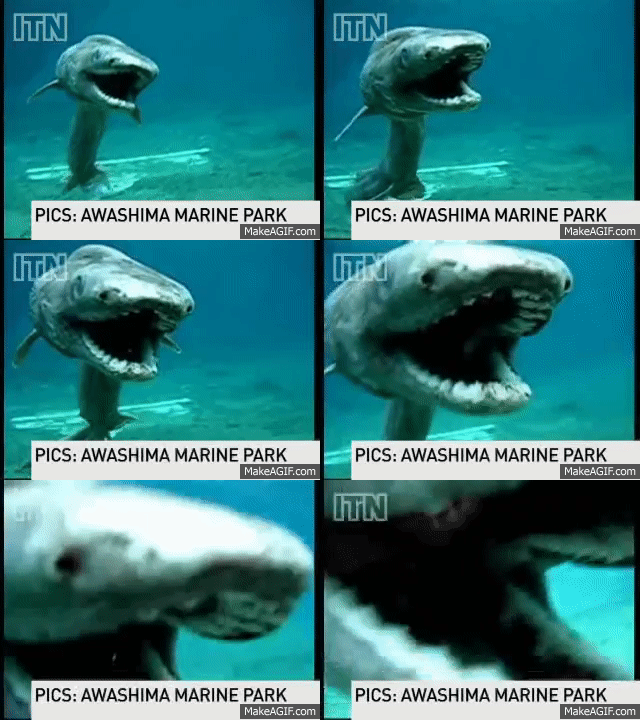
  • Watch this frilled shark swim in unusually shallow water off Japan
  • Follow Dr. Rae Wynn-Grant, an AMNH conservation researcher, on twitter!
  • Last call for vaquita, the panda of the sea. WWF reports that there are just 30 vaquita left in the wild, down from 60 last year.

Read More “Thursday Afternoon Dredging: February 9th, 2017” »

Monday Morning Salvage: January 2, 2017

Posted on January 2, 2017January 1, 2017 By Andrew Thaler
Weekly Salvage

Welcome to 2017 and the ninth year of marine science and conservation at Southern Fried Science!

Flotsam (what we’re obsessed with right now)

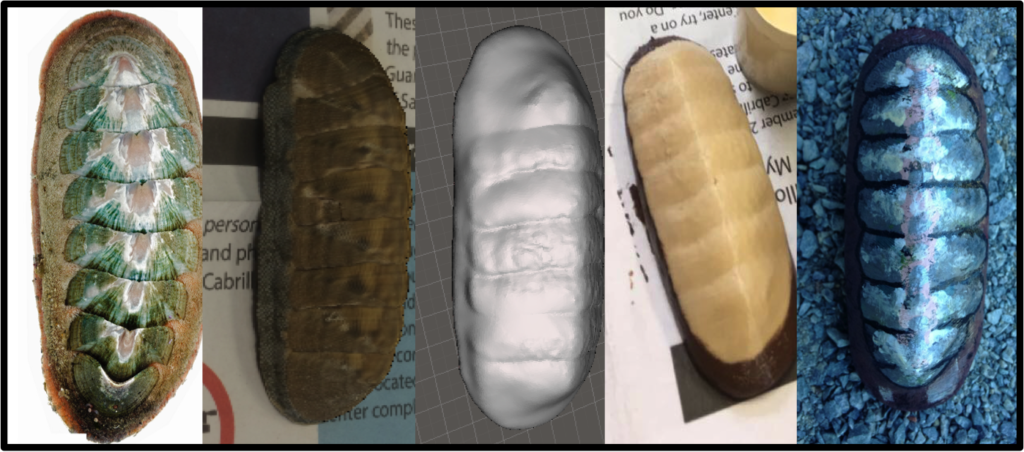
  • Alex Warneke knows exactly how to push all of my ocean outreach buttons: Low-cost teaching tools? Check! Hands on student engagement? Check! Open-source materials and datasets? Check! 3D Printing? Check! Meet 3D Cabrillo:
Courtesy A. Warneke, DSN.
  • Learn more about this awesome project from the National Park Service: How to Build a Better Biomodel.

Jetsam (what we’re enjoying from around the web)

Read More “Monday Morning Salvage: January 2, 2017” »

Dying for Reason in the Rational Utopia

Posted on August 10, 2016August 10, 2016 By Andrew Thaler
Conservation, Popular Culture

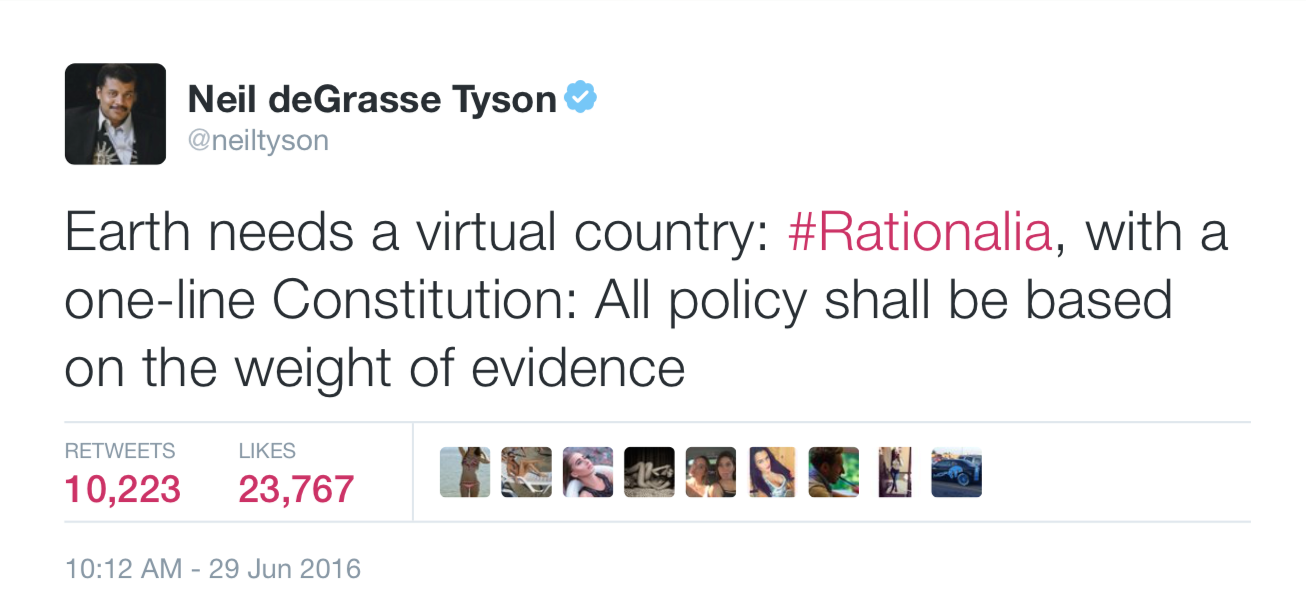
When Neil deGrasse Tyson proposed his “Rationalia” thought experiment several months ago, I thought is was cute but misguided. Now that he’s doubled down on the concept, I can see exactly why it is such a naively flawed idea. Rationalia would be a disaster for conservation. This short science fiction story illustrates why.


ration

“Oyez, oyez, oyez!  This, the 107th session of the 16th Superior District Court, is hereby gavelled to order. Please be seated.”

Cope Johns remained standing. He surveyed the crowd, an odd assortment of bystanders, tourists, and his few supporters. Chief Justice Carlsson entered the hall, climbed onto his podium, and looked down on the assembled masses. Somewhere amid the crush of bodies, an elderly lawyer took his seat. All eyes turned to him. He timidly rose to his feet.

“Today we hear Dr. Cope Johns, on behalf of the Vaquita (Phocoena sinus), versus the Free Republic of Rationalia. Make note that, as evidence suggests that timeliness is required in this decision, we have elected to expedite deliberations. The court has been briefed extensively on this case and requires no additional background. Dr. Johns, your opening statement?”

Cope approached the stand. The bailiff placed his left hand on the near-field ID scanner, confirming his identity. Cope raised his right hand to nothing and swore under his breath.

“Thank you, your honor. The Vaquita is a tiny porpoise that has been on the verge of extinction for the better part of a century. Its only remaining habitat is in the Gulf of Reason, where the Free Republic of Rationalia intends to establish the Lost Lobos tidal energy farm. This farm will displace the Vaquita breeding grounds and will likely drive the species over the brink to extinction.”

Read More “Dying for Reason in the Rational Utopia” »

The greater good: animal welfare vs. conservation

Posted on October 29, 2014October 29, 2014 By Guest Writer 1 Comment on The greater good: animal welfare vs. conservation
Blogging, Conservation

wrightAndrew Wright is a British marine biologist that has been working on the science-policy boundary around the world for over a decade. His experiences have led him to champion a better communication of science to policy makers and the lay public. His research has included a population viability analysis for the vaquita, sperm whales bioacoustics and the impacts of noise on various marine mammals. Andrew is currently working on several projects, most relating to investigating either sleeping behaviour or chronic stress in wild cetaceans. He is also spearheading efforts to bring more marketing techniques into conservation outreach.

The ever-logical Spock once said “The needs of the many outweigh the needs of the few.” Then he didn’t. Then he did again. (Thanks J. J. Abrams.)

But I digress.

Regardless of which Spock you are listening to, the logic is still sound. For example, most people would agree that it is sometimes necessary to put a few people in harm’s way to protect the entire population of a nation. Likewise, a system that taxes a few of the world’s wealthiest to help out the masses is generally accepted as a good idea.

The logic also holds when it comes to helping endangered species survive and recover. Decision-makers essentially try to maximise the returns of their investments, making sure that the greatest number of animals are protected for the all-too-limited funds available to take on the task at hand.

Read More “The greater good: animal welfare vs. conservation” »

Marine Conservation, Inspiration and a Great Big Geek

Posted on September 3, 2014September 3, 2014 By Chris Parsons 1 Comment on Marine Conservation, Inspiration and a Great Big Geek
Conservation

From 14-18th August 2014, the 3rd International Marine Conservation Congress was held in Glasgow, Scotland. The IMCC meetings are the largest international academic conferences on marine conservation. IMCC3 had over 700 presentations ranging from fisheries science to how marine scientists could better interact with the media, from Marine Protected Area effectiveness to the ethical treatment … Read More “Marine Conservation, Inspiration and a Great Big Geek” »

Posts pagination

Previous 1 2 3 Next

Popular Posts

Shark scientists want their research to help save threatened species, but don’t know how. Our new paper can help.Shark scientists want their research to help save threatened species, but don’t know how. Our new paper can help.December 1, 2025David Shiffman
Norway and Cook Islands put their deep-sea mining plans on pause.Norway and Cook Islands put their deep-sea mining plans on pause.December 3, 2025Andrew Thaler
What Ocean Ramsey does is not shark science or conservation: some brief thoughts on "the Shark Whisperer" documentaryWhat Ocean Ramsey does is not shark science or conservation: some brief thoughts on "the Shark Whisperer" documentaryJuly 2, 2025David Shiffman
What we know we don't know: impacts of deep-sea mining on whales, dolphins, sharks, turtles, and other migratory species.What we know we don't know: impacts of deep-sea mining on whales, dolphins, sharks, turtles, and other migratory species.November 20, 2025Andrew Thaler
2025: My year in writing, public speaking, and media interviews2025: My year in writing, public speaking, and media interviewsDecember 3, 2025David Shiffman
The Trouble with Teacup PigsThe Trouble with Teacup PigsOctober 14, 2012Andrew Thaler
Urea and Shark OsmoregulationUrea and Shark OsmoregulationNovember 15, 2010David Shiffman
How tiny satellites are tracking marine wildlifeDecember 1, 2025Andrew Thaler
Shark of Darkness: Wrath of Submarine is a fake documentaryShark of Darkness: Wrath of Submarine is a fake documentaryAugust 10, 2014Michelle Jewell
Quick Tips for Graduate Student Life - Write a Book ReviewJanuary 23, 2014Andrew Thaler
Subscribe to our RSS Feed for updates whenever new articles are published.

We recommend Feedly for RSS management. It's like Google Reader, except it still exists.

Southern Fried Science

  • Home
  • About SFS
  • Authors
  • Support SFS


If you enjoy Southern Fried Science, consider contributing to our Patreon campaign.

Copyright © 2025 Southern Fried Science.

Theme: Oceanly Premium by ScriptsTown