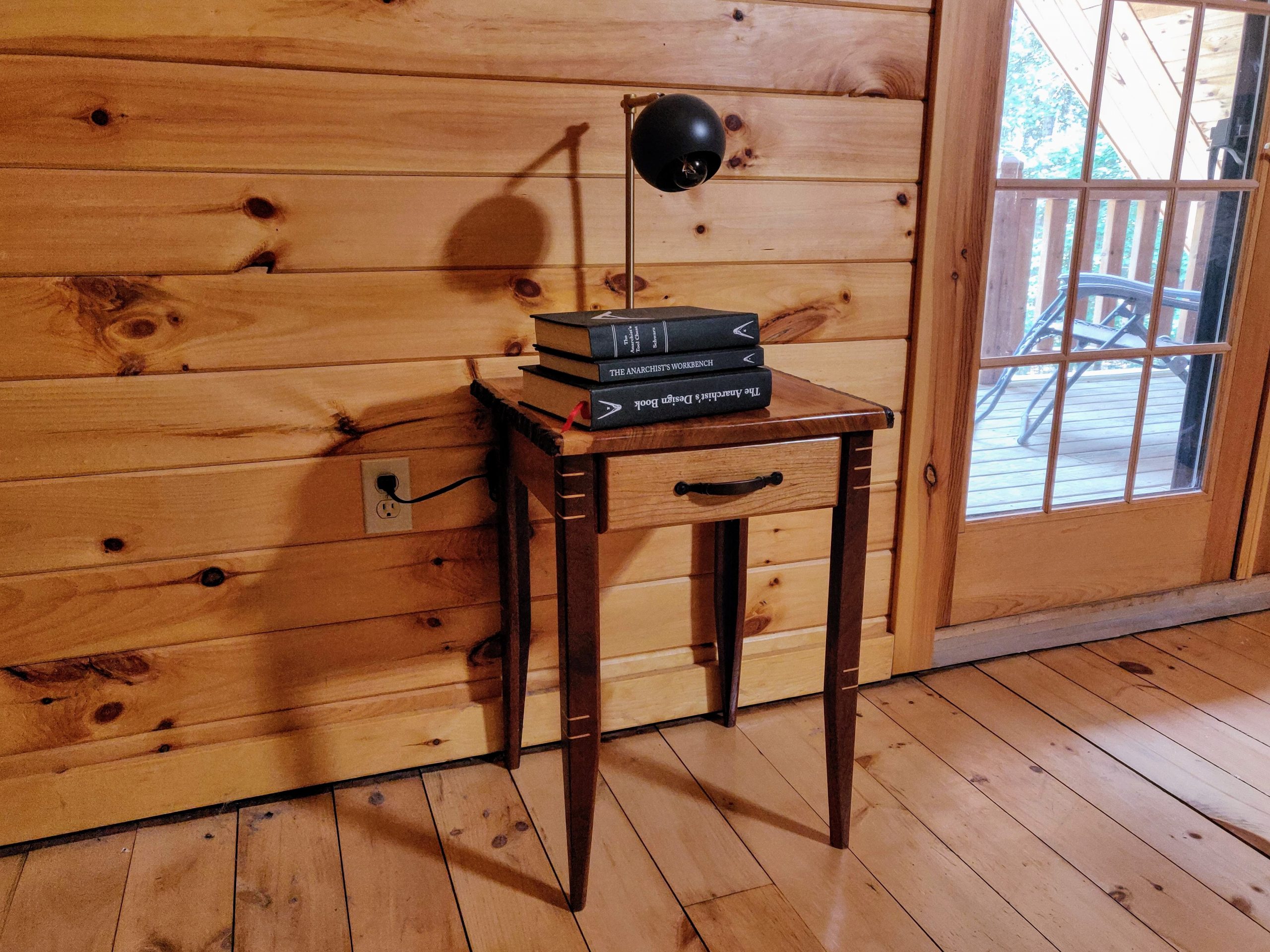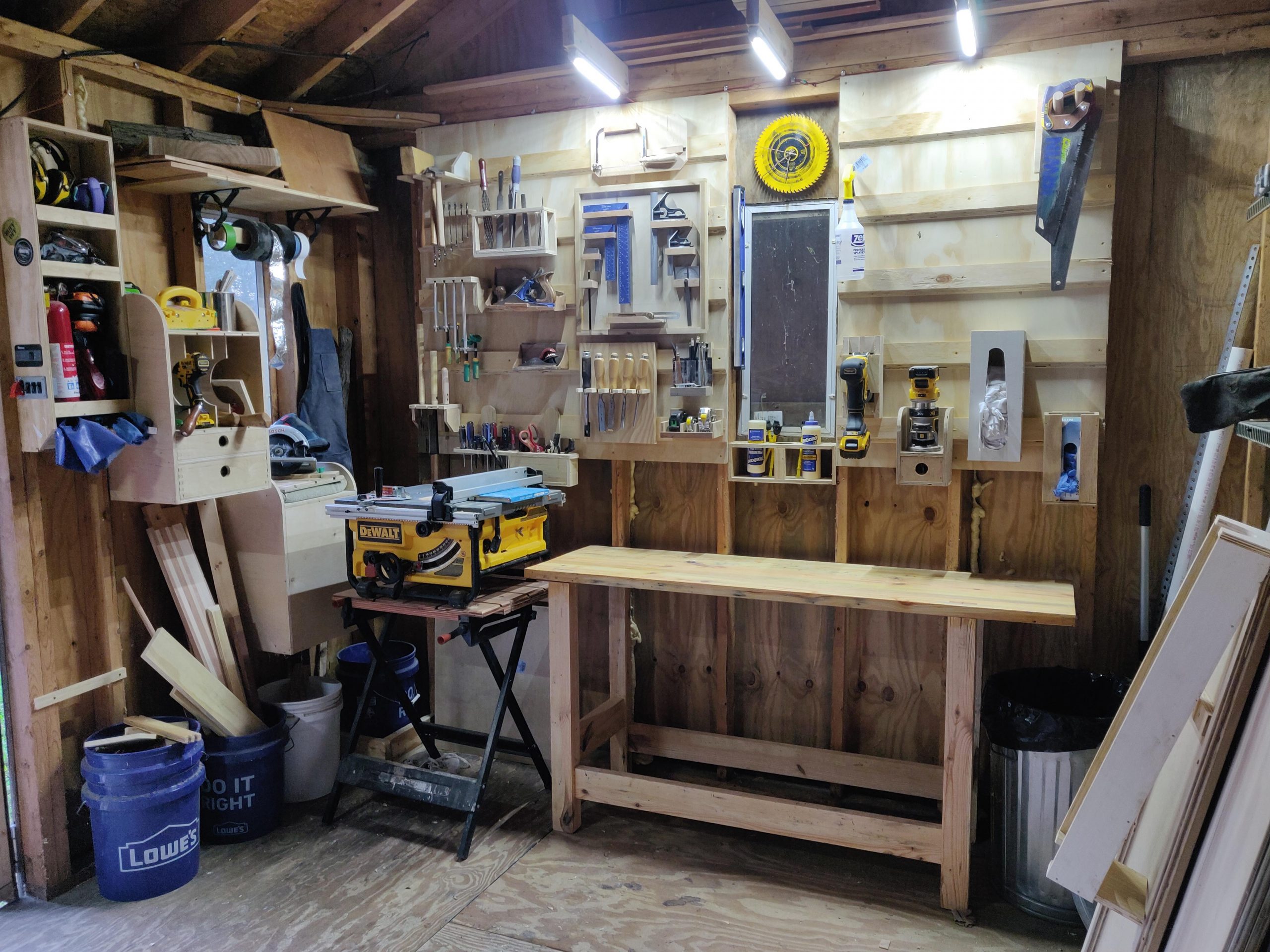
I know, I know. I started this series and then totally lost track of it. It needs an update and a fresh coat of finish. Fortunately, a few chats about getting started in woodworking inspired me to put some more work into my ridiculous woodworking manifesto.
This is Part 5 of Built to Last: A Reflection on Environmentally Conscientious Woodworking.
- Built to Last: A Reflection on Environmentally Conscientious Woodworking
- Part 1: I turned my woodshop into a personal solar farm.
- Part 2: Getting a handle on workworking chemicals, or sometimes we all need to vent.
- Part 3: Furniture as Revolution.
- Part 4: The best tool for the job is you
- A good joint is built to last: archaeologists uncover evidence for the earliest structural use of wood.
I’ve been woodworking my whole life, but this merger of science, conservation, woodworking, and the environment began with what remains one of the most popular articles on Southern Fried Science: How to build a canoe from scratch on a graduate student stipend. That was my return to serious woodworking after almost a decade and one fun way to celebrate passing my prelims.
So what do you actually need to get started woodworking?
You really don’t need nearly as much to get started as the woodworkers of YouTube may lead you to believe. Sure, as you progress you may want a really nice sander, you may find a domino joiner appealing, you might want to drop $1000 on a full set of nice hand planes, or maybe you start investing on milling machines.
But, at the beginning, you need something that cuts and something that connects. My freshman year of college, David Shiffman and I started a ridiculous company that recovered used lofts from dumpsters and dorm rooms at the end of the year, stored them over the summer, and then sold them back at a steep discount to incoming students as a recycled alternative to building a new loft. They had character.
We had exactly two power tools between us. A corded Skil drill that I paid $20 for and didn’t even have variable speed, and a very old corded jigsaw from a brand that doesn’t even exist. A hammer, a cheap handsaw, and the screwdriver that came in my truck’s spare tire kit rounded out our arsenal. We disassembled, rebuilt, and modified thousands of lofts using those tools. It really doesn’t take much.
When Amy and I built our Prelim canoes, we had a few more tools between us, but not much. I treated myself to the cheapest Compound Miter Saw at Lowes, plus a Black and Decker jigsaw and random orbital sander. That’s really all we used, and all I used for a very long time. That Jigsaw was terrible, but, you know what, it stuck around all the way through our move out to San Francisco and our farm phase in Virginia. I only finally upgrade it last year.
You can make great stuff with a few terrible tools. As long as you take your time, plan things out, and understand how your tools work, you can adapt what you have to whatever you need. The best tool for the job is always you.
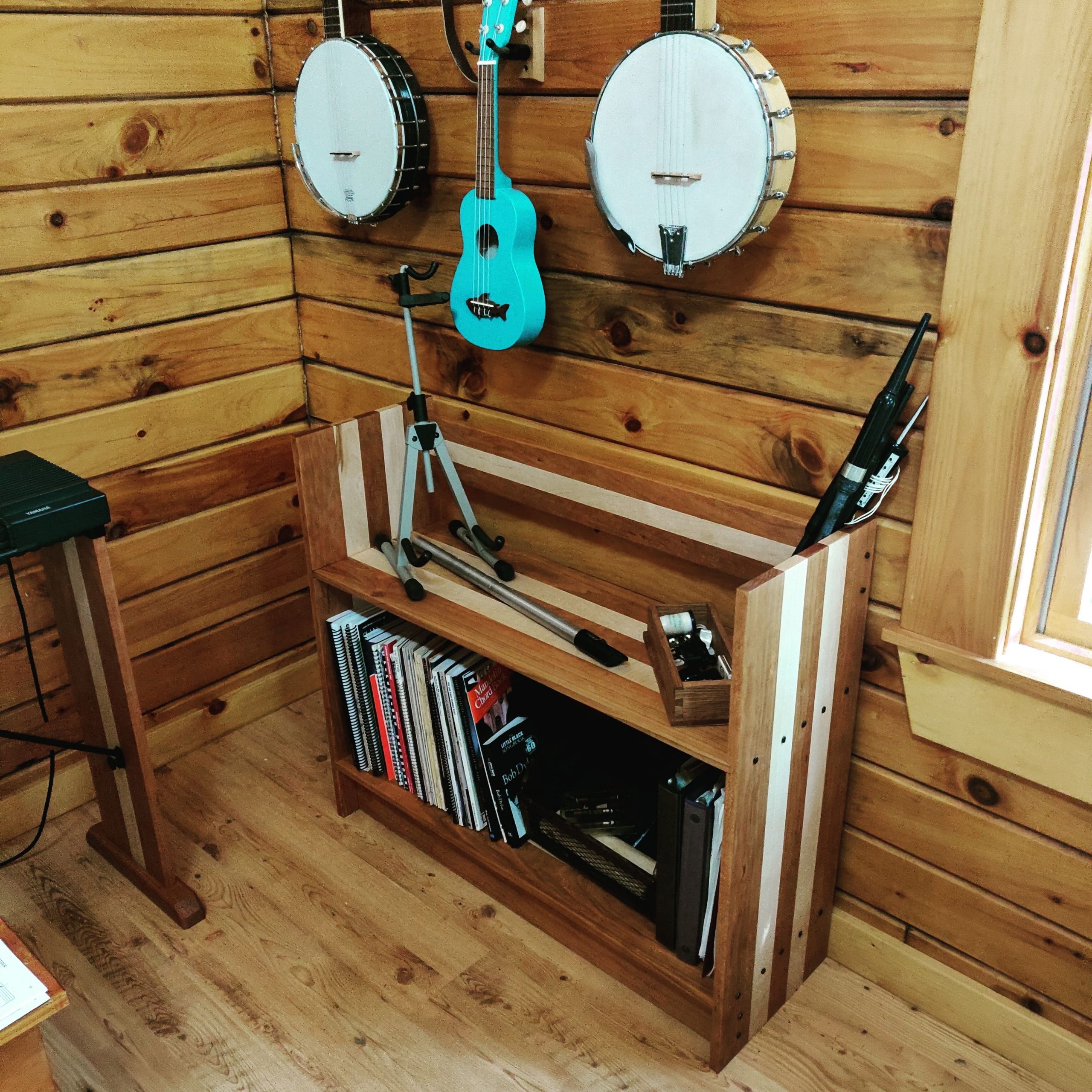
But it’s 2022, and the current tool landscape is awesome. Cordless tools were just starting to get good when I started building out my kit and I didn’t have the vast ecosystem of single platform tools that we have now. I also wasn’t quite as deep into hand tools and milling.
A Starter Set
What would I get today if I were new to woodworking and looking to get started?
Pick an brand you like and looks for a four or five tool combo kit that includes a drill, impact driver, circular saw, and a charger with a couple of batteries. If you’re lucky, you might find one with a jigsaw or a random orbit sander, too. A lot of them will come with things like Sawzalls and oscillating multitools, which are awesome for specific jobs, but you might not need them (my Sawzall comes out about once every 3 years, but it was essential for when we built that massive Pig Cooker). They often try to pass off a speaker or flashlight as one of the tools, and that always feels a bit weaselly.
Note: I’m an old-time fan of Stanley Black and Decker. Like, Alonso Decker Jr. personally gave me 1 share of Black and Decker when I turned 13-level fan. So I work mostly with the SBD brands (currently DeWalt, Craftsman, Black and Decker, Stanley, Irwin, Porter-Cable, et al.) but, honestly, most of the big name tools brands are perfectly find for weekend woodworking and you’ll figure out what you like. Most of my power tools are DeWalt, but I have some 18v Bosch tools 12v Milwaukee and they’re great.
A quick cruise through Amazon (I know, I know, but we use affiliate links to keep the servers running. Try to find it somewhere else if you can) brings up a few nice kits.
- This Craftsman 5-tool bundle has the four tools I think everyone should start with, plus a flashlight that you will probably forget about tomorrow, for a pretty good price.
- This Ryobi 6-tool set has the driver, drill, and circular saw, plus some other good but maybe not super useful for you tools for about the same price.
- And this DeWalt 3-tool plus a flashlight set has the big three tools to get started.
- The other option is to get a Drill/Impact Driver kit, a bigger battery, and then build your collection out as needed with tool-only sets (they don’t come with batteries and chargers, but eventually you’ll have enough batteries that you don’t need more). I have this DeWalt kit and it is great.
- You also, of course, need a good set of bits and blades for those tools.
And that’s the real secret. Pick a brand that has a lot of tool options on the same battery platform, get a small kit to start, and then just pick up tool-only deals a la carte as the need arrives.
Getting more Sophisticated
Once you know what you like to build and how you like to work, you can start thinking about larger general purpose tools as well as specialty tools. Eventually, you’re going to end up with a table saw, but you don’t need to go super fancy. I’ve had the same jobsite saw for ten years, and have built some stunning pieces of fine furniture on it. There’s lots of bells and whistles you can add as you scale up, but there’s no reason to feel like you need a huge cabinet saw to start.
But, if you’ve got the money, just get a SawStop. They’re good and they have that safety break which stops the saw blade if it senses your finger. They aren’t cheaper, but they are cheaper than losing a finger. And they just came out with a cute little compact table saw.
I have a DeWalt jobsite table saw that’s no longer made, but have heard nothing but praise about their current generation of jobsite saws. And many of them will take batteries or wall power, which is nice.
I also have a compound miter saw, and the newest sliding compound miter saws are pretty fantastic, but I haven’t felt the need to upgrade because 99% of the cuts I make on a miter saw, I can also do by hand or with a circular saw.
I have two routers, a heavy Porter Cable for hogging out material that now pretty much lives on my slab flattening jig, and a little trim router for cutting grooves and making clean edges. You may discover that you want a router, but it’s certainly not necessary. For big routers, you’ll want something corded, they just pull too much power. For trim routers, cordless is better so there’s one less thing to get in your way.
Finally, and my only explicit tool recommendation, is the Bosch GEX18V-5N 18V Brushless 5 In. Random Orbit Sander. I’ve chewed through several random orbital sanders, and this one, though expensive when you add in the battery and charger, is hands down one of the best sanders I’ve ever used. It’s low vibration and great dust collection. I shied away from cordless sanders for ages because the extra weight of the battery adds fatigue and they don’t run as long, but this thing is incredibly well-balanced with a 4-amp hour battery and I have yet to run low on power during long sanding sessions. This thing is on par with the professional grade sanders that run upwards of $900.
If your actual job involves writing, a good sander can save you from chronic carpal tunnel down the road.
Niche Tools for Niche Needs
I got into milling my own wood, which comes with its own set of tool needs. I added a chainsaw mill to my repertoire as well as a benchtop thickness planer. Neither is necessary if you’re just starting out, and as you settle in to the kind of woodworking you want to do, you’ll have a better idea of the kinds of tools you need.
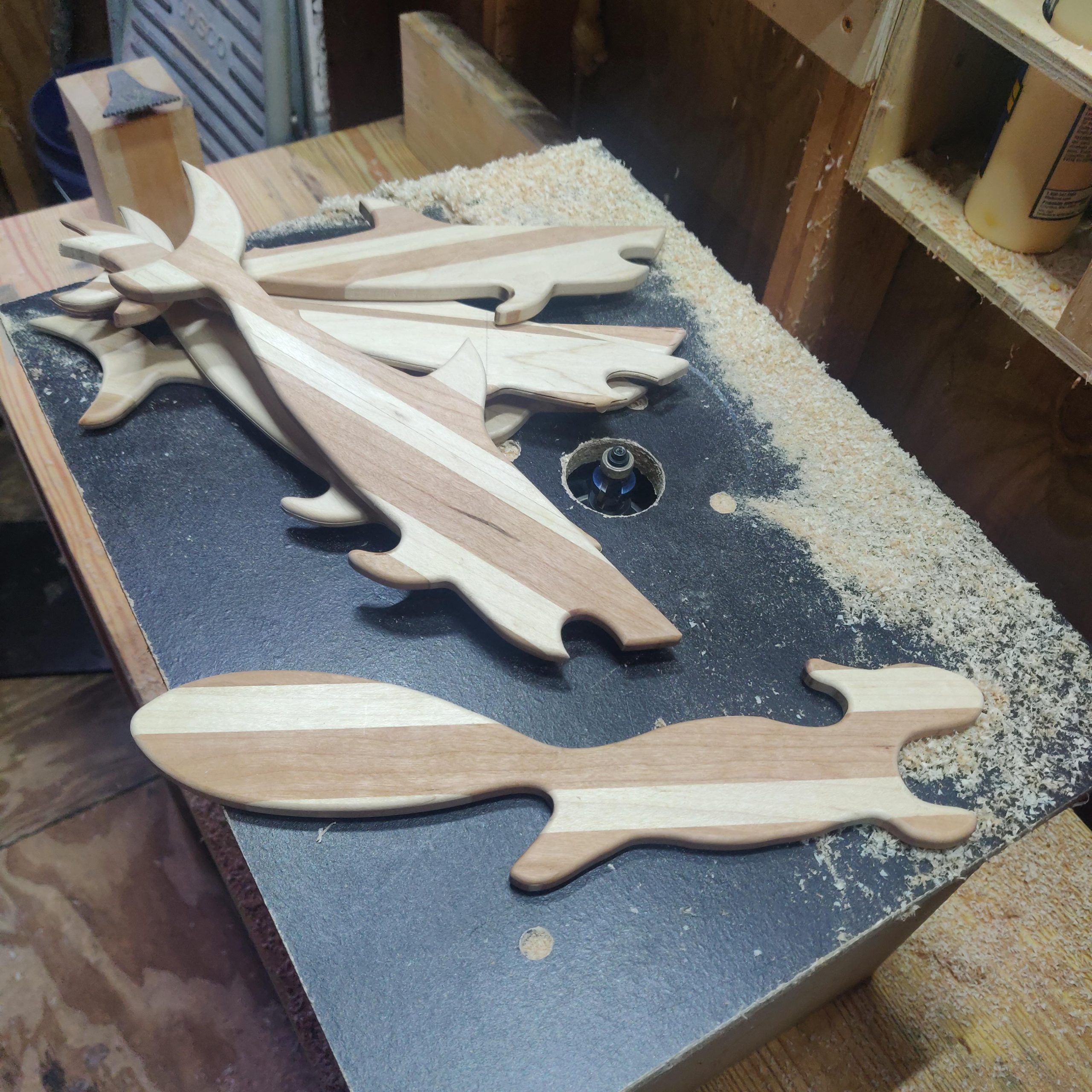
I also built a massive router sled, which is used to flatten very large pieces of wood. I also built a router table for my trim router to do very precise work on smaller pieces. One thing that will happen as you gain skill is that instead of buying tools, you will end up making your own jigs and guides to make your current tools do the things you need. Because the right tool for the job is you.
Hand Tools are Grand Tools
I have a lot of hand tools and I am easing more and more into hand tool workworking, including greenwood working and bushcraft. It’s more relaxed, quieter, and produces less mess. For me, who predominantly uses woodworking as a way to relax and unwind, rather than as an occupation where efficiency matters, hand tool woodworking is ideal.
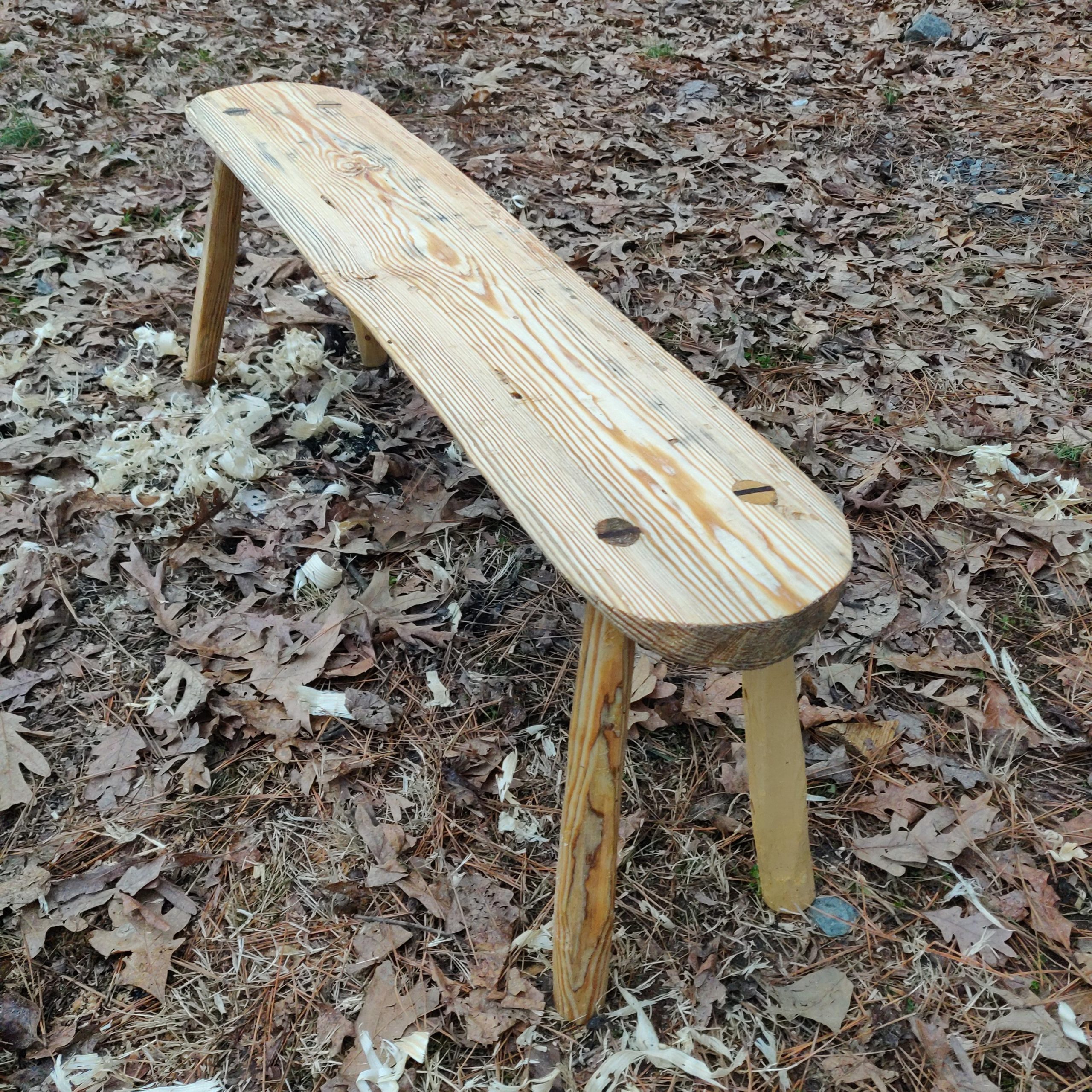
For a starter set, you need a small hammer, screwdriver set, hand saws, marking tools, a square and tape measure, and a wrench. The screwdriver and wrench are mostly for tuning a fixing your power tools.
Stepping up a tier, chisels are a great addition, as is a spokeshave or drawknife. Once you start looking at planes, you need to think about your time and budget. I’ve had great luck with a very cheap plane, but it required dozen of hours of work to get it machines and tuned to the point where it could actually take a good shaving.
There are a million options for a good handsaw, but a double edged Japanese pull saw is far and away the best bang for your buck. And they are a joy to cut with.
You can go very fancy with marking and measuring tools, and it’s another thing you’ll get a feel for as you advance. Just know that the most expensive marking tools aren’t any better than a good mid-priced tool. And the cheapest ones often aren’t worth the metal they’re stamped on. Except the Swanson Speed Square. Those are great.
Southern Fried Science and the OpenCTD project are supported by funding from our Patreon Subscribers. If you value these resources, please consider contributing a few dollars to help keep the servers running and the coffee flowing.
All photos by author.