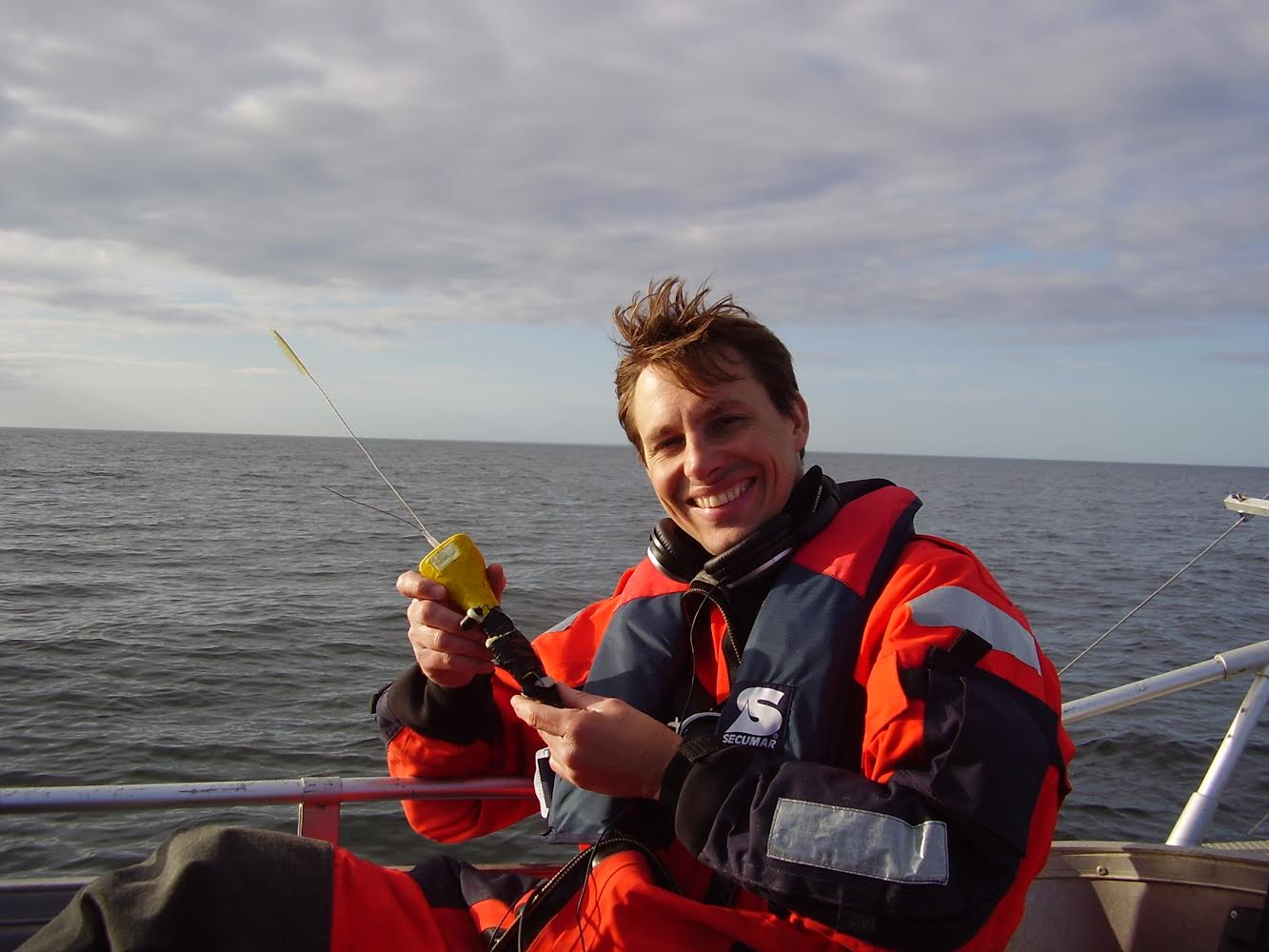
 Andrew Wright is a British marine biologist that has been working on the science-policy boundary around the world for over a decade. His experiences have led him to champion a better communication of science to policy makers and the lay public. His research has included a population viability analysis for the vaquita, sperm whales bioacoustics and the impacts of noise on various marine mammals. Andrew is currently working on several projects, most relating to investigating either sleeping behaviour or chronic stress in wild cetaceans. He is also spearheading efforts to bring more marketing techniques into conservation outreach.
The ever-logical Spock once said “The needs of the many outweigh the needs of the few.” Then he didn’t. Then he did again. (Thanks J. J. Abrams.)
But I digress.
Regardless of which Spock you are listening to, the logic is still sound. For example, most people would agree that it is sometimes necessary to put a few people in harm’s way to protect the entire population of a nation. Likewise, a system that taxes a few of the world’s wealthiest to help out the masses is generally accepted as a good idea.
The logic also holds when it comes to helping endangered species survive and recover. Decision-makers essentially try to maximise the returns of their investments, making sure that the greatest number of animals are protected for the all-too-limited funds available to take on the task at hand.
So when the world went crazy over the death of Marius the giraffe in February of this year, many conservation biologists found themselves in a state of disbelief.
Of course, the vast majority of those in the business of conservation will freely admit that the welfare of animals in zoos and aquaria is important. They are in our care and we have an ethical obligation to look after them and make sure they remain healthy and happy. And this is especially true in the case of endangered species.
So what is the problem?
Well, the trouble is that conservation of wild animals is woefully underfunded.
Let us look at a case in point. In August a new report was released stating that the worlds’ smallest cetacean (a group that includes whales, dolphins and porpoises), the vaquita, was down to just 97 animals and would likely to go extinct in the next four years. Crucially, all the necessary laws are in place; the solution is better enforcement and retraining of fishermen. And all this needs is money. And probably less than a movie star can make on a single movie.
On an environmental scale this is both tragic and a surprisingly easy fix. But, while a reasonable number of news agencies have covered the story, and continue to do so, the level of public outrage since that time can be best described as non-existent.
In another case, Suni, a 34-year-old male northern white rhino in the Ol Pejeta Conservancy, a wildlife conservancy in Kenya, died last week, leaving only six left in the world – all in captive facilities. The future of the species is now extremely bleak as Suni was one of the last two breeding males. And yet no-one seems to have noticed.
And therein lays the problem. We, as a society, cry foul over the perceived unethical treatment of animals that solidly inhabit our world, but apparently care little for those that live on the fringes. Consider that the western black rhino was officially declared extinct at the end of 2013, with very little fanfare, while the staff of Copenhagen Zoo received death threats over one giraffe from a healthy subspecies. The very existence of the vaquita and both the northern white and Javan rhinos currently hang in the balance, while many other animals, including two other subspecies of giraffe, are also listed by the IUCN as endangered. But there is no shouting and screaming.
Meanwhile, public outcry caused huge amounts of money to be offered up to buy Marius and ship him off to another location. In a previous case, ridiculous sums of money were invested in the ultimately unsuccessful attempt to reintroduce Keiko (of Free Willy fame) back into the wild (although he did enjoy a probably extended retirement in a Norwegian sea pen).
One reason often given for this is that people identify with animals with names. Accordingly, the money spent on such individuals simply wouldn’t be available for conservation otherwise, as people would not have offered it up. However, the lack of response to Suni’s death seems to contradict this. As do two other recent examples, Satao, the largest elephant in the world, and another huge tusker, Mountain Bull, that were both killed by poachers in late May of this year. These magnificent and important animals had names, but despite some media coverage the outpouring of outrage simply did not materialise. So perhaps it is simply that people can only identify with those animals they can see for themselves.
It is right that we protect the rights of animals in our care. But we must also remember that all wild animals are likewise at the mercy of human actions. We kill them for a handful of trinkets. We tear down their homes. We pollute their food and water. But the overwhelming majority of animals suffering in such ways find no spontaneous offers of new homes; no funds being set up for their welfare and security; no celebrities tweeting about how horrible their treatment is.
Animal rights are an ethical issue. It is an issue that should receive our attention. But if animals do indeed have rights, then don’t we have an ethical obligation to uphold the welfare and safety of all animals?
It’s important to understand and maintain the difference between an animal rights group (PETA , SSCS, HSUS ) and an animal welfare group ( local Shelters , wildlife rescues etc. )….
Otherwise the mixing of terms does a real disservice to animal welfare groups ……