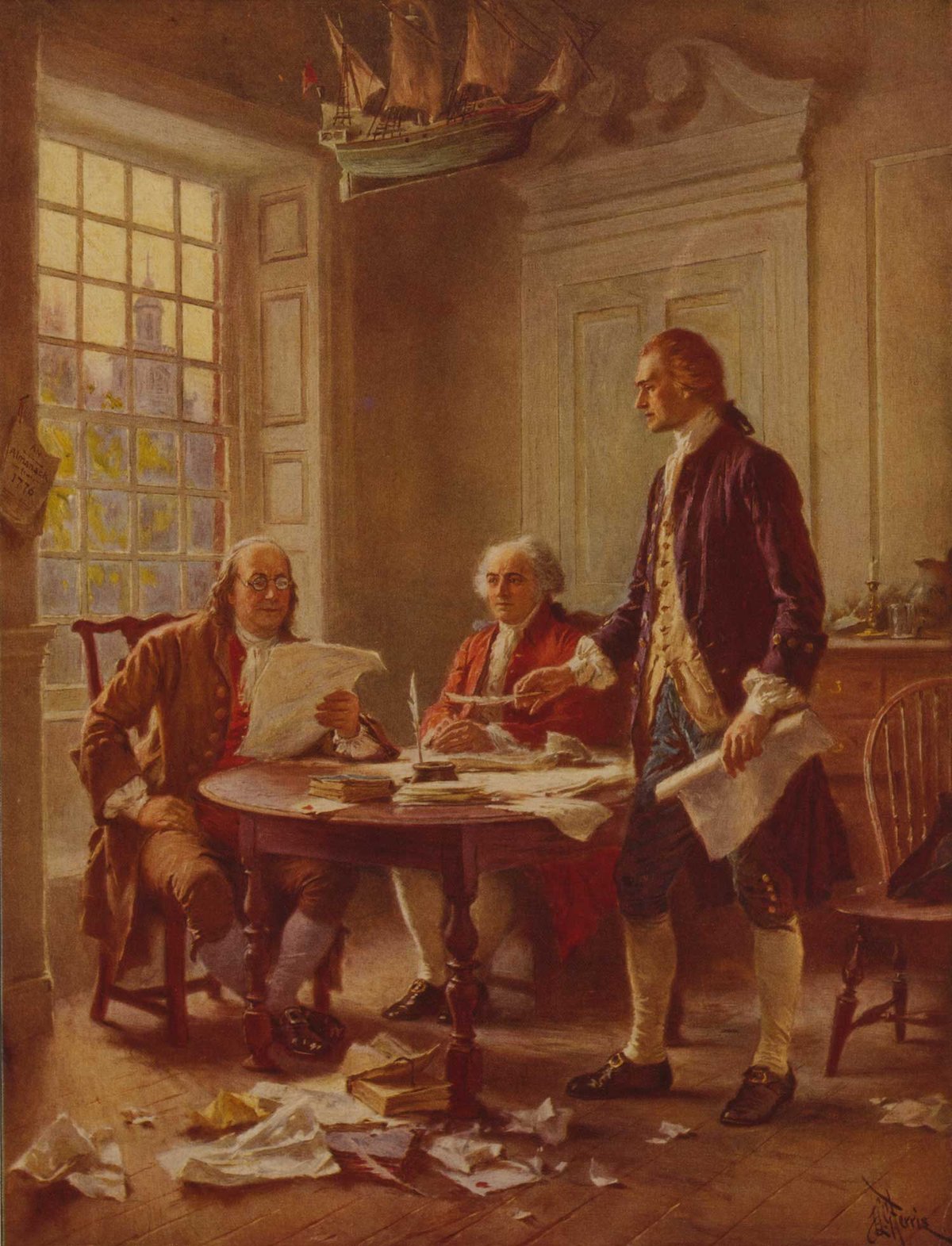
“Someone open up a window!” Adams yells.
“No!” a Congressman barks back.
“It’s stifling!” Adams protests.
“It’s hot as hell!”
“It’s ninety degrees! Have mercy, John, please! It’s hot as hell in Philadelphia!”
If you’ve ever seen the play or watched the movie musical 1776, you probably remember the Founding Fathers sweating through their wool waistcoats. The opening scene famously captures John Adams and the Continental Congress screaming at each other to open the windows in the Pennsylvania State House.
Historically, Philadelphia summers have always been swampy. But if John Adams thought 90 degrees in July was a miserable, historic ordeal, he would absolutely lose his mind looking at the weather data 250 years later.
We haven’t even hit the official start of summer yet, and both Philadelphia and Washington, D.C. are already racking up 90-degree days at an alarming pace. During April and May, the Mid-Atlantic has been baking in temperatures that used to be reserved for mid-July.
Here is how the 2026 year-to-date scoreboard looks for 90-degree days as of June 1.
~5 Days for Philadelphia:
- Philly hit the accelerator on April 15, hitting 91°F and breaking a daily record that had stood since 1941.
- The city logged an official four-day heat wave from May 17 to May 20. The mercury reached 96°F on May 18, but the real hammer dropped on May 19.
- Philadelphia soared to an astonishing 98°F, completely smashing its all-time record for the month of May.
~7 Days for Washington, D.C.
The nation’s capital was even worse – it started rewriting the history books early this year.
- On April 15, Reagan National Airport officially hit 90°F. That didn’t just feel hot; it shattered a 154-year-old daily temperature record. The region ended up hovering near or at the 90-degree mark for about two to three days that week.
- From May 17 to May 20, D.C. suffered through an intense, multi-day spring heat wave. The city logged consecutive 90-degree days, peaking with a scorching 96°F on Monday, May 18, and a blistering 97°F on Tuesday, May 19.
Combined, these two historic baseline cities have already experienced roughly 10 to 11 days of 90-degree temperatures before the first page of the June calendar was even turned.
When the Continental Congress met to draft the Declaration of Independence, a 90-degree day was a miserable peak-summer anomaly that pushed human tolerance to its limits. Today, greenhouse gases have altered the baseline of our atmosphere so thoroughly that these stifling temperatures are pushing their way deep into early spring.
If the Founding Fathers were around today, they wouldn’t just be arguing about opening a window. They’d be looking at a world where “hot as hell” isn’t a seasonal complaint anymore, but rather it’s the reality of the climate we’ve built.