Skip to content

Southern Fried Science

Over 15 years of ocean science and conservation online

  • Home
  • About SFS
  • Authors
  • Support SFS

Beneath the Broken Ice: Playing with Mud

Posted on April 18, 2012April 18, 2012 By Guest Writer
Science

Megumi Shimizu is a graduate student aboard the RVIB Nathaniel B. Palmer to collect sediment samples near Antarctic Peninsula as a part of the LARISSA project. She is interested in microorganisms and biogeochemistry of marine sediments; how the metabolism of microorganisms interact with the surrounding environment and the chemical components in sediments. See her first update here.


Are you playing with mud on the research vessel?

Some people on the ship joked when they saw me processing my sediment core. Yes, I’m playing with mud in Antarctica. Sampling sediments can tell us a lot, not only what happened across geologic time scales, but also what kind of organisms are living in the sediment, microbiology, and the geochemical conditions. We are serious about collecting mud and playing with mud.
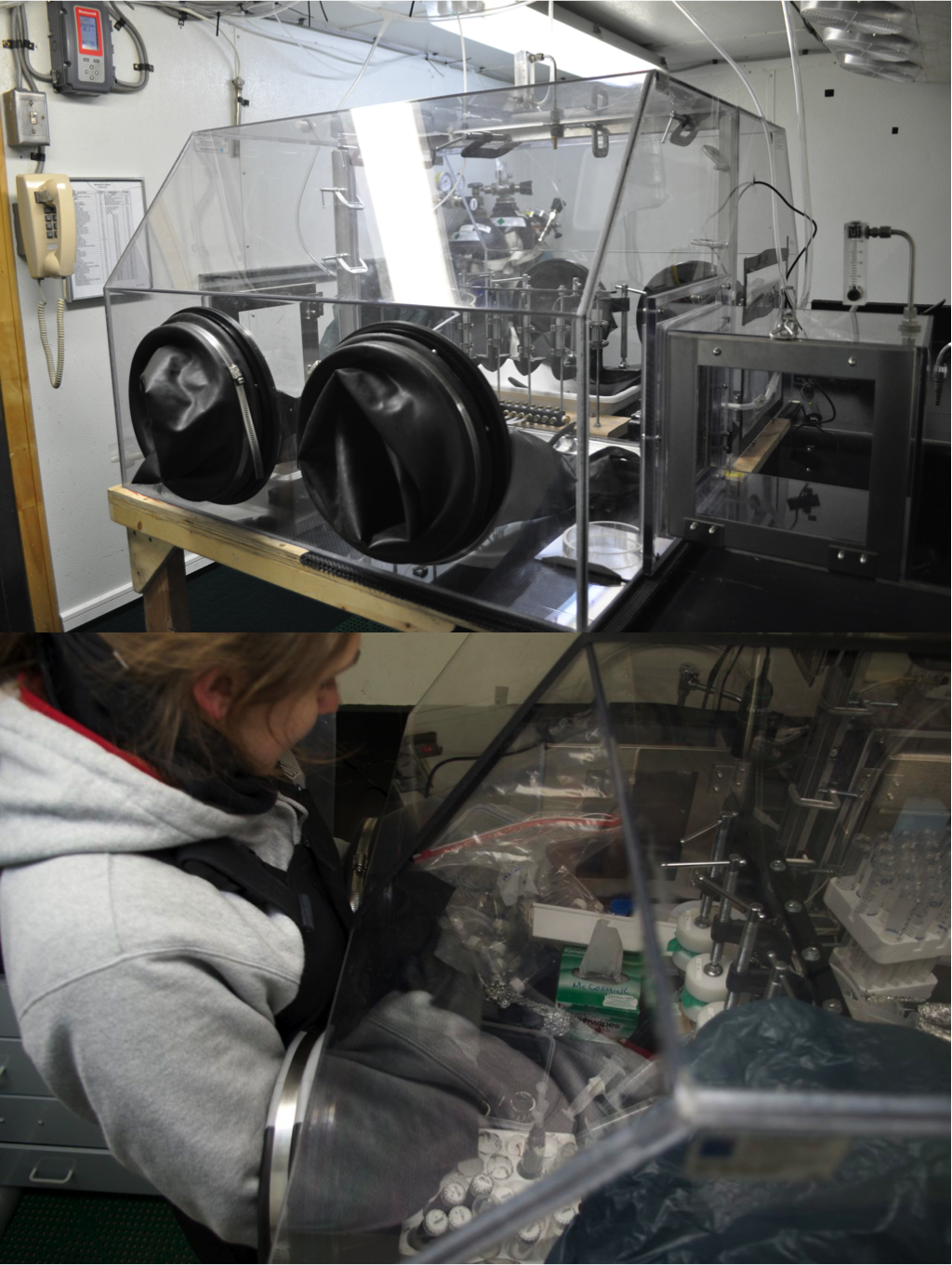
upper panel: the entire view of glove box, lower panel: Liz Bucceri working on sediment sample processing in glove box. Photo by Megumi Shimizu

Nathaniel B. Palmer has three pieces of equipment to collect sediment; the megacore, kasten core, and jumbo piston core. The length you can reach below seafloor is different, 40cm, 1.5 to 6m and 24m respectively. Megacore is more suitable for biological studies since it preserves the sediment-water interface better than kasten core and jumbo piston core. Geological studies prefer Kasten core and jumbo piston core so that they can get older data from the sediment.

For my microbial lipid biomarker study, I’m taking samples from the megacore and kasten core. Along with microbial lipid and DNA, our team is collecting sediment and porewater (the water in pore spaces of sediments) to analyze geochemical properties of sediments, such as methane, sulfate, sulfide, and dissolved inorganic carbon. To maintain the condition of the sediments as close as the real environment, the sediment cores are processed under the condition of cold (~0C degree) and anoxic (no oxygen). How to make that condition? We have a special room called “The Little Antarctica”, on the ship, which is a big refrigerator containing glove box. A glove box is the transparent container with two pairs of gloves. The inside of the box is kept practically anoxic (less than 1% of oxygen. Atmospheric oxygen is ~20%).
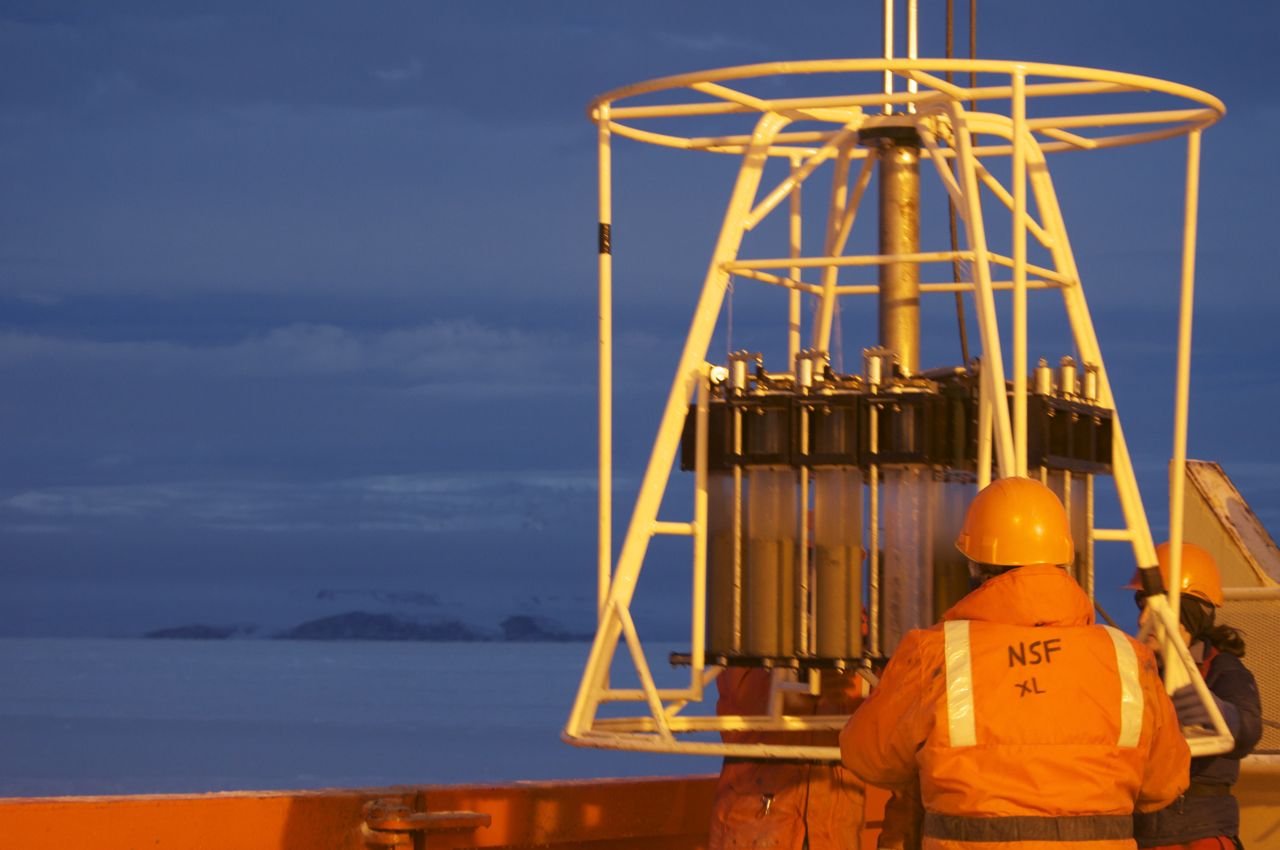
The megacore recovered up on back deck right before sunrise. Photo by Megumi Shimizu

To maximize the efficiency of sampling (40days in our case), science members are assigned to day shift or night shift. Unless the sampling needs sunlight, samples can come on the deck anytime. Sediment sample is one of those that can be up on deck at 3am. Marine technicians who are the specialists of handling sampling equipment on the deck, and science members work together to recover the equipment.

Like other research vessels, we all have to be aware of the danger of the back deck: heavy equipment, wires and so on. In addition, we are in Antarctica. 3am on the deck, the temperature often goes down around -20C and wind-chill -40C. We all have to wear vivid orange color float coats or mustang suites, layers of gloves, steal toe shoes and hard hats.

As a night shift person, I work from midnight to noon. Don’t worry about my meals. We have fourth meal called midrat served from 11:30pm to 12:30am in addition to breakfast, lunch and dinner. On shift time, I work for sampling or sample processing in the lab or in the little Antarctica. The ship also has a gym and lounge space so that we can relax after work by watching movies or playing foosball if you have time. My favorite way to refresh is to see the sunrise from the back deck. If I got tired after hours and hours or days and days of sample processing, I can just hop out to the deck (of course with a float coat and a hard hat).

The spectacular view of Antarctica charges my energy to work more!
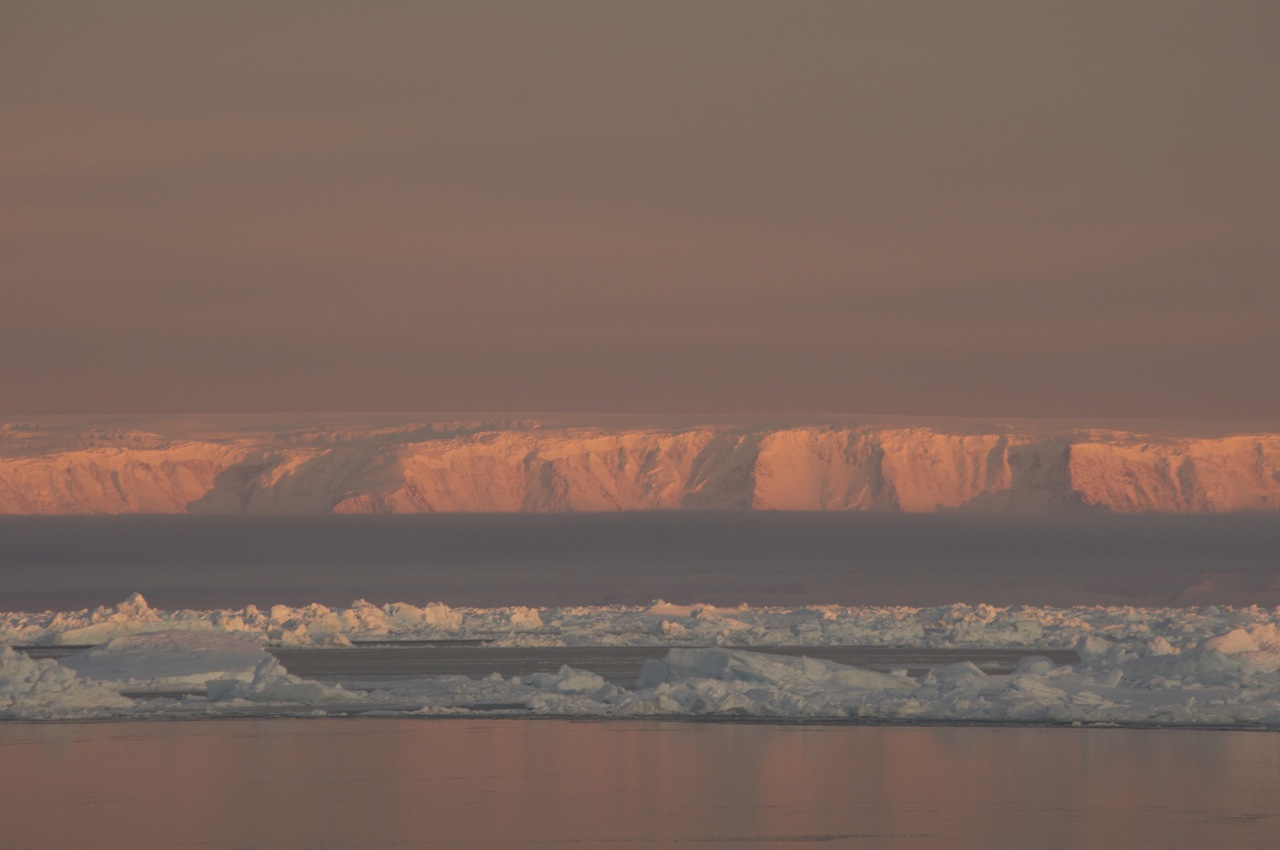
Sunrise in Antarctica. Photo by Megumi Shimizu


Share this:

  • Click to share on Bluesky (Opens in new window) Bluesky
  • Click to share on Facebook (Opens in new window) Facebook
  • Click to share on Reddit (Opens in new window) Reddit
  • Click to share on Threads (Opens in new window) Threads
  • Click to share on WhatsApp (Opens in new window) WhatsApp
  • Click to share on Mastodon (Opens in new window) Mastodon

Related

Tags: Antarctica climate change glove box LARISSA. Larsen B lipids megacore Microbes

Post navigation

❮ Previous Post: VentBase – securing the conservation of deep-sea hydrothermal vent ecosystems
Next Post: How severe are shark population decreases, and how do we know? ❯

You may also like

Weekly Salvage
Cuttlefish camouflage, climate change, ShellBorgs, and more! Monday Morning Salvage: June 19, 2017.
June 19, 2017
Uncategorized
Cleaning beaches and saving right whales: Thursday Afternoon Dredging, September 13, 2018
September 13, 2018
Uncategorized
Did monster hunters find a 120 meter long giant squid on google maps?
June 17, 2016
Uncategorized
June is National Ocean Month and the president’s proclamation needs some fact checking.
June 7, 2017

Popular Posts

Shark scientists want their research to help save threatened species, but don’t know how. Our new paper can help.Shark scientists want their research to help save threatened species, but don’t know how. Our new paper can help.December 1, 2025David Shiffman
Norway and Cook Islands put their deep-sea mining plans on pause.Norway and Cook Islands put their deep-sea mining plans on pause.December 3, 2025Andrew Thaler
What Ocean Ramsey does is not shark science or conservation: some brief thoughts on "the Shark Whisperer" documentaryWhat Ocean Ramsey does is not shark science or conservation: some brief thoughts on "the Shark Whisperer" documentaryJuly 2, 2025David Shiffman
The Trouble with Teacup PigsThe Trouble with Teacup PigsOctober 14, 2012Andrew Thaler
What we know we don't know: impacts of deep-sea mining on whales, dolphins, sharks, turtles, and other migratory species.What we know we don't know: impacts of deep-sea mining on whales, dolphins, sharks, turtles, and other migratory species.November 20, 2025Andrew Thaler
2025: My year in writing, public speaking, and media interviews2025: My year in writing, public speaking, and media interviewsDecember 3, 2025David Shiffman
Urea and Shark OsmoregulationUrea and Shark OsmoregulationNovember 15, 2010David Shiffman
Shark of Darkness: Wrath of Submarine is a fake documentaryShark of Darkness: Wrath of Submarine is a fake documentaryAugust 10, 2014Michelle Jewell
How tiny satellites are tracking marine wildlifeDecember 1, 2025Andrew Thaler
Build a dirt cheap, tough-as-nails field computer in a Pelican caseBuild a dirt cheap, tough-as-nails field computer in a Pelican caseJuly 21, 2015Andrew Thaler
Subscribe to our RSS Feed for updates whenever new articles are published.

We recommend Feedly for RSS management. It's like Google Reader, except it still exists.

Southern Fried Science

  • Home
  • About SFS
  • Authors
  • Support SFS


If you enjoy Southern Fried Science, consider contributing to our Patreon campaign.

Copyright © 2025 Southern Fried Science.

Theme: Oceanly Premium by ScriptsTown