Skip to content

Southern Fried Science

Over 15 years of ocean science and conservation online

  • Home
  • About SFS
  • Authors
  • Support SFS

Crab industry in crisis, world’s largest deep-sea mining vessel takes to sea, Bayou Women, ocean trash, and more! Monday Morning Salvage: May 7, 2018

Posted on May 7, 2018May 7, 2018 By Andrew Thaler 1 Comment on Crab industry in crisis, world’s largest deep-sea mining vessel takes to sea, Bayou Women, ocean trash, and more! Monday Morning Salvage: May 7, 2018
Weekly Salvage

Foghorn (A Call to Action!)

  • The Eruption at Kilauea on Hawai’i’s Big Island is truly spectacular, however hundreds of people are displaced from their homes. The mayor has directed those interested in giving donations to contact the Salvation Army at +1 (808) 756-0306.
  • Yale study: Newspaper op-eds change minds and The Long-lasting Effects of Newspaper Op-Eds on Public Opinion. Scientists and conservationists, this May, make an effort to publish a Letter to the Editor or OpEd in your local paper. If you’ve done so, please leave a link to it in the comments.

Flotsam (what we’re obsessed with right now)

  • Without seasonal workers, the Maryland crab industry is barreling towards a crisis. “Nearly half of the Eastern Shore’s crab houses have no workers to pick the meat sold in restaurants and supermarkets.” Crab crisis: Maryland seafood industry loses 40 percent of work force in visa lottery.
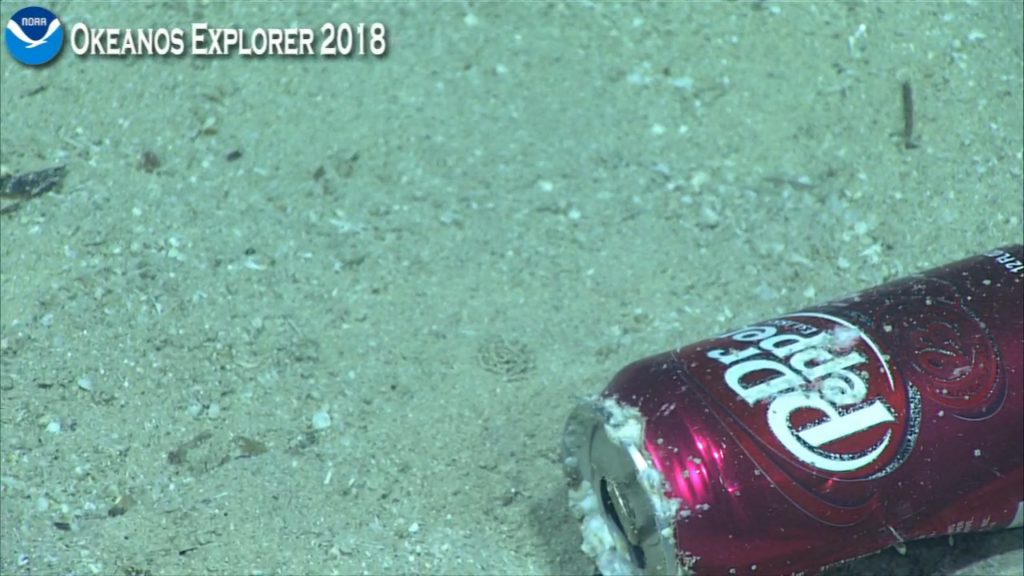
  • Trash on the seafloor. Megan McCuller has an eye-opening thread on all the trash they’re finding on the deep seafloor.
  • Lionfish Traps! Jake Levenson has been trying something similar in Dominica. New Weapons in the War on Lionfish, a Beautiful but Deadly Invader.
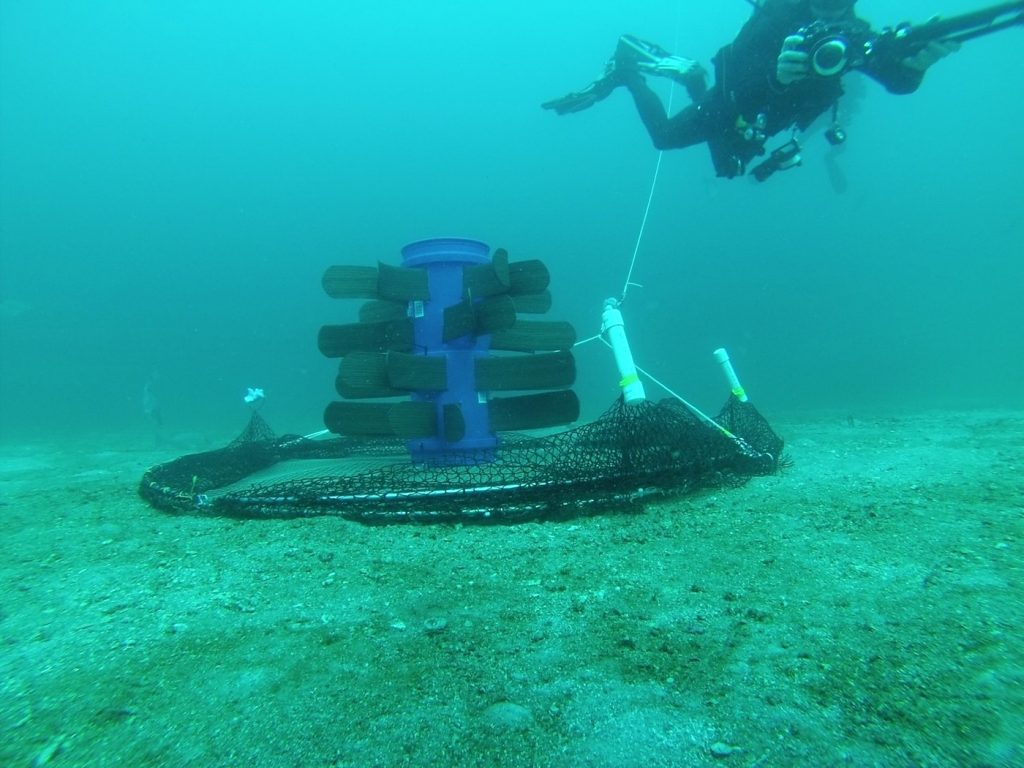
A second trap design from Gittings. Lionfish are attracted to the structures inside. (Steve Gittings/NOAA)

The Levee (A featured project that emerged from Oceandotcomm)

  • Women of the Bayou: Stories of resilience and ingenuity in south Louisiana’s changing landscape.
  • Listen to the Bayou Women radio production, too!

Jetsam (what we’re enjoying from around the web)

  • Hawaii Legislature Passes First-of-Its-Kind Ban on Sunscreens With Ingredients That Kill Corals.
  • In Oceans of DNA, Biologists Discover ‘Hidden’ Shark Diversity. Though, as a rule, I recommend always treating eDNA studies with a healthy dose of skepticism.
  • This week in deep-sea mining:
    • Anglo American to end investment in deep sea mining company Nautilus.
    • As China leads the hunt for deep-sea minerals, environmental and financial concerns come to the surface.
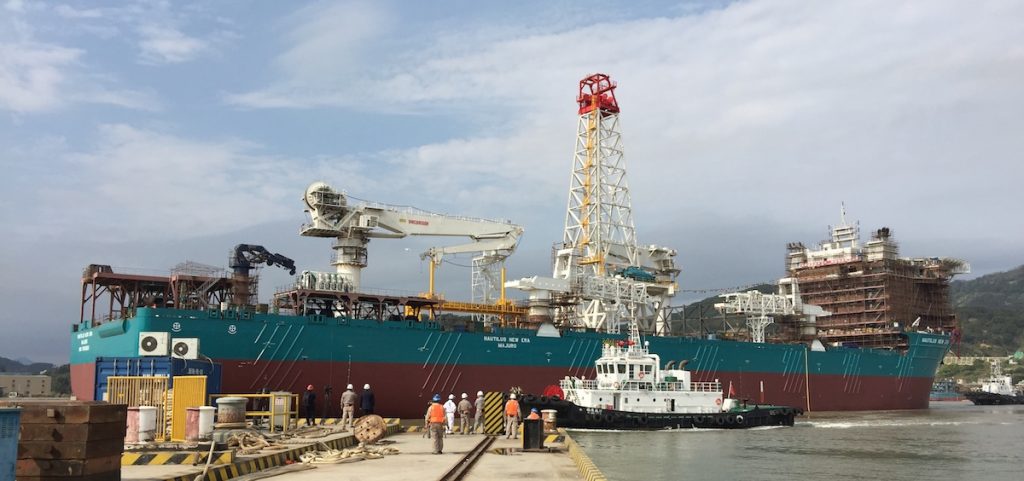
    • And now, a ship that can mine 39,000 tons of ore from a mile under water.
    • The Nautilus New Era is ~100 feet shorter than the Titanic and is longer than all but the largest aircraft carriers. It does not currently have AIS vessel tracking available.
  • Carbon Dioxide Has Never Been Higher in Humanity’s Existence. I’m sure this is fine.
  • How Oil Industry Robots Can Help Scientists Explore the Deep Sea.
  • This is the Longest Sailable Straight Line Path on Earth.
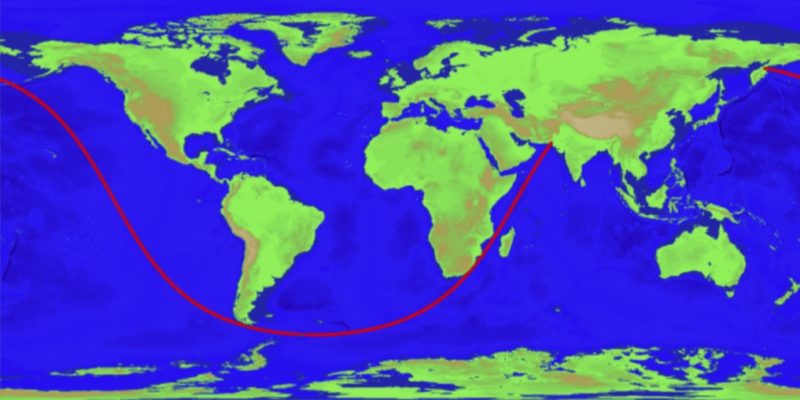
The Longest Sailable Straight Line Path on Earth. Credit: Rohan Chabukswar and Kushal Mukherjee
  • Study finds Great Lakes water, beer have varying levels of plastic particles.

Lagan (what we’re reading from the peer-reviewed literature)

  • Mcleod and friends (2018) Raising the voices of Pacific Island women to inform climate adaptation policies. DOI: 10.1016/j.marpol.2018.03.011.
  • Schedler-Meyer and friends (2018) Evolution of Complex Asexual Reproductive Strategies in Jellyfish. DOI: 10.1086/697538.
  • Christianson and friends (2018) Translucent soft robots driven by frameless fluid electrode dielectric elastomer actuators. DOI: 10.1126/scirobotics.aat1893.
  • Rosenberg and Zilber-Rosenberg (2018) The hologenome concept of evolution after 10 years. DOI: 10.1186/s40168-018-0457-9.

Shipping News (academic and ocean policy wonkery)

  • The Ugly Truth of Being a Black Professor in America.
  • Broader impacts that have impact.
  • Rethinking the graduate admissions process.

Driftwood (what we’re reading on dead trees)

  • Reassembling Rubbish: Worlding Electronic Waste by Josh Lepawsky.

Derelicts (favorites from the deep archive)

  • In sexual selection and thermoregulation, bigger is better, at least for fiddler crabs.
  • What happens when we punch a hole in the seafloor?
  • The disastrous feedback of what happens when fisheries funding dries up.

Feel free to share your own Foghorns, Flotsam, Jetsam, Lagan, Shipping News, Driftwood, and Derelicts in the comments below. If you enjoy Southern Fried Science, consider contributing to our Patreon campaign. For just $5 per month, you can support the SFS Writers Fund, which helps compensate your favorite ocean science and conservation bloggers for their efforts.
Share this:

  • Click to share on Bluesky (Opens in new window) Bluesky
  • Click to share on Facebook (Opens in new window) Facebook
  • Click to share on Reddit (Opens in new window) Reddit
  • Click to share on Threads (Opens in new window) Threads
  • Click to share on WhatsApp (Opens in new window) WhatsApp
  • Click to share on Mastodon (Opens in new window) Mastodon

Related

Tags: bayou women blua crab broader impacts carbon china crab picking crabs deep sea dna fliddler crabs funding GRE Great Lakes hawaii immigration Letter to the Editor Lionfish Louisiana Maryland Nautilus Minerals New Era oil OpEp plastic racism robots rubbish Sailing sexual selection sharks traps trash

Post navigation

❮ Previous Post: Write to your newspaper, banning plastic in the Bahamas, vanishing atolls, and more! Monday Morning Salvage: April 30, 2018.
Next Post: Seafaring neanderthals and switchblade fish: A mega Thursday Afternoon Dredging, May 10th, 2018 ❯

You may also like

Science
Surviving Grad School: What to expect from your stipend
January 29, 2013
Blogging
Space Crabs, Big Boats, and Fake Sharks: What you read on Southern Fried Science in March
March 31, 2024
Weekly Salvage
Chesapeake Requiem, the Black Friday for Climate Change, whale earwax, killing the GRE, and more! Monday Morning Salvage: November 26, 2018
November 26, 2018
Weekly Salvage
Smart phones are worse than you think, SeaWorld takes a dive, this week in deep-sea mining, and more! Monday Morning Salvage: April 9, 2018
April 9, 2018

One thought on “Crab industry in crisis, world’s largest deep-sea mining vessel takes to sea, Bayou Women, ocean trash, and more! Monday Morning Salvage: May 7, 2018”

  1. Yuliya Ivanova says:
    May 7, 2018 at 3:58 pm

    It’s so sad to see that many trash on the seafloor. it’s crazy what people do, why not just to collect your trash after a picnic on the beach …. so sad. 🙁

Comments are closed.

Popular Posts

Shark scientists want their research to help save threatened species, but don’t know how. Our new paper can help.Shark scientists want their research to help save threatened species, but don’t know how. Our new paper can help.December 1, 2025David Shiffman
Norway and Cook Islands put their deep-sea mining plans on pause.Norway and Cook Islands put their deep-sea mining plans on pause.December 3, 2025Andrew Thaler
What Ocean Ramsey does is not shark science or conservation: some brief thoughts on "the Shark Whisperer" documentaryWhat Ocean Ramsey does is not shark science or conservation: some brief thoughts on "the Shark Whisperer" documentaryJuly 2, 2025David Shiffman
The Trouble with Teacup PigsThe Trouble with Teacup PigsOctober 14, 2012Andrew Thaler
What we know we don't know: impacts of deep-sea mining on whales, dolphins, sharks, turtles, and other migratory species.What we know we don't know: impacts of deep-sea mining on whales, dolphins, sharks, turtles, and other migratory species.November 20, 2025Andrew Thaler
2025: My year in writing, public speaking, and media interviews2025: My year in writing, public speaking, and media interviewsDecember 3, 2025David Shiffman
Urea and Shark OsmoregulationUrea and Shark OsmoregulationNovember 15, 2010David Shiffman
Shark of Darkness: Wrath of Submarine is a fake documentaryShark of Darkness: Wrath of Submarine is a fake documentaryAugust 10, 2014Michelle Jewell
How tiny satellites are tracking marine wildlifeDecember 1, 2025Andrew Thaler
Build a dirt cheap, tough-as-nails field computer in a Pelican caseBuild a dirt cheap, tough-as-nails field computer in a Pelican caseJuly 21, 2015Andrew Thaler
Subscribe to our RSS Feed for updates whenever new articles are published.

We recommend Feedly for RSS management. It's like Google Reader, except it still exists.

Southern Fried Science

  • Home
  • About SFS
  • Authors
  • Support SFS


If you enjoy Southern Fried Science, consider contributing to our Patreon campaign.

Copyright © 2025 Southern Fried Science.

Theme: Oceanly Premium by ScriptsTown