Migratory species depend on a vast, interconnected ocean. Disturbance in the deep-sea isn’t localized, it ripples across a globally-connected ocean and impacts made today may persist long after our species fades.
Deep-sea mining is an industry in its infancy. As it has slowly matured towards commercial production, the major focus on the impacts of deep-sea mining has been to the benthic ecosystem, how mining will reshape the seafloor, what recovery looks like, and the fate of the plumes produced by the mining tool, the dewatering process, and accidental discharge. Much less attention has been paid to the direct and indirect impacts of deep-sea mining on whales, dolphins, sharks, turtles, and other highly migratory marine species who feed, reproduce, and travel through areas affected by deep-sea mining.
This summer, I was tapped by the UN Convention on the Conservation of Migratory Species of Wild Animals (CMS) to conduct the first broad-scale knowledge gap assessment looking at potential impacts on CMS-listed species. This include marine mammals, sharks and other cartilaginous fish, bony fish, marine reptiles, and seabirds. This does not include all highly migratory species in these groups (tuna, for example, are managed under a different set of treaties).
The first question I needed to answer was just how many CMS-listed species have ranges that overlap with existing mining exploration leases (nationally and internationally) or with proposed mining sites. I found that nearly half of CMS-listed marine mammals (48%), more than a third sharks and rays (38%), more than half of CMS-listed marine reptiles (56%), and 1 CMS listed of bony fish have ranges that overlap with potential or proposed deep-sea mining sites. Of the CMS-listed bird species, 7%, including most major seabird groups, have ranges that overlap with mining sites.
The bulk of the impacts are the usual suspects: direct damage to habitats that are ecologically important to migratory species or their prey, and the generation of plumes at the seafloor, midwater, and surface that can smother habitat, disrupt chemical cues, disturb navigation, and alter prey behavior.
More specific to migratory species is the sustained long-term noise produced by a major mining operation which alters the acoustic environment and interferes with echolocation, communication, navigation, and other soniferous behaviors. The increased presence of mining vessels and equipment can also alter animal behavior by changing habitat use, attracting prey species, creating light pollution, and increasing vessel traffic, resulting in a higher risk for ship strikes.
Adding an extra element to this study, I also found that climate change-induced range shifts are causing migratory species to alter their foraging and breeding grounds and shift migratory routes, leading to potential future conflicts with mining operations that are, currently, unaccounted for.
We should delight in scientific discovery, and as a largely benthic deep-sea ecologist, I had a lot to learn about migratory species in preparing this report. Some of the more surprising findings, for me include:
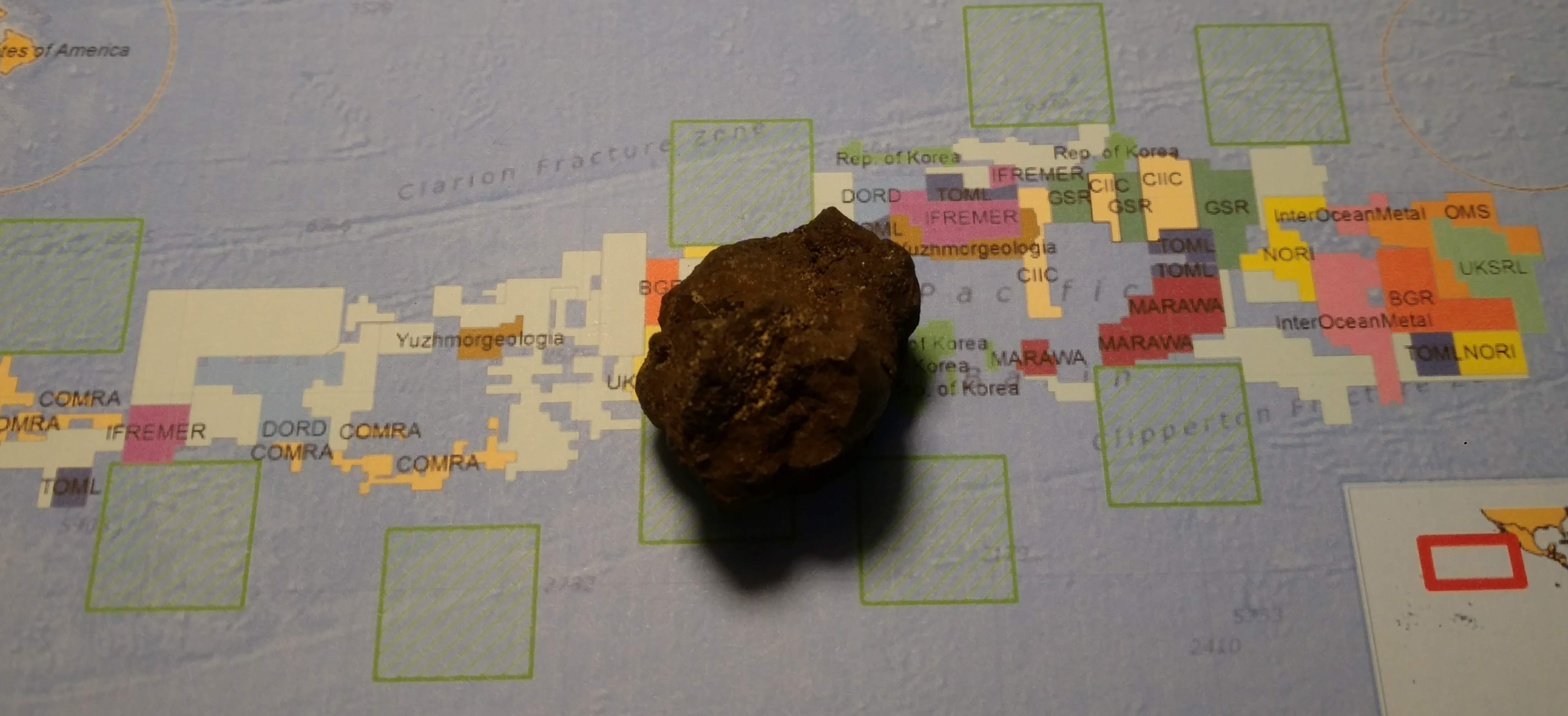
- Beaked whales may actual feed at the abyssal depths of nodule fields in the Clarion-Clipperton Zone. Scars on the seafloor 6000 meters deep look like feeding gouges from an unidentified species of beaked whale. Beaked whales may comprise up to a quarter of all cetacean species and they are among the most understudied group in the ocean. The Cuvier’s Beaked whale currently holds the record for deepest documented dive at 3000 meters, but if these feeding gouges are confirmed, it would double the depth record for deep-sea cetaceans.
- Because Norway’s proposed (but currently paused) plan for deep-sea mining includes inactive hydrothermal vents in their EEZ, coastal marine mammals that we don’t often think about as threatened by offshore mining, including harbor porpoises, grey seal, and harbor seals, may overlap with the mining zone.
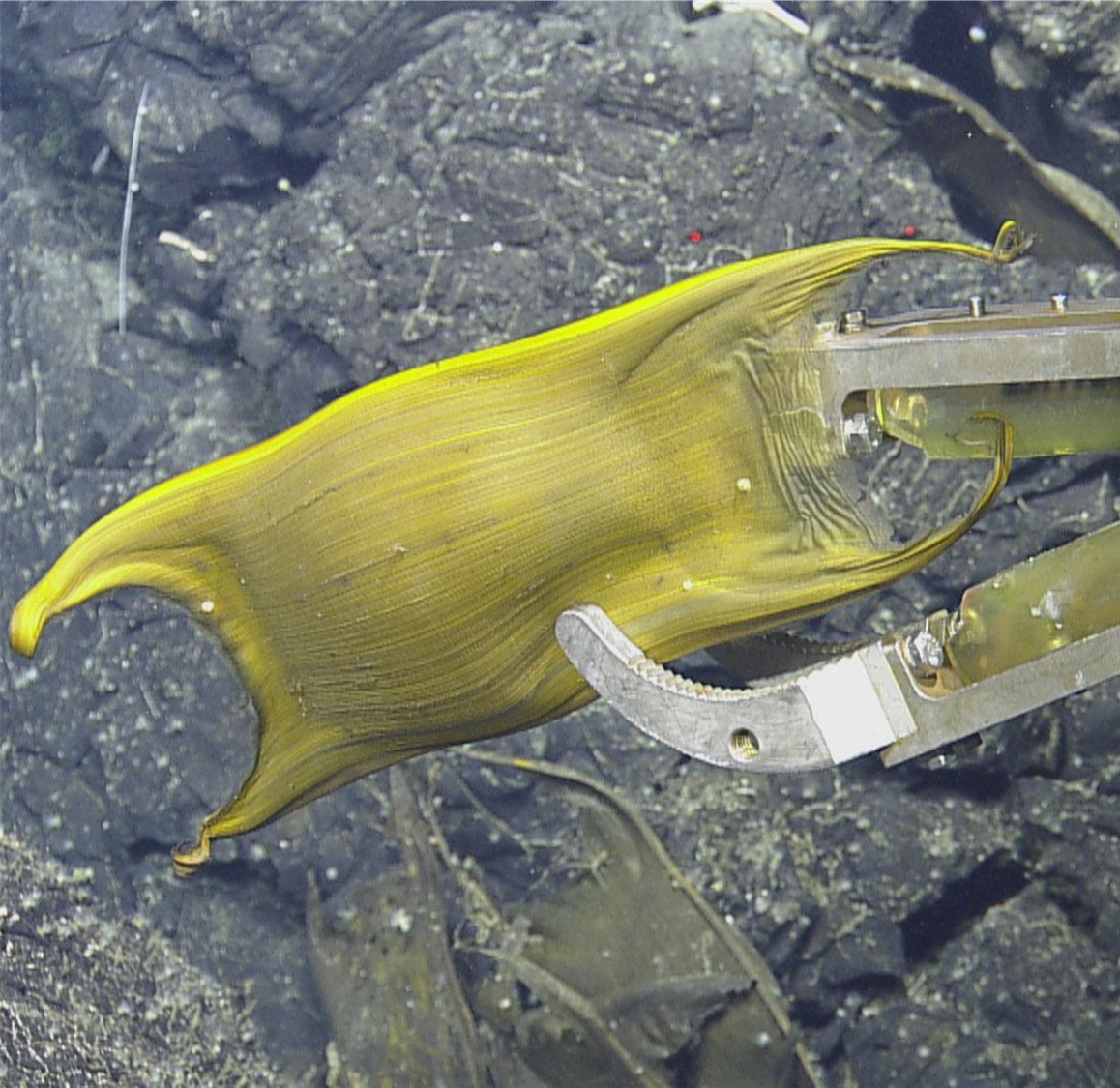
- There is a species of deep-sea skate which uses the heat of diffuse flow hydrothermal vents to protect and incubate their egg cases. The extra heat in the cold deep sea helps them gestate faster and the chemical-rich slurry which most non-vent-specialist deep sea species find unpleasant could minimize predation.
- Hammerhead sharks love hanging out over seamounts, placing them at particular risk for ferromanganese crust mining in the Pacific.
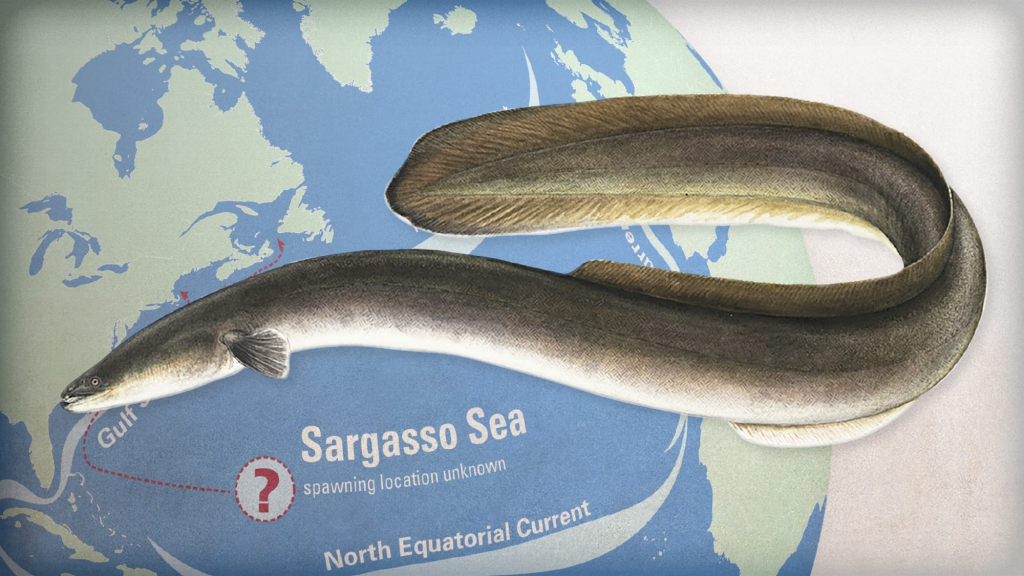
- There’s only one bony fish listed under the Convention on Migratory Species whose range overlap with mining prospects (many, many more commercially important highly migratory fish like tuna billfish also migrate over mining site, but are covered by different treaties): the European Eel. I also blew my first deadline reading about eel reproduction and migration because it’s just so neat. European Eels migrate out across the Atlantic to the Sargasso Sea to spawn, and their glass-clear offspring make the long journey home, a process that could take 18 months or more. Five to 25 years later they go back to the Sargasso Sea to repeat the cycle. And during those long migrations, they may travel across several mining exploration leases issued for hydrothermal vent on the Mid-Atlantic Ridge.
- Kemp’s Ridley sea turtles do not currently overlap with any existing or proposed deep sea mining site, but over the last decade they have experienced a major range shift, leaving the protective harbors of the Gulf of Mexico and Atlantic Coast to venture east, across the Atlantic, where some have been found as far north as the Netherlands. If this trend continues, future generations of Kemp’s Ridleys may find themselves cruising through mining operations on the Mid-Atlantic Ridge.
- We don’t really know how seabirds are going to respond to large stationary vessels deployed for months or years on station. Light and gas flares from offshore oil rigs attracts seabirds but they tend to shy away from offshore wind installations. Boats on station also act as fish aggregating devices and seabirds may find them compelling new areas for feeding.
So what do we know? We know that currently, the data gaps are huge. International Seabed Authority (ISA) contractors aren’t investing much time in observing highly migratory species and there are precious few entries in the DeepData database maintained by the ISA. Credit where credit is due: The Metals Company did provide acoustic mooring data which lets you hear how active cetacean behavior is in the CCZ, including dolphin whistles, minke whale calls, and sperm whale clicks.
We know that as deep-sea mining ramps up, we will see more and more interactions between highly migratory marine species and mining operations. For impacts from things like the mining plume, we still need extensive study to understand just how a metal-rich plume from the deep benthos impacts midwater species, including migratory animals and their prey. Noise will be a persistent problem throughout the life of the mine and it is contingent upon mining contractors to develop tools and procedures to minimize those impacts.
But for many of the predicted impacts, we already have tools to minimize and mitigate the harm. Ship strikes can be eliminated by reducing vessel speed and maintaining constant vigilance. Light can be minimized. Unlike most extractive industries, deep-sea mining has no hard infrastructure at sea, which means where migration patterns are known or critical habitats are discovered or rare species are observed, they can temporarily suspend operations or more to other sites within their leases.
Above all, Precaution is the watchword of deep-sea mining. Development of deep-sea mining must proceed under the precautionary principle. Solid, independent environmental baselines must be established, comprehensive, transparent environmental impact assessment must be available, and management plans based on best-available science and must be agreed upon by all stakeholders, not just the scientists and mining companies, before a new and novel extractive industry can begin operation on the deep seafloor.
The full report in English, French, and Spanish, as well as the summary and recommendations prepared by the CMS Secretariate, are available here: 25.2.3 Deep-Sea Mining
For scientists, policy wonks, and other ne’er-do-wells, you can cite the report as:
Cover photo: A skate egg case collected from a polymetallic sulphide deposit in the Galápagos Islands. Image via Ocean Exploration Trust.
Southern Fried Science is free and ad-free. Southern Fried Science and the OpenCTD project are supported by funding from our Patreon Subscribers. If you value these resources, please consider contributing a few dollars to help keep the servers running and the coffee flowing. We have stickers.