Last week, I published an OpEd at The Hill arguing that the Trump Administration has fundamentally altered the United States’ relationship to the international maritime community and the UN Convention on the Law of the Sea. It’s tough to capture everything I wanted to say in a few brief paragraphs. Here are some of my thoughts that didn’t make it into the final piece.
Do you really think this administration will ratify the Law of the Sea?
No, absolutely not. Ratification is a long shot even in the best of times, and this is far from the best of times. The best chance we had was during Obama’s first term, with 60 Democrats in the Senate, and even that is not quite enough to reach the 2/3 vote require to ratify a treaty. But the Trump Administration has less than a year to complete its policy agendas and then two years of an almost certain oppositional congress. We need to be thinking about what they next US president needs to do to restore our maritime reputation, and that begins with joining the treaty that codifies the Law of the Sea, rather than expecting our allies and adversaries to assume good faith where no good faith has been presented.
What happens if the US joins UNCLOS?
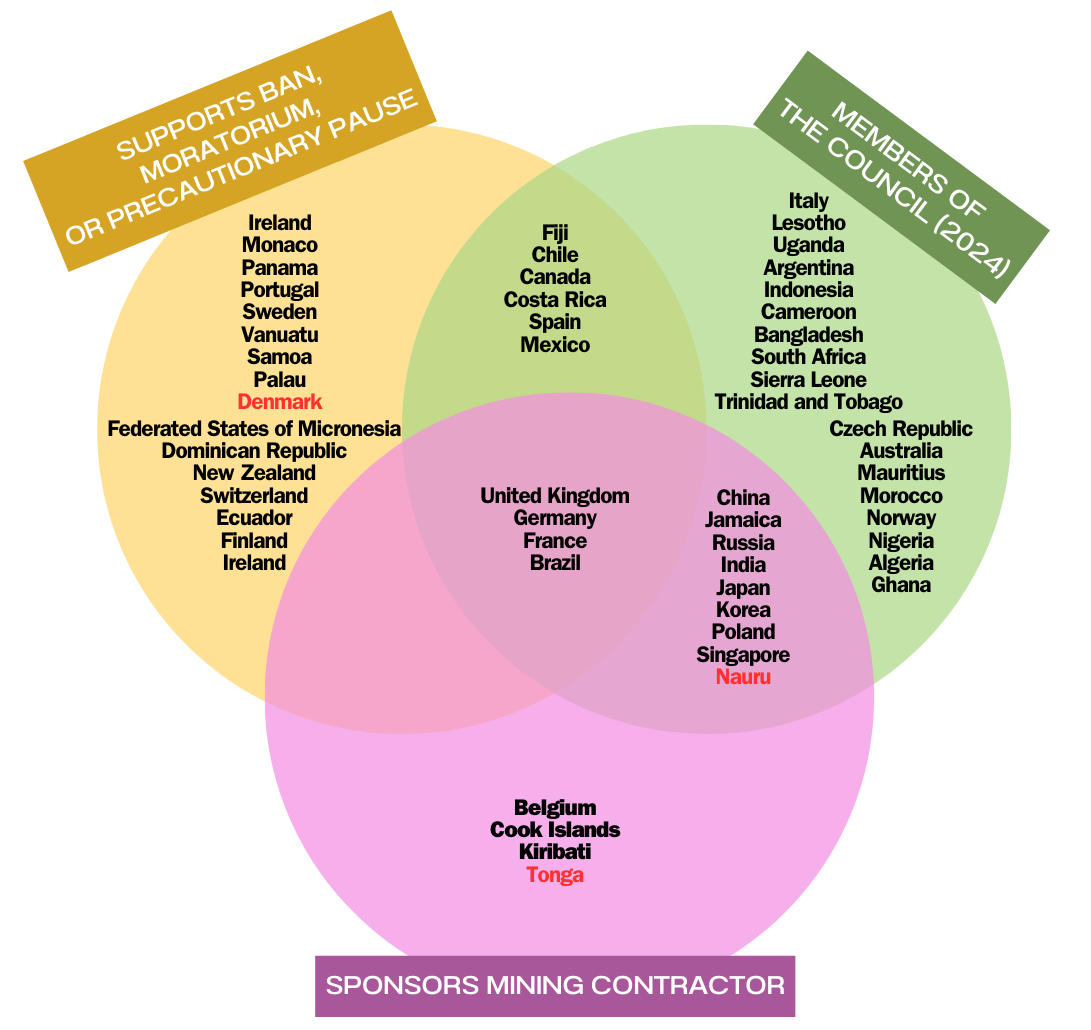
The US was a pivotal player in the negotiation of the UN Convention on the Law of the Sea and would benefit substantively from codifying the maritime rules which it already treated as customary law, until this administration upended those norms. Recognition of the US claims to its extended outer continental shelf through the Commission on the Limits of the Continental Shelf would reinforce, for example, President Biden’s declaration extending the US EEZ in Alaska and the Mariana Islands. At the International Seabed Authority, the US would immediately get a seat on the ISA Council and access to the areas of the Clarion Clipperton Zone that the ISA has been informally holding back in anticipation of the US eventually ratifying the treaty. Beyond that, we would actually be beholden to the rules that have ensure half a century of peace and prosperity in the ocean. Future administrations would be barred from radical departures of ocean law like ordering missile strikes on shipwrecked sailors or arbitrarily blockading straights and other restricted waterways.
What happens if the US doesn’t join UNCLOS?
With every administration that passes without ratification, the United States’ relationship to the global maritime community further erodes. The Blue Economy depends on international cooperation, a breakdown in the rules governing that cooperation creates a world that is less safe, more expensive, and less free. UNCLOS is the second most important international treaty after the UN Charter itself. A worst case scenario involves other major powers deciding that, if the US isn’t going to abide by these agreements, we shouldn’t have to either. A weakened UNCLOS means and end of the Ocean Century.
Isn’t this just a ploy to slow down deep-sea mining?
I know, I know. I’m the deep-sea mining guy. I’ve been outspoken in my opposition specifically to the US attempts to access the high seas in defiance of the UN Convention on the Law of the Sea. Ratifying UNCLOS would end that initiative.
There’s a reason so many commercial have turned to the US instead of the ISA. They’ll say it’s about regulatory certainty, the Seabed Authority dragging its feet, the Moratorium push. The reality is that the economics of deep-sea mining in 2026 still don’t work. The rush to the seafloor is a rush to lock up investment capital. The longer the process takes, the more clear it becomes that this is not the promised multi-billion dollar industry.
Deep-sea mining is, first and foremost, a geopolitical game. The private companies diving in because they see the gleam of cobalt at the bottom of the world do so at their peril. Nations use deep-sea mining to advance political goals on multiple fronts. Few of those goals have to do with the actual mining of metals from the seafloor. The kind of certainty investors want is never going to materialize.
Southern Fried Science is free and ad-free. Southern Fried Science and the OpenCTD project are supported by funding from our Patreon Subscribers. If you value these resources, please consider contributing a few dollars to help keep the servers running and the coffee flowing. We have stickers.