Skip to content

Southern Fried Science

Over 15 years of ocean science and conservation online

  • Home
  • About SFS
  • Authors
  • Support SFS

Author: Andrew Thaler

Marine science and conservation. Deep-sea ecology. Population genetics. Underwater robots. Open-source instrumentation. The deep sea is Earth's last great wilderness.

Great Whites get down to business, the Ocean Cleanup flounders, and a livestock carrier goes down – What’s up with the Ocean this week?

Posted on September 9, 2020September 8, 2020 By Andrew Thaler
News

Frisky business for Great White Sharks. For only the second time since western scientists began studying the ocean, Great White Shark mating has been documented in the wild. Shark sex is infrequently observed in the wild, and this fisherman’s observations can provide invaluable insight in the lives and loves of this iconic species. The Ocean … Read More “Great Whites get down to business, the Ocean Cleanup flounders, and a livestock carrier goes down – What’s up with the Ocean this week?” »

New dives to Challenger Deep raise old questions about privatization and exploration

Posted on September 7, 2020September 11, 2020 By Andrew Thaler 2 Comments on New dives to Challenger Deep raise old questions about privatization and exploration
Exploration

This article originally appeared in the June/July 2020 issue of the Deep-sea Mining Observer. It is reprinted here with permission. For the latest news and analysis about the development of the deep-sea mining industry, subscribe to DSM Observer here: http://dsmobserver.com/subscribe/

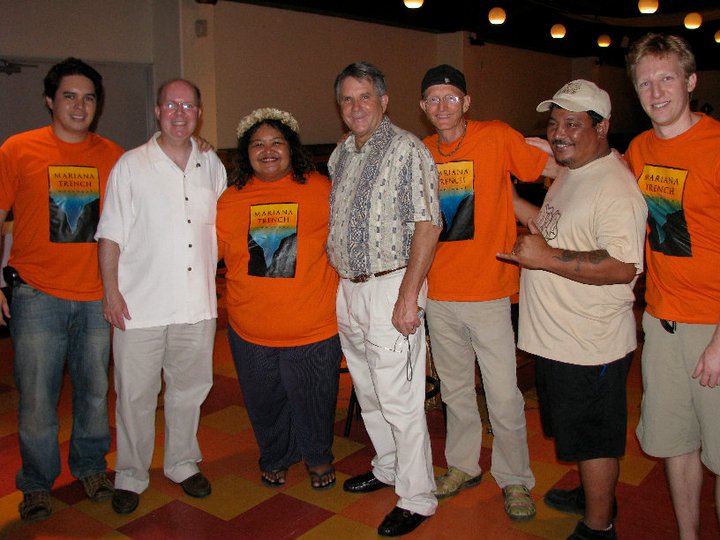
Featured Images: Friends of the Mariana Trench during the 2008 campaign to obtain Marine National Monument status
Featured Images: Friends of the Mariana Trench during the 2008 campaign to obtain Marine National Monument status for the Mariana Trench and surrounding island and seamounts.

For over 50 years, deep-ocean explorers have been able to claim that more people have walked on the moon than have dived to the deepest point on the Earth. Only two men descended into Challenger Deep in the 20th century–Don Walsh and Jacques Piccard–they were joined in the early 2010s by director James Cameron. Earlier this year, Victor Vescovo became the fourth to reach the bottom of Challenger Deep and, over the course of several subsequent dives this summer, the ranks of those who’ve reached the deepest ocean has swelled. 

Astronaut, oceanographer, and former NOAA Administrator Kathy Sullivan and explorer and mountaineer Vanessa O’Brien became the first and second woman to dive to the bottom of Challenge Deep aboard the privately owned HOV Limiting Factor, piloted by Vescovo and his team. 

Read More “New dives to Challenger Deep raise old questions about privatization and exploration” »

Dead dolphins wash up in Mauritius, mining for cobalt on the bottom of the sea, and Norwegian whaling – What’s up with the Ocean this week?

Posted on September 2, 2020September 2, 2020 By Andrew Thaler
News

The disaster continues in Mauritius. With the cleanup and salvage well underway, Mauritius has begun assessing the broader impacts of the disastrous bulk carrier wreck. Fishermen have reported seeing 30 to 30 dead dolphins floating in a lagoon near the wreckage including mothers and calfs. Dead whales, as well as sick and injured whales, are … Read More “Dead dolphins wash up in Mauritius, mining for cobalt on the bottom of the sea, and Norwegian whaling – What’s up with the Ocean this week?” »

Taking the bait, chopping up tankers, the calamari comeback, and some #scicomm advice– What’s up with the Ocean this week?

Posted on August 26, 2020August 26, 2020 By Andrew Thaler
News, Uncategorized

August 26, 2020 Don’t take the bait. Baiting fish for the sake of tourists has always engendered a fair bit of criticism. New research out of the Cook Islands demonstrates that frequent baiting at popular snorkeling sites alters fish behavior and causes harm to the reef ecosystem. Just don’t do it. More trouble in Mauritius. … Read More “Taking the bait, chopping up tankers, the calamari comeback, and some #scicomm advice– What’s up with the Ocean this week?” »

Facebook ditches drilling gear, Mauritius copes with a crisis, and a new giant rises from the deep – What’s up with the Ocean this week?

Posted on August 19, 2020August 19, 2020 By Andrew Thaler
News

August 19, 2020 Facebook is a hardware company. This week Oregonian revealed that Facebook quietly abandoned drilling equipment off of the Oregon coast. Fifty feet below the seafloor, heavy drilling equipment designed to lay fiber optic cable was damaged and abandoned by the social media company’s subsidiary. Facebook has no plans to recover the abandoned … Read More “Facebook ditches drilling gear, Mauritius copes with a crisis, and a new giant rises from the deep – What’s up with the Ocean this week?” »

The true, essential, and definitive guide to looking like a professional while teaching from home.

Posted on August 17, 2020August 17, 2020 By Andrew Thaler
The true, essential, and definitive guide to looking like a professional while teaching from home.
Academic life

Our world is in turmoil. From the chaos rises a new breed of academics, dedicated to the proposition that, amidst the fire and fury, with the seas rising around us and pandemics descending upon our communities, they alone have the foresight to lead you into the light, to guide you towards a greater good,  to brace the walls and cry out, with clarity of purpose, “No More!” They will  raise a clarion against that greatest of tribulations: looking sloppy while teaching on Zoom. 

I get it. It’s frustrating right now. We’re all trying to figure out how to be good educators and mentors and colleagues in a new, uncertain semester of hybrid classes, asymmetric learning, and teaching from a home that perhaps reveals a little too much about the grim prospects of academia to our bright eyed students. There are ways to make it better, and there are faux pas to avoid but no one has any idea what “professionalism” looks like in the age of Zoom.

This is new ground. We are the professionals. Whatever we need to do to make the class work, provide our students with an enriching and valuable education experience, and not collapse, exhausted, into a three-week-old laundry pile where we lie, like a barnacle, until the next lecture, is professional. 

But given all that, there are a few things you can do to improve the teach-from-home experience for you and for your students.

Read More “The true, essential, and definitive guide to looking like a professional while teaching from home.” »

An extremely active hurricane season, collapsing ice sheets, massive oil spills, and sexual harassment in shark science – What’s up with the Ocean this week?

Posted on August 12, 2020August 11, 2020 By Andrew Thaler
News

August 12, 2020 Buckle up and bunker down. NOAA has upgraded its predictions for the 2020 Atlantic Hurricane season to Extremely Active. We enter peak hurricane months without the buffer of a protection dust cloud swirling out of the Sahara, a reminder that climate systems on this planet are profoundly interconnected. We may see up … Read More “An extremely active hurricane season, collapsing ice sheets, massive oil spills, and sexual harassment in shark science – What’s up with the Ocean this week?” »

Bioprospecting in Practice: How a drug goes from the ocean to the clinic.

Posted on August 10, 2020August 10, 2020 By Andrew Thaler 1 Comment on Bioprospecting in Practice: How a drug goes from the ocean to the clinic.
Bioprospecting in Practice: How a drug goes from the ocean to the clinic.
Science

This article originally appeared in the June/July 2020 issue of the Deep-sea Mining Observer. It is reprinted here with permission. For the latest news and analysis about the development of the deep-sea mining industry, subscribe to DSM Observer here: http://dsmobserver.com/subscribe/

Bioprospecting, the discovery of new pharmaceutical compounds, industrial chemicals, and novel genes from natural systems, is frequently cited among the critical non-mineral commercial activities that yield value from the deep ocean. Isolating new chemicals or molecular processes from nature can provide substantial benefits to numerous industries. The value of products derived from marine genetic resources alone is valued at $50 billion while a single enzyme isolated from a deep-sea hydrothermal vent used in ethanol production has an annual economic impact of $150 million. 

In contrast to other extractive processes, bioprospecting is driven by and dependent on biodiversity. The greater the diversity and novelty of an ecosystem, the greater the likelihood that new compounds exist within that community. Bioprospecting is also viewed as light extraction, compounds only need to be identified once–actual production happens synthetically in the lab–thus leaving ecosystems relatively undisturbed compared to more intensive industries.

Despite the promise and importance of bioprospecting, there is generally a relatively poor understanding of what the process of discovery entails. How do researchers go from sponges on the seafloor to new antiviral treatments? 

Read More “Bioprospecting in Practice: How a drug goes from the ocean to the clinic.” »

Hurricanes, Sharks, Mining the Deep Sea, and the Great American Outdoors – What’s up with the Ocean this week?

Posted on August 5, 2020August 11, 2020 By Andrew Thaler 1 Comment on Hurricanes, Sharks, Mining the Deep Sea, and the Great American Outdoors – What’s up with the Ocean this week?
News

August 5, 2020 Holy Mola we are back! Bass my flounder for I have finned. It has been Half A Year since I last posted anything on Southern Fried Science. Granted, that year is 2020, so I think we can all give each other all the slack we need. I have missed this place, my … Read More “Hurricanes, Sharks, Mining the Deep Sea, and the Great American Outdoors – What’s up with the Ocean this week?” »

A decade of failures in Science Communication.

Posted on February 12, 2020February 18, 2020 By Andrew Thaler 4 Comments on A decade of failures in Science Communication.
Blogging

Eleven years is a long life for a science blog. Southern Fried Science was born in 2008, when the main writers were all graduate students. Over the last decade the online landscape has changed. Science Communication changed with it, adapting and evolving to meet an ever-shifting ecosystem. Looking back on the last decade and thinking about the next, it’s becoming easier to see where we went wrong. It’s not quite as easy to determine what we need to correct the course.

This is not a scientific assessment, this is my own personal observations from the last decade of running Southern Fried Science, from teaching Social Media for Environmental Communications for the last 7 years, from working with Upwell, one of the most dynamic and visionary ocean NGOs ever conceived, from helping build and launch multiple online platforms, dozens of novel programs, and hundreds of outreach campaigns, and from spending a lot of time since November 2016 reflecting on what we’ve done wrong.

That Hideous Deficit

Do we really need another 200 words on how bad the deficit model is and why it needs to die?

Apparently, yes.

The basic premise: that science perception and policy is shaped by an information deficit and that if we just make good science education content and spread it, we can combat the spread of misinformation, people will learn, and everything will get better.

It doesn’t work. It never worked. And it ignores the reality that misinformation is manufactured for political and financial gain, with tremendous incentives and, often, far better funding than science outreach campaigns. But beyond that, multiple studies have shown that, when confronted with information that challenges their fundamental world view, people don’t throw out their worldview, they reject the science, creating a more entrenched and intractable audience.

Read More “A decade of failures in Science Communication.” »

Posts pagination

Previous 1 … 16 17 18 … 149 Next

Popular Posts

The story of the pride flag made from NASA imagery: Bluesky's most-liked imageThe story of the pride flag made from NASA imagery: Bluesky's most-liked imageSeptember 27, 2024David Shiffman
"Why Sustainable Seafood Matters" is now available for preorder! Here's what it's about, and why I decided to write it."Why Sustainable Seafood Matters" is now available for preorder! Here's what it's about, and why I decided to write it.June 8, 2026David Shiffman
What Ocean Ramsey does is not shark science or conservation: some brief thoughts on "the Shark Whisperer" documentaryWhat Ocean Ramsey does is not shark science or conservation: some brief thoughts on "the Shark Whisperer" documentaryJuly 2, 2025David Shiffman
Shark of Darkness: Wrath of Submarine is a fake documentaryShark of Darkness: Wrath of Submarine is a fake documentaryAugust 10, 2014Michelle Jewell
I just told 850 shark scientists a hard truth: We’re not communicating shark conservation correctly.I just told 850 shark scientists a hard truth: We’re not communicating shark conservation correctly.June 1, 2026David Shiffman
Tackling the least important debate in deep-sea mining: the desultory hyphenTackling the least important debate in deep-sea mining: the desultory hyphenJune 8, 2026Andrew Thaler
Deep-sea Mining, Domestic Cats, Star Trek, and Ocean Exploration: Andrew's mid-year podcast round-up.Deep-sea Mining, Domestic Cats, Star Trek, and Ocean Exploration: Andrew's mid-year podcast round-up.June 6, 2026Andrew Thaler
Why ocean science is still one of the worst-funded scientific fields worldwideWhy ocean science is still one of the worst-funded scientific fields worldwideJune 3, 2026Chris Parsons
What is a Sand Shark?What is a Sand Shark?November 12, 2017Chuck Bangley
That's not a blobfish: Deep Sea Social Media is Flooded by AI SlopThat's not a blobfish: Deep Sea Social Media is Flooded by AI SlopDecember 19, 2025Andrew Thaler
Subscribe to our RSS Feed for updates whenever new articles are published.

We recommend Feedly for RSS management. It's like Google Reader, except it still exists.

Southern Fried Science

  • Home
  • About SFS
  • Authors
  • Support SFS


If you enjoy Southern Fried Science, consider contributing to our Patreon campaign.

Copyright © 2026 Southern Fried Science.

Theme: Oceanly Premium by ScriptsTown