Skip to content

Southern Fried Science

Over 15 years of ocean science and conservation online

  • Home
  • About SFS
  • Authors
  • Support SFS

Author: Andrew Thaler

Marine science and conservation. Deep-sea ecology. Population genetics. Underwater robots. Open-source instrumentation. The deep sea is Earth's last great wilderness.

Southern Fried Server Error: Please Stand By

Posted on January 4, 2016January 4, 2016 By Andrew Thaler
Uncategorized

Something strange is happening at Southern Fried Science. Over the weekend, the Southern Fried Servers experienced a bizarre and unaccountable server error. Our regularly scheduled content was apparently and inexplicably replaced by what appears to be authentic articles from Southern Fried Science, circa 2041. While it warms my heart to know that our little blog … Read More “Southern Fried Server Error: Please Stand By” »

Still time to get your Oceanography for Everyone microsatellite onto the next payload!

Posted on January 3, 2016January 3, 2016 By Andrew Thaler
Uncategorized

On January 1, 2016, the Southern Fried Science central server began uploading blog posts apparently circa 2041. Due to a related corruption of the contemporary database, we are, at this time, unable to remove these Field Notes from the Future or prevent the uploading of additional posts. Please enjoy this glimpse into the ocean future … Read More “Still time to get your Oceanography for Everyone microsatellite onto the next payload!” »

Site-wide Notice

Posted on January 2, 2016February 1, 2016 By Andrew Thaler
Uncategorized

On January 1, 2016, the Southern Fried Science central server began uploading blog posts apparently circa 2041. Due to a related corruption of the contemporary database, we are, at this time, unable to remove these Field Notes from the Future or prevent the uploading of additional posts. Please enjoy this glimpse into the ocean future … Read More “Site-wide Notice” »

A Mega Apology for Megalodon

Posted on January 2, 2016January 2, 2016 By Andrew Thaler 3 Comments on A Mega Apology for Megalodon
Uncategorized

On January 1, 2016, the Southern Fried Science central server began uploading blog posts apparently circa 2041. Due to a related corruption of the contemporary database, we are, at this time, unable to remove these Field Notes from the Future or prevent the uploading of additional posts. Please enjoy this glimpse into the ocean future while we attempt to rectify the situation.


brokenLast April I did something dumb. As longtime readers no doubt know, in the last few years the April Fools pranks between me and David Shiffman have gotten… excessive. After he had my favorite dog cloned a dozen times (thanks for that, buddy, they’re all doing great), I had to step up my game. Well, it looks like all these years of continuously one-upping each other, we have finally found the upper limit.

David has been railing against the non-existence of Megalodon for decades. It is the myth that will not die. Ages ago, I naively thought after Shark Week 2015 and our paper, we would finally be done with the Megalodon Conspiracy, but, unlike its namesake, the legend persists.

So, early last year I used CRISPR-CRASS to do something I’ve always wanted to try. With the help of some students, who will remain unnamed, I de-extincted Carcharocles megalodon and quietly deposited it in one of his unused behavioral test tanks. He returned from the field to discover that, finally, the monster shark lives.

brokenWe thought it was hilarious. A couple months later, I wrote about the process of garage de-extinction for Mouthfeedr (seriously, how cool is it that you can bring a species back from oblivion with the tools available in a modestly well-equipped bio-shack?).

Read More “A Mega Apology for Megalodon” »

Founder effects in a deep-sea invasive: Easter Limpets

Posted on January 1, 2016January 2, 2016 By Andrew Thaler
Uncategorized

On January 1, 2016, the Southern Fried Science central server began uploading blog posts apparently circa 2041. Due to a related corruption of the contemporary database, we are, at this time, unable to remove these Field Notes from the Future or prevent the uploading of additional posts. Please enjoy this glimpse into the ocean future while we attempt to rectify the situation.


Global Norming marches into the deep sea. We’ve been watching with concern the gradual shift towards the normalization of species distribution due to the widespread introduction of marine invasives. Thanks to a general lack human habitation on the seafloor, the deep sea has remained largely exempt from this phenomenon. It takes a lot of technanthropic migration to normalize an ecosystem.

In the past, scientists have observed small numbers of deep-sea species transported into new biogeographic regions on the backs of research submersibles and industrial equipment, hinting at the potential for deep-sea invasion. Thankfully proactive mitigation measures have mostly prevented large scale deep-sea invasions. Range expansion due to climate change is generally considered to be the greater threat to deep-sea ecosystem stability.

In a recent paper, Plough and friends (2040) identify a large-scale species invasion at hydrothermal vents in the Caribbean. Lepetodrilus johnsonii, a limpet species common at hydrothermal vents around the equatorial extent of the East Pacific Rise have established themselves at vent fields around the Mid-Cayman Spreading Center, just south of the Cayman Islands. As the Pacific and Caribbean are separated by continents, it is unlikely that this invasion happened without human assistance.

Using next-generation Yotta+ environmental holome sequencing, Plough and friends were able to trace the invasion to a relatively small founder population, at most 23 individuals, which we’re likely transported sometime in the last 6 years.

Read More “Founder effects in a deep-sea invasive: Easter Limpets” »

For science communication, hashtag games are a scientist’s secret weapon.

Posted on December 15, 2015 By Andrew Thaler
Uncategorized

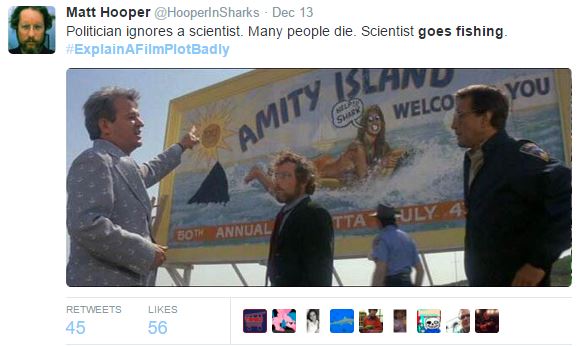
#ExplainAFilmPlotBadly, #StupidCommonNames, #LOTRyourResearch.

Hashtag games. A few times a week, these weird, funny, quirky wordplay challenges explode across twitter, driving the most serious, and sometimes even super-serious, tweeters to pause for a moment of levity and let you know what they think Jaws is really about.

jaws

Goofy, whimsical, and extremely silly, one might wonder why scientists and science communicators would want to jump into these games, potentially compromising the reputation they’ve built up as a Serious Scientist (TM), unswayed by such foolishness.

The answer is simple: Playing hashtag games makes you a better communicator of science.

Read More “For science communication, hashtag games are a scientist’s secret weapon.” »

Ocean Kickstarter of the Month: Let’s build another trash eating water wheel in Canton!

Posted on December 8, 2015December 8, 2015 By Andrew Thaler
Uncategorized

Help the Waterfront Partnership of Baltimore Build a new Water Wheel powered trash interceptor in Baltimore’s Canton neighborhood.

Help Fund the Canton Water Wheel.

I love the Baltimore Trashwheel. Let’s build another one.

healthyharbor_waterwheelsign1

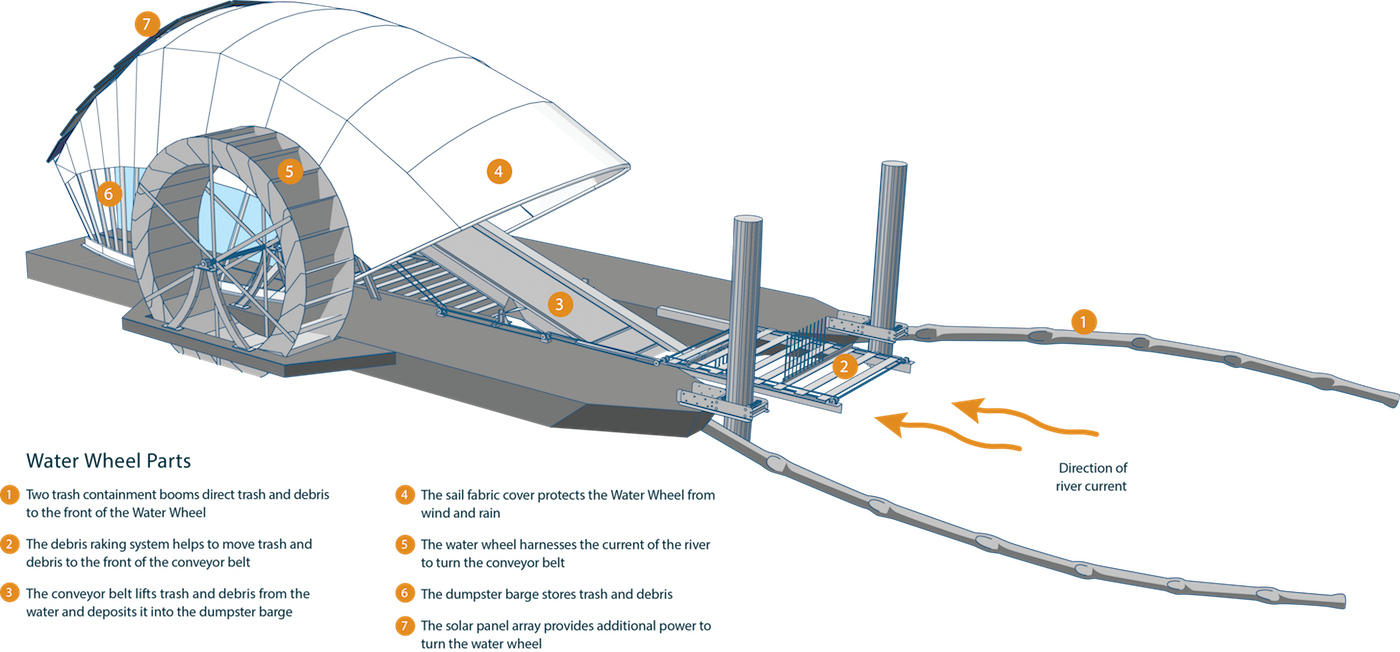
In all seriousness, if you haven’t heard about the Baltimore Water Wheel, see my first article, or my 1-year recap at Hakai, or my most recent SFS post, or visit Mr. TrashWheel on Twitter. Of all the tech in all the world proposed to clean trash out of our oceans, these water wheels are the only large scale projects that have best tested and vetted against some serious garbage.

Read More “Ocean Kickstarter of the Month: Let’s build another trash eating water wheel in Canton!” »

Why I keep returning to the Baltimore Water Wheel

Posted on December 5, 2015December 5, 2015 By Andrew Thaler 1 Comment on Why I keep returning to the Baltimore Water Wheel
Conservation

Last month, I returned to Baltimore for the National Ocean Exploration Forum. While there, I paid a visit to my old friend, Mr. Trashwheel.

The Inner Harbor Water Wheel is in its second year of operation, cleaning up the Chesapeake Bay to the tune of up to 50,000 pounds of trash per day. I have written about this cool piece of engineering and ingenuity several times.

Charm in the fall.
Charm in the fall.

So why do I keep writing and revisiting this project?

It’s working.

Read More “Why I keep returning to the Baltimore Water Wheel” »

Scanning the Sea: How I create 3D printable ocean objects using a smartphone and free software.

Posted on November 7, 2015November 7, 2015 By Andrew Thaler
Education
Trilobites!
Trilobites!

From simple sand dollars to life-sized hammerhead shark skulls, 3D printable ocean objects present an incredible opportunity for ocean outreach. Many commercial biological models are expensive, fragile, and often overkill for educators’ needs, where simple, robust, and easily replaceable anatomical models suffice. Over the last year, I’ve been honing my 3D printing skills, learning how to design 3D-printable objects, and mastering 3D scanning using free software and the now-ubiquitous smartphone. My designs, along with the open-source objects used for Oceanography for Everyone, can be found on my YouMagine profile (though Patreon supporters get early access to most prints).

Earlier this year, I wrote about how the ability to essentially photocopy a three dimensional object in a matter of hours revived my Ocean Optimism and opened up a whole new world of outreach possibilities. Since then, I’ve been working behind the scenes on some bigger projects that depend on 3D printing, one of which, Oceanography for Everyone launched last month. It’s a big ocean out there, and one person can’t possibly come close to producing a comprehensive collection of ocean objects. With several successful 3D scans under my belt, I think it’s time to share the process and invite the rest of the ocean-loving world join me in my efforts to scan the sea.

123D Catch, the software that powers it all.

Read More “Scanning the Sea: How I create 3D printable ocean objects using a smartphone and free software.” »

Ocean Kickstarter of the Month: Cleaning our oceans one marina at a time.

Posted on November 5, 2015November 23, 2015 By Andrew Thaler
Conservation

Update 2: Seabin has moved to Indiegogo. Find them here.

Update: Due to issues with the platform, Seabin has suspended its Kickstarter campaign. We will update if there is a relaunch. 

Seabin Project. An automated rubbish bin that lives in the water of marinas and collects floating rubbish, oil, fuel & detergents 24/7

Seabin Project. Cleaning our oceans one marina at a time.

The accumulation of trash in our oceans is a big deal, and while there are some very good systems designed to remove garbage from local waterways, there is also a plethora of questionable projects as well. Seabin, an automated trash collector that catches floating waste, oil, fuel and detergents from marines and other confined, high traffic waterways, fits squarely in that first group. A small, shore-powered, suction driven system draws floating trash into a container, separates oil, fuel, and detergents, and returns clean seawater back to the marina.

This Mallorca-based team has been developing Seabin for several years, and, by all accounts, have poured their time and savings into validating a functional prototype. They’ve been working with marinas and other ocean-tech groups to develop a system that is simple to use and easy to service by a single operator. While the Seabin currently draws high voltage shore power, they have visions of a future alternative-energy system.

Onward to the Ocean Kickstarter criteria!

Read More “Ocean Kickstarter of the Month: Cleaning our oceans one marina at a time.” »

Posts pagination

Previous 1 … 47 48 49 … 149 Next

Popular Posts

The story of the pride flag made from NASA imagery: Bluesky's most-liked imageThe story of the pride flag made from NASA imagery: Bluesky's most-liked imageSeptember 27, 2024David Shiffman
"Why Sustainable Seafood Matters" is now available for preorder! Here's what it's about, and why I decided to write it."Why Sustainable Seafood Matters" is now available for preorder! Here's what it's about, and why I decided to write it.June 8, 2026David Shiffman
Tackling the least important debate in deep-sea mining: the desultory hyphenTackling the least important debate in deep-sea mining: the desultory hyphenJune 8, 2026Andrew Thaler
What Ocean Ramsey does is not shark science or conservation: some brief thoughts on "the Shark Whisperer" documentaryWhat Ocean Ramsey does is not shark science or conservation: some brief thoughts on "the Shark Whisperer" documentaryJuly 2, 2025David Shiffman
Deep-sea Mining, Domestic Cats, Star Trek, and Ocean Exploration: Andrew's mid-year podcast round-up.Deep-sea Mining, Domestic Cats, Star Trek, and Ocean Exploration: Andrew's mid-year podcast round-up.June 6, 2026Andrew Thaler
The evolution of the International Whaling Commission – from  whaling quotas to whale conservationThe evolution of the International Whaling Commission – from  whaling quotas to whale conservationJune 10, 2026Chris Parsons
Shark of Darkness: Wrath of Submarine is a fake documentaryShark of Darkness: Wrath of Submarine is a fake documentaryAugust 10, 2014Michelle Jewell
Isn’t ironic, don’t you think: dismantling the Ocean Observatories Initiative on World Oceans DayIsn’t ironic, don’t you think: dismantling the Ocean Observatories Initiative on World Oceans DayJune 9, 2026Southern Fried Science
What is a Sand Shark?What is a Sand Shark?November 12, 2017Chuck Bangley
That's not a blobfish: Deep Sea Social Media is Flooded by AI SlopThat's not a blobfish: Deep Sea Social Media is Flooded by AI SlopDecember 19, 2025Andrew Thaler
Subscribe to our RSS Feed for updates whenever new articles are published.

We recommend Feedly for RSS management. It's like Google Reader, except it still exists.

Southern Fried Science

  • Home
  • About SFS
  • Authors
  • Support SFS


If you enjoy Southern Fried Science, consider contributing to our Patreon campaign.

Copyright © 2026 Southern Fried Science.

Theme: Oceanly Premium by ScriptsTown