Skip to content

Southern Fried Science

Over 15 years of ocean science and conservation online

  • Home
  • About SFS
  • Authors
  • Support SFS

Author: Andrew Thaler

Marine science and conservation. Deep-sea ecology. Population genetics. Underwater robots. Open-source instrumentation. The deep sea is Earth's last great wilderness.

The Extraterrestrial Ocean: Could OpenROV Trident explore the seas of Europa?

Posted on October 26, 2015October 26, 2015 By Andrew Thaler
Science
OpenROV Trident
OpenROV Trident

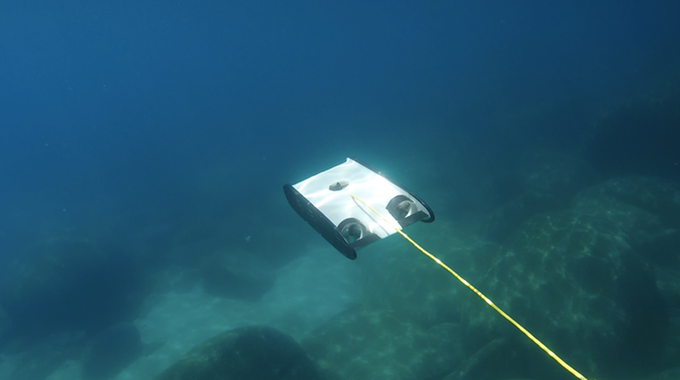
Our planet is an ocean, and it is almost entirely unexplored. OpenROV, and their new Trident underwater drone is one of many tools that will help change that by democratizing exploration, conservation, and ocean science. We are poised atop the crest of a wave that may change how humans interact with the ocean as profoundly as the invention of the aqualung.

Earth is not the only body in our solar system that hosts an ocean. As we (slowly) venture out into the stars, could OpenROV Trident dive in extraterrestrial seas?

Read More “The Extraterrestrial Ocean: Could OpenROV Trident explore the seas of Europa?” »

What the Farm?! A podcast about agriculture by two wanna-be farmers who have no idea what they’re doing.

Posted on October 21, 2015 By Andrew Thaler 1 Comment on What the Farm?! A podcast about agriculture by two wanna-be farmers who have no idea what they’re doing.
Blogging

What the Farm?! is a completely unrelated side-project that I’ve been developing with Andrew Middleton (@EcoAndrewTRC). It has nothing to do with Marine Science and Conservation, so if you want further updates, subscribe to our SoundCloud stream. RSS feed is here. Enjoy the first two episodes, right here: [soundcloud url=”https://api.soundcloud.com/tracks/229414322″ params=”auto_play=false&hide_related=false&show_comments=true&show_user=true&show_reposts=false&visual=true” width=”100%” height=”450″ iframe=”true” /] … Read More “What the Farm?! A podcast about agriculture by two wanna-be farmers who have no idea what they’re doing.” »

Oceanography for Everyone: Empowering researchers, educators, and citizen scientists through open-source hardware

Posted on October 19, 2015October 19, 2015 By Andrew Thaler
Oceanography for Everyone

Three years ago, Kersey Sturdivant and myself launched an ambitious crowdfunding project–the OpenCTD–with the plan to produce a low-cost, open-source CTD for thousands of dollars less than the commercial alternative. That campaign fizzled, bringing in barely 60% of our target goal. After taxes and fees, that amounted to about $3500 available to us to play around with. The OpenCTD wasn’t dead, but it was on life support.

We had a vision: to make to tools of oceanography accessible to the widest range of people, not just ocean researchers, but citizen scientists, boat-owners, fishermen, surfers, swimmers, any one who enjoyed the ocean and wanted to better understand their local waterways. The OpenCTD was ambitious, not only in its scope, but also in our ignorance of the knowledge required to achieve that goal. In the three years since, I moved to California (and then moved back East) to meet with some of the best underwater engineers in the open-source movement. We added Russell Neches, an experienced hardware hacker to our team. We partnered with OpenROV to learn from their vast experience. And I’ve spent the time re-skilling: learning to code, design and fabricate 3D printable materials, build electronic components from the ground up, and manage an open-source project.

Read More “Oceanography for Everyone: Empowering researchers, educators, and citizen scientists through open-source hardware” »

How to pitch an Ocean Kickstarter for us to review

Posted on October 12, 2015October 12, 2015 By Andrew Thaler
Blogging

I put this up as a closer on our last Ocean Kickstarter selection, and am posting here as a standalone for anyone who may have missed it.

Email me at southernfriedscientist@gmail.com with the subject heading: Ocean Kickstarter: Your Project. This isn’t limited to Kickstarter, projects on IndieGoGo, RocketHub, GoFundMe, or any other site are eligible for an Ocean Kickstarter of the month. We will review based on three criteria:

1. Is it sound, reasonable, and informed by science?

2. Is there a clear goal, timeline, and budget; and are they partnering with the people who have experience hitting those marks?

3. Do some of the parties involved have a successful record with other crowdfunding projects and experience delivering on rewards.

Read More “How to pitch an Ocean Kickstarter for us to review” »

Ocean Kickstarter of the Month: Meet Norman the Nurse Shark

Posted on October 6, 2015October 6, 2015 By Andrew Thaler
Education, Science

In this book kids learn about sharks and the oceans as they travel with Norman on his adventure through the Bahamas.

Sharks4Kids First Book: Meet Norman the Nurse Shark

Sharks4Kids is an educational non-profit based in Florida that produces curricula and media designed to teach primary-school age kids about sharks and shark conservation. They also conduct Skype-in-lessons, classroom visits, field trips, and shark tagging camps. For their first Kickstarter campaign, they’re producing a book, targeted at elementary-school students.

Sharks matter, according to my co-author who uses the handle WhySharksMatter, and ocean outreach literature targeting younger students is often light on solid educational content. Online media is great, when available, but not everyone has reliable access to the internet. One of the campaign goals is to distribute this book to schools in the Bahamas, which is a major benefit to a region where persistent, high-bandwidth internet is not always a given.

Onward to the Ocean Kickstarter criteria!

1. Is it sound, reasonable, and informed by science? Sharks4Kids has a solid tract record producing entertaining and scientifically literate content that appeals to a younger audience. I have no doubt that Norman the Nurse Shark, though necessarily anthropomorphized, will provide fact-based, pseudoscience-free information about nurse sharks. 

Read More “Ocean Kickstarter of the Month: Meet Norman the Nurse Shark” »

Robots Versus Aliens – Anticipatory conservation in technology-drive initiatives

Posted on September 30, 2015September 29, 2015 By Andrew Thaler
Conservation, Science

This week, I and a team of marine ecologist, explorers, and ocean technologists published Robots as vectors for marine invasions: best practices for minimizing transmission of invasive species via observation-class ROVs. This paper, conceived and largely produced during the ROV2PNG Marine Science Short Course in Papua New Guinea, represent the current best practices for minimizing or eliminating the spread of invasive species via portable, low-cost underwater robots.

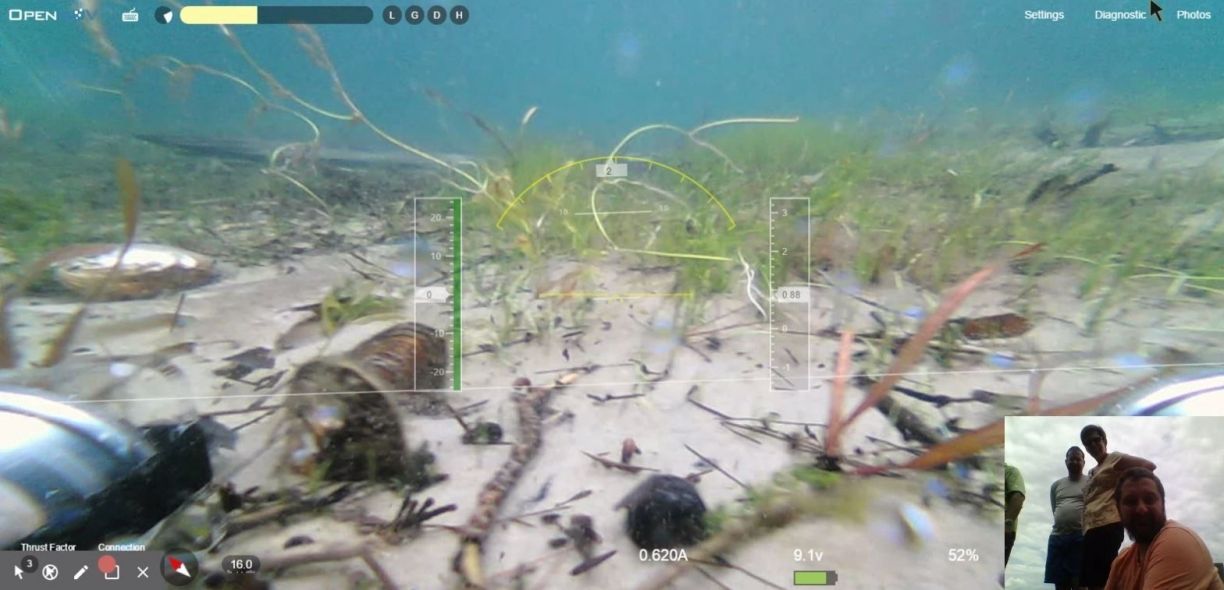
Zebra mussels observed via OpenROV. Photo by author.

Species invasion, particularly in the ocean, is a huge problem. Invasive species are ruthlessly good at out-competing native fauna. Without any natural predators, they can flourish, causing massive, irreparable damage to marine ecosystems. As scientists, explorers, and conservationist, we have to be proactive in ensuring that our actions don’t negatively impact the ecosystems we’re trying to save. Our guidelines are simple, but effective, and, most importantly, easy to follow.

  1. Educate yourself about species invasions generally and specifically about current issues in the area you’re working.
  2. Inspect your gear.
  3. Soak your gear in freshwater between dives.
  4. Soak your gear in weak bleach between expeditions.
  5. Avoid moving your equipment between geographic regions, when possible.

Technology can be a powerful tool in the aid of conservation. Around the world, people are using low-cost robotics to count elephants, detect poachers, protect tortoises, even seek-and-destroy invasive sea stars. As I discuss over at Motherboard, these robots are a transformative component of 21st century marine science and conservation, they fundamentally reshape the way we interact with the ocean. And with the explosive success of the latest OpenROV launch, there are about to be a lot more robots in the water. This is a good thing. The more eyes we have in the sea, the more people that actively contribute to ocean exploration, the more people with access to the tools necessary to explore, study, and understand our oceans and how they are changing, the better off we will all be.

Read More “Robots Versus Aliens – Anticipatory conservation in technology-drive initiatives” »

Keeping your robot invasions under control.

Posted on September 28, 2015 By Andrew Thaler
Conservation, Education, Science

It’s been a big week for papers here at Southern Fried Science. This morning, Amy, myself, William (of Bomai Cruz fame), and Dominik and Erika of OpenROV published our guidelines on minimizing the potential for microROVs to act as invasive species vectors in Tropical Conservation Science. The abstract: Remotely operated vehicles (ROVs) present a potential risk … Read More “Keeping your robot invasions under control.” »

Combating fake science in popular media – six months later

Posted on September 28, 2015October 6, 2015 By Andrew Thaler
Uncategorized

As noted earlier, David and my paper on twitter, social media, Shark Week, and fake documentaries came out last week. Since scientific publishing has a “long tail” — the time between when we actually wrote the paper and when it was published, in this case, was almost 9 months — we thought it might be … Read More “Combating fake science in popular media – six months later” »

Congressional Republicans hold Ocean Science Hostage Over Failed Anti-health Care Bill

Posted on September 25, 2015September 25, 2015 By Andrew Thaler 1 Comment on Congressional Republicans hold Ocean Science Hostage Over Failed Anti-health Care Bill
Conservation

All summer and into the fall, Congressional Republicans have been attempting to pass a bill to defund Planned Parenthood, an organization that provides critical health care needs to women across the country. After the latest bill failed, Majority Leader Mitch McConnell promised to put forth a “clean bill” that would avoid an October government shutdown. With news breaking today that Speaker John Boehner will quit his post at the end of October and fresh predictions the the shutdown is now unlikely, you might think that this recent quixotic quest has foundered, at least for the moment.

You would be wrong.

S.764 is originally An Act to reauthorize and amend the National Sea Grant College Program Act, and for other purposes. This was the bill that authorized funding for the National SeaGrant program, one of the flagship marine science, conservation, and fisheries agencies in the United States. Funding for Sea Grant is a truly bipartisan issue. Both sides see the value in continuing this support for ocean issues. How bipartisan? In an era of increasingly schismatic politics, the SeaGrant reauthorization bill passed the senate with unanimous support. 

If you wanted to read S.764 today, however, you would be met with this:

Resolved, That the bill from the Senate (S. 764) entitled “An Act to reauthorize and amend the National Sea Grant College Program Act, and for other purposes.”, do pass with the following Amendment: This Act may be cited as the “Defund Planned Parenthood Act of 2015”

source

Read More “Congressional Republicans hold Ocean Science Hostage Over Failed Anti-health Care Bill” »

Fish tales: Combating fake science in popular media

Posted on September 23, 2015September 22, 2015 By Andrew Thaler
Uncategorized

Yesterday, after months of waiting, David and my magnum opus on our efforts to stem the tide of fake documentaries was, at last, made available online: Fish tales: Combating fake science in popular media. What role should scientist play in correcting bad science, fake science, and pseudoscience presented in popular media? Here, we present a case … Read More “Fish tales: Combating fake science in popular media” »

Posts pagination

Previous 1 … 48 49 50 … 149 Next

Popular Posts

The story of the pride flag made from NASA imagery: Bluesky's most-liked imageThe story of the pride flag made from NASA imagery: Bluesky's most-liked imageSeptember 27, 2024David Shiffman
"Why Sustainable Seafood Matters" is now available for preorder! Here's what it's about, and why I decided to write it."Why Sustainable Seafood Matters" is now available for preorder! Here's what it's about, and why I decided to write it.June 8, 2026David Shiffman
Tackling the least important debate in deep-sea mining: the desultory hyphenTackling the least important debate in deep-sea mining: the desultory hyphenJune 8, 2026Andrew Thaler
What Ocean Ramsey does is not shark science or conservation: some brief thoughts on "the Shark Whisperer" documentaryWhat Ocean Ramsey does is not shark science or conservation: some brief thoughts on "the Shark Whisperer" documentaryJuly 2, 2025David Shiffman
The evolution of the International Whaling Commission – from  whaling quotas to whale conservationThe evolution of the International Whaling Commission – from  whaling quotas to whale conservationJune 10, 2026Chris Parsons
Deep-sea Mining, Domestic Cats, Star Trek, and Ocean Exploration: Andrew's mid-year podcast round-up.Deep-sea Mining, Domestic Cats, Star Trek, and Ocean Exploration: Andrew's mid-year podcast round-up.June 6, 2026Andrew Thaler
Shark of Darkness: Wrath of Submarine is a fake documentaryShark of Darkness: Wrath of Submarine is a fake documentaryAugust 10, 2014Michelle Jewell
Isn’t ironic, don’t you think: dismantling the Ocean Observatories Initiative on World Oceans DayIsn’t ironic, don’t you think: dismantling the Ocean Observatories Initiative on World Oceans DayJune 9, 2026Southern Fried Science
What is a Sand Shark?What is a Sand Shark?November 12, 2017Chuck Bangley
That's not a blobfish: Deep Sea Social Media is Flooded by AI SlopThat's not a blobfish: Deep Sea Social Media is Flooded by AI SlopDecember 19, 2025Andrew Thaler
Subscribe to our RSS Feed for updates whenever new articles are published.

We recommend Feedly for RSS management. It's like Google Reader, except it still exists.

Southern Fried Science

  • Home
  • About SFS
  • Authors
  • Support SFS


If you enjoy Southern Fried Science, consider contributing to our Patreon campaign.

Copyright © 2026 Southern Fried Science.

Theme: Oceanly Premium by ScriptsTown