Skip to content

Southern Fried Science

Over 15 years of ocean science and conservation online

  • Home
  • About SFS
  • Authors
  • Support SFS

Author: Andrew Thaler

Marine science and conservation. Deep-sea ecology. Population genetics. Underwater robots. Open-source instrumentation. The deep sea is Earth's last great wilderness.

#Ocean2Ocean: Dorkface has Died of Dysentery Edition

Posted on August 20, 2013October 27, 2013 By Andrew Thaler
Blogging

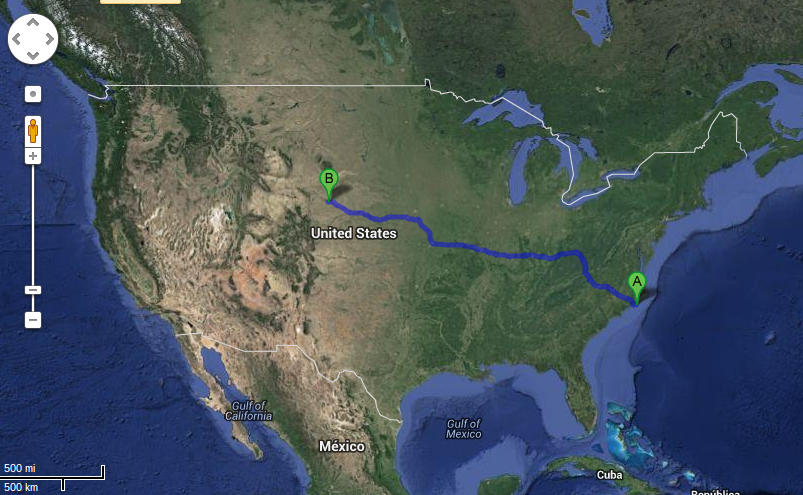
Screenshot 2013-08-20 at 17.08.41Location: Scotts Bluff, NE

Distance Traveled: 1837 miles

Distance Remaining: 1163 miles

MPG: not great.

After replacing the surge-break assembly on the trailer, we resumed the long haul across Missouri, ending the day with a 10 PM arrival at the Diamond B ranch. The goats we’re ready to get out of the car.

Tired, but still wired from too much caffeine and a frustrating day, we made the mistake of turning on the TV to see if there were any good shows on. We discovered something along the lines of Doomsday Castle Builders. I adore Doomsday Preppers and find their mentality absolutely fascinating. However, I adore them in much the same way that I adore the poor one-eyed cat that constantly tries to get into our chicken coop. If there actually were a doomsday, these guys are the last people with which you’d want to be stuck. Anti-social, paranoid, trigger happy — I can’t help but assume the fact that they operate under the assumption that people will immediately resort to roving gangs of murders is less about understanding the human condition and more about projection. The entire mentality of the “prepper” movement necessarily ignores the fact that civilization exists because we’re an inherently cooperative species. It does make for entertaining television.

Actually, on second thought, we’re probably better off if the preppers go lock themselves in bunkers and let the rest of us get on with the business of recovery.

Read More “#Ocean2Ocean: Dorkface has Died of Dysentery Edition” »
#Ocean2Ocean: Corn Maze Edition

Posted on August 19, 2013October 27, 2013 By Andrew Thaler
Blogging

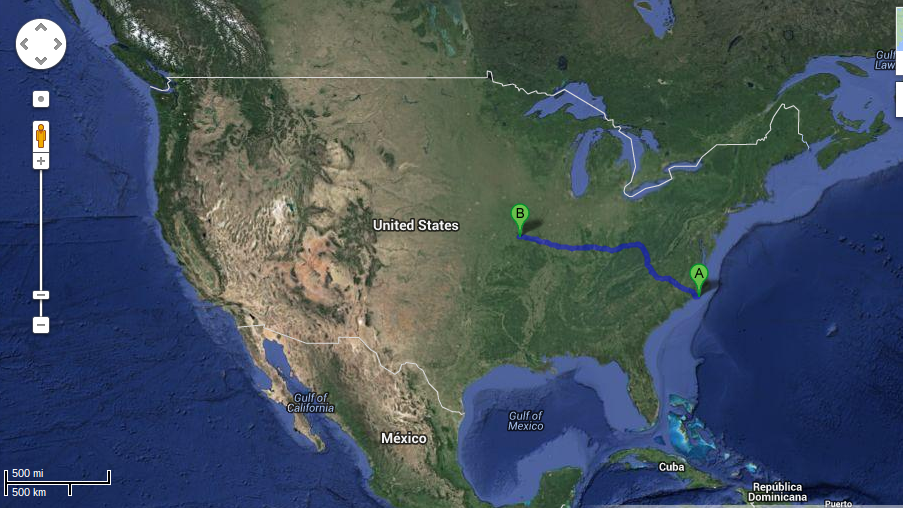
Screenshot 2013-08-19 at 11.35.00Location: Columbia, MO

Distance Traveled: 1119 miles

Distance Remaining: 1881 miles

MPG: 12.8

Status: awaiting repairs

The drive through Indiana and Illinois was long and uneventful. The goats have settled into their routine, and now seem to prefer napping in their crate to climbing in and out of the truck for a walkabout. We did get to see the St. Louis Arch as we drove through town, which the most exciting moment of the drive. Otherwise, we saw plenty of corn.

We stayed the night at the Circle B Ranch, another fabulous horse hotel. No llamas, this time, but the goats were delighted to have a stall to wander around and the horses were very curious about their new barn companions.

This morning, after more than 1000 miles, we finally had our first breakdown, as the surge-break assembly on one of trailer tires rusted out. We’re currently sitting in Columbia, MO awaiting a mechanic to come out and take a look. For what it’s worth, UHaul’s roadside assistance was professional and responsive.

Read More “#Ocean2Ocean: Corn Maze Edition” »

#Ocean2Ocean: Bluegrass State Edition

Posted on August 18, 2013October 27, 2013 By Andrew Thaler 3 Comments on #Ocean2Ocean: Bluegrass State Edition
Blogging
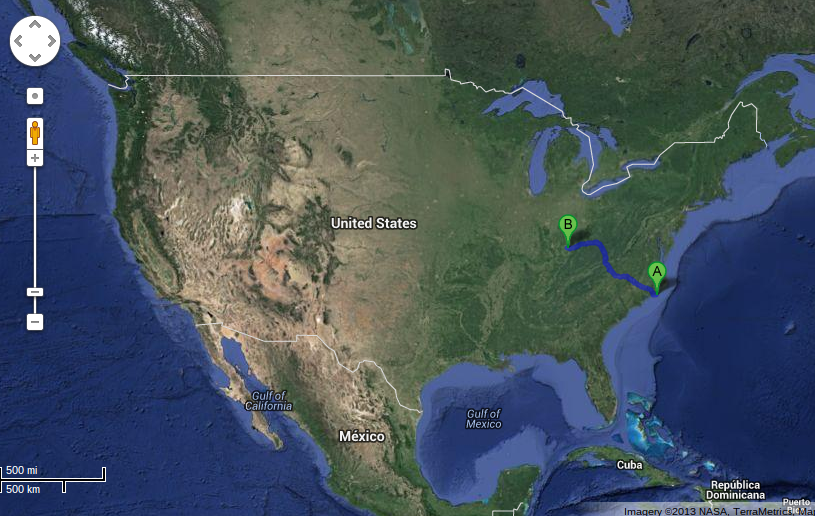
Progress to date.
Progress to date.

Location: West of Lexington, KY

Distance traveled: 645 miles

Distance remaining: 2355 miles

MPG: 12.2

Last night we checked in to the delightful Sunday Stables, where Luna and Hermione shared a barn (but not a stall) with horses, cats, chickens, and a llama. Susan Sunday was a fabulous host and the goats were glad of solid ground and some room to roam.

We crossed the border into Kentucky earlier this morning, and we greeted with the sight of massive oil refineries as well as an Amazon.com warehouse, very different from the mountains and coal plants of West Virginia.

Read More “#Ocean2Ocean: Bluegrass State Edition” »

#Ocean2Ocean: North Carolina in the rearview

Posted on August 17, 2013October 27, 2013 By Andrew Thaler
Blogging

After 7 hours of driving (North Carolina is a long state), we have crossed the Virginia border. Our departure from coastal NC was marked, inexplicably, by a flock of wild turkeys on the side of 70. Inconveniently, it also happens to be move in week for several Carolina universities; it was slow going through the Triangle.

The goats are calm, but confused.

Read More “#Ocean2Ocean: North Carolina in the rearview” »

From Ocean to Ocean: The Great Southern Fried Migration

Posted on August 16, 2013October 27, 2013 By Andrew Thaler 4 Comments on From Ocean to Ocean: The Great Southern Fried Migration
Blogging

The time has finally come. After 11 years in North Carolina, I have finally succumbed to the insatiable human desire to venture beyond the horizon. Tomorrow morning, Amy and I will hitch our worldly possessions to my tough old truck and drive west until we reach the Pacific Ocean. And, because we’re 1/4 of Southern Fried Science, we’ll live blog the entire journey. A few FAQ’s before we go: What are you doing in California? Amy has a post-doctoral fellowship at the California Ocean Science Trust, where she’ll be developing a new citizen science initiative. I will be searching for work once I get there. So, if you’re an employer Oakland or the San Francisco Bay area, and need a crack deep sea ecologist, conservation geneticist, or science communicator, please take a look at my Curriculum Vitae. What will happen to your chickens? The chickens have been adopted by a family who will love them and their eggs for years to come. I’ve said my goodbyes to Poly, Tikka, Olga, and Masala. What will happen to your goats? Luna and Hermione are coming with us. What?

Read More “From Ocean to Ocean: The Great Southern Fried Migration” »

The Ocean belongs to everyone. Shouldn’t we all have access to the tools needed to study it?

Posted on August 12, 2013October 27, 2013 By Andrew Thaler
The Open CTD Project

Oceanography for Everyone – The OpenCTD I believe that scientific research should have as few barriers to participation as possible. I believe that not only should the results of scientific research be freely available to the public, but that the tools–software, hardware, and expertise–of science should be made as accessible as possible. In many cases, … Read More “The Ocean belongs to everyone. Shouldn’t we all have access to the tools needed to study it?” »

DiveTracks: because we can’t talk underwater

Posted on August 6, 2013August 5, 2013 By Andrew Thaler
Science

We’re happy to announce a new experiment in our ongoing effort with casual video adventures. We take short videos from one of our SCUBA diving adventures, watch them together, and do a running commentary about whatever issues, topics, and stories emerge during the video. There’s just two rules – neither of us can have watched … Read More “DiveTracks: because we can’t talk underwater” »

Two weeks left to Support the OpenCTD and help us build an oceanographic tool for everyone!

Posted on August 5, 2013October 27, 2013 By Andrew Thaler 1 Comment on Two weeks left to Support the OpenCTD and help us build an oceanographic tool for everyone!
Science

Wow! Since we launched the OpenCTD we’ve raised nearly $4,000 to help develop an oceanographic tool the anyone can build. But $4,000 is only 40% of our funding goal, and we’ve got 12 days left to fund the rest of the project. If you believe in open source oceanography, think to tools of scientific research … Read More “Two weeks left to Support the OpenCTD and help us build an oceanographic tool for everyone!” »

Herring Wars: Quotas, Conflicts, and Climate Change in the North Atlantic

Posted on July 25, 2013October 27, 2013 By Andrew Thaler 4 Comments on Herring Wars: Quotas, Conflicts, and Climate Change in the North Atlantic
Conservation, Science
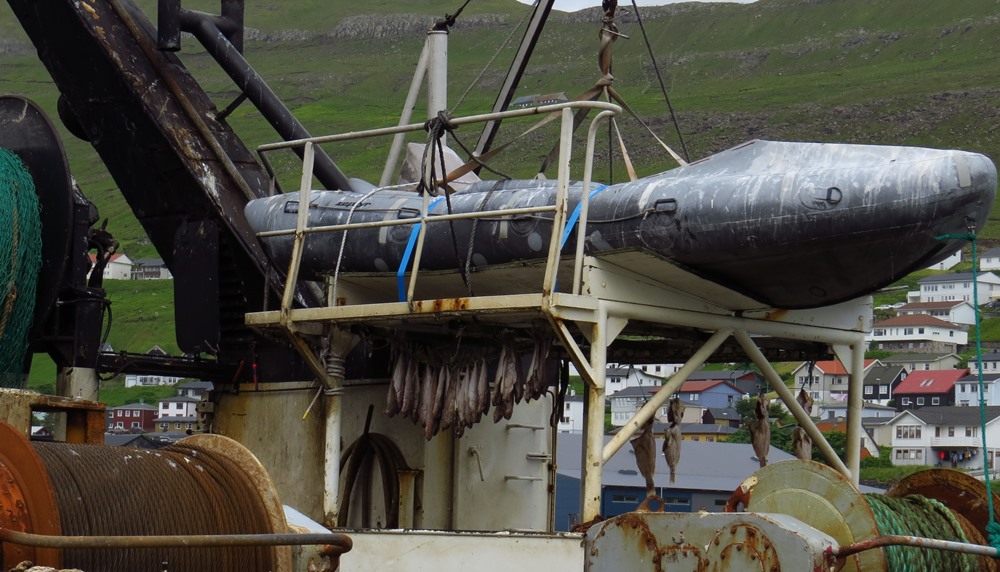
Herring and other fish hung out to dry on a trawler in Klaksvík. Photo by ADT.

A small collection of islands in the North Sea, a few hundred miles south of the Arctic Circle, is preparing for war. The European Union, under the auspices of an international fisheries management agreement, is ready to levy heavy trade sanctions against the Faroe Islands, an independent protectorate of Denmark. The Faroes, with a population of less than 50,000, intends to fight these sanctions, defy EU authority, and defend their economic independence. The object of contention is the right to fish Atlanto-Scandian Herring; the driving force behind this dispute–dramatic shifts in fish distribution brought on by warming seas and altered currents. This may be the first international conflict directly attributable to climate change. It will not be the last. Regardless of the outcome, this confrontation will set a precedent for future climate conflicts. Welcome to the Herring War.

Despite their uninspiring name, herring are a rather handsome fish. Atlantic herring, Clupea harengus, are relatively small with a classically “fishy” (fusiform) body shape. They are among the most abundant fish in the ocean, forming schools that can number in the billions. Along with other planktivorous fishes, such as menhaden, that convert phyto- and zooplankton into higher trophic-level biomass, herring are critical to ocean food-webs. They are considered to be among the most important fish in the sea. Herring are the dominant prey species for many large, pelagic predators like tuna, sharks, marine mammals, salmon, and sea birds, among others. Their dominant predator, unsurprisingly, is us.

Read More “Herring Wars: Quotas, Conflicts, and Climate Change in the North Atlantic” »

It’s not about the Mermaids: Animal Planet’s track record of fabricated reality

Posted on July 19, 2013March 24, 2014 By Andrew Thaler 24 Comments on It’s not about the Mermaids: Animal Planet’s track record of fabricated reality
Popular Culture, Science
The Little Mermaid statue in Copenhagen, of which this post is not about. Photo by ADT.

I have fond memories of Animal Planet. I grew up with Steve Irwin and Jeff Corwin. On the rare occasions when I have caught their recent programming, I’ve enjoyed shows like River Monsters and Monsters Inside Me. These are certainly not high-minded nature documentaries like Planet Earth and Blue Planet, but they manage to be both entertaining and informative. Then came the ghost hunters, pet psychics, bigfoot hunters, and mermaids. I started watching with a cynical eye*, started noticing things that seemed out of place: a catfish that looked already dead before being caught, a multitude of pets that looked surprisingly healthy considering their life in a hoarders house, conversations that seemed awkward, forced, and disjointed. And then there was Mermaids.

I’m not naive to the realities of reality shows**, but I do believe that channels like Animal Planet, channels that bill themselves as educational programming, have a responsibility to present fact-based programming. I also believe the public has a reasonable expectation that Animal Planet’s programming is at least honest in the events it portrays. Whale Wars is not Storage Wars. I’m also not a reality TV hater, and believe that it is possible to create compelling, educational programming in that format. After all, had it aired today, the Underwater World of Jacques Cousteau would have been classified as a reality show.

I’m not even talking about intentionally fake shows, like Lost Tapes or Mermaids: the Body Found, nor am I talking about shows with supernatural premises, like Pet Psychics or The Haunted, although I do have problems with the ways those shows portray the supernatural credulously while marketing them as science-based. I’m talking specifically about shows where Animal Planet stages, distorts, or manufactures scenes and then presents them as being actual events captured by their film crew. I’m talking about outright deception with the intention of misleading the audience.

I’m also talking about evidence. Over the years, I have had hundreds of head-scratching moments while watching Animal Planet shows that I strongly suspect were staged. For some the evidence is there, but, unless someone involved in the production comes forward, most will remain unconfirmed. Instead of wallowing in hearsay, I present to you four cases in which we have convincing evidence–statements from members of the cast, discordance with widely reported events, or witness and expert testimony–that an Animal Planet show is staged.

Read More “It’s not about the Mermaids: Animal Planet’s track record of fabricated reality” »

Posts pagination

Previous 1 … 64 65 66 … 149 Next

Popular Posts

What Ocean Ramsey does is not shark science or conservation: some brief thoughts on "the Shark Whisperer" documentaryWhat Ocean Ramsey does is not shark science or conservation: some brief thoughts on "the Shark Whisperer" documentaryJuly 2, 2025David Shiffman
What is a Sand Shark?What is a Sand Shark?November 12, 2017Chuck Bangley
Zombie ideas in conservation: trophy hunting and conservationZombie ideas in conservation: trophy hunting and conservationAugust 6, 2026Ali Gaster
Jumping the shark: New study reviews the breaching behavior of sharks and raysJumping the shark: New study reviews the breaching behavior of sharks and raysSeptember 19, 2024David Shiffman
Please Help This Little Dumbo Octopus Travel Across AmericaPlease Help This Little Dumbo Octopus Travel Across AmericaAugust 3, 2026Angelo Villagomez
Shark of Darkness: Wrath of Submarine is a fake documentaryShark of Darkness: Wrath of Submarine is a fake documentaryAugust 10, 2014Michelle Jewell
That's not a blobfish: Deep Sea Social Media is Flooded by AI SlopThat's not a blobfish: Deep Sea Social Media is Flooded by AI SlopDecember 19, 2025Andrew Thaler
Is Academic Publishing is breaking conservation science?Is Academic Publishing is breaking conservation science?August 10, 2026Chris Parsons
Considering writing a popular science book? Here's my adviceConsidering writing a popular science book? Here's my adviceJuly 7, 2025David Shiffman
Fun facts and FAQs about Megalodon, Maryland's new (and definitely extinct) official state sharkFun facts and FAQs about Megalodon, Maryland's new (and definitely extinct) official state sharkApril 15, 2026David Shiffman
Subscribe to our RSS Feed for updates whenever new articles are published.

We recommend Feedly for RSS management. It's like Google Reader, except it still exists.

Southern Fried Science

  • Home
  • About SFS
  • Authors
  • Support SFS


If you enjoy Southern Fried Science, consider contributing to our Patreon campaign.

Copyright © 2026 Southern Fried Science.

Theme: Oceanly Premium by ScriptsTown