In the lecture we just posted, Keith Rittmaster mentioned that Sperm Whales are highly asymmetric. Below is just one examples of this dramatic asymmetry, the size difference between the left and right nostrils in the cranium.
Author: Andrew Thaler
Marine science and conservation. Deep-sea ecology. Population genetics. Underwater robots. Open-source instrumentation. The deep sea is Earth's last great wilderness.Keith Rittmaster discusses Bonehenge. For more on Bonehenge, check out http://bonehenge.org/ Read our previous posts about the project: Visiting Bonehenge and Bonehenge – Community action in science outreach
We see so many powerful designs in nature, yet when we design our own structure we tend to build rigid, fixed, industrial beasts. What designs in nature inspire you? How do we break away from a culture of hard edges and inflexible machines?
The world’s attention is rightfully focus on the ongoing tragedy unfurling in Japan. Earthquake aftershocks continue to cause damage and the Fukushima nuclear power plant is not yet under control. But the tsunami the struck the Japanese coast continued across the Pacific, and while no place was as hard hit as Japan, there were other casualties, including the Charles Darwin Research Station on the Galapagos island of Santa Cruz.
Read More “Tsunami severely damages Charles Darwin Research Station” »
The Nicholas School of the Environment is hosting the Flat Grok Video Contest. We are on an unsustainable course. While world populations and consumption grow, resources diminish and global warming threatens our way of life. In his blog The Green Grok, Dr. Bill Chameides, dean of the Nicholas School of the Environment at Duke University, elucidates … Read More “Grok my Flock” »
The theme this month is design in nature. Last week we posted a video that discusses how we can use nature to design our cities. This week, Janine Benyus talks about using nature to inspire technology. I don’t have a bigger point to make this week. Biology is cool and we can learn a lot … Read More “Weekly dose of TED – Janine Benyus: Biomimicry in action” »

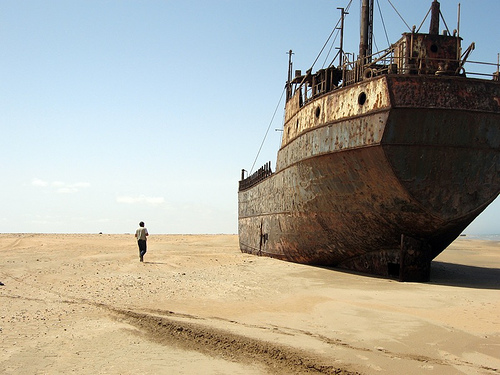
A 900-mile coastline runs perpendicular to the border of Angola and Namibia. The cold water carried up from the antarctic by the Benguela Current meets the warm, dry air of the Namib Desert and the resulting depression forms a cold, dense fog that extends out into the sea. The currents and wind combine to produce a force pushing inexorably towards shore. These conditions led mariners to christen this seemingly desolate and inhospitable stretch of sand the Skeleton Coast.
Kate Orff, is not a biologist, she’s an architect. I love the idea of using natural systems to design human systems. The idea that construction should work with the landscape is not new, all you have to do is visit Falling Water to see that, but it’s an idea that hasn’t taken off like it … Read More “Weekly dose of TED: Reviving New York’s rivers with oysters!” »
The Nicholas School of the Environment is seeking scholarly editorial contributions to Environmental Leadership, a 2-volume, 100-chapter reference handbook that is part of the new SAGE Reference Series on Leadership. Chapters are anticipated to be 7000 words. This is a unique opportunity to help define environmental leadership. Academic and public libraries will be able to purchase the handbook as both a printed and a digital product.
Read More “Call for chapters – Environmental Leadership: A Reference Handbook” »

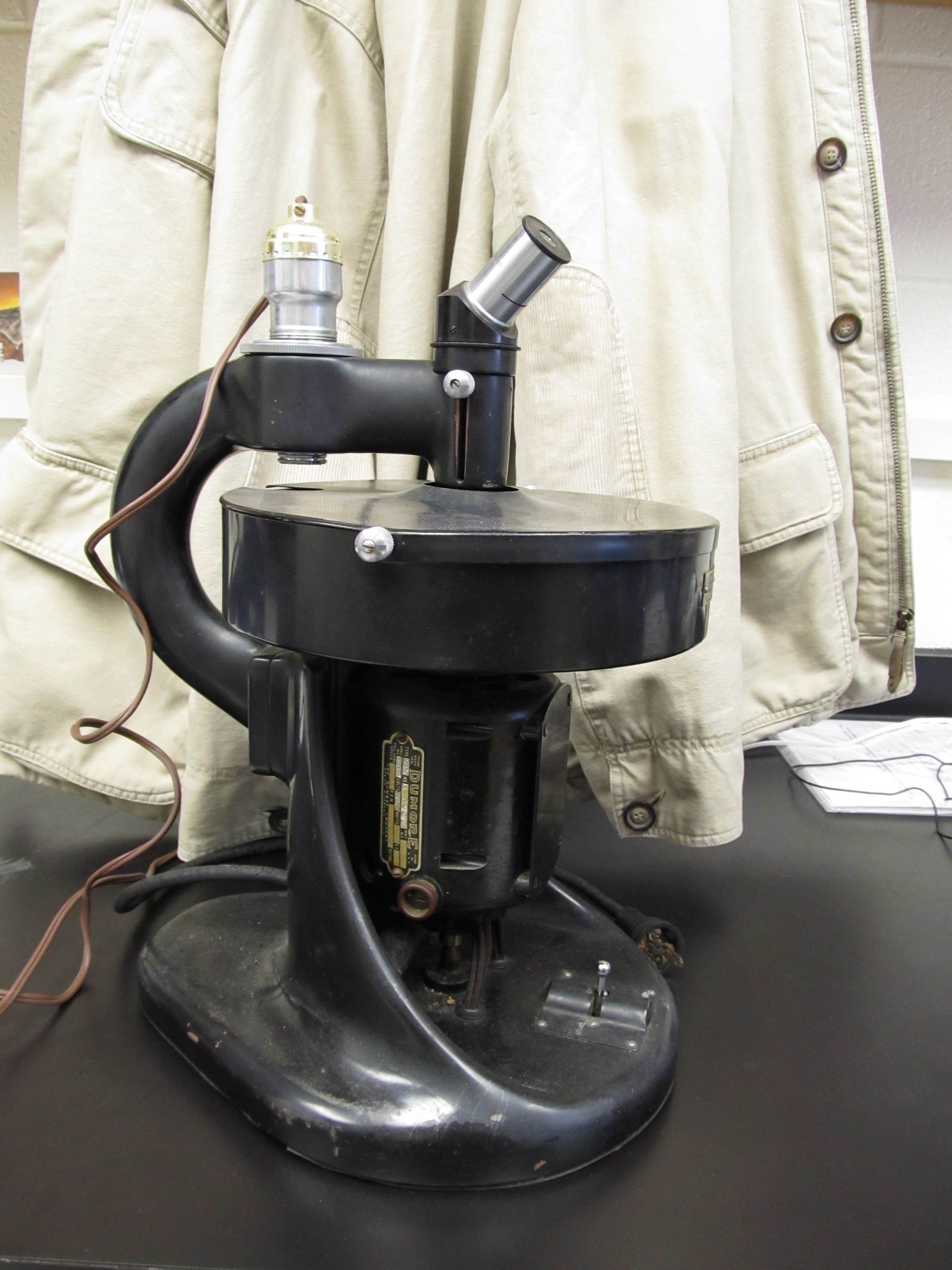
While cleaning out our lab the other day, we discovered this mysterious piece of equipment buried deep within a cabinet. After querying several dozen scientists of different eras, we have determined only that it was manufactured in the early 20th century and no one has any idea what it is. The optics were made by Bausch and Lomb, the motor was made by Dunmore. We have a few guesses about its intended purpose.
This machine is massive, it weighs about 50 pounds and is forged from Bakelite and steel. The drum is clearly some kind of centrifuge and the optics point into the center of the spinning drum. No one has yet been willing to plug it in and turn it on. There are two patent numbers listed on the plate – patent # 1,648,369 and patent # 1,907,803.
Read More “Help identify this mystery machine from the darkest recesses of our lab” »