After reading some of the reviews from our Readers’ Survey, many people list these among their favorite posts, while many others consider them their least favorite. So, we’ve decided to change the posting schedule for Finding Melville’s Whale. From now on, one or two new entries will appear every Sunday, instead of Tuesdays and Thursdays. We hope you will continue reading along with us as we dive deeper in Melville’s masterpiece.
Author: Andrew Thaler
Marine science and conservation. Deep-sea ecology. Population genetics. Underwater robots. Open-source instrumentation. The deep sea is Earth's last great wilderness.
Uncategorized
Check out some of the fantastic swag you could win during the Southern Fried Science Readers’ Survey! All of this is stuffed into the rare and highly coveted Science Online 2010 tote bag. In addition, you could win an exclusive DVD of WhySharksMatter’s Four Things Everyone should know about Sharks documentary and every Shark Science … Read More “Win fantastic prizes in our reader survey!” »
Uncategorized
That marine mammals have a rich sonic life has been well understood for several decades. What we didn’t understand until recently is how much we’ve changed the ocean soundscape, and how much we will continue to change the soundscape. Many of our new alternative energy plans involve maritime structures – offshore wind farms, wave energy … Read More “Weekly dose of TED – Peter Tyack: The intriguing sound of marine mammals” »
Science
 Beginning today, Dr. Al Dove of Deep Type Flow will be floating somewhere of the coast of Brazil exploring the Abrolhos reef platform. They will be using the Johnson Sea Link, the tragically mothballed US submersible once described as “a shining legacy of deep sea research“, which has been granted a second life under long-term contract with CEPEMAR Environmental Services. Follow along with the adventure at Deep Type Flow or under the twitter hashtag #Abrolhos2011.
Read More “Dive into the mushroom reefs of Brazil with Dr. Al Dove” »
Uncategorized
Sunglasses are a critical piece of gear if you plan on spending prolonged periods of time in the sun. Not only do they protect your eyes, but the right pair can help you spot marine-life swimming below the surface or boost your bird-watching prowess. An enormous, multi-billion dollar industry has formed to produce and market the right sunglasses to the right people.
It’s all bullshit.
Read More “SFS Gear Reviews: Protecting your eyes without breaking the bank” »
Conservation, Science
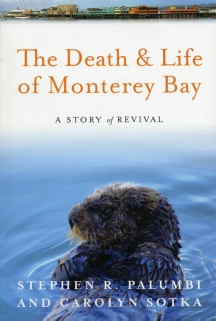 A few weeks ago, Mark Powell at Blogfish posted “Where are conservation success stories?” in which he asks if we have a bias against good news in conservation. Late last year we presented a series of conservation success stories from the IUCN. Whether because we choose to focus only on the doom-and-gloom news stories or because the natural world really is in pretty bad shape, success stories in conservation are few and far between. That is why The Death and Life of Monterey Bay, a new book by Stephen Palumbi and Carolyn Sotka, is so important. Palumbi is a working scientist and director of the Hopkins Marine Station in Monterey Bay and his work has been cited on this blog before. Carolyn Sotka is the project coordinator for COMPASS, an organization that connects scientist to policy makers and journalists.
In The Death and Life of Monterey Bay, Palumbi and Sotka present the history of Monterey Bay, from discovery, to exploitation, to collapse, and ultimately to rebirth. They weave the narratives of many important players, exploring the legacy of a dedicated conservationist who existed before the term was coined, the hunters, fishers, and canneries who found fortune and destruction, the writers and scientists who made Monterey Bay a literary icon, and the Bay itself, which survived by equal parts luck, tenacity, and foresight. The events in the book span hundreds of years, but we can still glean lessons from both the collapse and rebirth of Monterey Bay.
Read More “Lessons from the Death and Life of Monterey Bay” »
Uncategorized
The time has come for Southern Fried Science to get its report card. At the top of the page there is a link to the Reader Survey. We want to here from you, find out what you like, what you don’t like, and how you think this site could improve. Please take the survey, it … Read More “Take the Southern Fried Science Readers Survey, win fantastic prizes!” »
Uncategorized
As Science Online kicks into high gear, I’d like to give a shout out to the three new blogs that have joined the Gam this week! First up is the long-awaited People, Policy, Planet by Lyndell. The blogs focuses on environmental policy, science research, and ecology. Read her introductory posts Politics and Policy. Next up … Read More “Welcome three new blogs to our network!” »
Uncategorized
I had the pleasure of seeing Roz Savage speak at the Nicholas School of the Environment last year. That talk was a slightly longer version of the one above, with the addition that she had finished her Pacific voyage in Papua New Guinea. The question I pose to our readers is, what effect do these … Read More “Weekly dose of TED – Roz Savage: Why I’m rowing across the Pacific” »
Uncategorized
Any good field scientist needs a good camera. At the very least you have to document your sampling sites, record samples, and get good photographs of your methods for the inevitable presentations. A field camera needs to be compact, flexible, easy to use, light on batteries, and durable. Of course, the more advanced photographer may scale up to a robust Digital SLR, but at that point, you already know what you need. For the rest of us, a smaller point-and-shoot will suffice.
I shoot with both a heavy duty DSLR and a light-weight point-and-shoot, depending on the conditions, how much space I have available, and how much gear I have to lug around. When it came time to replace my 6-year-old point-and-shoot with something a little more modern, I wanted something that had more flexibility than the run-of-the-mill pointers while still being small enough to carry around in a pocket. I also put a priority on optical zoom (which is definately not the same as digital zoom). I chose the Cannon Power Shot SX130 IS.