Skip to content

Southern Fried Science

Over 15 years of ocean science and conservation online

  • Home
  • About SFS
  • Authors
  • Support SFS

Author: David Shiffman

Red tide, whale poop, and vanishing puffins: Thursday Afternoon Dredging, August 30th, 2018

Posted on August 30, 2018 By David Shiffman
Uncategorized

Cuttings (short and sweet): Follow the official account of the US Sawfish Recovery Team on twitter! The harmful algal blooms in Florida, explained. From the Ocean Conservancy blog. This environmental news story has resulted in not only heartbreak, but confusion. This explainer post by Ocean Conservancy experts answers many of the questions that folks have … Read More “Red tide, whale poop, and vanishing puffins: Thursday Afternoon Dredging, August 30th, 2018” »

5 things to know about spotted eagle ray tooth plates, August’s 3D printed reward!

Posted on August 17, 2018August 17, 2018 By David Shiffman
Education

I recently unveiled a new tier of Patreon rewards: 3D printed shark and ray models!For $17 per month, you will get a monthly 3D printed educational model of different shark or ray parts in the mail, and you’ll be supporting my efforts to provide these models to schools for free.

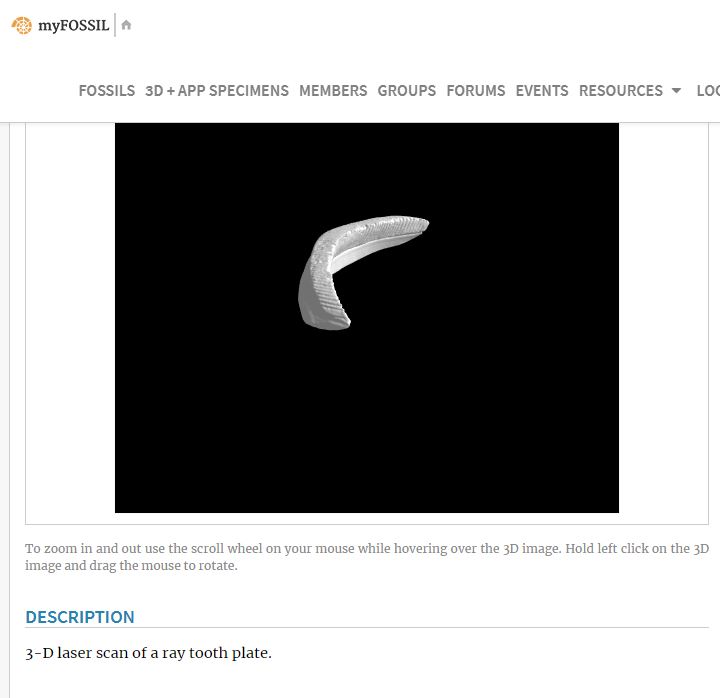
August’s reward is a row from the tooth plate of a spotted eagle ray, Aetobatus narinari! The original specimen is housed at the University of Tennessee fossil collection, and the 3D scan was shared online as part of the FOSSIL project.

I asked University of Florida/Florida Museum Ph.D. student Jeanette Pirlo about the FOSSIL project:

” The FOSSIL Project is an NSF funded project, based out of the University of Florida and the Florida Museum, devoted to cultivating a networked community of practice in which fossil club members and professional paleontologists collaborate in learning the practice of science and outreach. The myFOSSIL.org website is the platform from which our members can collaborate by sharing their fossil finds, curate their personal collections, and participate in ongoing paleontological research” – Jeanette Pirlo
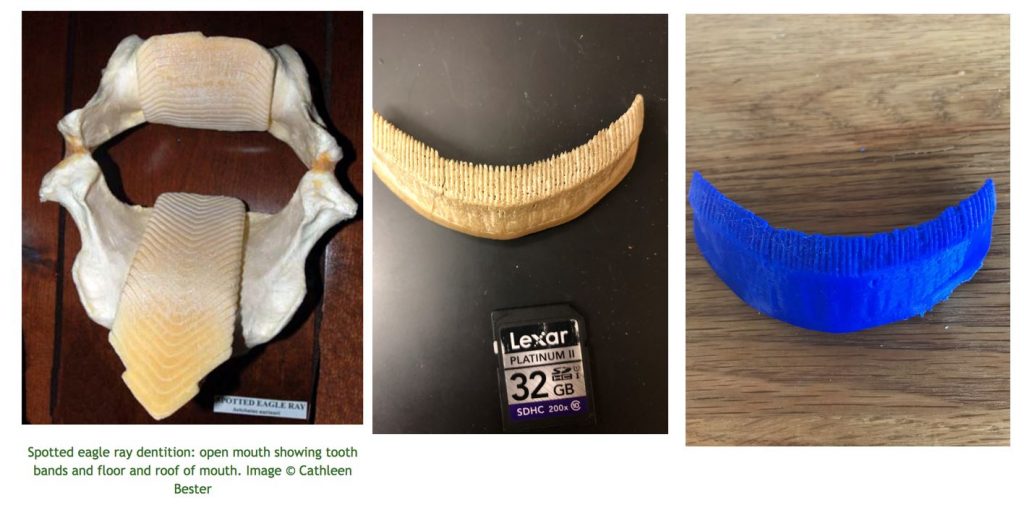
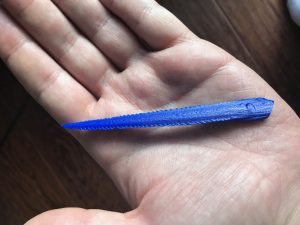
A full set of Spotted Eagle Ray Jaws showing multiple tooth rows fused into a plate, photo by Cathleen Bester courtesy Jeanette Pirlo at the Florida Museum. The specific individual tooth row that was scanned here, photo by Maggie Limbeck, University of Tennessee Masters Candidate. And the 3D printed version


Learn more about the spotted eagle ray and it’s teeth below!

Read More “5 things to know about spotted eagle ray tooth plates, August’s 3D printed reward!” »
Plastic Eating Worms and Scientists Running for Office: Thursday Afternoon Dredging, August 16th, 2018

Posted on August 16, 2018 By David Shiffman
Uncategorized

Cuttings (short and sweet):  Follow underwater engineer Amy Kukulya, as seen on Shark Week, on twitter! (And have you seen my review of Shark Week 2018?) Marine worms are eating plastic now. By Michael Allen, for Hakai Magazine. Predatory coral bring down jellyfish by working together. From MongaBay news updates. Spoils (long reads and deep dives): … Read More “Plastic Eating Worms and Scientists Running for Office: Thursday Afternoon Dredging, August 16th, 2018” »

Shark Week 2018 overall thoughts and episode reviews

Posted on August 15, 2018 By David Shiffman
Popular Culture, Science

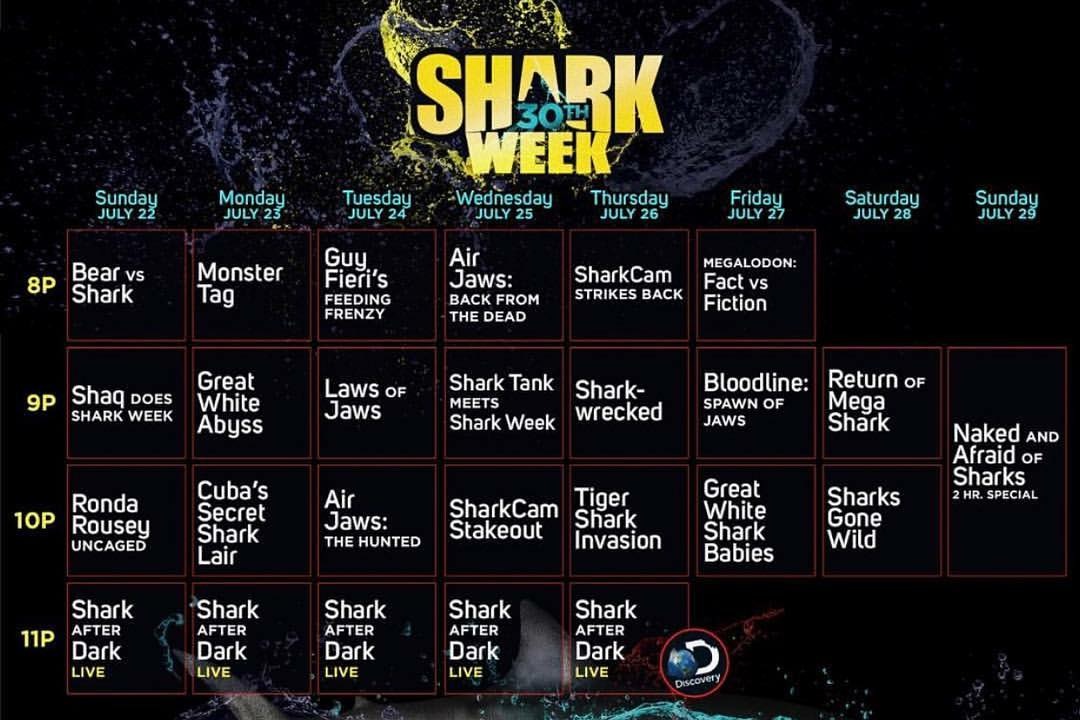
The 30th anniversary of Shark Week was the biggest ever, with 22 episodes. It was, as usual, a bit of a mixed bag, though nothing was anywhere near as bad as the bad old days of Megalodon, and there was some pretty good stuff. As has become tradition here at Southern Fried Science, here are some overall thoughts on this year’s Shark Week, as well as reviews for each episode (not counting the clip shows, which I didn’t watch- even I have limits).

Overall thoughts:

  • I heard more references to shark conservation this year, though almost exclusively offhand references to how the Bahamas is a Shark Sanctuary (there was one mention of shark fin trade bans in the Shark Tank show).
  • There were more women scientists and non-white scientists than I can remember, but still some major issues with diversity of scientists. (The white male scientists were still treated differently, including being given their full titles, and in one case a white male with a Masters was called Dr. while a woman with a Ph.D. was not called Dr.).
  • 22 shows is too many shows. I may be the only one in the world who actually tried to watch them all and I had to skip the clip shows because even I have limits.

Rather than organizing episode reviews in chronological order or air date, this year I’m going to organize them by theme.

Read More “Shark Week 2018 overall thoughts and episode reviews” »

ACTION ALERT: Protect Florida sharks from harmful fishing practices

Posted on July 19, 2018July 19, 2018 By David Shiffman 3 Comments on ACTION ALERT: Protect Florida sharks from harmful fishing practices
Conservation, Science

After years of scientists and conservationists complaining about problems with common land-based shark fishing practices, the Florida Fish and Wildlife Conservation Commission is finally taking action! At their April meeting, FWC formally announced that they are considering revising regulations governing this activity with the goal of restricting the unnecessary and cruel handling practices that result in killing protected species of sharks.

(For background on this topic, please read my detailed open letter, or this summary of my research).

Here are the options that FWC is considering.

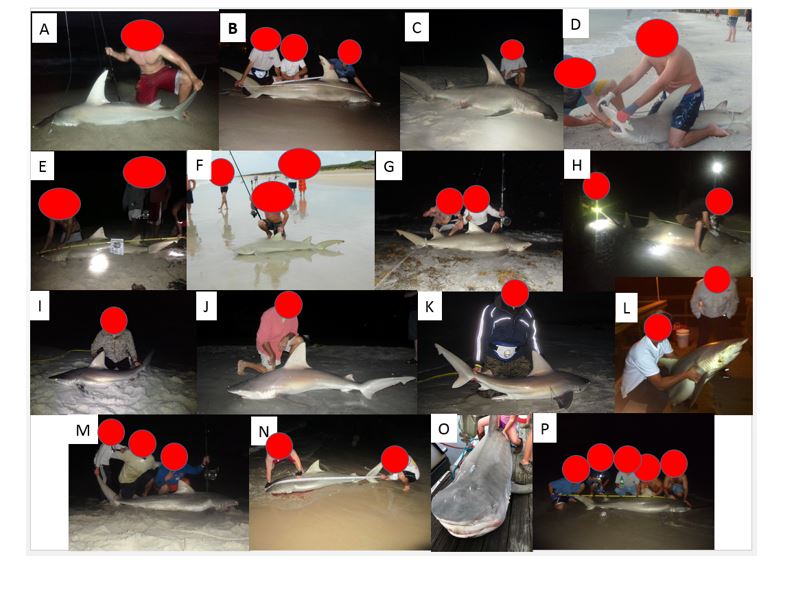
Examples of unequivocally illegal shark fishing from Shiffman and Friends 2017


How can you help? Either physically attend a workshop or send a formal comment online!


Read More “ACTION ALERT: Protect Florida sharks from harmful fishing practices” »

Pirates, conch, and surfing scientists: Thursday Afternoon Dredging, July 19th, 2018

Posted on July 19, 2018 By David Shiffman
Uncategorized

Cuttings (short and sweet):  Follow Erin Meyer, the director of conservation programs for the Seattle Aquarium, on twitter! Piracy Incident Reported in First Half of 2018 at Lowest Level in 10 Years. From GCaptain news alerts. She said she didn’t know it was illegal to take conchs. She’s heading to jail anyway. By Gwen Filosa, for … Read More “Pirates, conch, and surfing scientists: Thursday Afternoon Dredging, July 19th, 2018” »

Ice-free Arctic and salmon symphonies: Thursday Afternoon Dredging, July 12 2018

Posted on July 12, 2018 By David Shiffman
Uncategorized

Cuttings (short and sweet):  Follow environmental social scientist Angela Dean on twitter! Ice free passage for ships could cause problems for marine mammals. From MongaBay Bone scraps hint at whale harvest by ancient Romans. From Nature News. The Senate Committee on Commerce, Science, and and Transportation is holding a hearing entitled “SHARKS!”  “We don’t see many … Read More “Ice-free Arctic and salmon symphonies: Thursday Afternoon Dredging, July 12 2018” »

5 things to know about sixgill shark teeth, this month’s 3D printed reward!

Posted on June 18, 2018June 18, 2018 By David Shiffman
Science

I recently unveiled a new tier of Patreon rewards: 3D printed shark and ray models!For $17 per month, you will get a monthly 3D printed educational model of different shark or ray parts in the mail, and you’ll be supporting my efforts to provide these models to schools for free.

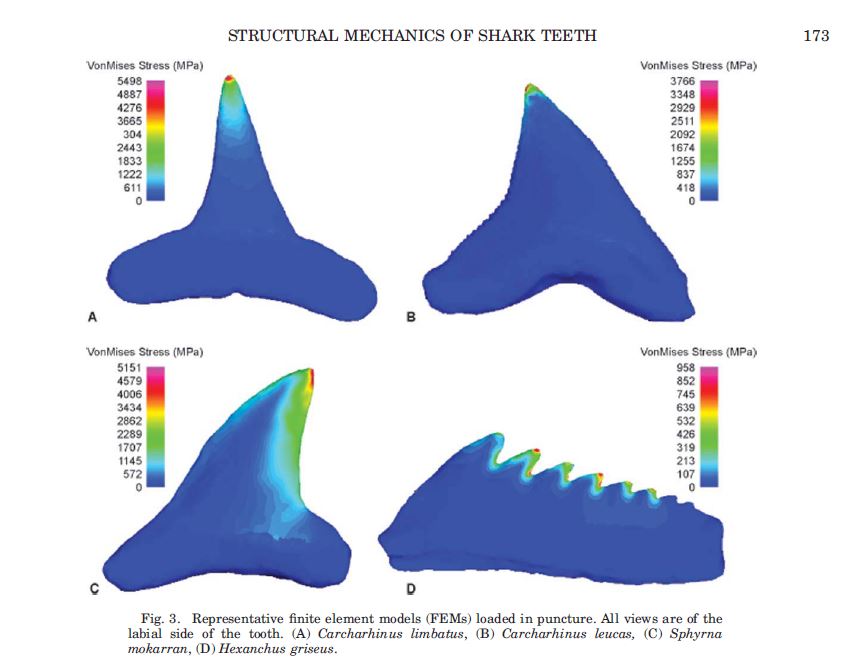
This month’s reward is a tooth from Hexanchus griseus, the bluntnose sixgill shark, a member of the cowshark family!This particular specimen was scanned by Dr. Lisa Whitenack as part of her Ph.D. dissertation work on comparative evolution and biomechanics of shark teeth.

Figure from Whitenack et al. 2011, the sixgill tooth is the one in the lower right! This paper studied teeth of different shapes using Finite Element Analysis (FEA). When Lisa inputs the shape of the tooth, how elastic the tooth is, and how much force the tooth experiences into her computer program, FEA will map out stress on the entire tooth. High points of stress are where a tooth would be likely to break.

Learn more about the bluntnose sixgill shark and it’s unusual shaped teeth below!

Read More “5 things to know about sixgill shark teeth, this month’s 3D printed reward!” »

I asked 15 ocean plastic pollution experts about the Ocean Cleanup project, and they have concerns

Posted on June 13, 2018June 14, 2018 By David Shiffman
Conservation, Science

The online ocean science community has been vocally skeptical about the Ocean Cleanup, a device that aims to physically remove plastic pollution from the ocean. Drs. Kim Martini and Miriam Goldstein published a technical review of its feasibility over at Deep Sea News, and Andrew asked some important questions that have yet to be answered. Also, be sure to read environmental journalist Chris Clarke’s thorough overview of these concerns.

Overall concerns include a lack of understanding of the problem (including but not limited to the fact that much of the harmful ocean plastic is small and well-dispersed), insufficient structural integrity for a large object that will be deployed in the open ocean (which would result in the object breaking and creating even more ocean garbage), and the fact that this device is designed to aggregate objects of a certain size to remove them from the water but cannot distinguish between plastic and living things.

Mainstream media coverage has been noticeably less critical of the Ocean Cleanup, often presenting the idea as revolutionary and it’s creator as a genius.

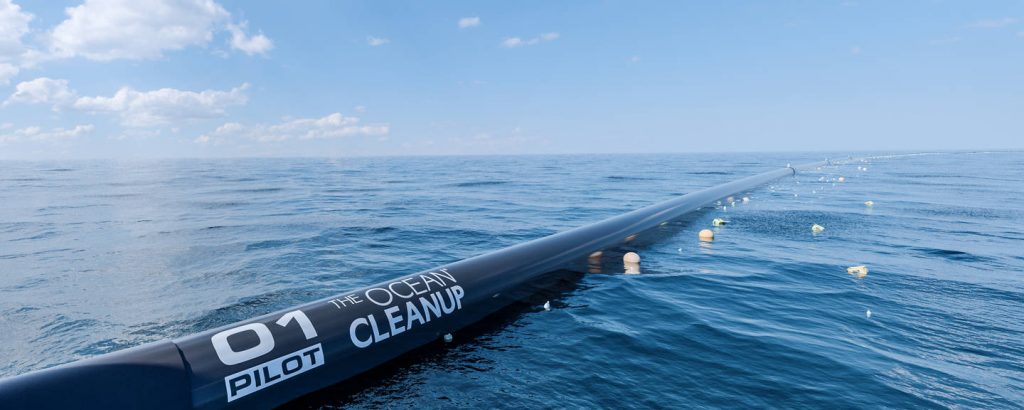
Artist’s conception of the Ocean Cleanup, from TheOceanCleanup.com

I am not an expert in ocean plastic pollution. However, the uncritical tone of most mainstream media coverage of the Ocean Cleanup does not seem to correspond with my impression of expert opinion on this matter from speaking with expert colleagues who study this.

Through professional contacts, I developed a list of 51 ocean plastic pollution experts who work in academia, government, and the environmental non-profit sector, and I sent them some questions about the Ocean Cleanup. 15 (4 in academia, 5 each in government and the non-profit sector, and 1 in industry) agreed to participate in an anonymous survey. While this is not (and not intended to be) an exhaustive survey of the entire field of ocean plastic pollution, the broad agreement among a diverse group of experts is telling. Below, please see what they had to say through some representative quotes. Some respondents chose to provide an on-the-record quote, while many chose to remain anonymous out of concerns about reprisal.

I also asked Lonneke Holierhoek, COO of the Ocean Cleanup, to respond to these concerns. Her comments are included in each section.

Read More “I asked 15 ocean plastic pollution experts about the Ocean Cleanup project, and they have concerns” »

5 things to know about stingray barbs, this month’s 3D printed reward!

Posted on May 29, 2018May 29, 2018 By David Shiffman
Science

I recently unveiled a new tier of Patreon rewards: 3D printed shark and ray models!For $17 per month, you will get a monthly 3D printed educational model of different shark or ray parts in the mail, and you’ll be supporting my efforts to provide these models to schools for free.

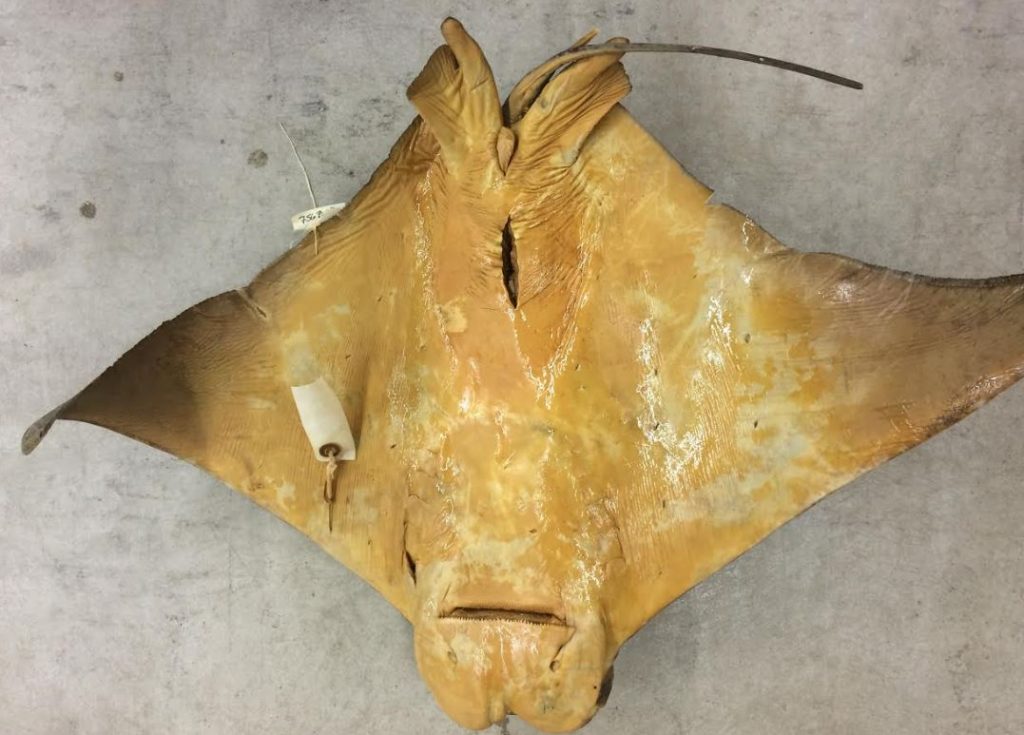
This month’s reward is the barb from a Pacific Cownose Ray, Rhinoptera steindachneri. This particular specimen is a part of the Texas A&M University Biodiversity Research and Teaching Collection, and was scanned as part of the #ScanAllFishes project! 

I reached out to Heather Prestidge and Kevin Conway, curators of the Texas A&M collection. They told me that this particular specimen was collected in 1993 by John McEachran (author of the multi-volume “fishes of the Gulf of Mexico“) and Janine Caira (now a parasitologist at UConn). It was collected in Baja California, Mexico. Heather was pleased to learn that I was using their specimen for this project, and said “our specimens have an unlimited number of uses even after their primary project!”

Here’s a picture of another specimen of the same species from this collection, you can see why they’re sometimes called “Golden Cownose Rays”.

Photo courtesy Christian Jones, NOAA

Here’s a CT scan focusing on the barb, from the Virtual Natural History Museum.

Learn more about the Pacific cownose ray and the science behind stingray barbs below!

Read More “5 things to know about stingray barbs, this month’s 3D printed reward!” »

Posts pagination

Previous 1 … 8 9 10 … 68 Next

Popular Posts

Here are some ocean conservation technologies that I'm excited aboutHere are some ocean conservation technologies that I'm excited aboutFebruary 19, 2026David Shiffman
What Ocean Ramsey does is not shark science or conservation: some brief thoughts on "the Shark Whisperer" documentaryWhat Ocean Ramsey does is not shark science or conservation: some brief thoughts on "the Shark Whisperer" documentaryJuly 2, 2025David Shiffman
That's not a blobfish: Deep Sea Social Media is Flooded by AI SlopThat's not a blobfish: Deep Sea Social Media is Flooded by AI SlopDecember 19, 2025Andrew Thaler
Shark of Darkness: Wrath of Submarine is a fake documentaryShark of Darkness: Wrath of Submarine is a fake documentaryAugust 10, 2014Michelle Jewell
Bipartisan Concern Expressed Over Deep Sea Mining at Congressional HearingBipartisan Concern Expressed Over Deep Sea Mining at Congressional HearingJanuary 23, 2026Angelo Villagomez
The horrifying physiological and psychological consequences of being AquamanThe horrifying physiological and psychological consequences of being AquamanJuly 18, 2012Andrew Thaler
The story of the pride flag made from NASA imagery: Bluesky's most-liked imageThe story of the pride flag made from NASA imagery: Bluesky's most-liked imageSeptember 27, 2024David Shiffman
What is a Sand Shark?What is a Sand Shark?November 12, 2017Chuck Bangley
Cascading planetary-wide ecosystem effects of the extirpation of apex predatory Krayt dragons on TatooineCascading planetary-wide ecosystem effects of the extirpation of apex predatory Krayt dragons on TatooineJuly 22, 2014David Shiffman
Mermaids: The New Evidence is a Fake DocumentaryMermaids: The New Evidence is a Fake DocumentaryMay 28, 2013Andrew Thaler
Subscribe to our RSS Feed for updates whenever new articles are published.

We recommend Feedly for RSS management. It's like Google Reader, except it still exists.

Southern Fried Science

  • Home
  • About SFS
  • Authors
  • Support SFS


If you enjoy Southern Fried Science, consider contributing to our Patreon campaign.

Copyright © 2026 Southern Fried Science.

Theme: Oceanly Premium by ScriptsTown